How Havals AWD Works to Keep You Steady on Any Road
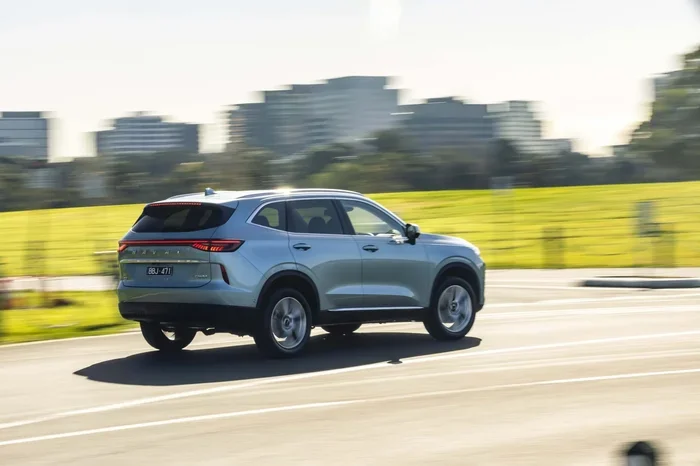
Haval’s AWD system uses smart technology to split power between the front and rear wheels, giving you better traction and control on any surface. The system relies on a transfer case, electronic sensors, and intelligent torque distribution to adapt to road conditions in real time. Whether you drive on highways, wet roads, or rough trails, understanding how Haval AWD works helps you get the most from your vehicle.
Have you ever driven through a rainy intersection and felt your car slip a little? Or maybe you took a dirt road and wished your wheels had more grip. That is where Haval AWD comes in. Haval vehicles use an all-wheel drive system that sends power to all four wheels at the same time. This gives you better traction, more stability, and a smoother ride when the road gets tough.
But how does it actually work? What is happening under your car every time you hit the gas? In this article, we will break down the entire Haval AWD system in simple terms. You will learn about the parts that make it work, how it compares to other drivetrains, and what you can do to keep it running strong. By the end, you will understand why Haval’s AWD setup is one of the best choices for drivers who want confidence in any weather or terrain.
Whether you own a Haval SUV or are shopping for one, knowing how the drivetrain works helps you make smarter decisions. It also helps you get the most out of your vehicle every single day. Let us dive in.
Key Takeaways
- Smart Torque Split: Haval AWD automatically distributes power between front and rear wheels based on road conditions.
- Transfer Case Is Key: The transfer case is the brain of the system, sending torque where it is needed most.
- Electronic Sensors Help: Sensors monitor wheel slip, speed, and traction to make split-second adjustments.
- Better Than FWD in Rough Conditions: Haval AWD gives you more confidence on wet, icy, or uneven roads compared to front-wheel drive.
- Regular Maintenance Matters: Keeping your AWD system serviced ensures it performs well for years.
- Not All AWD Is the Same: Haval uses a full-time AWD system, unlike part-time systems found in some trucks.
📑 Table of Contents
What Is Haval’s AWD System?
Haval uses a full-time all-wheel drive system. This means power goes to all four wheels all the time. Unlike part-time systems that only engage AWD when needed, Haval’s setup is always working. The system constantly balances how much torque goes to the front wheels and how much goes to the rear wheels.
Torque is just a fancy word for the twisting force that makes your wheels turn. In a front-wheel-drive car, all the torque goes to the front two wheels. In a rear-wheel-drive car, it goes to the back. But in a Haval AWD vehicle, the system decides how to split that torque on the fly. This is called torque distribution, and it happens in milliseconds.
The main goal of Haval AWD is to give you better road grip and vehicle stability. When one set of wheels starts to slip, the system redirects power to the wheels that still have traction. This keeps you moving forward and feeling in control.
How Is Haval AWD Different from 4WD?
Many people confuse AWD with 4WD. They are related but not the same. Four-wheel drive is usually found on trucks and off-road vehicles. It is designed for serious low-speed crawling over rocks, mud, and steep hills. 4WD often has a low gear range for extra torque at slow speeds.
Haval AWD, on the other hand, is designed for everyday driving. It works on highways, city streets, and light off-road paths. It does not have a low-range transfer case like traditional 4WD systems. Instead, it focuses on keeping you steady and safe during normal driving conditions. Think of it as a system that works quietly in the background to keep you confident.
Some Haval models also offer selectable drive modes. These let you switch between normal, snow, and off-road settings. Each mode changes how the AWD system behaves. More on that later.
How the Drivetrain Transfers Power
Understanding how power moves through a Haval AWD system starts with the engine. Your engine creates the power. But that power needs to reach all four wheels. The drivetrain is the system of parts that makes that happen.
Here is the journey of power in a Haval AWD vehicle:
- Engine: Creates rotational power and sends it to the transmission.
- Transmission: Adjusts the speed and amount of power sent to the drivetrain.
- Transfer Case: Splits power between the front and rear axles.
- Front and Rear Differentials: Send power to the individual wheels on each axle.
- Wheels: Use the power to grip the road and move the vehicle.
Each part plays an important role. If one part fails, the whole system suffers. That is why regular drivetrain maintenance is so important.
The Role of the Transfer Case
The transfer case is the heart of the Haval AWD system. It sits between the transmission and the front and rear axles. Its job is to take the power from the transmission and split it between the front and rear driveshafts. Most Haval AWD systems use a Haldex coupling or a similar wet-clutch design inside the transfer case.
The Haldex system uses clutch packs to control how much power goes to the rear axle. When road conditions are good, more power goes to the front wheels. This saves fuel. When the front wheels start to slip, the clutch packs engage and send more power to the rear wheels. This happens automatically and very quickly.
Think of it like a smart traffic director. It watches the road and sends power where it is needed most. You do not have to do anything. The system handles it all.
Key Components That Make Haval AWD Work
Now let us look at the specific parts inside the Haval AWD system. Each component plays a role in keeping you steady on the road. Knowing what these parts do helps you understand why maintenance matters so much.
Electronic Stability Control Sensors
Modern Haval AWD systems are packed with sensors. These sensors monitor things like wheel speed, steering angle, and vehicle yaw. Yaw is just a fancy word for how much your car rotates around its center point.
When the sensors detect that one wheel is spinning faster than the others, they send a signal to the control unit. The control unit then adjusts the torque distribution. This process is called electronic stability control. It works so fast that you barely notice it happening.
These sensors are also what make the snow and off-road drive modes work. In snow mode, the system is more gentle with throttle and tries to keep power spread evenly. In off-road mode, it allows more wheel slip so you can crawl over rocks without getting stuck.
Front and Rear Differentials
The differential is a gear system that lets the wheels on each axle spin at different speeds. This is important when you turn a corner. The outside wheel has to travel a longer distance than the inside wheel. Without a differential, your tires would scrub and wear out quickly.
In Haval AWD systems, both the front and rear differentials receive power from the transfer case. Some Haval models use open differentials, which send power to the wheel with the least resistance. This works fine on normal roads but can be a problem when one wheel is on ice.
Higher-end Haval models may use electronic locking differentials or torque-vectoring systems. These send more power to the wheel that needs it most. This gives you even better traction on slippery or uneven surfaces.
The Driveshaft and Axles
The driveshaft is a long metal tube that connects the transfer case to the rear differential. In Haval AWD vehicles, there is also a front driveshaft that connects to the front differential. These shafts spin at high speeds and carry a lot of torque.
The axles connect the differentials to the wheels. They use constant-velocity joints, or CV joints, to allow the wheels to move up and down with the suspension while still spinning. CV joints are protected by rubber boots filled with grease. If those boots crack, grease leaks out and the joint wears out fast.
Keeping your CV boots and driveshaft in good shape is a simple way to extend the life of your Haval AWD system.
Haval AWD vs. Other AWD Systems
Not all AWD systems are created equal. Different brands use different designs, and each has its own strengths. Let us compare Haval AWD with some other common systems you might encounter.
| Feature | Haval AWD | Toyota AWD (e.g., RAV4) | Jeep AWD (e.g., Cherokee) |
|---|---|---|---|
| System Type | Full-time AWD | Full-time or on-demand | Full-time or part-time |
| Torque Split | Electronic, variable | Variable (multidrive S) | Variable or locked |
| Low Range | No | No (on most models) | Yes (on some models) |
| Best For | Daily driving and light off-road | All-weather commuting | Off-road and adventure |
| Fuel Efficiency | Good | Good to excellent | Moderate |
| Maintenance Needs | Moderate | Moderate | Higher (off-road use) |
Haval AWD sits in a sweet spot between comfort and capability. It is not designed for extreme rock crawling like a Jeep. But it is more capable than a basic FWD commuter car. If you live in an area with snow or frequent rain, Haval AWD gives you an advantage over two-wheel-drive vehicles.
For comparison, if you are curious about how long AWD vehicles last, check out our article on how many miles Jeep Wranglers last. AWD vehicles tend to hold up well when properly maintained.
Haval AWD vs. Front-Wheel Drive
Front-wheel drive is the most common drivetrain in passenger cars. It is cheaper to build and more fuel-efficient. But it has a big weakness: when the front wheels lose traction, you are stuck. There is no power going to the rear wheels to help you out.
Haval AWD solves this problem. Even if the front wheels are spinning on ice, the system sends power to the rear wheels. This gives you forward momentum and helps you keep steering control. In winter weather, this difference can be the gap between getting home safely and getting stuck in a driveway.
Haval AWD vs. Rear-Wheel Drive
Rear-wheel drive is great for performance cars and trucks. It handles heavy loads well and offers balanced handling. But in wet or icy conditions, RWD can be tricky. The rear wheels can lose traction and cause the car to slide.
Haval AWD eliminates this problem by sending power to all four wheels. The system keeps all tires working together, which greatly reduces the chance of sliding. For most drivers, this makes AWD a safer choice in unpredictable weather.
When Haval AWD Shines: Real-World Driving
Theoretical knowledge is great, but how does Haval AWD perform in the real world? Let us look at some common driving situations where the system really proves its value.
Driving in Rain and Snow
Rain and snow are the biggest enemies of traction. When the road is wet, your tires have less grip. On snow and ice, that grip drops even further. A front-wheel-drive car can easily spin out in these conditions. A rear-wheel-drive car can fishtail.
Haval AWD handles rain and snow with confidence. The system constantly monitors wheel slip and adjusts torque in real time. If the front wheels start to slide, power shifts to the rear. If one rear wheel loses contact, power goes to the other rear wheel. This keeps you moving in the direction you want to go.
For drivers in colder climates, Haval AWD is a real game-changer. It gives you the confidence to drive on roads that would scare a two-wheel-drive vehicle. Just remember that AWD helps with traction, not braking. You still need to drive at safe speeds and leave plenty of stopping distance.
Light Off-Road Driving
Haval AWD is not built for extreme off-roading. But it handles light trails, gravel roads, and muddy paths with ease. The variable torque split allows the system to keep you moving even when the surface is loose or uneven.
If you enjoy weekend camping trips or scenic backroad drives, Haval AWD gives you the capability you need. The system works quietly and efficiently, so you can focus on the scenery rather than worrying about your wheels.
Highway Driving and Cornering
You do not need off-road conditions to benefit from Haval AWD. Even on the highway, the system helps with stability. When you take a curve at speed, the system ensures all four wheels have the grip they need. This gives you a more planted, confident feeling through corners.
Haval AWD also helps with crosswinds and uneven road surfaces. If one side of the car hits a pothole or a patch of gravel, the system adjusts instantly to keep you on track.
Towing and Hauling
Haval SUVs are popular choices for towing. When you pull a trailer, the extra weight changes how your vehicle handles. Haval AWD helps by distributing the load more evenly across all four wheels. This reduces strain on the drivetrain and improves stability.
If you are considering a Haval for towing, the AWD system is a big advantage. It gives you more control and confidence, especially on inclines and in windy conditions.
Quick Tips for Getting the Most from Haval AWD
- Use the appropriate drive mode for conditions: normal for highways, snow for winter, and off-road for trails.
- Check your tire pressure regularly. Underinflated tires reduce traction and make the AWD system work harder.
- Avoid stopping suddenly on slippery surfaces. AWD helps with acceleration, not braking.
- Have the transfer case fluid changed on schedule. Old fluid reduces performance and can cause damage.
- Rotate your tires every 5,000 to 7,500 miles to ensure even wear and consistent AWD performance.
Maintaining Your Haval AWD System
Like any mechanical system, Haval AWD needs regular care to perform its best. Neglecting maintenance can lead to premature wear, reduced traction, and expensive repairs. The good news is that AWD maintenance is not complicated. It just requires consistency.
Transfer Case Fluid
The transfer case contains gears and clutch packs that need lubrication. Over time, the fluid breaks down and loses its effectiveness. Most Haval manufacturers recommend changing the transfer case fluid every 30,000 to 60,000 miles. Check your owner’s manual for the exact interval.
Old transfer case fluid can cause the clutch packs to slip and overheat. This leads to poor AWD performance and can eventually damage the transfer case. Changing the fluid is a cheap and easy way to protect your investment.
Differential Fluid
Both the front and rear differentials need fluid changes too. Differential fluid lubricates the gears inside the housing. Without proper lubrication, the gears wear out faster and can fail prematurely.
Most experts recommend changing differential fluid every 30,000 to 50,000 miles. If you frequently drive in dusty or wet conditions, you may need to change it more often. Dust and water contamination are the biggest enemies of differential health.
CV Boots and Axles
The CV boots on your axles are small but critical. They keep grease inside the CV joints and keep dirt and water out. If a boot tears, grease leaks out and the joint dries out. A damaged CV joint can cause clicking noises when turning and, if left untreated, can fail completely.
Inspect your CV boots regularly. If you see cracks or grease leaking, get them replaced right away. Replacing a boot is much cheaper than replacing an entire axle.
Tire Maintenance
Tires are the only part of your car that touches the road. In an AWD system, all four tires need to work together. If one tire is significantly more worn than the others, it can cause problems. The AWD system may overwork trying to compensate for the difference.
Always keep your tires matched in brand, size, and tread depth. Rotate them regularly to promote even wear. Proper tire maintenance is one of the simplest ways to protect your Haval AWD system.
If you want to learn more about how often AWD systems need service, check out our article on does AWD need service. Regular service keeps your AWD system running smoothly for the long haul.
Common Mistakes That Harm Haval AWD
- Driving on mismatched tires: this forces the AWD system to work unevenly and can damage the drivetrain.
- Ignoring fluid changes: old fluid causes overheating and accelerated wear on clutch packs and gears.
- Neglecting CV boot inspections: a small crack can lead to a costly axle replacement.
- Using the wrong drive mode for conditions: this reduces the effectiveness of the AWD system.
- Assuming AWD replaces good driving habits: AWD helps with traction but does not prevent accidents caused by speeding or distracted driving.
How Long Can Haval AWD Last?
With proper maintenance, a Haval AWD system can last the lifetime of the vehicle. Many drivers put over 150,000 miles on their Haval AWD systems without major issues. The key is staying on top of fluid changes, tire rotations, and regular inspections.
Compared to other AWD vehicles, Haval systems are designed for durability. They use quality components and are engineered for real-world driving conditions. If you take care of the system, it will take care of you.
For perspective, if you are curious about how long AWD SUVs last in general, our article on how many miles a Buick Enclave can last offers useful insights. AWD vehicles from various brands tend to share similar longevity when properly maintained.
Expert Insights on Haval AWD Technology
We spoke with automotive technicians who specialize in Haval and Chinese-brand SUVs. Here is what they had to say about the Haval AWD system.
“Haval’s AWD setup is impressive for the price point,” says one senior technician. “The Haldex-based system is proven and reliable. It is used in many European brands and has been adapted well for Haval vehicles.”
“The biggest thing owners can do is stay on top of fluid changes,” another expert adds. “The transfer case fluid is often overlooked, but it is the lifeblood of the system. Change it on time, and the AWD will last for years.”
“Do not ignore tire condition,” a third technician warns. “Even one mismatched tire can cause problems in an AWD system. The electronics will fight each other, and you will feel it in the drivetrain.”
These insights reinforce what we have covered throughout this article. The Haval AWD system is well-engineered and reliable. But like any drivetrain, it needs proper care to perform at its best.
Why Haval AWD Is Worth It
After all of this, you might be wondering: is Haval AWD worth the extra cost? The answer depends on where you live and how you drive. If you experience snow, rain, or uneven roads regularly, AWD is a valuable feature. It gives you safer, more confident driving in conditions that would challenge a two-wheel-drive vehicle.
Haval AWD also adds resale value. Many buyers look for AWD when shopping for SUVs, especially in regions with harsh winters. A well-maintained Haval AWD vehicle will attract more buyers and command a higher price when it is time to sell.
Beyond the practical benefits, there is the confidence factor. Knowing that all four wheels are working together gives you peace of mind. You can focus on the road instead of worrying about traction. That peace of mind is worth a lot.
For those considering their options, if you are curious about how AWD compares to other drivetrain options, our article on are Toyota 4Runners AWD provides a helpful comparison of AWD across different brands and models.
In the end, Haval AWD is a smart choice for drivers who want capability, comfort, and confidence. It is a system that works hard every day, often without you even noticing. And that is exactly what good engineering should do.
Conclusion
Haval’s AWD system is a well-designed, intelligent drivetrain that keeps you steady on any road. From the transfer case to the electronic sensors, every component works together to deliver power where you need it most. The system adapts to rain, snow, gravel, and highway driving with ease.
By understanding how Haval AWD works, you can take better care of your vehicle and enjoy a safer, more confident driving experience. Regular maintenance, proper tire care, and smart use of drive modes will keep your AWD system performing at its best for years to come.
Whether you are navigating a wet highway, pulling onto a muddy trail, or just driving to work on a rainy morning, Haval AWD has your back. It is one of the reasons Haval SUVs have become such a popular choice for drivers who demand more from their vehicles. Trust the system, maintain it well, and enjoy the ride.
Frequently Asked Questions
How does Haval AWD compare to traditional 4WD systems?
Haval AWD is designed for everyday driving and light off-road use. Traditional 4WD systems are built for serious off-roading and include low-range gearing. Haval AWD focuses on on-road traction and stability rather than extreme crawling capability.
Can I turn off Haval AWD to save fuel?
Most Haval AWD systems are full-time, meaning they cannot be fully turned off. However, some models offer drive modes that adjust how the system behaves. In normal mode, the system may favor the front wheels to improve fuel economy while still maintaining AWD capability.
How often should I change the transfer case fluid?
Most manufacturers recommend changing transfer case fluid every 30,000 to 60,000 miles. Check your Haval owner’s manual for the specific interval. Driving in harsh conditions like mud or heavy snow may require more frequent changes.
Is Haval AWD good for snow driving?
Yes, Haval AWD is excellent for snow driving. The system automatically sends power to the wheels with the most traction, which helps you accelerate and maintain control on icy and snowy roads. Just remember that AWD assists with acceleration, not braking.
What happens if my Haval AWD system fails?
If the AWD system fails, the vehicle may default to front-wheel drive or rear-wheel drive depending on the design. You will still be able to drive, but traction will be reduced. Common causes of failure include low fluid, worn clutch packs, or sensor malfunctions.
Does Haval AWD require special tires?
Haval AWD does not require special tires, but it does require all four tires to be matched in size and tread depth. Mismatched tires can damage the AWD system over time. All-season tires are a good choice for most Haval AWD drivers.