What Happens If PSI Is Too High And Why You Should Care
What Happens If PSI Is Too High can cause serious tire damage, reduce traction, and compromise vehicle safety. Overinflated tires wear out faster, create a harsh ride, and increase the risk of blowouts. Understanding proper tire pressure helps you stay safe and save money.
Key Takeaways
- Overinflation damages tires: Excess PSI causes uneven center tread wear and weakens the tire sidewall over time.
- Safety risks increase: High tire pressure reduces the contact patch, leading to longer braking distances and traction loss.
- Ride quality suffers: Overinflated tires make your ride harsher and less comfortable on every road surface.
- Fuel economy may improve slightly: But the trade-off in tire life and safety is not worth it.
- Check PSI regularly: Use a reliable tire pressure gauge and compare readings to your vehicle’s recommended levels.
- Temperature affects PSI: Air pressure inside tires rises with heat, so check tire pressure when tires are cool.
- TPMS is your friend: The Tire Pressure Monitoring System alerts you when PSI is too high or too low.
📑 Table of Contents
- Understanding PSI and Why It Matters for Your Tires
- What Happens If PSI Is Too High in Your Tires
- How Overinflation Affects Vehicle Performance
- How to Check and Maintain Proper Tire Pressure
- Common Mistakes Drivers Make With Tire Pressure
- Expert Tips for Keeping PSI in the Safe Range
- Key Takeaways
- Conclusion
Understanding PSI and Why It Matters for Your Tires
PSI stands for pounds per square inch. It measures the air pressure inside your tires. Every vehicle has a recommended PSI level. This number is not random. Engineers calculate it based on the vehicle’s weight, size, and intended use.
When you drive with the wrong PSI, problems follow. Too low, and your tires flex too much. Too high, and the tire becomes rigid. Both extremes are bad. But today, we focus on the overinflation side. What Happens If PSI Is Too High is a question every driver should know the answer to.
The recommended PSI is usually on a sticker inside the driver’s door jamb. Some vehicles also list it in the owner’s manual. Never use the number printed on the tire sidewall. That number is the maximum PSI the tire can handle, not the ideal pressure for your vehicle.
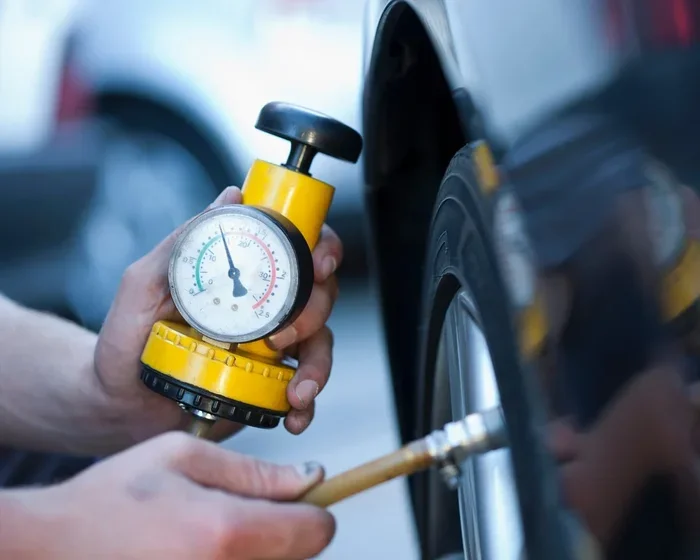
Checking your tire pressure is simple. Grab a tire pressure gauge from any auto parts store. Unscrew the valve cap, press the gauge onto the valve stem, and read the number. Do this when the tires are cold. Driving heats up the air inside, which raises the PSI reading and gives you a false high number.
What Happens If PSI Is Too High in Your Tires
Overinflated tires behave very differently from properly inflated ones. The excess air pushes the tire walls outward. This changes the shape of the tire’s contact patch. The contact patch is the part of the tire that touches the road. When PSI is too high, this patch shrinks. Less rubber on the road means less grip.
Reduced Traction and Handling Problems
When the contact patch shrinks, your tires lose grip. This is especially dangerous on wet or icy roads. Overinflated tires are more likely to hydroplane. They cannot channel water away from the tread as effectively. You may notice the car feels skittish or unresponsive during turns.
Steering feel changes too. The car may feel tight or twitchy at high speeds. Small steering inputs cause big reactions. This oversteer behavior catches many drivers off guard. It is one of the most immediate signs that your PSI is too high.
Increased Risk of Tire Blowouts
This is the scariest consequence. Too much air pressure puts stress on the tire sidewall. The sidewall is the flexible side of the tire that absorbs road bumps. When it is overstretched from high PSI, it becomes brittle. Over time, micro-cracks form. These cracks can grow suddenly, causing a blowout.
A blowout at highway speeds is extremely dangerous. The tire can completely detach from the rim. You lose all control of the vehicle in an instant. According to the NHTSA, tire failures cause thousands of accidents every year. Many of these are linked to improper inflation.
Uneven and Premature Tire Wear
Overinflated tires wear out faster in the center of the tread. This is called center tread wear. Instead of the tire wearing evenly across the full width, the middle bears all the load. You will notice the center tread is significantly smoother than the edges.
This uneven wear shortens the overall lifespan of the tire. A tire that should last 60,000 miles might only make it to 40,000. That is a lot of wasted money. Replacing tires is expensive, and premature wear is preventable with proper PSI.
Harsher Ride Quality
Tires absorb road imperfections. They act as a cushion between the road and your car. When PSI is too high, the tire becomes stiff. It cannot compress and absorb bumps effectively. The result is a harsh, jarring ride.
You will feel every pothole and crack in the road more intensely. Passengers in the back seat will feel it too. Over time, this harsh ride can also damage other suspension components. Shock absorbers and struts wear out faster when the tires cannot do their job.
How Overinflation Affects Vehicle Performance
The effects of high PSI go beyond just the tires. Your entire vehicle feels the difference. Let us look at the performance impacts in detail.
Braking Distance Increases
Shorter braking distance saves lives. Overinflated tires take longer to stop. The reduced contact patch means less friction with the road surface. In emergency situations, those extra feet matter a lot.
Studies show that tires with 5 PSI over the recommended level can increase braking distance by several feet. On wet roads, the difference is even more pronounced. This is a safety risk you can easily avoid by checking your PSI regularly.
Fuel Economy: A Small Gain with Big Trade-Offs
Some people believe overinflating tires improves fuel economy. There is a tiny bit of truth to this. Less rolling resistance means the engine works slightly less. But the fuel savings are minimal. We are talking about fractions of a mile per gallon.
The trade-off is not worth it. You sacrifice tire life, ride comfort, traction, and safety for a negligible fuel benefit. Save your money and stick to the recommended PSI. The fuel savings from proper inflation are the same as from overinflation, without the downsides.
Uneven Load Distribution
Your tires are designed to support the vehicle’s weight across the full tread. High PSI concentrates the load on the center of the tire. This creates an imbalance in how weight is distributed. The tire cannot grip the road evenly.
This is particularly problematic when carrying heavy loads or towing. The vehicle needs maximum traction in these situations. Overinflated tires reduce your ability to maintain control when it matters most.
How to Check and Maintain Proper Tire Pressure
Preventing overinflation is easier than fixing the damage it causes. Here is a simple guide to keeping your PSI in the right range.
Step-by-Step Tire Pressure Check
- Find your vehicle’s recommended PSI on the door jamb sticker or owner’s manual.
- Purchase a reliable tire pressure gauge. Digital gauges are more accurate than pencil-style ones.
- Check tire pressure when the tires are cold. Drive less than a mile, or wait at least three hours after driving.
- Remove the valve cap from the tire stem.
- Press the gauge firmly onto the valve stem. You should hear a brief hiss, which is normal.
- Read the number on the gauge. Compare it to the recommended PSI.
- If the PSI is too high, press the small pin inside the valve stem to release air. Recheck the pressure.
- If the PSI is too low, add air using a gas station air pump or portable compressor.
- Replace the valve cap when done. This keeps dirt and moisture out of the valve.
When to Check Your Tire Pressure
Make it a habit to check your tire pressure at least once a month. Air slowly leaks through tires over time. A tire can lose 1 PSI per month without any visible leak. Temperature changes also affect PSI. For every 10-degree drop in ambient temperature, tire pressure drops about 1 PSI.
Before long road trips is also a great time to check. You want your tires in perfect condition for highway driving. Also check after any major temperature swing, like the first cold snap of fall or the heat of summer.
Understanding Your TPMS
Most modern vehicles have a Tire Pressure Monitoring System. This is the TPMS light on your dashboard. It illuminates when tire pressure is too low or, in some systems, too high.
Do not ignore this light. It is there to protect you. If the TPMS light comes on, check all four tires immediately. Some vehicles show individual tire pressures on the dashboard display. This makes it easy to identify which tire is overinflated.
Keep in mind that TPMS sensors have a limited lifespan. They typically last 5 to 10 years. If your light stays on even after you fix the PSI, the sensor itself may need replacement.
Common Mistakes Drivers Make With Tire Pressure
Even careful drivers make mistakes with tire pressure. Here are the most common ones and how to avoid them.
Relying on the Tire Sidewall Number
The number on the tire sidewall is the maximum PSI, not the recommended PSI. Using this number as your target will overinflate your tires every time. Always use the vehicle manufacturer’s recommendation instead.
Only Checking Tires When They Look Flat
Tires can be significantly overinflated or underinflated and still look normal to the naked eye. You cannot judge PSI by looking at a tire. Always use a gauge. This is the only reliable way to know your actual pressure.
Ignoring the Spare Tire
Your spare tire needs proper PSI too. Many people forget about it until they need it. By then, the spare might be flat or underinflated. Check your spare tire pressure at least twice a year.
Adding Air After Driving
Some drivers check PSI after a long drive and add air to match the recommended number. But hot tires read higher than cold tires. Adding air based on a hot reading will result in overinflation once the tires cool down. Always check when tires are cold.
Assuming All Tires Need the Same PSI
Some vehicles have different PSI requirements for front and rear tires. This is common in trucks and SUVs with rear-heavy loads. Always check the door jamb sticker for the correct PSI for each position.
Expert Tips for Keeping PSI in the Safe Range
Invest in a Quality Tire Pressure Gauge
The free gauges at gas stations are often inaccurate. They get bumped around and rarely calibrated. A personal digital gauge costs under $15 and gives you reliable readings every time. Keep one in your glove box and use it regularly.
Set Calendar Reminders
Tire pressure checks are easy to forget. Set a recurring reminder on your phone for the first of every month. This simple habit can save you from premature tire wear, safety risks, and unexpected repairs.
Consider a TPMS Upgrade
If your vehicle does not have a built-in TPMS, you can install an aftermarket tire pressure monitoring system. These external sensors screw onto the valve stems and send real-time pressure readings to a small display in your car. Some advanced systems even send alerts to your phone.
Know the Signs of Overinflation
Your vehicle will tell you when PSI is too high. Watch for these warning signs:
- A harder, harsher ride than usual
- Increased road noise from the tires
- Vibration through the steering wheel
- The car pulling to one side unexpectedly
- Reduced grip during wet weather driving
- Visible center tread wear when you inspect the tires
If you notice any of these signs, check your tire pressure right away. Catching high PSI early prevents costly damage and keeps you safe on the road.
Key Takeaways
- Overinflation causes center tread wear: Your tires wear out faster in the middle, shortening their lifespan significantly.
- High PSI reduces traction: A smaller contact patch means less grip, especially on wet or icy surfaces.
- Blowout risk increases: Excess pressure stresses the tire sidewall, making blowouts more likely at high speeds.
- Ride quality gets worse: Overinflated tires transmit more road vibration and harshness into the cabin.
- Braking distance increases: Less tire contact with the road means longer stopping distances in emergencies.
- Check PSI monthly with a gauge: Never rely on visual inspection or gas station air pumps for accuracy.
- Follow your vehicle’s recommended PSI: Find it on the door jamb sticker, not on the tire sidewall.
Conclusion
What Happens If PSI Is Too High is a question with serious real-world consequences. Overinflated tires reduce your traction, increase your risk of blowouts, wear out prematurely, and make your ride uncomfortable. The safety and financial costs are real.
The good news is prevention is simple. Check your tire pressure regularly with a quality gauge. Follow your vehicle’s recommended PSI. Respond to TPMS alerts immediately. These small habits protect your tires, your fuel economy, and most importantly, your safety.
Do not wait for a problem to check your tire pressure. Make it part of your regular vehicle maintenance routine. Your tires are the only part of your car that touches the road. Treat them right, and they will keep you safe for thousands of miles. Start today. Grab a tire pressure gauge and check your PSI. Your future self will thank you.
Frequently Asked Questions
Can high PSI cause a tire blowout?
Yes, overinflated tires are at a higher risk of blowouts. Excess air pressure stretches the tire sidewall beyond its normal range. This creates stress points that can lead to sudden tire failure, especially at highway speeds or under heavy loads.
How often should I check my tire pressure?
Check your tire pressure at least once a month. Also check it before long trips and after significant temperature changes. Always check when the tires are cold for the most accurate reading.
Where can I find the recommended PSI for my vehicle?
Look for a sticker on the driver’s side door jamb. This sticker lists the recommended tire pressure for both front and rear tires. You can also find this information in your vehicle owner’s manual.
Does overinflation affect fuel economy?
Overinflated tires may slightly improve fuel economy due to reduced rolling resistance. However, the improvement is minimal and does not outweigh the safety risks, reduced tire life, and poor ride quality that come with high PSI.
What should I do if my TPMS light comes on?
Check all four tires with a reliable pressure gauge as soon as possible. If the PSI is too high, release air until you reach the recommended level. If the PSI is too low, add air. If the light stays on after correcting the pressure, the TPMS sensor may need replacement.
Is it safe to drive on overinflated tires?
Driving on overinflated tires is not safe. The reduced contact patch decreases traction, increases braking distance, and raises the risk of blowouts. If you discover your tires are overinflated, release air to the proper PSI before driving long distances.