Does the Mazda CX-30 Come With Blind Spot Monitoring
The Mazda CX-30 offers blind spot monitoring as standard on Premium, Grand Touring, and Signature trims, and as an option on lower trims. The system is part of the i-Activsense safety suite and uses radar sensors in the rear bumper and side mirrors. It provides visual and audible alerts to help you change lanes safely and confidently.
You’re asking: Does the Mazda CX-30 come with blind spot monitoring? The short answer is yes, but it depends on the trim and model year. Mazda CX-30 blind spot monitoring is part of the i-Activsense safety suite, and it’s standard on many popular trims. In this guide, we’ll show you exactly which CX-30 configurations include the feature, how the system alerts you, and what to do if the warning light comes on. You’ll also learn about adding the system to older models and keeping it maintained. By the end, you’ll know everything you need to make a confident decision about this important safety technology.
Blind spot monitoring has become a must-have feature for many car buyers. It helps you change lanes safely by alerting you to vehicles in your blind spots. The Mazda CX-30 is a stylish compact crossover that offers strong safety credentials. But not every trim includes this feature from the factory. We’ll break down the details so you know exactly what to expect.
Whether you’re shopping for a new CX-30 or considering a used one, understanding the blind spot system can save you time and money. It also helps you avoid surprises at the dealership. Let’s dive into how the system works and which trims get it.
Key Takeaways
- Standard on most trims: The Mazda CX-30 includes blind spot monitoring as standard on Grand Touring and higher trims, and it’s optional on the base model.
- Part of i-Activsense: The system works alongside rear cross-traffic alert and lane departure warning for full coverage.
- Easy to spot: You’ll see a warning light in the side mirrors and hear a chime if a vehicle is in your blind spot.
- Can be added later: Aftermarket kits and dealership installations can bring the feature to older CX-30s that lack it.
- Low maintenance: The sensors are sealed, but keeping them clean ensures reliable operation.
- Worth the safety boost: Blind spot monitoring significantly reduces lane-change accidents and is a smart investment for any driver.
📑 Table of Contents
- What Is Blind Spot Monitoring on the Mazda CX-30?
- Which Mazda CX-30 Trims Include Blind Spot Monitoring?
- The i-Activsense Safety Suite and Other Driver-Assist Features
- Common Mistakes to Avoid with Blind Spot Monitoring
- Can You Add Blind Spot Monitoring to a CX-30 That Doesn’t Have It?
- Blind Spot Monitoring Maintenance and Common Issues
- Expert Insights: Getting the Most Out of Your CX-30’s Blind Spot System
- Final Verdict: Is Blind Spot Monitoring Worth It on the CX-30?
What Is Blind Spot Monitoring on the Mazda CX-30?
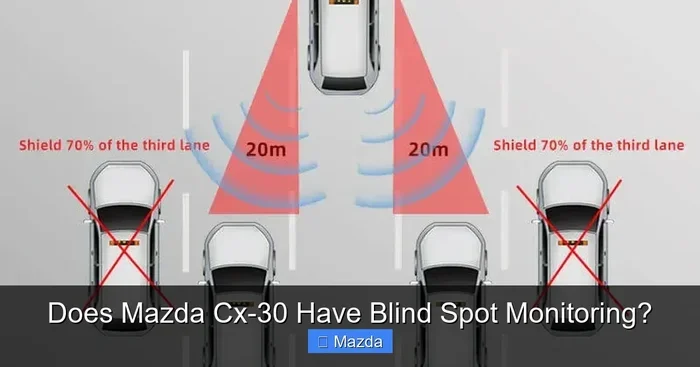
Blind spot monitoring on the Mazda CX-30 uses sensors mounted in the rear bumper and side mirrors. These sensors detect vehicles approaching from behind in your blind spots. When a car is detected, the system gives you a visual warning in the side mirror. If you activate the turn signal while a vehicle is in your blind spot, you’ll also hear an audible alert.
The system is designed to work at speeds above about 10 mph. It constantly scans the lanes beside and behind your vehicle. The coverage area is wide enough to catch vehicles in the adjacent lane, even if they are passing quickly. This makes it especially useful on highways and busy multi-lane roads.
How the System Works
The CX-30 uses radar-based sensors. They are hidden behind the rear bumper and side mirror trim pieces. The sensors constantly scan the areas beside and behind your vehicle. When the system detects a vehicle in those zones, it triggers the warning light in the corresponding side mirror. The light is usually a small amber or red icon that looks like a car with curved lines.
The system is part of Mazda’s i-Activsense suite. This suite bundles multiple driver-assist technologies together. It includes things like lane departure warning, adaptive cruise control, and rear cross-traffic alert. The blind spot monitoring works hand in hand with these features to give you a full picture of your surroundings. You can think of it as an extra set of eyes that never gets tired.
What the Warning Lights Look Like
The blind spot warning light appears on the outside of the side mirror. It’s a small LED icon. If you turn on your turn signal while a vehicle is in your blind spot, the light will flash rapidly. You’ll also hear a beep or chime inside the cabin. The combination of visual and audible alerts ensures you notice the danger even if you’re distracted.
Some drivers confuse the blind spot light with other warning lights. For example, you might wonder does low engine oil show on the dashboard? Yes, it does, but that’s a different system. The blind spot warning is separate and specifically for lane-change safety. If you see a steady light without signaling, it means a vehicle is detected in your blind spot. A flashing light means you’ve engaged the turn signal while a car is there.
Which Mazda CX-30 Trims Include Blind Spot Monitoring?
The availability of blind spot monitoring depends on the trim level and the model year. Mazda has updated the CX-30 over the years, and the feature has become more standard. Let’s look at the typical trim breakdown.
Standard vs. Optional Equipment
On the base 2024 Mazda CX-30, blind spot monitoring is often optional. It comes as part of a technology package. Higher trims like the Premium and Grand Touring include it as standard equipment. The top-tier Signature trim always includes it along with additional safety features.
Here’s a quick comparison table of the typical trim levels and blind spot monitoring availability:
| Trim Level | Blind Spot Monitoring | Notes |
|---|---|---|
| Base (2.5 S) | Optional (part of tech package) | Must add the technology package |
| Select (2.5 Select) | Optional | Often bundled with other packages |
| Premium (2.5 Premium) | Standard | Included on this trim and above |
| Grand Touring | Standard | Includes i-Activsense suite |
| Signature | Standard | Full safety and luxury package |
While the 2023 Mazda CX-5 offers a full suite of tech including Sirius radio, the CX-30 focuses more on driver-assist features like blind spot monitoring. Always check the window sticker or build sheet to confirm the exact features on a specific vehicle. The technology package often bundles blind spot monitoring with other useful features like a heads-up display and a premium audio system.
Model Year Differences
For model years before 2022, blind spot monitoring was more commonly an add-on option. Starting around 2022, Mazda began making it standard on more trims. If you’re buying a used CX-30, it’s important to verify the trim and option codes. A base model from 2020 might not have it unless the previous owner added the package.
You can also use a Mazda dealer lookup tool with the VIN. This will show you every factory-installed feature. It’s a quick way to confirm whether a specific CX-30 has blind spot monitoring. When shopping used, always ask the seller for the vehicle history report and the option codes. This saves you from guessing and ensures you know exactly what you’re getting.
The i-Activsense Safety Suite and Other Driver-Assist Features
The Mazda CX-30 blind spot monitoring doesn’t work alone. It’s part of a larger safety ecosystem called i-Activsense. This suite includes several advanced driver-assist features that work together to keep you safe. Understanding the full suite helps you appreciate how blind spot monitoring fits into the bigger picture.
Rear Cross-Traffic Alert
Rear cross-traffic alert uses the same sensors as blind spot monitoring. When you’re backing out of a parking spot, it warns you about approaching traffic from the sides. This is especially useful in busy parking lots where visibility is limited. The system can detect cars, pedestrians, and even bicycles in some cases. It’s a natural companion to blind spot monitoring and works seamlessly with it.
Lane Departure Warning and Lane Keep Assist
Lane departure warning alerts you if you start to drift out of your lane without a turn signal. Lane keep assist can gently steer the car back into the lane. These features complement blind spot monitoring by covering different angles around the vehicle. Together, they form a strong defense against common accident types like sideswipes and unintended lane departures.
Adaptive Cruise Control
Adaptive cruise control adjusts your speed to maintain a safe following distance. It uses radar to detect the vehicle ahead. When combined with blind spot monitoring, it provides a comprehensive safety net for highway driving. You can set your speed and let the car manage the distance, while the blind spot system watches the lanes beside you.
All of these features rely on the same sensor network. Keeping that network clean and unobstructed is essential for proper operation. A single dirty sensor can affect multiple systems at once.
Common Mistakes to Avoid with Blind Spot Monitoring
Even with a great system like the one in the CX-30, drivers can develop bad habits. Avoiding these common mistakes will help you get the most out of your blind spot monitoring.
- Relying solely on the system: Blind spot monitoring is a helper, not a replacement for checking your mirrors and looking over your shoulder. Always perform a shoulder check before changing lanes.
- Ignoring warning lights: If the blind spot light stays on constantly, don’t ignore it. It usually indicates a sensor fault or dirt buildup. Address it promptly to keep the system reliable.
- Modifying the bumper: Aftermarket bumpers, tow hooks, or license plate frames can block the sensors. If you install any bumper accessories, make sure they don’t cover the sensor locations.
- Assuming all trims are equal: Not every CX-30 comes with blind spot monitoring from the factory. Always verify the specific features on the vehicle you’re considering.
- Neglecting sensor cleaning: Mud, snow, and ice can cover the sensors and cause false warnings or system shutdowns. A quick wipe after a dirty drive can prevent headaches.
By staying aware of these pitfalls, you’ll keep the system working as intended. The goal is to enhance your awareness, not replace your own vigilance.
Can You Add Blind Spot Monitoring to a CX-30 That Doesn’t Have It?
Yes, you can add blind spot monitoring to a Mazda CX-30 that didn’t come with it from the factory. There are a few different ways to do this. The right choice depends on your budget and how integrated you want the system to be.
Aftermarket Blind Spot Detection Kits
Aftermarket blind spot detection kits are available from brands like TadiBrothers, iJDMTOY, and others. These kits typically include sensors that mount to the rear bumper and a warning unit that installs inside the cabin. The sensors are usually universal and can be adapted to fit the CX-30’s bumper shape.
Pros of aftermarket kits:
- Lower cost compared to dealership installation
- Can be installed on older model years
- Often include rear cross-traffic alert as well
Cons include potential wiring complexity and the fact that the warning lights may not be integrated into the factory side mirrors. Instead, you might get a small display on the dashboard. Some kits also require a professional installation to ensure the sensors are angled correctly.
Dealership Installation
Many Mazda dealerships can retrofit blind spot monitoring onto older CX-30s. They use OEM sensors and wiring harnesses. This ensures the system matches the factory look and integrates with the existing i-Activsense features. The dealership can also program the system to work with the factory instrument cluster and side mirror lights.
If you’re considering a dealership install, you might also wonder whether you can get your Mazda serviced anywhere. The answer is yes, but for this type of specialized work, a Mazda dealer has the software and training needed for proper calibration. They can also update the software to ensure the new sensors work with the existing safety systems.
The cost for a dealership retrofit can range from $500 to $1,200 depending on the model year and the specific sensors required. It’s a worthwhile investment if you value the factory integration and warranty coverage. An aftermarket kit installed by a professional might cost $300 to $600 total, including parts and labor.
Cost Considerations
Aftermarket kits typically cost between $150 and $400 for parts. Professional installation at an auto shop adds another $100 to $300. A dealership installation will be more expensive but offers the benefit of OEM parts and seamless integration. When deciding, consider the age of your CX-30 and how long you plan to keep it. If you’re keeping the car for many years, the dealership retrofit is a smart choice. If you’re on a tight budget, a quality aftermarket kit can still provide excellent protection.
Blind Spot Monitoring Maintenance and Common Issues
The Mazda CX-30 blind spot monitoring system is designed to be low maintenance. However, like any electronic system, it can encounter issues. Knowing how to keep it working properly will save you from false warnings or system failures.
Keeping Sensors Clean
The blind spot sensors are located in the rear bumper and near the side mirrors. Dirt, mud, snow, and ice can cover these sensors and cause the system to malfunction. If you notice the blind spot warning light coming on randomly, check the sensors first.
Cleaning the sensors is simple. Use a soft cloth and warm water. Avoid high-pressure washers directly at the sensor areas, as the force can damage the delicate electronics. In winter, clear snow from the rear bumper before driving. A quick wipe after a muddy off-road trip can also prevent false alerts.
Interestingly, not every transmission has a dipstick, and the CX-30’s blind spot sensors are similarly sealed, requiring no regular fluid checks. They are maintenance-free in that sense, but physical cleaning is still important. The sensors don’t need lubrication or fluid replacement, just a clear line of sight.
What to Do If the System Malfunctions
If the blind spot warning light stays on constantly or doesn’t turn off, there may be a fault. Common causes include a damaged sensor, a wiring issue, or a software glitch. Here’s what you can do:
- Check the sensors for dirt or debris and clean them.
- Inspect the rear bumper for any damage or aftermarket modifications that might block the sensors.
- Try resetting the system by turning the ignition off and on again.
- If the light persists, visit a Mazda dealership for a diagnostic scan.
A dealership technician can read the fault codes and determine if a sensor needs replacement. Most CX-30 models have two blind spot sensors per side, so a single sensor failure usually triggers the warning light. The technician can replace the sensor and recalibrate the system in most cases.
Expert Insights: Getting the Most Out of Your CX-30’s Blind Spot System
Experienced drivers and Mazda technicians share a few tips for maximizing the effectiveness of blind spot monitoring on the CX-30.
First, adjust your side mirrors properly before relying on the system. The blind spot sensors have a specific coverage area, and properly adjusted mirrors reduce the gaps even further. The Mazda manual includes a mirror adjustment procedure that takes just a few minutes.
Second, remember that the system works best at moderate speeds. It is designed for highway and suburban driving. In very slow traffic or parking lots, the system may not activate. That’s when rear cross-traffic alert and your own observation become even more important.
Third, if you frequently tow a trailer or carry a bike rack, be aware that these accessories can obstruct the sensors. Check the owner’s manual for guidance on accessory placement and sensor coverage. Some roof-mounted cargo carriers may also slightly affect the radar field.
Finally, keep your software up to date. Mazda occasionally releases updates that improve blind spot detection algorithms and reduce false alerts. A dealer visit for a routine service can include a software check at no extra cost.
Final Verdict: Is Blind Spot Monitoring Worth It on the CX-30?
Absolutely. The Mazda CX-30 blind spot monitoring system adds a significant layer of safety. It helps you change lanes with confidence, especially in heavy traffic or on busy highways. The system is unobtrusive when not active, and the alerts are clear and noticeable.
Even if you’re a careful driver, you can’t always see what’s in your blind spots. The CX-30’s sensors cover large areas and work reliably in most conditions. Combined with the rest of the i-Activsense suite, it makes the CX-30 one of the safer compact crossovers in its class.
If you’re buying a used CX-30, prioritize a trim that includes blind spot monitoring. If you already own one without it, a dealership retrofit or a quality aftermarket kit is a smart upgrade. The peace of mind alone is worth the cost. You’ll feel more confident every time you change lanes, and you’ll know you’ve taken an important step to protect yourself and your passengers.
Always remember to keep the sensors clean and address any warning lights promptly. A well-maintained blind spot monitoring system will serve you well for the life of your CX-30. Drive safely and enjoy the confidence that comes with this essential safety feature.
Frequently Asked Questions
What is blind spot monitoring on the Mazda CX-30?
Blind spot monitoring on the Mazda CX-30 uses radar sensors in the rear bumper and side mirrors to detect vehicles in your blind spots. When a car is detected, a warning light in the side mirror illuminates, and if you signal, an audible alert sounds. This system is part of the i-Activsense safety suite and significantly reduces the risk of lane-change collisions.
Which Mazda CX-30 trims come with blind spot monitoring?
Blind spot monitoring is standard on the CX-30 Premium, Grand Touring, and Signature trims. It is optional on the base and Select trims, usually bundled with a technology package. Always verify the specific features on a vehicle using the VIN lookup or the window sticker before purchasing.
Can I add blind spot monitoring to my Mazda CX-30 if it doesn’t have it?
Yes, you can add blind spot monitoring to a CX-30 that lacks it. You can choose an aftermarket blind spot detection kit for a lower cost, or have a Mazda dealership install OEM sensors for seamless integration. Dealership installation typically costs between $500 and $1,200 and ensures proper calibration with the existing safety systems.
How do I clean the blind spot sensors on my CX-30?
Use a soft cloth and warm water to gently wipe the sensors located in the rear bumper and near the side mirrors. Avoid high-pressure washers, as they can damage the sensors. Regular cleaning, especially in winter or after driving through mud, helps the system operate reliably and prevents false warnings.
Why is my blind spot warning light staying on in my CX-30?
A constantly illuminated blind spot warning light usually indicates a sensor fault, dirt covering the sensor, or a wiring issue. Start by cleaning the sensors and checking for bumper damage. If the light remains on, a Mazda dealership can run a diagnostic scan to identify the exact problem and recommend the proper repair.
Is blind spot monitoring worth it on the Mazda CX-30?
Yes, blind spot monitoring is a valuable safety feature that helps prevent lane-change accidents. It works alongside rear cross-traffic alert and lane departure warning to create a comprehensive safety net. For the relatively low cost of the feature, the peace of mind and potential insurance discount make it well worth having on any CX-30.