Toyota Corolla Clicking But Not Starting Here Is Why
A Toyota Corolla clicking but not starting usually means your battery, starter, or key fob needs attention. The sound you hear—whether a single click or rapid clicking—gives big clues about the root cause. This guide walks you through the most common reasons and simple fixes you can do yourself. You’ll also learn when to call a mechanic and how to prevent the problem from returning.
You turn the key or press the button, and all you hear is a fast click-click-click or a single firm click. Your Toyota Corolla is trying to start but falling short. That sound is actually helpful. It tells you the electrical system is alive, but something is stopping the engine from turning over.
A Toyota Corolla clicking but not starting can happen for many reasons. The good news is that most of them are easy to diagnose. You do not need to be a mechanic to figure out the next step. This guide breaks down every possible cause, from a simple dead battery to a tricky immobilizer glitch. You will also find quick fixes and tips to keep your Corolla healthy.
Let us start with the most common reason and work our way down. By the end, you will know exactly what to check and what to ignore.
Key Takeaways
- Dead battery: The #1 reason for a clicking Corolla. A voltage test takes two minutes and costs nothing.
- Starter solenoid failure: A single loud click often points to a worn starter motor or solenoid.
- Weak key fob battery: Push-button start models are especially vulnerable. A $5 battery fix can save a tow.
- Corroded terminals: Built-up grime on battery cables blocks power. Cleaning them is a quick DIY job.
- Immobilizer confusion: The car’s security system may reject the key, causing a click but no start.
- Fuel pump relay: A faulty relay kills the fuel supply, leading to a cranking but silent engine.
- When to call a pro: If jump-starting fails and the lights stay bright, the starter or immobilizer likely needs a technician.
📑 Table of Contents
Why Does My Toyota Corolla Click But Not Start?
The clicking noise comes from the starter circuit. When you turn the ignition, the battery sends power to the starter motor. The solenoid engages the gear, and the engine should crank. If any part of that chain fails, you hear a click instead of a roar.
Here is the key: the type of click matters. A single click usually means the solenoid is trying to engage but cannot. Rapid clicking means the battery has power but not enough to turn the starter motor. Both patterns point to different fixes.
The Single Click
A single, firm click often comes from the starter solenoid. The solenoid receives the signal but the starter motor does not spin. This can mean a bad starter, a seized engine, or a broken electrical connection. It can also point to a neutral safety switch that is not reading “Park” or “Neutral.”
The Rapid Clicking
If you hear a fast click-click-click that repeats, your battery is the likely culprit. The battery has just enough voltage to activate the solenoid but not enough to crank the engine. The starter motor tries to turn and then gives up. This cycle repeats as a rapid series of clicks. This is the most common reason for a Toyota Corolla clicking but not starting and the easiest to fix.
| Clicking Pattern | Likely Cause | First Step |
|---|---|---|
| Single click | Starter solenoid, bad starter, neutral safety switch | Check if gear is in Park or Neutral |
| Rapid clicking | Weak or dead battery, corroded terminals | Test battery voltage |
| No click, dash lights dim | Bad battery cable, parasitic draw | Inspect battery terminals |
| Click, then nothing, dash lights normal | Fuel pump relay, ignition switch, immobilizer | Listen for fuel pump hum |
If you want to test your battery safely, check out this guide on How Do I Check My Car Battery. It walks you through using a multimeter in plain English.
The Usual Suspect: A Dead Battery
A dead battery causes most no-start situations. Your Corolla’s battery powers the starter, lights, and computer. When the voltage drops below 12 volts, the starter struggles. At 11.5 volts or lower, you will often hear rapid clicking and nothing else.
Batteries age over time. The average car battery lasts three to five years. Cold weather makes this worse because it slows the chemical reaction inside the battery. If your Corolla sits for a long time, the battery can drain to a point where it cannot start the engine.
How To Test Your Corolla’s Battery
You need a simple digital multimeter. Set it to DC voltage. Touch the red probe to the positive terminal and the black probe to the negative terminal. A healthy battery reads 12.6 volts or higher when the engine is off.
- 12.6V or above: Battery is fully charged.
- 12.4V: 75% charged. Startable but weak.
- 12.2V: 50% charged. May struggle to start.
- Below 11.9V: Dead or deeply discharged.
If the voltage is low, try a jump start. If the car starts and runs fine, your battery is the problem. You can also check for corroded terminals. White or blue-green buildup on the battery posts blocks current flow. Cleaning the terminals with a wire brush often restores full power.
When To Replace The Battery
If your battery is more than four years old and fails a load test, replace it. A new Toyota Corolla battery costs around $150 to $250 at a parts store. Many shops will install it for free. Do not keep jump-starting a weak battery. It can damage the alternator and leave you stranded again.
Starter Motor And Solenoid Problems
The starter motor is a small but powerful electric motor. It spins the engine until it fires. The solenoid acts as a heavy-duty switch that sends battery power to the starter. When either part fails, you get a Toyota Corolla clicking but not starting condition.
What The Starter Solenoid Does
When you turn the key or press the start button, the ignition switch sends a small signal to the solenoid. The solenoid then closes a heavy contact, allowing the full battery current to flow to the starter motor. You hear a single click when the solenoid engages. If the starter motor is good, the engine should crank immediately after that click.
Signs Of A Failing Starter
- Single click, no crank: The solenoid engages but the motor does not turn. The starter is burned out or the engine is seized.
- Grinding noise: The starter gear is worn and does not mesh properly with the flywheel.
- Intermittent starting: The starter works sometimes and fails other times. This often means the brushes are worn.
- Clicking only when you tap the starter: A light tap with a wrench can temporarily free a stuck starter. This is a classic sign of a dying motor.
Starter replacement is a job for a mechanic. The part costs $200 to $400, and labor adds another $100 to $200. However, a quick tap on the starter body can sometimes bump the brushes into contact and get you home. Use this only as a temporary fix.
Key Fob And Immobilizer Issues
Modern Toyota Corollas use a push-button start system with a smart key fob. The car must recognize the fob before it will allow the engine to start. If the fob battery is weak or the immobilizer system has a glitch, you will hear a click but the engine will not crank.
Weak Key Fob Battery
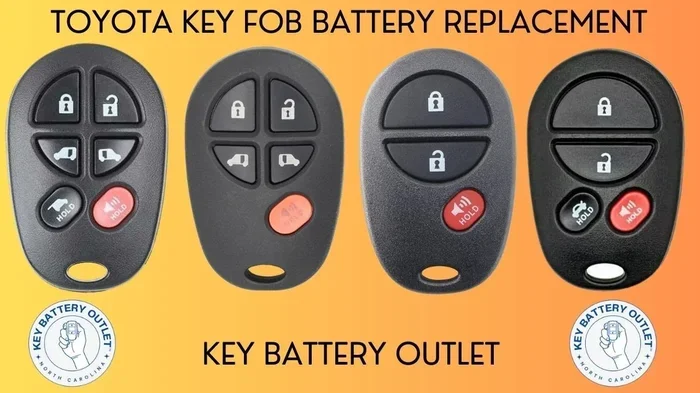
The key fob uses a small coin-cell battery. When that battery gets low, the fob cannot broadcast its signal strongly enough. The car’s immobilizer does not see the fob, and it refuses to start. You might still be able to unlock the doors or open the trunk, but the start function fails.
A Toyota Corolla clicking but not starting with a push-button start system is often a key fob battery problem. Replacing the battery takes 30 seconds. Most Corolla fobs use a CR2032 battery. You can find them at any drugstore for under $5.
If you are not sure whether your fob battery is weak, check out How Do I Know If My Key Fob Needs A New Battery. It covers the warning signs and how to swap the battery safely.
Immobilizer Not Recognizing The Key
The immobilizer is a security feature that prevents theft. It stores a unique code in the key’s chip. When you insert the key or hold the fob near the start button, the car checks the code. If the code does not match, the immobilizer blocks the starter and fuel injection.
Sometimes the immobilizer gets confused. A dead key fob battery is the usual cause, but water damage or a faulty antenna ring around the ignition can also break the communication. If you have a spare fob, try it. If the spare works, the original fob battery or chip is the problem.
For deeper immobilizer troubleshooting, read How Do I Fix My Immobiliser Problem. It explains how to reset the system and when to seek help.
Fuel System And Ignition Troubles
Less common but still possible, fuel and ignition issues can cause a Toyota Corolla clicking but not starting. The engine needs spark, fuel, and compression to run. If the fuel pump or ignition switch fails, the starter may crank the engine but it will not fire. In some cases, you will hear a single click and nothing else.
Faulty Fuel Pump Relay
The fuel pump relay sends power to the electric fuel pump. When you turn the key to the “ON” position, you should hear a faint hum from the back of the car for two to three seconds. That hum primes the fuel system. If the relay is bad, the pump does not run, and the engine has no fuel.
A bad fuel pump relay often causes the car to crank for a long time before dying or not starting at all. The starter motor works fine, but the engine does not catch. You can swap the relay with a similar one in the fuse box to test it. Relays are cheap and easy to replace.
Ignition Switch Wear
The ignition switch sends power to the starter circuit when you turn the key. Over time, the internal contacts wear out. You might notice that the car starts inconsistently. Sometimes you have to wiggle the key or push the push-button start harder. A worn ignition switch can also cause the accessory circuit to fail, so the radio and lights flicker when you try to start.
Replacing an ignition switch is a moderate repair. The part costs $100 to $300, and labor depends on the model year. If you suspect the ignition switch, a mechanic can test it with a multimeter and confirm the diagnosis.
Quick Fixes And When To Seek Help
Not every Toyota Corolla clicking but not starting problem requires a tow. Here are a few things you can try right now.
Jump-Starting Safely
Jump-starting a dead battery is safe if you follow the correct order. Connect the red clamp to the positive terminal of the dead battery. Connect the other red clamp to the positive terminal of the good battery. Then connect the black clamp to the negative terminal of the good battery. Finally, connect the last black clamp to an unpainted metal surface on the dead car’s engine block, away from the battery.
Start the good car and let it run for two minutes. Then try starting the Corolla. If it starts, let it run for at least 15 minutes to recharge the battery. Remove the cables in reverse order. Never let the clamps touch each other.
If the car starts but dies again immediately, the alternator may not be charging the battery. In that case, you should have the alternator tested. You can learn more about alternator health in How Do I Know If My Alternator Is Still Good.
Pedal Trick For Push-Button Start
On some Corolla models, you can start the car by pressing the start button while lightly pressing the brake pedal and holding the fob against the start button. This bypasses the antenna ring and uses the fob’s backup transmitter. It works if the fob battery is dead but the chip is still readable. This is a temporary fix until you replace the battery.
Preventive Maintenance Tips
You can avoid most Toyota Corolla clicking but not starting situations with simple habits.
- Check the battery age: Write the installation date on the battery case. Replace it every four years as a precaution.
- Clean the terminals: Inspect the battery posts twice a year. Use a wire brush and a baking soda solution to remove corrosion.
- Replace the key fob battery: Change the CR2032 battery every two years, even if the fob still works. A weak battery can cause intermittent no-start issues.
- Avoid short trips: Short drives do not fully recharge the battery. Take the car on a longer drive at least once a week.
- Listen for the fuel pump hum: Turn the key to “ON” (do not start) and listen for a two-second hum. No hum means a possible relay or pump issue.
Common Mistakes To Avoid
- Ignoring the single click: People often think a single click means the battery is fine. It can actually be a bad starter or neutral safety switch.
- Tapping the starter too hard: A light tap can help, but hitting it with a hammer can damage the bearings.
- Charging a frozen battery: If the battery is frozen (no acid movement), do not charge it. It can explode. Let it thaw first.
- Using the wrong battery: Always match the group size and cold cranking amps (CCA) to your Corolla’s specifications.
Expert Insights
Experienced technicians say that the first thing to check when a Corolla clicks is the battery voltage under load. A battery that reads 12.6 volts at rest might drop to 9 volts when the starter tries to turn. That drop reveals a weak battery that passes a static test but fails under demand. A load tester gives a much clearer picture than a simple voltage check.
Another tip: if the car has been sitting for a long time, the parasitic draw might have drained the battery. Modern cars have computers that draw a small amount of power even when off. A normal parasitic draw is less than 50 milliamps. Anything higher means an electrical component is staying awake and slowly draining the battery.
Finally, do not overlook the simple things. Make sure the gear selector is fully in “Park” or “Neutral.” A slightly misaligned shifter can prevent the neutral safety switch from closing. This is one of the most common reasons for a single click and no start, and it costs nothing to fix.
Conclusion
A Toyota Corolla clicking but not starting is almost always a simple problem with a clear solution. Start with the battery. Test the voltage and clean the terminals. If the battery is good, listen to the type of click. A single click points to the starter or neutral safety switch. Rapid clicking points to a weak battery or corroded cables. Do not forget the key fob battery, especially if your Corolla has a push-button start system.
Most of these fixes take less than an hour and cost under $50. You can save hundreds of dollars in towing fees by doing a little detective work first. If you have tried everything and the car still clicks, it is time to visit a trusted mechanic. They can test the starter, fuel pump, and immobilizer with professional tools.
Keep this guide handy. Share it with a friend who is stuck in the driveway. A little knowledge turns a frustrating morning into a quick fix and gets you back on the road with confidence.
Frequently Asked Questions
Why does my Toyota Corolla click once but not start?
A single click usually means the starter solenoid is engaging but the starter motor is not turning. This can be caused by a bad starter motor, a seized engine, or a faulty neutral safety switch. Check that the gear is fully in Park or Neutral first. If the problem persists, the starter likely needs replacement.
Can a weak key fob battery cause a no-start condition?
Yes, absolutely. Modern Toyota Corollas with push-button start rely on the key fob to communicate with the car’s immobilizer. A low fob battery weakens the signal, and the car may refuse to start even though the dashboard lights come on. Replacing the CR2032 battery in the fob often fixes this instantly.
How do I know if my battery is too dead to jump start?
If the battery voltage is below 10.5 volts, it may not accept a jump start and could be deeply discharged or damaged. Also, if the battery case is swollen or frozen, do not attempt a jump start. In those cases, a new battery is the only solution.
Is it safe to keep trying to start my Corolla if it clicks?
Wait at least 10 seconds between attempts. Continuous clicking drains the battery further and can overheat the starter motor. Let the battery rest for a minute or two before trying again. If the third attempt fails, stop and use a charger or seek a jump start.
What is the cost to fix a starter motor on a Toyota Corolla?
A new starter motor part typically costs $200 to $400. Labor adds $100 to $200 at most shops. The total repair usually falls between $300 and $600. Some independent mechanics offer lower rates than dealerships, so it pays to get a quote before committing.
How can I prevent my Corolla from clicking and not starting in the future?
Replace the battery every four years, clean the terminals twice a year, and swap the key fob battery every two years. Avoid leaving lights or accessories on when the engine is off. Take the car on a drive of at least 20 minutes once a week to keep the battery fully charged.