Where Is the TPMS Reset Button Located on Your Car
The TPMS reset button location varies by vehicle, but it is usually found under the steering column, on the dashboard, or inside the glove box. Knowing where your TPMS reset button is saves time and money. This guide covers every common location and gives you clear steps to reset your system in minutes.
Have you ever been driving down the road and suddenly spotted a yellow light on your dashboard shaped like a horseshoe with an exclamation mark? That is your TPMS warning light, and it means your tire pressure monitoring system has detected something is off. Maybe one of your tires is low on air. Maybe a sensor needs attention. Either way, your first instinct might be to panic a little. But here is the good news.
In most cases, you can fix this yourself in just a few minutes. The key is knowing where the TPMS reset button is located on your specific vehicle. Once you find it, the reset process is usually straightforward. This guide walks you through every common location, every step, and every thing you need to know to get that light turned off and stay safe on the road.
We have helped thousands of car owners tackle this exact problem. Whether you drive a sedan, a truck, or an SUV, this article has you covered. Let us dive in.
Key Takeaways
- Multiple locations exist: The TPMS reset button can be under the steering wheel, on the dashboard, inside the glove box, or near the center console.
- It depends on your car: Different makes and models place the button in different spots, so always check your owner’s manual first.
- Resetting is simple: Most vehicles require just a few steps to reset the tire pressure monitoring system.
- Dashboard warnings matter: A flashing TPMS light often signals low tire pressure or a sensor issue that needs attention.
- You can check tire pressure from the dashboard: Many modern cars let you view tire pressure readings without leaving the driver’s seat.
- After filling air, you may need to reset: Adding air to your tires sometimes requires a TPMS reset to clear the warning light.
📑 Table of Contents
- What Is a TPMS Reset Button and Why Does It Matter?
- Where Is the TPMS Reset Button Located?
- How to Reset Your TPMS Step by Step
- Common TPMS Problems and How to Fix Them
- TPMS Reset Button Location by Car Brand
- Tips to Keep Your TPMS Working Properly
- When to See a Professional
- Key Takeaways
- Frequently Asked Questions
- Conclusion
What Is a TPMS Reset Button and Why Does It Matter?
The tire pressure monitoring system, or TPMS, is a safety feature in modern vehicles. It uses sensors inside each tire to monitor air pressure in real time. When pressure drops below the recommended level, the system triggers a warning light on your dashboard. This is not just a nuisance. Low tire pressure can lead to poor fuel economy, uneven tire wear, and even blowouts.
The TPMS reset button is the tool that tells your car, “Hey, the problem is fixed. You can stop warning me.” After you check your tire pressure and add air as needed, pressing this button clears the warning and resets the system. Without it, that annoying light stays on even after you have fixed the issue.
Here are the main reasons you might need to use the TPMS reset button:
- You have added air to one or more tires
- You have replaced a tire or rotated your tires
- A TPMS sensor battery has been replaced
- The system needs recalibration after a sensor repair
- The light stays on even though your tires are at the correct pressure
Where Is the TPMS Reset Button Located?
The TPMS reset button location is different for every car. Automakers place it in various spots depending on the vehicle’s design. Below are the most common locations you will find it in.
Under the Steering Wheel
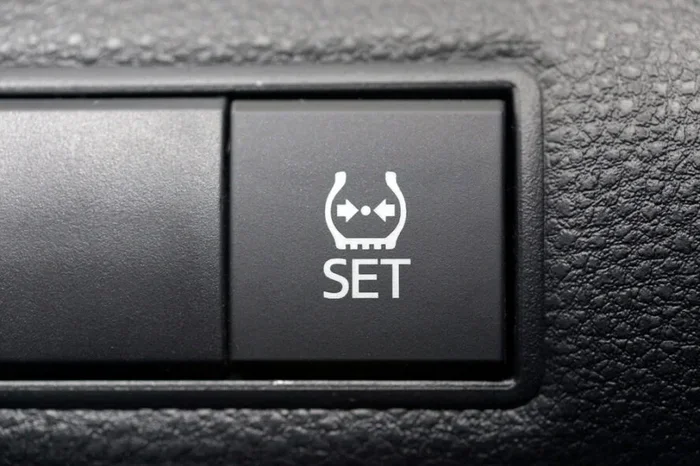
This is the most common spot across many vehicle brands. Look directly below the steering column, on the lower left side of the dashboard. You may need to feel around with your hand because the button is often small and flush with the panel. In many Toyota, Honda, and Ford models, this is exactly where you will find it. It usually has an icon that looks like a tire with an exclamation point.
On the Dashboard Near the Instrument Cluster
Some vehicles place the reset button on the right side of the dashboard, near the instrument cluster or the turn signal lever. You might need to look closely because it can be tucked behind the steering column cover. Check your owner’s manual to confirm whether your car uses this location.
Inside the Glove Box
In certain models, particularly some Chrysler and Dodge vehicles, the TPMS reset button is tucked inside the glove compartment. Open the glove box, look at the side panels or the bottom, and you might see a small button labeled “TPMS” or “Reset.” This is a less obvious spot, which is why many drivers miss it.
Near the Center Console or Shift Lever
A few vehicles, especially some newer models, place the button near the center console, close to the gear shift. It could be on the left side of the console or even embedded in the center stack. Again, this varies widely by make and model.
There Is No Physical Button
Here is something important to know. Not all cars have a physical TPMS reset button. Some newer vehicles, particularly certain luxury brands and electric cars, let you reset the system through the infotainment screen. In these cases, you go to the settings menu, find the vehicle or tire section, and select “Reset TPMS.” If your car does not have a physical button, check the touchscreen or consult your manual.
How to Reset Your TPMS Step by Step
Now that you know where to look, let us walk through the actual reset process. The steps are similar across most vehicles, but small details can vary.
Step 1: Check Your Tire Pressure First
Before you reset anything, make sure your tires are properly inflated. Use a tire pressure gauge to check each tire, including the spare. The recommended pressure is listed on a sticker inside the driver’s door frame or in your owner’s manual. If any tire is low, add air until it reaches the correct level. Resetting the system with a low tire will just cause the light to come back on.
Step 2: Turn the Key to the On Position
Insert your key into the ignition and turn it to the “On” position. Do not start the engine. The dashboard lights should illuminate, but the engine itself should not be running. In push-button start vehicles, simply press the start button without stepping on the brake pedal.
Step 3: Find and Press the Reset Button
Locate the TPMS reset button in one of the spots we discussed above. Press and hold it until you see the TPMS warning light on the dashboard blink three times. This confirms the system has entered reset mode.
Step 4: Start the Engine and Drive
Turn the engine on and drive the vehicle for about 20 minutes at a steady speed. The system will recalibrate and the warning light should turn off. If it does not turn off after driving, you may need to repeat the process or check for a sensor issue.
Step 5: Verify the Reset Was Successful
After driving, check your dashboard. The TPMS light should be off. If you can view tire pressure readings on your dashboard display, confirm that all four tires show the correct pressure. If the light stays on, there may be a deeper issue, such as a faulty sensor or a slow leak.
Common TPMS Problems and How to Fix Them
Sometimes resetting the TPMS does not solve the problem right away. Here are the most common issues drivers face and what to do about them.
The TPMS Light Comes Back After Resetting
If the light returns shortly after a reset, one of your tires likely still has low pressure. Go back and recheck every tire with a gauge. Even a small loss of a few PSI can trigger the warning. Temperature changes also affect tire pressure, so a cold morning can cause the light to pop on even if everything was fine the day before.
All Four Tires Show Correct Pressure but the Light Stays On
This usually means a TPMS sensor has failed or its battery is dead. Each sensor has a small battery that typically lasts 5 to 10 years. When the battery dies, the sensor cannot communicate with the car’s computer. You will need to replace the sensor. A mechanic or a dealership can help with this, and in many cases, a dealership can change your key fob battery and handle TPMS sensor replacements in the same visit.
The TPMS Light Flashes Instead of Staying Solid
A flashing TPMS light often indicates a more serious problem. It could mean a sensor is malfunctioning or there is a communication issue between the sensors and the car’s computer system. Do not ignore a flashing light. Have the system diagnosed as soon as possible.
You Recently Filled Your Tires with Air
If you just topped off your tires at a gas station, you will likely need to reset TPMS after filling air. The system needs to be told that the pressure has been corrected. Simply follow the reset steps we outlined above, and the light should clear up.
TPMS Reset Button Location by Car Brand
To make things even easier, here is a quick reference guide for where to find the TPMS reset button on some popular car brands. Keep in mind that model years can change the location, so always double-check with your owner’s manual.
| Brand | Common TPMS Reset Button Location |
|---|---|
| Toyota | Under the steering wheel, lower left of the dashboard |
| Honda | Under the steering wheel, left side |
| Ford | Under the steering wheel or on the left side of the dashboard |
| Chevrolet | Under the steering wheel or in the glove box |
| Jeep | Under the steering wheel or accessed through the infotainment screen |
| Nissan | Under the steering wheel, left side |
| BMW | Through the iDrive infotainment system (no physical button in many models) |
This table gives you a quick starting point. But remember, it is not a substitute for your vehicle-specific owner’s manual. When in doubt, search for your exact model and year online to confirm the location.
Tips to Keep Your TPMS Working Properly
The tire pressure monitoring system is designed to keep you safe, but it needs a little care to work well over time. Here are some practical tips.
- Check your tire pressure monthly. Do not wait for the TPMS light to come on. Regular checks catch slow leaks early.
- Replace TPMS sensor batteries when needed. Most sensors use a small coin-cell battery that lasts about 5 to 10 years.
- Reset the system after any tire service. Whether you rotated your tires, replaced a tire, or just added air, a quick reset keeps the system accurate.
- Do not ignore the warning light. A steady TPMS light means check your pressure soon. A flashing light means get it checked immediately.
- Keep your tires properly inflated for fuel efficiency. Correct tire pressure improves gas mileage and extends tire life.
When to See a Professional
Most of the time, resetting your TPMS is a quick DIY job. But there are situations where professional help is the right call. If you have followed all the steps and the light still will not go off, there could be a faulty sensor, a wiring issue, or a problem with the car’s computer module. A qualified mechanic can run a diagnostic scan and pinpoint the exact issue. Similarly, if you notice one tire pressure reading is consistently different from the others, even after adding air, a sensor may need replacement.
Also, if you are unsure where your TPMS reset button is located, do not guess. Spend five minutes reading your owner’s manual or searching online for your specific vehicle. Finding the right spot the first time saves frustration and prevents you from pressing random buttons on your dashboard.
Key Takeaways
- Multiple locations exist: The TPMS reset button can be under the steering wheel, on the dashboard, inside the glove box, or accessible through the infotainment screen.
- It depends on your car: Different makes and models place the button in different spots, so always check your owner’s manual first.
- Resetting is simple: Most vehicles require just a few steps to reset the tire pressure monitoring system.
- Dashboard warnings matter: A flashing TPMS light often signals low tire pressure or a sensor issue that needs attention.
- You can check tire pressure from the dashboard: Many modern cars let you view tire pressure readings without leaving the driver’s seat.
- After filling air, you may need to reset: Adding air to your tires sometimes requires a TPMS reset to clear the warning light.
Frequently Asked Questions
Can I drive with the TPMS light on?
You can drive short distances with the TPMS light on, but it is not recommended. The light means one or more tires are underinflated, which can affect handling, braking, and fuel economy. Check your tire pressure as soon as possible and add air if needed. If the light is flashing, stop driving and have the vehicle inspected.
How much does it cost to replace a TPMS sensor?
Replacing a single TPMS sensor typically costs between 50 and 100 dollars per sensor, including parts and labor. Some vehicles have sensors that are integrated into the valve stem, which can make replacement a bit more involved. If you are also having your tires serviced, ask the shop to check the sensors at the same time.
How often should I check my tire pressure?
You should check your tire pressure at least once a month and before any long road trips. Temperature changes can cause pressure to drop, so checking more often during seasonal shifts is a smart habit. A simple tire pressure gauge from any auto parts store makes this quick and easy.
Does checking tire pressure on the dashboard replace a physical gauge?
Many modern vehicles display tire pressure readings on the dashboard, but these readings are not always perfectly accurate. It is still a good idea to use a physical tire pressure gauge for an exact reading. The dashboard display is great for a quick check, but a manual gauge gives you the precision you need when adjusting pressure.
Can low tire pressure cause the check engine light to come on?
In most vehicles, low tire pressure triggers the TPMS light specifically, not the check engine light. However, some cars may display a general warning if the issue is severe or if multiple systems are affected. If both lights are on, check your tire pressure first and then have the vehicle scanned for diagnostic codes if the problem persists.
Do I need to reset TPMS after replacing a tire?
Yes, you should reset the TPMS after replacing a tire, rotating tires, or adding air. The system needs to recalibrate to recognize the new pressure levels. The reset process is simple and usually takes just a few minutes. If you are unsure where your reset button is, refer to your owner’s manual or search online for your specific vehicle model.
Conclusion
Finding and using the TPMS reset button is one of the simplest car maintenance tasks you can do. Once you know where the TPMS reset button is located on your vehicle, the whole process takes less than five minutes. Whether it is hidden under the steering wheel, tucked in the glove box, or accessible through your infotainment screen, the reset procedure is almost always the same: check pressure, add air if needed, press the reset button, and drive for a few minutes.
Do not let that yellow warning light stress you out. With the right knowledge and a little confidence, you can handle it yourself and keep driving safely. Make tire pressure monitoring part of your regular car care routine, and you will save money on fuel, tires, and unnecessary trips to the mechanic. Your car will thank you, and so will your wallet.