What Is the Difference Between Transponder Key and Chip Key
A transponder key and a chip key are often used as the same thing, but they have key differences. A transponder key sends a signal to your car’s immobilizer system, while a chip key uses a small computer chip to prove you are the rightful owner. Understanding this helps you choose the right car key replacement and keep your vehicle immobilizer working properly.
Key Takeaways
- Transponder keys and chip keys are not the same thing: Each has a unique function and technology.
- Transponder keys use radio signals: They communicate with your car’s immobilizer system to start the engine.
- Chip keys rely on embedded microchips: These store a security code that must match your car’s system.
- Both boost car security: They act as anti-theft devices that make hot-wiring much harder.
- Key programming is essential: A car locksmith can program both types of keys for you.
- Replacement costs vary: Transponder keys tend to cost more than basic chip keys.
- Regular maintenance helps: Keep your key battery fresh and your key clean for best performance.
📑 Table of Contents
- What Is the Difference Between a Transponder Key and a Chip Key?
- What Is a Transponder Key?
- What Is a Chip Key?
- How Do Transponder Keys and Chip Keys Work?
- Transponder Key vs Chip Key: Key Differences
- When Do You Need a Car Key Replacement?
- Tips to Keep Your Automotive Key Working Great
- Expert Insights on Key Technology
- Final Thoughts
What Is the Difference Between a Transponder Key and a Chip Key?
Transponder key and chip key are terms that get thrown around a lot. Many people use them as if they mean the same thing. But they actually refer to two different types of automotive key technology. Knowing the difference can save you time, money, and a lot of frustration.
Your car key does more than just turn the ignition lock. It communicates with your vehicle’s car security system. This communication is what allows the engine to start. Without the right signal, your car simply will not turn on. That is where transponder keys and chip keys come in.
In this article, we will break down exactly how each type of key works. We will look at their differences, their similarities, and why it all matters for your car key replacement needs. By the end, you will know exactly what kind of key your car uses and how to keep it working.
Let us dive in and clear up the confusion once and for all.
What Is a Transponder Key?
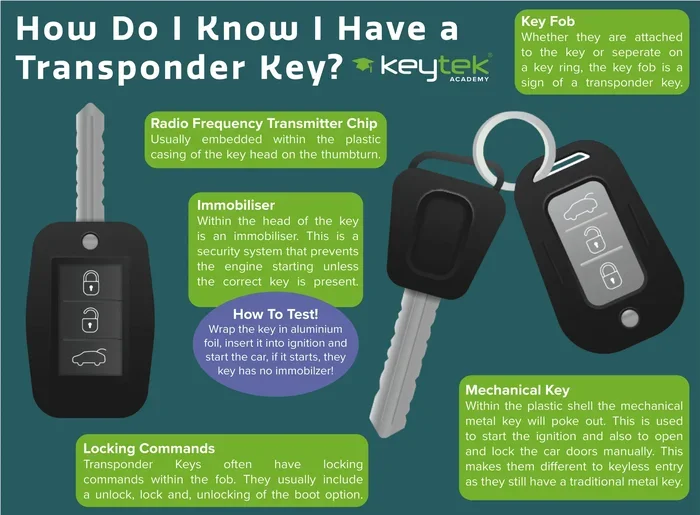
A transponder key is a smart automotive key that has a tiny radio transmitter inside. The word transponder comes from “transmitter” and “responder.” When you insert the key into the ignition lock, it sends a signal to the car. The car then checks if that signal matches its security code.
How Does a Transponder Key Work?
Here is the simple process. You put the key in the ignition. The car’s immobilizer system sends out a low-level radio signal. The transponder chip in the key picks up that signal. It then sends back a unique response. If the response matches, the engine starts. If it does not match, the car stays locked.
This whole process happens in milliseconds. You do not even notice it is happening. But it is a powerful anti-theft device. Without the right key, a thief cannot simply hot-wire the car.
Common Cars That Use Transponder Keys
Most modern vehicles use transponder keys. Here are some examples:
- Ford models from the mid-1990s onward
- Toyota and Honda vehicles
- Chevrolet and GMC trucks and SUVs
- BMW and Mercedes-Benz luxury cars
- BMW smart key systems
Almost every new car on the road today uses some form of transponder technology. This has made car theft much harder for criminals.
What Is a Chip Key?
A chip key is a type of automotive key that contains a small embedded microchip. This chip stores a unique security code. When you insert the key, the car reads that code. If the code matches, the engine start process begins.
People often confuse chip keys with transponder keys. And that is understandable. The two technologies are closely related. But there is an important difference in how they send and receive signals.
How Does a Chip Key Work?
A chip key does not have its own battery or transmitter. Instead, it relies on the energy from the car’s RFID technology reader. When the key enters the ignition, the reader sends a signal. The chip in the key uses that energy to send back its stored security code.
Think of it like a passive tag at a store. It does not need power. It only responds when it is scanned. That is exactly how a chip key works.
Types of Chip Keys
There are a few different types of chip keys you may encounter:
- Fixed-code chip keys: These always send the same code. They are older and less secure.
- Rolling-code chip keys: These change the code every time you use them. They are much safer.
- Encrypted chip keys: These use advanced encryption. They are found in newer luxury vehicles.
Each type offers a different level of car security system protection. Your car locksmith can help you identify which type you have.
How Do Transponder Keys and Chip Keys Work?
Both types of keys use similar basic ideas. They both rely on a small chip. They both communicate with your car’s immobilizer system. But the way they send and receive signals is different.
A transponder key actively sends a radio signal. It has its own tiny transmitter. A chip key passively responds to a signal from the car. It does not send anything on its own until it is scanned.
This difference matters when it comes to key programming and key duplication. Transponder keys need more complex programming. Chip keys are usually simpler to duplicate. But both require special equipment.
Let us look at a quick side-by-side comparison of how each one operates.
| Feature | Transponder Key | Chip Key |
|---|---|---|
| Signal Type | Active radio signal | Passive response only |
| Power Source | Built-in transmitter | Uses car reader energy |
| Security Level | High | Medium to High |
| Programming Complexity | Moderate to Complex | Simple to Moderate |
| Common Use | Modern vehicles | Older and mid-range models |
| Anti-theft Device Strength | Very Strong | Strong |
As you can see, both types offer strong protection. But transponder keys tend to be more advanced.
Transponder Key vs Chip Key: Key Differences
Now let us get to the heart of the matter. What exactly sets these two apart? Here are the main differences you need to know.
1. Signal Transmission
A transponder key actively sends a signal to the car. It broadcasts its transponder signal the moment it enters the ignition. A chip key waits to be asked. It only responds when the car sends out a signal first.
This makes transponder keys slightly faster in communication. But more importantly, it makes them harder to copy.
2. Security Level
Transponder keys generally offer better security. They use rolling codes that change every time. This means a copied signal will not work the next time you start the car.
Chip keys can also be very secure. But older fixed-code chip keys can be more vulnerable. A thief with the right equipment might be able to clone the code.
3. Cost of Replacement
Replacing a transponder key usually costs more. The technology is more advanced. Key programming requires specialized tools. A chip key replacement is often cheaper, especially for older models.
On average, a transponder key replacement can cost between 50 and 200 dollars. A basic chip key replacement might cost between 20 and 100 dollars. But prices vary based on your car make and model.
4. Key Programming Needs
Both types of keys need professional key programming. You cannot just walk into a store and get a working copy. A car locksmith or dealership will need to program the new key to match your car’s security code.
Transponder keys require more advanced programming equipment. Chip keys may need simpler tools. But either way, do not try to program a key yourself unless you are trained.
5. Battery Requirements
Some transponder keys have a battery. This powers the key fob functions like remote keyless entry. A basic chip key usually does not need a battery. It gets all the power it needs from the car’s reader.
If your key fob stops working, check the key battery first. It is a simple fix that can save you a trip to the locksmith.
When Do You Need a Car Key Replacement?
There are several situations where you might need a car key replacement. Knowing the signs can help you act before you get locked out.
Signs You Need a New Key
- Your key is physically damaged or broken
- The car does not recognize the key anymore
- You have lost your only working key
- The key battery keeps dying even after replacement
- The ignition lock feels stiff or stuck
- You bought a used car without the original key
Where to Get a Replacement
You have a few options for car key replacement. You can go to a dealership. You can call a car locksmith. Or you can use an online key replacement service.
Dealerships are often the most expensive option. A car locksmith is usually more affordable and faster. Online services can be convenient but make sure they are reputable.
Can You Duplicate a Transponder or Chip Key?
Yes, but it is not as simple as copying a regular key. Both transponder and chip keys need to be programmed to your specific car. A professional car locksmith can duplicate and program both types of keys for you.
Do not try to buy a blank key online and program it yourself. You could end up with a key that does not work. That wastes your time and your money.
Tips to Keep Your Automotive Key Working Great
Your automotive key is an important part of your daily routine. Taking care of it can save you from unexpected problems. Here are some simple tips to keep your key in top shape.
1. Replace the Key Battery Regularly
If your key has a fob with buttons, the key battery will need replacing. Most batteries last one to two years. Keep a spare battery in your glove box. This way, you are always ready.
2. Protect the Key from Damage
Do not drop your key. Do not expose it to extreme heat or water. A damaged chip inside the key can stop it from working. Keep your key in a safe place when it is not in use.
3. Get a Spare Key Made
Always have a backup key. If you lose your only key, getting a car key replacement can be expensive and stressful. A spare key gives you peace of mind.
4. Keep the Key Clean
Dirt and grime can build up around the chip. This can interfere with the transponder signal. Wipe your key down regularly with a soft cloth. A little maintenance goes a long way.
5. Know Your Car’s Security System
Understanding your vehicle immobilizer helps you troubleshoot problems. If your car will not start, check the key first. Often, the issue is a dead battery or a damaged chip. Before you call for help, do a quick check.
Quick Tips Box
Quick Tips:
- Always keep your spare key in a different location than your primary key.
- Write down your car’s security code and store it safely.
- Have your car locksmith program a backup key every few years.
- Never ignore warning signs like a flickering dashboard light when you insert the key.
Common Mistakes to Avoid
Here are some mistakes people make with their transponder key and chip key:
- Ignoring the key fob battery: A dead battery means no remote entry. Replace it before it dies completely.
- Trying to copy the key at a regular store: Most copy shops cannot program transponder or chip keys.
- Using the wrong key type: Not all keys work with all cars. Always confirm the key type for your vehicle.
- Delaying replacement after a loss: The longer you wait, the higher the risk of theft.
Expert Insights on Key Technology
Automotive key technology has come a long way. In the old days, a simple metal key was all you needed. Today, cars use advanced RFID technology and encrypted immobilizer systems to keep vehicles safe.
A professional car locksmith stays up to date with these changes. They know how to program the latest transponder and chip keys. They can also help you upgrade your car security system if needed.
If you are unsure what kind of key your car uses, the best step is to consult an expert. They can look up your vehicle and tell you exactly what you need. This saves you from buying the wrong key or paying for unnecessary services.
Final Thoughts
The difference between a transponder key and chip key comes down to how they communicate with your car. A transponder key actively sends a signal. A chip key passively responds to one. Both serve the same purpose: they keep your car safe and secure.
Understanding this difference helps you make better decisions about car key replacement. It also helps you talk to your car locksmith with confidence. You will know exactly what your car needs.
Take care of your automotive key. Keep the battery fresh. Store it safely. And always have a backup. These small steps can save you from big headaches down the road.
Your car key is more than just a piece of metal. It is the first line of defense for your vehicle. Treat it with care, and it will keep your car secure for years to come.
Frequently Asked Questions
Can a transponder key work as a chip key?
Yes, in many cases a transponder key can function like a chip key. Both use a small embedded chip to communicate with your car’s immobilizer system. However, a transponder key has an added transmitter that actively sends a signal. This makes it slightly more advanced than a basic chip key.
How much does it cost to replace a transponder key?
The cost of a car key replacement for a transponder key usually ranges from 50 to 200 dollars. The price depends on your car make and model. Luxury vehicles and newer models tend to cost more. A car locksmith is often cheaper than a dealership for this service.
Can I program a chip key myself?
It is possible for some older chip keys, but it is not recommended. Modern automotive key systems require specialized programming equipment. A professional car locksmith has the right tools and expertise. DIY programming can lead to errors and wasted money.
What is the role of RFID technology in car keys?
RFID technology is the foundation of both transponder and chip keys. It allows the key and the car to communicate wirelessly. The car sends out a signal, and the key responds with its unique security code. This seamless exchange is what prevents unauthorized engine start attempts.
How long does a key battery last?
A typical key battery lasts between one and two years. If you use remote keyless entry frequently, the battery may drain faster. Signs of a weak battery include a short range on your remote or a non-responsive fob. Keep a spare battery handy for quick swaps.
What should I do if my transponder key stops working?
First, check the key battery if your key has one. Next, try a spare key if you have one. If neither works, contact a car locksmith for key programming or car key replacement. Do not attempt to force the key into the ignition lock, as this can cause further damage.