What Happens If Your Fuel-Air Mixture Gets Too Rich
A rich fuel-air mixture means your engine is burning too much fuel and not enough air. This common problem can cause black smoke, poor fuel economy, rough idling, and even long-term engine damage if ignored. Understanding the symptoms and root causes helps you fix the issue early and avoid costly repairs.
What happens when your engine gets more fuel than it needs? A rich fuel-air mixture is a common problem that many car owners face. It can lead to poor performance, wasted gas, and even serious engine damage over time. Understanding what a rich mixture is and how to spot the signs early can save you hundreds of dollars in repairs.
Your engine needs a precise balance of fuel and air to run efficiently. When that balance tips too far in one direction, problems start to appear. A rich condition means there is simply too much fuel compared to the amount of air entering the combustion chamber. This guide will walk you through everything you need to know about this issue.
Let us break down the causes, symptoms, and fixes in plain language. Whether you are a seasoned DIY mechanic or a curious car owner, this article has something useful for you.
Key Takeaways
- A rich fuel-air mixture occurs when there is too much fuel and not enough air in the combustion chamber.
- Common symptoms include black exhaust smoke, reduced fuel economy, rough idling, and a glowing check engine light.
- Leading causes include faulty oxygen sensors, clogged air filters, and malfunctioning fuel injectors.
- Driving with a rich mixture for too long can damage your catalytic converter and spark plugs.
- Fixes range from simple maintenance like air filter replacement to replacing sensors and fuel system parts.
- Regular engine maintenance is the best way to prevent a rich fuel-air mixture from developing.
📑 Table of Contents
What Is a Fuel-Air Mixture and Why Does It Matter?
Every time you start your car, the engine mixes air and fuel in a very specific ratio. The ideal ratio is about 14.7 parts air to 1 part fuel. This is known as the stoichiometric ratio. When everything works correctly, your engine burns fuel cleanly and efficiently.
A rich fuel-air mixture means there is more fuel than the engine needs for the amount of air available. Think of it like a recipe where you accidentally add too much oil and not enough flour. The result is a messy, inefficient outcome.
Your car’s engine control unit, or ECU, manages this air-fuel ratio constantly. It uses sensors to monitor what is happening and adjusts the fuel delivery in real time. When one of these sensors fails or gets dirty, the mixture can become too rich.
The air-fuel ratio matters because it directly affects how well your engine runs. A properly balanced mixture gives you power, good fuel economy, and low emissions. A rich mixture does the opposite. It wastes fuel, makes your engine work harder, and produces harmful exhaust.
How the Air-Fuel Ratio Works
Here is a simple way to think about it. Imagine your engine is like a campfire. You need the right mix of wood and oxygen to keep a clean, steady flame. Add too much wood and not enough air, and you get a smoky, smoldering fire. That is exactly what happens inside your engine when the mixture is too rich.
The ECU controls fuel injection based on input from several sensors. The oxygen sensor, also called the lambda sensor, measures how much unburned oxygen is in the exhaust. The mass airflow sensor tells the ECU how much air is entering the engine. Together, these sensors help maintain the perfect balance.
When any part of this system fails, the balance can shift. A rich condition is one of the most common results of sensor failure or fuel system problems.
What Causes a Rich Fuel-Air Mixture?
Several things can cause your engine to run rich. Some are simple and cheap to fix. Others require more involved repairs. Let us look at the most common culprits.
Faulty Oxygen Sensor
The oxygen sensor is one of the most important parts of your fuel system. It measures the amount of oxygen in your exhaust gases and sends that data back to the ECU. If the sensor fails or becomes slow, it may tell the ECU to inject more fuel than necessary.
Over time, oxygen sensors can get contaminated by oil ash, coolant, or fuel additives. When this happens, they lose accuracy. A bad oxygen sensor is one of the top reasons a car runs rich.
Clogged or Dirty Air Filter
Your engine needs clean air to mix with fuel. If your air filter is clogged with dirt and debris, less air reaches the combustion chamber. With less air but the same amount of fuel, the mixture becomes too rich.
This is one of the easiest problems to fix. Replacing a dirty air filter is inexpensive and takes just a few minutes. Yet many car owners overlook this simple maintenance step.
Malfunctioning Fuel Injectors
Fuel injectors spray precise amounts of fuel into the engine cylinders. When an injector is stuck open or leaking, it delivers too much fuel. This creates a rich condition that can be hard on your engine.
Fuel injectors can get dirty over time from carbon buildup. They can also fail mechanically. In either case, the result is the same: too much fuel in the mix.
Faulty Fuel Pressure Regulator
The fuel pressure regulator controls how much fuel goes through the fuel rail. If the regulator fails, it can push too much fuel into the system. This excess fuel ends up creating a rich mixture.
You can test a fuel pressure regulator with a simple gauge. If the pressure is too high, the regulator may need to be replaced.
Mass Airflow Sensor Problems
The mass airflow sensor tells the ECU exactly how much air is entering the engine. If this sensor is dirty or failing, it may underreport the airflow. The ECU then thinks less air is coming in and adds more fuel to compensate.
Cleaning the mass airflow sensor with a specialized cleaner can often fix this problem. If the sensor is damaged, replacement is the best option.
Symptoms of a Rich Fuel-Air Mixture
How do you know if your engine is running rich? There are several clear signs to watch for. The earlier you catch them, the easier and cheaper the fix will be.
Black Exhaust Smoke
One of the most visible signs of a rich mixture is black smoke coming from the exhaust pipe. This happens because unburned fuel is exiting the combustion chamber and burning in the exhaust system.
Black smoke is not just bad for your engine. It is also harmful to the environment. If you notice dark exhaust, especially when idling or accelerating, it is worth investigating right away.
Poor Fuel Economy
If you are filling up more often than usual, a rich mixture could be the cause. When your engine burns too much fuel, it obviously uses more gas. You may notice a sudden drop in miles per gallon that cannot be explained by driving habits.
Keep track of your fuel economy over time. A noticeable decline is often one of the first clues that something is wrong with your air-fuel ratio.
Rough or Uneven Idling
A rich mixture can cause your engine to idle roughly or inconsistently. You may feel vibrations in the steering wheel or seat when stopped at a light. The RPMs may fluctuate up and down without any input from you.
Rough idling is a sign that the combustion process is not running smoothly. A rich fuel-air mixture is a common cause of this problem.
Check Engine Light
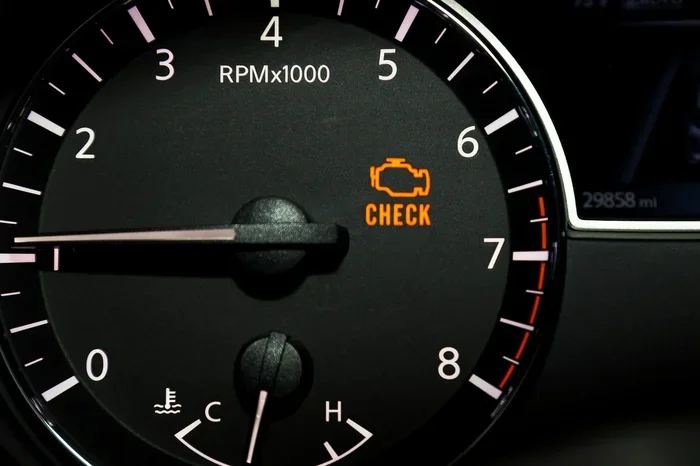
The check engine light is your car’s way of telling you something is wrong. A rich mixture often triggers this light because the ECU detects that the oxygen levels in the exhaust are too low.
If your check engine light comes on and you notice other symptoms on this list, a rich mixture is a likely suspect. You can use an OBD-II scanner to read the error codes and confirm the diagnosis.
Some drivers ignore the check engine light for months. This is a big mistake. A glowing light means your car is trying to tell you something important. Ignoring it can lead to bigger problems down the road.
Sluggish Acceleration
When there is too much fuel in the mix, the engine does not respond as quickly to the throttle. You may feel a delay or hesitation when you press the gas pedal. This is especially noticeable when merging onto highways or climbing hills.
Poor acceleration is not just annoying. It can also be dangerous in certain driving situations. If your car feels sluggish, get it checked out.
Strong Fuel Smell
A rich mixture often produces a noticeable fuel odor, especially around the exhaust or inside the cabin. This happens because unburned fuel is making its way through the exhaust system and even into the ventilation system.
If you smell gasoline near your car or inside the vehicle, do not ignore it. Unburned fuel is not only wasteful but also a potential fire hazard.
Spark Plug Fouling
When too much fuel enters the combustion chamber, it can coat your spark plugs in a black, sooty residue. This is called fouling. Fouled spark plugs cannot create a proper spark, which leads to misfires and poor performance.
If you remove your spark plugs and they look black and wet, a rich mixture is likely the cause. Replacing the spark plugs is necessary, but you should also address the root cause to prevent it from happening again.
What Happens If You Keep Driving With a Rich Mixture?
Ignoring a rich fuel-air mixture is not a good idea. Short-term driving with a rich condition might not destroy your engine immediately. But over time, the damage adds up and can become very expensive to repair.
Catalytic Converter Damage
The catalytic converter is one of the most expensive parts of your exhaust system. It works to reduce harmful emissions by converting pollutants into less harmful gases. A rich mixture sends unburned fuel through the exhaust, which can overheat and clog the catalytic converter.
A clogged catalytic converter reduces engine performance and can eventually cause your car to stall. Replacing a catalytic converter can cost anywhere from $500 to $2,500 depending on your vehicle. This is a repair you absolutely want to avoid by catching the rich mixture problem early.
Increased Exhaust Emissions
A rich mixture produces higher levels of carbon monoxide, hydrocarbons, and other harmful pollutants. These emissions are bad for the environment and can cause your vehicle to fail an emissions test.
In many states, passing an emissions inspection is required for vehicle registration. A rich mixture will almost certainly cause you to fail. Fixing the underlying problem is the only way to pass and keep the air clean.
Engine Oil Contamination
Unburned fuel can wash past the piston rings and contaminate your engine oil. This dilutes the oil and reduces its ability to lubricate engine components properly. Over time, contaminated oil leads to increased wear and tear on bearings, cylinders, and other internal parts.
If you check your oil and it smells strongly of fuel or looks thin and dark, this could be a sign of a rich mixture problem. Changing the oil and addressing the root cause is important to protect your engine.
Reduced Engine Power and Performance
When your engine is running rich, it is not operating at peak efficiency. You will notice a loss of power, especially under heavy load or at high speeds. This can make highway driving and merging unsafe.
Many drivers adapt to this gradual loss of performance without realizing it. If your car does not feel as responsive as it used to, a rich mixture could be the reason.
Wasted Fuel and Increased Costs
Burning too much fuel means you are literally throwing money out of your tailpipe. Over weeks and months, the extra fuel costs add up significantly. A rich mixture can reduce your fuel economy by 10 to 20 percent or more.
For the average driver, this could mean spending an extra $30 to $60 per month on gas. Over a year, that is $360 to $720 wasted because of a problem that often has a simple and affordable fix.
How Do You Fix a Rich Fuel-Air Mixture?
The fix depends on what is causing the rich condition. Here are the most common solutions, starting with the simplest.
Step 1: Check and Replace the Air Filter
Start with the easiest and cheapest fix. A clogged air filter restricts airflow and can cause a rich mixture. Remove the air filter and hold it up to a light. If you cannot see light through it, replace it.
Air filters are inexpensive and should be replaced every 12,000 to 15,000 miles as part of regular maintenance. This simple step can resolve a rich mixture problem in many cases.
Step 2: Inspect and Clean the Oxygen Sensor
If replacing the air filter does not help, the next step is to check the oxygen sensor. Use an OBD-II scanner to look for codes related to the oxygen sensor or fuel trim. Codes like P0172 (System Too Rich) are strong indicators.
You can try cleaning the sensor with a specialized cleaner. If cleaning does not work or the sensor is damaged, replacement is the way to go. Oxygen sensors typically cost between $50 and $250 for parts, plus labor if you do not install it yourself.
Step 3: Check Fuel Injectors
Inspect the fuel injectors for leaks or signs of sticking. A fuel injector cleaning kit can sometimes resolve the issue by flushing out carbon deposits. If an injector is physically damaged or leaking, replacement is necessary.
Fuel injectors range in price from $15 to $100 each for parts. Labor costs vary depending on the engine design and accessibility.
Step 4: Test the Fuel Pressure Regulator
Connect a fuel pressure gauge to the fuel rail and check the pressure against your vehicle’s specifications. If the pressure is too high, the regulator may need to be replaced.
In some vehicles, the fuel pressure regulator is part of the fuel pump assembly, which can increase the repair cost. Expect to pay between $100 and $400 for parts and labor.
Step 5: Clean or Replace the Mass Airflow Sensor
Remove the mass airflow sensor and inspect it for dirt and debris. Use a specialized MAF sensor cleaner to gently clean the delicate wires or hot film inside. Do not touch the sensor elements with your fingers or anything rough.
If cleaning does not resolve the issue, a new mass airflow sensor costs between $100 and $300. This is a straightforward repair that often solves rich mixture problems completely.
Step 6: Check for Vacuum Leaks
Sometimes a rich mixture is caused not by too much fuel but by a vacuum leak that throws off the air-fuel ratio. Inspect all vacuum hoses and connections for cracks, leaks, or loose fittings.
A smoke test at a repair shop can help identify vacuum leaks that are hard to see. Fixing vacuum leaks is usually inexpensive and can make a big difference in your air-fuel balance.
Quick Tips for Fixing a Rich Mixture
- Always start with the simplest and cheapest fixes first. You might be surprised how often a new air filter solves the problem.
- Use an OBD-II scanner to read error codes. This gives you a clear starting point and helps you avoid guessing.
- Do not ignore the check engine light. It is there for a reason and will save you money if you respond to it early.
- Keep up with regular maintenance. Routine services like air filter changes and sensor cleaning prevent many fuel mixture problems.
- Use quality fuel and air filters. Cheap replacements may not seal properly or filter effectively, leading to recurring problems.
Preventing a Rich Fuel-Air Mixture in the Future
The best way to deal with a rich fuel-air mixture is to prevent it from happening in the first place. Regular maintenance and attentive driving habits go a long way.
Follow your vehicle’s recommended maintenance schedule. Replace air filters, spark plugs, and fuel filters on time. Have your oxygen sensors and mass airflow sensors inspected during routine service appointments.
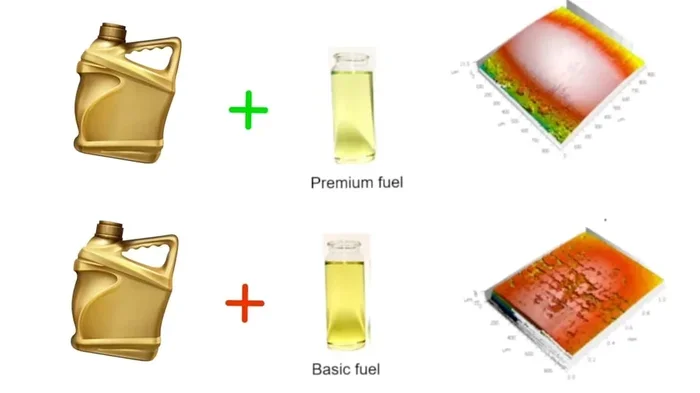
Use high-quality fuel from reputable gas stations. Cheap fuel can contain contaminants and additives that foul sensors and injectors over time. It is worth paying a little more for cleaner fuel.
Pay attention to how your car feels and sounds during daily driving. If you notice any changes in performance, fuel economy, or exhaust color, investigate early. Catching problems when they are small prevents them from becoming expensive repairs later.
Keep your engine bay clean and free of debris. Dirt and grime can accumulate on sensors and electrical connections, causing intermittent problems that are hard to diagnose. A clean engine is a healthy engine.
Finally, do not ignore dashboard warning lights. If your check engine light comes on, have it checked promptly. Many auto parts stores will read your codes for free. This simple step can save you thousands of dollars in potential damage.
Remember that your car is a complex machine where everything is connected. A simple sensor failure can cascade into bigger problems if left unchecked. Staying on top of maintenance is the single best investment you can make in your vehicle’s longevity and performance.
Whether you handle repairs yourself or visit a mechanic, understanding what is happening under the hood gives you confidence. You will be able to ask the right questions, spot potential problems early, and avoid being taken advantage of by unscrupulous shops.
A rich fuel-air mixture is a common but serious issue that deserves your attention. With the knowledge you now have, you are well-equipped to identify the problem, understand the causes, and take the right steps to fix it. Your engine, your wallet, and the environment will all thank you.
Frequently Asked Questions
Can I still drive my car if the fuel-air mixture is too rich?
You can drive short distances with a rich mixture, but it is not recommended. A rich condition wastes fuel, reduces performance, and can damage your catalytic converter over time. If you notice symptoms like black smoke or poor fuel economy, get your car inspected as soon as possible.
How much does it cost to fix a rich fuel-air mixture?
The cost depends entirely on what is causing the problem. A simple air filter replacement might cost under $50. Replacing an oxygen sensor or fuel pressure regulator could run between $100 and $400. More complex repairs involving fuel injectors or the catalytic converter can cost several hundred dollars or more.
Can a dirty air filter cause a rich fuel-air mixture?
Yes, absolutely. A clogged air filter restricts airflow to the engine. With less air but the same amount of fuel, the mixture becomes too rich. This is one of the easiest and cheapest fixes, which is why checking your air filter should always be the first step.
Will a rich fuel-air mixture damage my engine?
Over time, yes. A persistent rich mixture can foul spark plugs, contaminate engine oil, overheat the catalytic converter, and increase wear on internal engine components. The longer you drive with a rich condition, the more expensive the repairs become.
How do I know if my fuel-air mixture is too rich or too lean?
A rich mixture has too much fuel and produces black exhaust smoke, poor fuel economy, and a strong fuel smell. A lean mixture has too little fuel and can cause overheating, backfiring, and hesitation during acceleration. An OBD-II scanner can confirm which condition your car is experiencing by reading the fuel trim codes.
Can I fix a rich fuel-air mixture myself?
Many causes of a rich mixture can be fixed at home with basic tools. Replacing an air filter, cleaning a mass airflow sensor, or checking fuel pressure are all DIY-friendly tasks. However, if the problem involves fuel injectors, oxygen sensors, or the ECU, professional diagnosis and repair may be necessary.
=== CONCLUSION ===
A rich fuel-air mixture is a common engine problem that every car owner should know how to recognize and address. The symptoms are clear once you know what to look for: black exhaust smoke, poor fuel economy, rough idling, and a glowing check engine light. These signs are your car’s way of telling you that something needs attention.
The good news is that most causes of a rich mixture are straightforward to diagnose and fix. Start with the simple stuff like air filters and sensor cleaning before moving on to more complex repairs. Regular maintenance is your best defense against this and many other engine problems.
Do not ignore the warning signs. Addressing a rich fuel-air mixture early protects your engine, saves you money at the pump, and keeps your car running smoothly for years to come. Your car works hard for you every day. Taking care of it with the right knowledge and timely repairs is the least you can do.