Texas Window Tint Law Explained and What It Means for You
Texas Window Tint Law sets clear rules on how dark or reflective your car windows can be. Understanding these regulations helps you avoid costly tickets and keep your vehicle street legal. This guide breaks down every tint percentage, exemption, and requirement you need to know as a Texas driver.
Texas Window Tint Law can feel confusing if you have never looked into it before. You might wonder what tint darkness is allowed on your front windshield. Or maybe you are asking yourself whether your current tint is even legal. Either way, this guide has you covered.
Understanding the Texas tint regulations is essential for every car owner in the Lone Star State. The rules are not just suggestions. They are enforceable laws backed by the Texas Department of Public Safety. Getting them wrong can lead to costly fines, failed inspections, and even having to remove your tint entirely.
In this article, we will walk through every detail of Texas Window Tint Law. We will explain visible light transmission limits, which windows can be tinted, and what exemptions are available. By the end, you will know exactly what is legal and what is not. Let us dive right in.
Key Takeaways
- Front side windows must allow more than 25% light transmission in Texas.
- Rear windows and back windshield have more flexible tint darkness rules.
- A medical exemption allows darker tint for qualifying conditions.
- Reflective and metallic tint is restricted on front side windows.
- Tint stickers are required on the driver’s side window for verification.
- Violating Texas tint laws can result in fines up to $500 or more.
- Professional installation ensures your tint meets state regulations.
📑 Table of Contents
- What Is Texas Window Tint Law?
- Legal Tint Darkness for Each Window
- Reflective and Metallic Tint Restrictions
- Medical Exemption for Darker Tint
- Tint Stickers and Certification Requirements
- Penalties for Violating Texas Tint Laws
- Tips for Choosing Legal Window Tint in Texas
- Common Mistakes People Make With Window Tint in Texas
- How Texas Window Tint Law Compares to Other States
- Frequently Asked Questions About Texas Tint Law
- Final Thoughts on Texas Window Tint Law
What Is Texas Window Tint Law?
Texas Window Tint Law refers to the set of regulations that govern how much tint can be applied to vehicle windows. These rules are found in the Texas Transportation Code. They cover everything from tint darkness to reflective properties. The goal is to balance driver privacy and sun protection with road safety.
The law focuses on a measurement called visible light transmission, or VLT. VLT tells you how much light passes through your window film. The lower the VLT percentage, the darker the tint. For example, a 5% VLT tint is very dark, while a 70% VLT tint is nearly clear. Texas sets specific VLT limits for each window on your vehicle.
Why Tint Laws Exist
You might wonder why states even have tint regulations. The answer is simple: safety. Dark tint can reduce a driver’s ability to see the road, especially at night or in bad weather. It can also make it harder for law enforcement to see inside your vehicle during a traffic stop. Reflective tint can blind other drivers, which adds another layer of danger.
Texas Window Tint Law is designed to prevent these risks. The state wants drivers to enjoy the benefits of window film. But it also wants to make sure those benefits do not come at the cost of safety. That is why each window has its own specific limit.
Legal Tint Darkness for Each Window
This is the most important part of Texas Window Tint Law. The state breaks down tint darkness rules by window. Here is exactly what the law allows for passenger vehicles.
Front Windshield Tint Rules
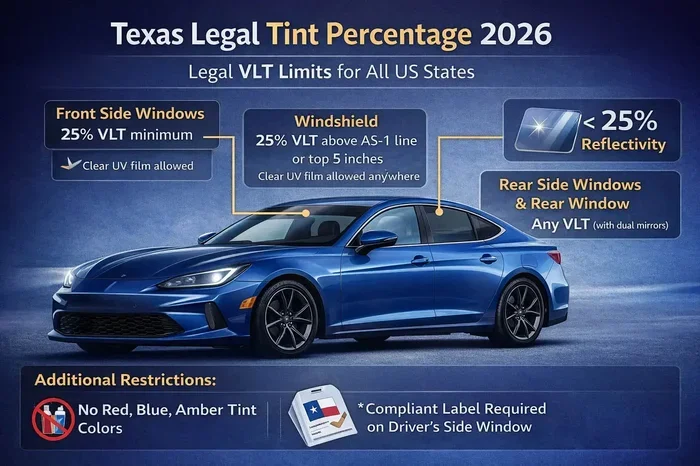
The front windshield has the strictest rules in Texas. You are only allowed to tint the top portion of the windshield. This tint strip must be above the manufacturer’s AS-1 line. If your vehicle does not have an AS-1 line, the tint cannot go below the top five inches of the windshield.
No tint film is allowed on the rest of the front windshield. This ensures the driver has a clear, unobstructed view of the road ahead. Even a small violation here can result in a citation during a routine inspection.
Front Side Window Tint Rules
For the front side windows, Texas requires a minimum VLT of 25%. This means your tint film must allow at least 25% of visible light to pass through. In practical terms, this is a relatively light tint. It provides some sun protection without significantly darkening the window.
If your front side windows have a tint darker than 25% VLT, it is considered illegal. Law enforcement officers can pull you over and issue a citation. The fine for this violation can range from $25 to $500, depending on the circumstances.
Rear Side Windows and Rear Windshield Tint Rules
Here is where Texas Window Tint Law gives you more flexibility. The rear side windows and the rear windshield can be tinted to any darkness level. There is no minimum VLT requirement for these windows on passenger vehicles. This means you can apply a very dark tint if you want more privacy or heat rejection.
However, there is one important condition. If your rear windows are tinted darker than 25% VLT, your vehicle must have dual side mirrors. This ensures the driver has adequate visibility for safe lane changes and turns. Without dual mirrors, a dark rear tint would be considered a violation.
Reflective and Metallic Tint Restrictions
Texas Window Tint Law also addresses the type of tint material you can use. Reflective and metallic tints are popular because they reduce glare and heat. But they can also create problems for other drivers on the road.
What the Law Says About Reflectivity
The law states that front side windows cannot have a reflective or mirrored appearance. The tint must not look like a mirror from either side of the vehicle. This rule applies to both the driver’s and passenger’s front doors.
Rear side windows and the rear windshield are not subject to the same reflectivity restrictions. You can use reflective or metallic film on these windows if you choose. Just keep in mind that excessive reflectivity can still attract unwanted attention from law enforcement.
Allowed Tint Colors in Texas
Texas does not restrict tint colors for most windows. You can use tinted, colored, or mirrored film within the legal limits. The only exception is on the front windshield, where tint color is generally not permitted except for the top strip.
Some tint shops may try to sell you tint with a reddish or bronze hue. While these colors are often legal on rear windows, they may not be allowed on front side windows if they reduce VLT below 25%. Always check the VLT percentage, not just the color.
Medical Exemption for Darker Tint
Not everyone can tolerate standard tint darkness. Some people have medical conditions that make them extremely sensitive to sunlight. Texas Window Tint Law recognizes this and provides a pathway for a darker tint exemption.
Who Qualifies for a Medical Exemption?
You may qualify for a medical exemption if you have a condition that requires limited sun exposure. Common qualifying conditions include lupus, porphyria, and severe photosensitivity disorders. Skin cancer patients undergoing treatment may also be eligible.
To get an exemption, you need a signed physician’s statement. This statement must explain your condition and why darker tint is medically necessary. You then submit the statement to the Texas Department of Public Safety for approval.
How the Exemption Works
Once approved, you will receive a medical exemption certificate. This certificate must be kept in your vehicle at all times. It allows you to tint your front side windows and windshield below the standard 25% VLT limit.
The exemption is vehicle-specific, not person-specific. If you sell the car, the exemption does not transfer. You must apply for a new exemption if the vehicle goes to a new owner. Always carry your certificate in the glove box during traffic stops.
Tint Stickers and Certification Requirements
Texas Window Tint Law requires specific documentation on your vehicle. These requirements help law enforcement quickly verify that your tint is legal.
The Required Tint Sticker
Every vehicle with tinted front side windows must display a tint sticker. This sticker goes on the driver’s side window, between the glass and the film. It certifies that the tint meets Texas legal standards.
The sticker must be placed where it is clearly visible. If an officer cannot see the sticker during a traffic stop, they may assume your tint is illegal. This can lead to an unnecessary citation and the hassle of proving otherwise.
Certified Tint Film
The tint film you purchase should come with a certification label from the manufacturer. This label confirms the film meets the required VLT standards. Reputable tint shops will always use certified film and provide you with documentation.
If you buy tint from an unverified source, you risk installing film that does not meet Texas standards. Always ask your installer for proof of certification. It saves you time, money, and the headache of a failed inspection.
Penalties for Violating Texas Tint Laws
Breaking Texas Window Tint Law comes with real consequences. Understanding these penalties can motivate you to stay compliant.
Fines and Fees
A tint violation citation in Texas typically carries a fine between $25 and $500. The exact amount depends on how dark your tint is and whether it is a first-time or repeat offense. In some cases, the fine can be higher if the violation is combined with other offenses.
Keep in mind that these fines are just the beginning. If your tint causes you to fail a vehicle inspection, you will need to pay for removal and reinstallation. That adds even more cost to the violation.
Failed Inspection and Vehicle Impoundment
Texas requires annual vehicle safety inspections. Tinted windows that do not meet VLT standards will cause your vehicle to fail inspection. You cannot register your car or renew your license plates until the issue is resolved.
In extreme cases, law enforcement may impound your vehicle if the tint is deemed a safety hazard. While this is rare, it has happened. It is always better to be proactive and ensure your tint is within legal limits.
Tips for Choosing Legal Window Tint in Texas
Now that you know the rules, let us talk about how to choose the right tint for your vehicle. These practical tips will help you stay legal while still getting the benefits you want.
Work with a Reputable Tint Shop
Choose a tint installation company that knows Texas regulations inside and out. A reputable shop will ask you about your VLT goals before recommending any film. They will also handle the sticker placement and certification paperwork for you.
Ask friends, family, or online reviews for recommendations. A good tint shop will be transparent about what is legal and what is not. Avoid any shop that promises to install tint darker than the law allows.
Check Your VLT Before Installation
Before you commit to a tint film, check the VLT percentage. Most quality tint films display their VLT rating clearly. Choose a film that meets or exceeds the 25% minimum for front side windows.
If you want darker tint for your rear windows, you have more freedom. Just remember the dual mirror requirement if your rear tint drops below 25% VLT. This simple check can save you from an expensive mistake.
Consider Ceramic or Carbon Film
Ceramic and carbon window films are excellent choices for Texas drivers. They block heat and UV rays effectively without the mirror-like reflectivity of metallic films. They also tend to have a more natural, non-metallic appearance.
These films are often more expensive than standard dyed tint. But they last longer and perform better in the Texas heat. The investment is well worth it for anyone who spends a lot of time driving.
Common Mistakes People Make With Window Tint in Texas
Even well-meaning car owners can run into trouble with Texas Window Tint Law. Here are the most common mistakes to avoid.
- Assuming all windows can be tinted the same darkness. The front and rear windows have different rules.
- Forgetting about the dual mirror requirement. Dark rear tint without dual mirrors is a violation.
- Skipping the tint sticker. No sticker means a likely citation during a traffic stop.
- Using untinted front windshield film below the AS-1 line. This is strictly illegal in Texas.
- Buying tint online without checking VLT ratings. Online products may not meet Texas standards.
- Ignoring the medical exemption process. If you qualify, do not leave the benefit on the table.
How Texas Window Tint Law Compares to Other States
Every state has its own tint regulations, and they vary quite a bit. Texas is considered moderately strict compared to other states. Some states allow darker front side window tint, while others have even stricter rules.
For example, some southern states allow a 35% VLT on front side windows. Texas holds the line at 25%. On the other hand, some states ban all front window tint except for the windshield strip. Texas gives you more flexibility on the front side windows than those stricter states.
If you travel frequently with your vehicle, it is worth knowing the tint laws of the states you visit. A tint that is legal in Texas might get you a ticket in a neighboring state with stricter rules. Always do your research before crossing state lines.
Frequently Asked Questions About Texas Tint Law
Can I tint my front windshield in Texas?
You can tint a small strip at the top of the front windshield. The tint must be above the AS-1 line or the top five inches, whichever is less. No tint film is allowed on the rest of the front windshield.
What happens if I get pulled over for illegal tint in Texas?
You will likely receive a citation with a fine ranging from $25 to $500. The officer may also require you to remove the illegal tint before your vehicle can pass inspection.
Is there a medical exemption for window tint in Texas?
Yes. If you have a qualifying medical condition, you can apply for an exemption through the Texas Department of Public Safety. You will need a physician’s statement and a certificate to keep in your vehicle.
Do I need dual mirrors if my rear windows are tinted dark?
Yes. If your rear side windows or rear windshield are tinted below 25% VLT, Texas law requires dual side mirrors. This ensures the driver has sufficient visibility for safe driving.
Can I use reflective or mirrored tint on my car in Texas?
Reflective tint is not allowed on the front side windows. However, you can use reflective film on the rear side windows and rear windshield without restriction.
How much does legal window tint cost in Texas?
Professional tint installation typically costs between $150 and $400 depending on the vehicle size and film quality. Ceramic and carbon films cost more but offer better performance and durability.
Final Thoughts on Texas Window Tint Law
Texas Window Tint Law is straightforward once you understand the basics. The front windshield gets the most restrictive treatment. Front side windows must stay at or above 25% VLT. Rear windows offer much more freedom, with no minimum darkness requirement. And if you have a medical need, an exemption can give you the darker tint you need.
Staying compliant is not just about avoiding fines. It is about keeping yourself and others safe on Texas roads. Legal tint still gives you excellent sun protection, heat reduction, and privacy. You simply need to choose the right film and install it correctly.
Take the time to research your options. Work with a trusted tint professional. Keep your certification sticker in place. And if you qualify for a medical exemption, make sure you have your paperwork ready. Following these steps means you enjoy your tinted windows without any legal headaches.
Texas is a big state with plenty of sun. Window tint is a smart investment for any vehicle. Just make sure your tint meets the law. That way, you get all the benefits of your tint and none of the trouble.