Is There a Lot of Math in Being a Mechanic Really
Many people wonder if a career as a mechanic requires advanced math skills. The truth is that being a mechanic involves practical math every single day, from basic arithmetic to more complex calculations. You do not need to be a math genius, but a solid understanding of automotive repair calculations and mechanic math skills will help you succeed. This article breaks down exactly what math a mechanic uses, why it matters, and how you can build confidence in your abilities.
Key Takeaways
- Mechanics use math daily: From simple arithmetic to torque calculations, math is a core part of the job.
- You do not need to be a math genius: Basic math skills and practical knowledge go a long way.
- Automotive math covers many areas: Including engine diagnostics, tire pressure, fuel efficiency, and electrical systems.
- Training programs teach the math you need: Most mechanic schools include practical math in their curriculum.
- Diagnostic tools reduce the math burden: Modern technology handles complex calculations for you.
- Strong mechanic math skills boost your career: They help you diagnose problems faster and earn more.
📑 Table of Contents
What Kind of Math Do Mechanics Use Every Day?
When most people think about a mechanic, they picture someone covered in grease, turning wrenches, and fixing engines. But there is a side of the job that does not get talked about enough. Math is everywhere in automotive work. It is not just about knowing how to turn a bolt. It is about understanding numbers, measurements, and calculations that keep vehicles running safely.
So, what kind of math are we talking about here? The good news is that it is not all advanced calculus or abstract equations. Most of the math mechanics use is practical and hands-on. Let us break it down so you can see exactly what to expect.
Basic Arithmetic: The Foundation of Every Repair
Addition, subtraction, multiplication, and division form the backbone of a mechanic’s daily work. When you are ordering parts, you need to add up costs. When you are measuring fluid levels, you subtract what is there from what is needed. Simple stuff, right? But here is the thing. These basic operations happen hundreds of times during a single workday.
For example, imagine a customer brings in a car that needs an oil change, a new air filter, and brake pad replacement. You need to calculate the total cost quickly and accurately. That means adding parts costs, labor time, and any applicable fees. Getting this wrong can lead to customer complaints or lost revenue for the shop.
Fractions, Decimals, and Conversions
Mechanics work with fractions and decimals constantly. A bolt might be 7/16 of an inch, while another measurement is 10.5 millimeters. Converting between metric and standard units is a daily task. This is one area where many people struggle, but it becomes second nature with practice.
Quick Tip: Keep a conversion chart in your toolbox or on your phone. It saves time and reduces errors when you are switching between metric and standard measurements.
Percentages and Proportions
You might not think about it, but percentages play a big role in automotive work. Calculating discounts on parts, determining fuel efficiency improvements, or figuring out the percentage of wear on a brake pad all involve percentages. Proportions come into play when mixing fluids, like coolant or transmission fluid, where the right ratio matters a lot.
The Role of Math in Engine Diagnostics
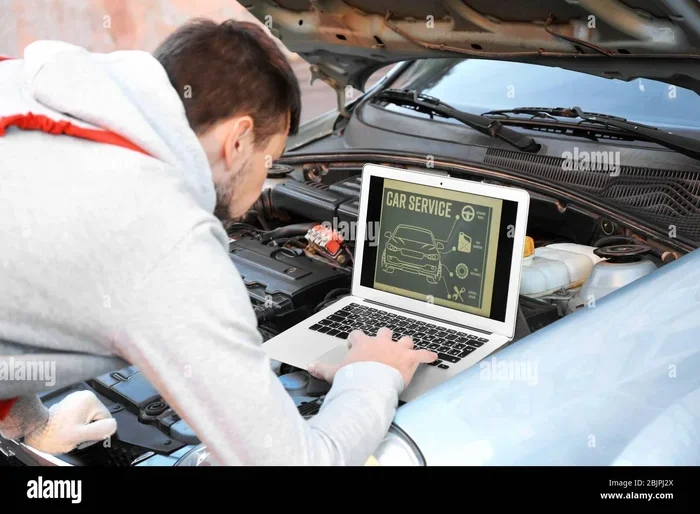
Modern engines are computers on wheels. They rely on sensors, fuel injectors, and complex systems to run properly. When something goes wrong, mechanics need to use diagnostic tools and math to figure out what is happening under the hood.
Understanding Engine Displacement
Engine displacement is a measurement of the total volume of all the cylinders in an engine. It is usually measured in liters or cubic centimeters. To calculate displacement, you need to know the bore (the diameter of the cylinder), the stroke (how far the piston travels), and the number of cylinders.
The formula looks like this:
Displacement = (π ÷ 4) × bore² × stroke × number of cylinders
That might look intimidating, but most mechanics do not do this by hand. The numbers are usually listed in service manuals. Still, understanding what the numbers mean helps you make better decisions when diagnosing engine problems.
Fuel Efficiency and Air-Fuel Ratios
Every engine needs the right mix of air and fuel to run efficiently. This is called the air-fuel ratio. The ideal ratio for most gasoline engines is 14.7:1, meaning 14.7 parts air to 1 part fuel. When this ratio is off, the engine runs poorly. Mechanics use math to adjust fuel injectors, calibrate sensors, and troubleshoot why a vehicle is getting poor fuel economy.
Reading Diagnostic Trouble Codes
When a check engine light comes on, mechanics plug in a diagnostic scanner. The scanner gives them a code. But the code is only the starting point. Understanding what the code means and how it relates to the vehicle’s systems requires analytical thinking. Sometimes, you need to calculate expected sensor values and compare them to what the scanner shows.
Math in Vehicle Maintenance and Repairs
Routine maintenance is where mechanic math skills really shine. Oil changes, tire rotations, brake inspections, and fluid flushes all involve measurements and calculations. Let us look at some common maintenance tasks and the math behind them.
Tire Pressure and Tire Size Calculations
Tire pressure is measured in pounds per square inch (PSI). Every vehicle has a recommended tire pressure listed on the driver’s side door jamb. If a tire is underinflated, it wears out faster and reduces fuel efficiency. Overinflated tires ride rough and can blow out.
Mechanics use a simple gauge to check pressure, but they also need to understand the math behind tire sizes. A tire marked 205/55R16 tells you the width, aspect ratio, and rim diameter. Converting between these measurements helps when ordering replacement tires or wheels.
Torque Specifications
Torque is the rotational force applied to a bolt or nut. Every manufacturer specifies a torque value for every bolt on the vehicle. Too little torque and the part can come loose. Too much torque and you can strip the bolt or crack the component.
Torque wrenches are the tool of choice here. They are calibrated to apply a specific amount of force. Understanding torque specifications is essential for safety. A loose wheel nut on the highway can be catastrophic.
| Task | Math Involved | Why It Matters |
|---|---|---|
| Oil Change | Volume measurements, capacity calculations | Prevents engine damage from too little or too much oil |
| Tire Rotation | Pattern recognition, measurement matching | Ensures even tire wear and safe driving |
| Brake Pad Replacement | Thickness measurements, wear percentage | Prevents brake failure and costly rotor damage |
| Coolant Flush | Ratio mixing, capacity calculations | Prevents engine overheating and corrosion |
| Spark Plug Gap | Measurement in thousandths of an inch | Affects engine performance and fuel efficiency |
Brake System Math
The braking system relies on hydraulic pressure. When you press the brake pedal, you create force that is multiplied through the brake lines to the calipers. The size of the master cylinder and the caliper pistons determines how much force reaches the brakes. Mechanics need to understand this math when diagnosing spongy brakes or uneven braking.
Electrical System Calculations
Modern vehicles have miles of wiring and dozens of electrical components. Basic electrical math involves understanding voltage, current, and resistance. Ohm’s Law (V = I × R) is a fundamental tool for troubleshooting electrical problems. Even if you are not solving equations on paper, knowing how these values relate helps you use a multimeter effectively.
Quick Tips for Everyday Math in the Shop
- Always double-check your measurements before making a purchase or performing a repair.
- Keep a small calculator in your toolbox for quick conversions.
- Use smartphone apps for metric-to-standard conversions on the fly.
- Write down calculations for complex jobs so you do not have to redo them.
- Practice mental math regularly to build speed and confidence.
Does a Mechanic Need Advanced Math Skills?
This is a question many aspiring mechanics ask. The short answer is no. You do not need to be a math whiz to succeed in this field. But you do need a solid grasp of practical math. Let us look at what level of math is actually required and what you can expect.
What Level of Math Is Enough?
Most mechanic jobs require math at a middle school to early high school level. You need to be comfortable with fractions, decimals, percentages, and basic algebra. That is it. The math is almost always applied in a practical context, which makes it easier to understand and remember.
For example, if a repair manual says to tighten a bolt to 35 foot-pounds of torque, you do not need to derive the formula. You just need to set your torque wrench correctly. The math has already been done for you.
Common Mistakes Mechanics Make With Math
Even experienced mechanics make math errors from time to time. Here are some of the most common mistakes:
- Forgetting to convert units: Mixing up metric and standard measurements can lead to incorrect parts orders or improper installations.
- Rounding too early: Rounding numbers in the middle of a calculation can throw off the final result, especially with torque or fluid measurements.
- Misreading gauges: Digital gauges are great, but analog gauges require careful reading. A slight misread can lead to a wrong diagnosis.
- Skipping the math entirely: Relying too much on guesswork instead of measurements is a recipe for costly mistakes.
Expert Insight: How Veteran Mechanics Handle Math
Many veteran mechanics say that the math becomes automatic over time. You do not think about it consciously. You just do it. The key is to build a strong foundation early on and practice regularly. The more you work with numbers in the shop, the more natural they feel.
One experienced technician shared this advice: “The math does not need to be fancy. It just needs to be accurate. If you can add, subtract, multiply, divide, and convert between units, you can handle 95 percent of what comes your way.”
How to Build Your Mechanic Math Skills
If you are worried about your math abilities, do not stress. Math skills can be improved with practice and the right resources. Here is how you can build confidence in your mechanic math skills.
Take a Basic Math Course
Many community colleges and trade schools offer basic math courses tailored for tradespeople. These courses focus on the math you will actually use on the job. They cover topics like measurement conversions, fractions, percentages, and basic formulas. Even a single course can make a huge difference.
Practice With Real-World Examples
The best way to learn mechanic math is to practice with real-world examples. Here are some exercises you can try:
- Measure the tire pressure of three different vehicles and convert the readings between PSI and kilopascals.
- Calculate the total cost of a repair job, including parts, labor, and tax.
- Determine the correct coolant mixture ratio for a specific vehicle.
- Measure brake pad thickness and calculate the percentage of wear remaining.
Use Online Resources and Apps
There are many free online tools and apps designed to help mechanics with math. Conversion calculators, torque conversion charts, and fuel economy calculators are just a few clicks away. Bookmark a few reliable resources and use them whenever you are unsure.
Learn From Your Mistakes
Every mistake is a learning opportunity. If you mix up a measurement or calculate the wrong amount of fluid, do not beat yourself up. Instead, figure out where you went wrong and how to avoid it next time. Over time, your accuracy will improve dramatically.
The Future of Math in Automotive Work
The automotive industry is changing fast. Electric vehicles, hybrid systems, and advanced driver-assistance systems (ADAS) are becoming more common. What does this mean for the math a mechanic needs to know?
Electric Vehicles and New Math Demands
Electric vehicles (EVs) introduce new types of calculations. Battery capacity is measured in kilowatt-hours (kWh). Charging rates involve voltage and amperage calculations. Range estimates depend on energy consumption per mile. As EVs become more popular, mechanics will need to understand these concepts at a basic level.
However, the math is still practical and applied. You are not deriving complex equations. You are reading numbers from a display and making decisions based on them.
Diagnostic Technology and Automated Calculations
Modern diagnostic equipment does a lot of the heavy lifting for you. Scanners, alignment machines, and fuel analyzers all perform calculations automatically. This does not mean math is less important. It means the math has shifted from manual calculations to interpreting results and making decisions based on data.
Expert Insight: “Technology handles the calculations, but the mechanic handles the thinking. You still need to understand what the numbers mean and how they relate to the vehicle,” says a master technician with over 20 years of experience.
The Bottom Line
The future of automotive work will always require a basic understanding of math. As vehicles become more complex, the math may become more specialized, but it will always be grounded in practical, real-world applications. Mechanics who embrace continuous learning and stay curious about numbers will have the best career prospects.
Conclusion
So, is there a lot of math in being a mechanic? The answer is yes, but not in the way most people fear. Being a mechanic involves practical, everyday math that you can learn and master with practice. From basic arithmetic and unit conversions to torque specifications and diagnostic calculations, math is a core part of the trade.
You do not need to be a math genius. You need to be accurate, careful, and willing to learn. The math becomes easier and more natural the more you work in the field. Training programs, hands-on experience, and a willingness to practice are all you need to build strong mechanic math skills.
If you are considering a career in automotive repair, do not let math scare you away. Embrace it as a tool that makes you better at your job. The more comfortable you become with numbers, the more confident and capable you will be as a technician. Start building your skills today, and you will be surprised at how quickly math becomes second nature in the shop.
Frequently Asked Questions
Do I need to be good at math to become a mechanic?
No, you do not need to be a math genius. Most mechanic work involves basic arithmetic, fractions, decimals, and unit conversions. These skills are easy to learn and improve with practice. Many successful mechanics were not strong in math at first but developed their skills through hands-on experience.
What kind of math do automotive technicians use most often?
Automotive technicians use basic arithmetic, measurement conversions, percentages, and ratios most often. They also work with torque specifications, tire pressure calculations, and fuel efficiency math. Advanced math is rarely needed because diagnostic tools handle complex calculations automatically.
Can I learn mechanic math in a training program?
Yes, most mechanic training programs include practical math as part of the curriculum. Trade schools and community colleges offer courses that focus specifically on the math used in automotive repair. These programs make it easy to build confidence in your abilities before entering the workforce.
How does technology reduce the need for manual math in automotive repair?
Modern diagnostic scanners, alignment machines, and fuel analyzers perform most calculations automatically. Mechanics spend less time doing manual math and more time interpreting results and making decisions. However, understanding the underlying math helps you troubleshoot problems more effectively and avoid costly mistakes.
Is more math required for diesel mechanics or specialty technicians?
Diesel mechanics and specialty technicians may encounter slightly more complex math, especially when working with hydraulic systems, engine performance calculations, and emissions testing. However, the math is still practical and applied. It is not abstract or theoretical in nature.
Will the rise of electric vehicles change the math requirements for mechanics?
Electric vehicles introduce new types of calculations related to battery capacity, charging rates, and energy consumption. However, these calculations are still practical and grounded in real-world applications. Mechanics who stay curious and continue learning will adapt to these changes easily.