How Many Gallons of Gas Does a 2015 Toyota Camry Hold
The 2015 Toyota Camry holds 15.8 gallons of gas in its fuel tank. With an EPA rating of around 25 city and 35 highway MPG, this sedan can travel roughly 395 to 553 miles on a full tank. Understanding your fuel capacity helps with trip planning and budgeting.
Have you ever wondered exactly how much fuel your 2015 Toyota Camry can hold? Maybe you are planning a road trip and need to know how far you can go before stopping for gas. Or perhaps you just want to understand your car better. Either way, you are in the right place.
The 2015 Toyota Camry is one of the most popular sedans on the road. It is known for reliability, comfort, and solid fuel economy. But knowing your car’s fuel tank capacity is important for so many reasons. It helps you plan trips, estimate costs, and avoid running low on fuel at the wrong time.
In this article, we will cover everything you need to know about the gas tank in the 2015 Camry. We will look at the exact fuel capacity, fuel economy numbers, driving range, and practical tips to get the most out of every gallon. Whether you are a new Camry owner or have been driving one for years, this guide has useful information for you.
Key Takeaways
- Fuel Tank Capacity: The 2015 Toyota Camry holds 15.8 gallons of gasoline.
- Driving Range: You can expect 395 to 553 miles per tank depending on driving conditions.
- City vs Highway MPG: The Camry gets better mileage on highways than in city traffic.
- Hybrid Option: The 2015 Camry Hybrid offers even better fuel economy than the gas-only model.
- Cost to Fill Up: At average gas prices, a full tank costs around $45 to $65 depending on location.
- Maintenance Matters: Regular upkeep keeps your Camry fuel-efficient over time.
📑 Table of Contents
- How Many Gallons of Gas Does a 2015 Toyota Camry Hold
- Fuel Economy and MPG Ratings
- How Far Can You Drive on a Full Tank
- How Much Does It Cost to Fill Up the 2015 Camry
- Comparing the 2015 Camry to Other Toyota Models
- Maintenance Tips to Keep Your Camry Fuel Efficient
- Common Myths About Camry Fuel Capacity
- How to Check Your Exact Fuel Level
- Final Thoughts
How Many Gallons of Gas Does a 2015 Toyota Camry Hold
The 2015 Toyota Camry comes with a fuel tank that holds 15.8 gallons of gasoline. This is the standard capacity for the gas-only models. The tank size stays the same across most trim levels, including the LE, SE, XLE, and XSE.
This 15.8 gallon capacity is a sweet spot for a midsize sedan. It is large enough to give you a solid driving range. But it is not so big that the car feels heavy or wastes space. Toyota engineers designed this tank to balance range, weight, and interior space perfectly.
If you are comparing the Camry to other sedans, the tank size is right in line with competitors. For example, the Honda Accord and Nissan Altima also carry similar fuel capacities. This makes the Camry a very practical choice for daily commuting and long drives alike.
Why Tank Size Matters
Knowing your gas tank size is more than just a number. It directly affects how often you visit the gas station. A larger tank means fewer fill-ups. A smaller tank means more stops but sometimes better overall vehicle balance.
With 15.8 gallons, the 2015 Camry strikes a great balance. You can go long distances without worrying too much about fuel. At the same time, the tank does not take up excessive space under the car. This helps keep the center of gravity low, which improves handling and ride comfort.
Here are some quick facts about the 2015 Camry fuel tank:
- Tank Capacity: 15.8 gallons
- Fuel Type: Regular unleaded gasoline
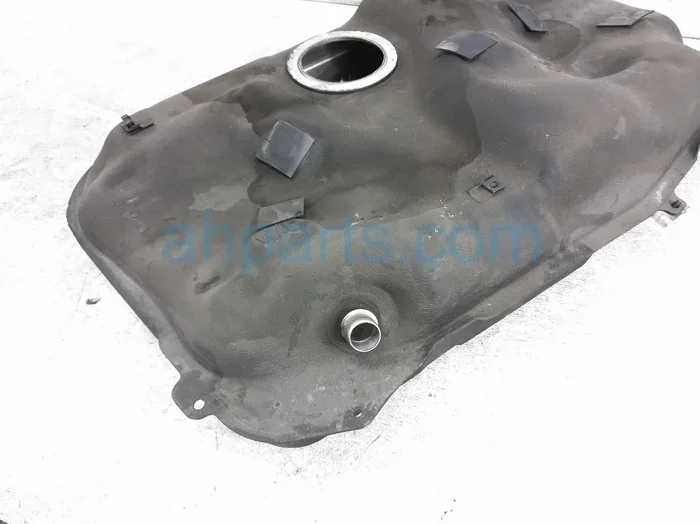
- Tank Material: Plastic (high-density polyethylene)
- Fuel Gauge: Electronic display on the dashboard
- Reserve Range: Approximately 40 to 50 miles after the low fuel light comes on
Fuel Economy and MPG Ratings
The 2015 Toyota Camry delivers respectable fuel economy for a midsize sedan. The EPA rated the base 2.5-liter four-cylinder engine at 25 miles per gallon in the city and 35 miles per gallon on the highway. These numbers make the Camry one of the more efficient options in its class.
If you drive mostly in the city, you can expect around 25 MPG. If your driving is mostly highway cruising, you will likely see closer to 35 MPG. And if you have a mix of both, somewhere in between is realistic. Most owners report getting around 28 to 32 MPG in combined driving conditions.
City Driving vs Highway Driving
City driving tends to use more fuel. You deal with stop-and-go traffic, idling at intersections, and frequent acceleration. All of these factors reduce your miles per gallon. With the 2015 Camry, you can expect closer to the 25 MPG figure in heavy city traffic.
Highway driving is much more fuel-efficient. Steady speeds, fewer stops, and less idling all help. On the open highway, the Camry can reach its rated 35 MPG or even exceed it on flat terrain with cruise control set at a steady pace.
The Camry Hybrid Advantage
The 2015 Toyota Camry Hybrid offers even better fuel economy. The hybrid version gets an estimated 40 MPG in the city and 39 MPG on the highway. This is a significant improvement over the gas-only model.
However, the hybrid model also has a slightly different fuel system setup. The hybrid uses a smaller battery pack alongside the gasoline engine. This means it uses less gas overall but still relies on the same 15.8 gallon tank for its fuel supply.
If fuel economy is a top priority for you, the hybrid version of the 2015 Camry is worth serious consideration. It can significantly reduce your trips to the gas station and save you money over time.
How Far Can You Drive on a Full Tank
Now let us talk about the fun part. How far can you actually go with a full tank of gas in the 2015 Camry? This is where the tank capacity and MPG ratings come together to give you a practical number.
To calculate your driving range, you simply multiply the tank capacity by the MPG rating. Here is a quick breakdown:
- City Range: 15.8 gallons x 25 MPG = 395 miles
- Highway Range: 15.8 gallons x 35 MPG = 553 miles
- Combined Range: 15.8 gallons x 30 MPG (average) = 474 miles
So on a full tank, you can comfortably drive anywhere from 395 miles in city conditions to over 550 miles on the highway. That is a serious range. You could drive from Los Angeles to San Francisco and back on a single tank of gas.
For comparison, the how many miles is 12 gallons of gas question gives you a shorter range, but the Camry’s larger 15.8 gallon tank gives it a clear advantage. More gallons in the tank means more miles between fill-ups.
Keep in mind that these numbers are estimates. Your actual range will vary based on driving habits, road conditions, vehicle load, and tire pressure. But these figures give you a very reliable baseline for planning trips and estimating fuel costs.
How Much Does It Cost to Fill Up the 2015 Camry
Understanding the cost of filling your tank is important for budgeting. With a 15.8 gallon tank, the cost depends entirely on current gas prices. Let us look at some realistic examples.
At an average gas price of $3.00 per gallon, a full tank costs about $47.40. At $3.50 per gallon, it costs around $55.30. And at $4.00 per gallon, you are looking at roughly $63.20 for a complete fill-up.
These numbers can vary quite a bit depending on where you live. Gas prices differ from state to state and even from city to city. Coastal areas and major metropolitan regions tend to have higher prices. Rural areas and the Midwest often have lower prices.
Here is a simple cost comparison table:
Gas Price Per Gallon | Cost to Fill 15.8 Gallon Tank
$3.00 | $47.40
$3.50 | $55.30
$4.00 | $63.20
$4.50 | $71.10
If you drive about 1,000 miles per month and average 30 MPG, you will use around 33 gallons of gas each month. That means roughly two fill-ups per month at the 15.8 gallon tank capacity. At $3.50 per gallon, your monthly fuel cost would be around $115.
Tips to Reduce Fuel Costs
Saving money on gas is something every driver cares about. Here are some practical tips to stretch your fuel budget with the 2015 Camry:
- Keep your tires properly inflated. Underinflated tires reduce fuel economy.
- Use cruise control on highway drives to maintain steady speeds.
- Avoid rapid acceleration and hard braking.
- Remove excess weight from your trunk and back seat.
- Get regular oil changes using the recommended grade of oil.
- Keep your air filters clean and replace them on schedule.
- Plan your routes to avoid heavy traffic when possible.
Comparing the 2015 Camry to Other Toyota Models
The 2015 Toyota Camry holds 15.8 gallons, but how does that compare to other Toyota vehicles? Let us take a quick look at how the Camry stacks up against some other popular models from Toyota’s lineup.
The Toyota Fortuner is a larger SUV with a bigger fuel tank. If you are curious about how the Fortuner’s fuel capacity compares, checking the how much mileage does a Fortuner give can provide useful context. The Fortuner typically has a larger tank but also weighs more, which affects overall fuel economy.
Toyota sedans in general tend to have similar fuel tank sizes. The Corolla, for instance, usually carries about 13.2 gallons. The Camry’s 15.8 gallon tank gives it a meaningful advantage in range over the compact Corolla. You simply get more miles between fill-ups with the Camry.
On the other end of the spectrum, Toyota trucks like the Tundra have much larger fuel tanks, sometimes exceeding 26 gallons. But those vehicles also consume fuel at a much higher rate. The Camry strikes a perfect balance between tank size and fuel efficiency for most drivers’ needs.
Maintenance Tips to Keep Your Camry Fuel Efficient
A well-maintained Camry will deliver better fuel economy over time. Neglecting basic maintenance can cause your MPG to drop significantly. Here are some simple steps to keep your 2015 Camry running at its best.
First, stay on top of your oil changes. Clean oil reduces engine friction and helps the engine run more efficiently. Use the oil weight recommended in your owner’s manual, which for the 2015 Camry is typically 0W-20 or 5W-30 depending on your specific engine configuration.
Second, check your tire pressure regularly. Tires that are even slightly underinflated can reduce fuel economy by 1 to 2 percent. That might not sound like much, but it adds up over thousands of miles of driving.
Third, replace your air filters on schedule. A clogged air filter restricts airflow to the engine, which makes it work harder and burn more fuel. This is a simple and inexpensive fix that pays for itself quickly.
Fourth, keep your fuel system clean. Using a quality fuel injector cleaner every few thousand miles can help maintain optimal fuel delivery. This ensures your engine gets the right air-fuel mixture for maximum efficiency.
Fifth, address warning lights promptly. If your check engine light comes on, do not ignore it. A faulty oxygen sensor, for example, can reduce fuel economy by up to 40 percent. Fixing it quickly saves both fuel and money.
For more information on keeping your car in great shape for the long haul, check out our guide on how to make a car last 500 thousand miles. Regular maintenance is the foundation of a long-lasting, fuel-efficient vehicle.
Common Myths About Camry Fuel Capacity
There are several myths floating around about fuel tank sizes and how they affect driving. Let us clear up a few of the most common ones.
Myth 1: Filling the tank completely damages the fuel system. This is not true. Modern fuel systems are designed to handle a full tank. The Camry’s fuel tank and components are built to safely contain 15.8 gallons at all times.
Myth 2: You should never let the tank go below a quarter full. While it is good practice to avoid running on empty, there is no mechanical reason you must keep your tank above 25 percent. The fuel pump is submerged in fuel and uses it for cooling. Running very low for extended periods can cause the pump to overheat, but occasional low fuel is perfectly fine.
Myth 3: Premium fuel gives better mileage in the Camry. The 2015 Camry is designed to run on regular unleaded gasoline. Using premium fuel will not improve your MPG or engine performance. Stick with regular and save your money.
Myth 4: The fuel gauge is always accurate. Fuel gauges can sometimes be off, especially as the tank gets low. The actual reserve range can vary by 10 to 20 miles depending on driving conditions. Always refuel before the gauge hits empty to avoid getting stranded.
How to Check Your Exact Fuel Level
The 2015 Toyota Camry has an electronic fuel gauge on the dashboard instrument cluster. It shows a needle or bar that indicates your current fuel level. The gauge also includes markings for empty, quarter, half, three-quarters, and full.
For more precise readings, you can manually check the fuel level after filling up. Note the odometer reading when you fill the tank completely. Then track your mileage until you need to fill up again. Divide the miles driven by the number of gallons you added. This gives you your actual MPG for that tank.
This manual method is often more accurate than relying solely on the dashboard gauge. Over time, tracking your fuel consumption this way helps you understand your real-world fuel economy and spot any changes that might indicate a problem.
If you notice a significant drop in fuel economy, it could be a sign of an underlying issue. Common causes include dirty fuel injectors, worn spark plugs, a malfunctioning oxygen sensor, or low tire pressure. Addressing these issues quickly keeps your Camry running efficiently.
Final Thoughts
The 2015 Toyota Camry holds 15.8 gallons of gas in its fuel tank. This is a well-designed capacity that gives you plenty of range for daily commuting and long road trips alike. With an EPA rating of 25 city and 35 highway MPG, you can expect to drive between 395 and 553 miles on a single tank of fuel.
Understanding your fuel capacity and economy is one of the simplest ways to become a smarter, more efficient driver. It helps you plan trips with confidence, budget for fuel costs accurately, and avoid the stress of running low on gas at inconvenient times.
Take care of your Camry with regular maintenance, drive with good habits, and you will enjoy excellent fuel economy for years to come. The 2015 Camry is a proven, reliable vehicle that delivers on both performance and efficiency. Whether you are buying one, already own one, or are just curious about its specs, knowing the fuel tank capacity is a great starting point for understanding this iconic sedan.
For more Toyota Camry information, you might want to check out whether you can order a 2024 Toyota Camry or learn about the V8 engine options in the Toyota Camry. These topics build on the Camry knowledge base and give you a fuller picture of what this vehicle has to offer.
Frequently Asked Questions
How far can a 2015 Toyota Camry go on a full tank?
With a 15.8 gallon tank and an average of 30 MPG combined, the 2015 Camry can travel approximately 474 miles on a full tank. City driving reduces this to around 395 miles, while highway driving can push the range up to 553 miles.
What type of gas does the 2015 Toyota Camry require?
The 2015 Toyota Camry requires regular unleaded gasoline with an octane rating of 87 or higher. Using premium fuel will not improve performance or fuel economy. Regular gas is all your Camry needs.
Is the fuel tank size the same across all 2015 Camry trims?
Yes, the 15.8 gallon fuel tank capacity is consistent across all gas-only trims of the 2015 Camry. This includes the LE, SE, XLE, XSE, and other non-hybrid trims. The hybrid model also uses the same tank size.
How can I improve the fuel economy of my 2015 Camry?
You can improve fuel economy by keeping tires properly inflated, getting regular oil changes, using cruise control on highways, avoiding aggressive driving, and removing excess weight from the vehicle. Clean air filters and fuel injectors also help maintain optimal efficiency.
Does the 2015 Camry Hybrid have a different fuel tank size?
No, the 2015 Camry Hybrid also has a 15.8 gallon fuel tank. The difference is that the hybrid uses a combination of gasoline and electric power, which significantly improves overall fuel economy compared to the gas-only model.
How often should I fill up my 2015 Camry?
This depends on your driving habits and daily mileage. If you drive about 30 miles per day and get 30 MPG, you will use roughly one gallon per day. A full 15.8 gallon tank should last you about two weeks of average driving before you need to refuel.