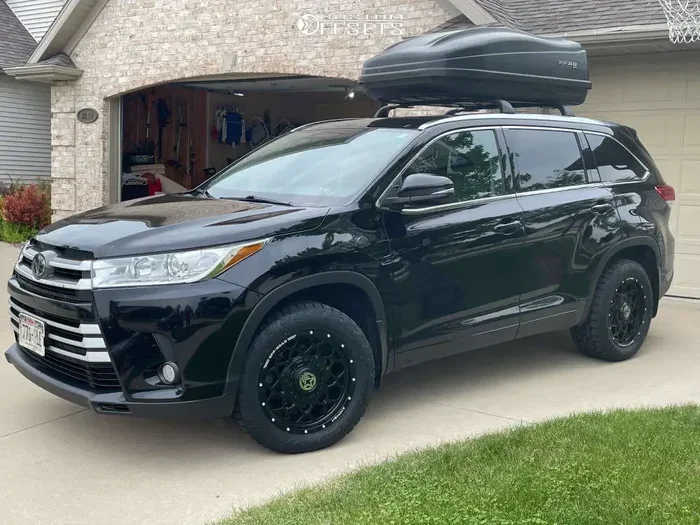
How Many Axles Does a Toyota Highlander Actually Have
The Toyota Highlander has two axles — one front axle and one rear axle — which is standard for most SUVs. The axle setup changes depending on whether your Highlander is two-wheel drive or all-wheel drive, and this directly impacts towing capacity, handling, and overall performance. Knowing your axle configuration helps with maintenance, parts replacement, and understanding how your vehicle handles the road.
The Toyota Highlander is one of the most popular three-row SUVs on the road today. Families love it. Commuters love it. And anyone who needs a reliable ride absolutely loves it. But beneath all that popularity lies a question that not many people think about until something goes wrong.
How many axles does a Toyota Highlander actually have?
It sounds like a simple question. And the answer is pretty straightforward. But the reason it matters goes way deeper than most people realize. Your axles do more than just hold your wheels in place. They transfer power from the engine to the ground. They carry the weight of your entire vehicle. And they play a huge role in how your Highlander handles, tows, and rides.
In this guide, we will break down everything you need to know about the Toyota Highlander axle setup. We will cover how many axles it has, what each axle does, how the drivetrain changes the setup, and what you need to do to keep your axles in great shape.
Let us get into it.
Key Takeaways
- Two axles total: Every Toyota Highlander comes with a front axle and a rear axle, regardless of trim or year.
- AWD vs. 2WD matters: The all-wheel drive model uses a more complex axle and drivetrain setup than the two-wheel drive version.
- Axles handle heavy loads: Your Highlander’s axles support the vehicle’s weight, passengers, cargo, and towing force.
- Maintenance is key: Regular inspection of axle boots, shafts, and joints prevents costly repairs down the road.
- Axle ratio affects performance: Different Highlander trims may have different axle ratios that influence fuel economy and towing power.
- Hybrid models share the same axle count: The Highlander Hybrid still uses two axles, just with a different powertrain layout.
📑 Table of Contents
- Understanding What an Axle Is and Why It Matters
- How Many Axles Does a Toyota Highlander Have
- The Difference Between 2WD and AWD Axle Setups
- Axle Components and How They Work on the Highlander
- How Axle Configuration Affects Towing and Payload
- Maintaining Your Toyota Highlander Axles
- Common Axle Problems on the Toyota Highlander
- How Axles Affect Your Daily Driving Experience
- Final Thoughts
Understanding What an Axle Is and Why It Matters
Before we talk about the Toyota Highlander specifically, let us make sure we are on the same page about what an axle actually does. A lot of people think the axle is just a metal rod that connects two wheels. And technically, that is not wrong. But it is only part of the story.
An axle is a central shaft that rotates with the wheels. It transfers the engine’s power to the wheels so your vehicle can move. It also bears the entire weight of the vehicle, passengers, cargo, and anything else you throw in the back. That is a big job for a piece of metal.
On most modern SUVs like the Highlander, the axle assembly includes several components working together. You have the axle shaft itself. You have the constant velocity, or CV, joints that allow the shaft to rotate at different angles. You have the differential, which splits power between the left and right wheels. And you have axle boots that protect everything from dirt and moisture.
When any one of these parts fails, you will feel it. Your vehicle might vibrate. It might make a clicking noise when you turn. Or it might just stop moving altogether. That is why understanding your axle setup matters, even if you are not a mechanic.
How Many Axles Does a Toyota Highlander Have
Here is the direct answer. A Toyota Highlander has two axles. One is the front axle. One is the rear axle. This is true for every generation of the Highlander, every trim level, and every engine option. Whether you drive the base LE, the mid-range XLE, the sporty SE, or the top-of-the-line Limited, you have two axles.
This is the standard setup for almost all passenger SUVs and crossovers. A four-door family SUV like the Highlander does not need more than two axles to handle the road safely and efficiently. Even the larger three-row versions stick with this same basic layout.
Now, here is where things get a little more interesting. While the number of axles stays the same, the type of axle and the drivetrain connected to it can vary quite a bit.
Front Axle Details
The front axle on a Toyota Highlander is a split axle design. That means the left wheel and the right wheel on the front are connected by separate axle shafts that run through the differential. This setup allows each front wheel to rotate at a different speed when you turn a corner. Without this, your tires would scrub and wear out very quickly.
On front-wheel drive Highlanders, the front axle also receives power directly from the transmission. The axle shafts connect to the front wheels and push the vehicle forward. On all-wheel drive models, the front axle still receives power, but it also sends some power to the rear axle through a transfer case.
Rear Axle Details
The rear axle on the Highlander is a live axle in most configurations. This means the axle shaft rotates with the wheels and carries the vehicle’s weight. The differential sits in the center of the rear axle and distributes power to both rear wheels.
On two-wheel drive Highlanders, the rear axle simply supports the back end of the vehicle and allows the wheels to spin. On all-wheel drive models, the rear axle also receives power from the transfer case, making it an active part of the drivetrain.
The Difference Between 2WD and AWD Axle Setups
Not all Toyota Highlanders are built the same way under the hood. The axle setup changes depending on whether your vehicle is two-wheel drive or all-wheel drive. And understanding this difference helps you get the most out of your vehicle.
Two-Wheel Drive Axle Configuration
The two-wheel drive Highlander uses a simpler axle and drivetrain layout. Power flows from the engine to the transmission and then to the front axle only. The rear axle is non-driven, meaning it just supports the weight of the rear of the vehicle and allows the wheels to rotate freely.
This setup is lighter and more fuel efficient. If your Highlander is your daily commuter and you live in an area with mild winters, the two-wheel drive version works great. You get the same two axles, but the power delivery is more focused.
All-Wheel Drive Axle Configuration
The all-wheel drive Highlander has a more complex axle system. Power flows from the engine to the transmission, then to both the front and rear axles through a transfer case. The transfer case splits the torque and sends it to the front and rear axles simultaneously.
This means both axles are actively working to move the vehicle. The result is better traction, especially in rain, snow, or off-road conditions. If you have ever wondered why your AWD Highlander feels more confident on wet roads, this is the reason.
If you are curious about starting your Highlander without the push-button start system, you can learn whether you can start your Toyota Highlander with a key as a backup option.
Hybrid Powertrain and Axle Interaction
The Toyota Highlander Hybrid also uses two axles. The hybrid powertrain adds an electric motor and a battery pack, but the axle count remains the same. In most hybrid Highlanders, the front axle receives power from both the gas engine and the electric motor through a planetary gear set. The rear axle receives power through the hybrid system’s power split device.
This setup gives the Highlander Hybrid excellent fuel economy without sacrificing the towing and hauling capability that families need. The hybrid system also uses regenerative braking, which puts less stress on the axle components over time.
Axle Components and How They Work on the Highlander
Now that you know the Highlander has two axles, let us look at what makes up each axle. Understanding the components helps you talk to your mechanic with confidence. It also helps you spot warning signs before a small problem becomes a big repair bill.
Axle Shafts
The axle shafts are the long rods that connect the differential to the wheels. On the Highlander, there are two axle shafts per axle, one for each wheel. These shafts spin at high speeds and transmit torque from the engine to the ground.
Over time, axle shafts can wear out. You might notice a clicking noise when you turn, especially at low speeds. Or you might feel a vibration while driving at highway speeds. These are signs that your axle shafts need attention.
CV Joints
Constant velocity joints sit at both ends of each axle shaft. They allow the shaft to rotate smoothly even when the suspension moves up and down or when you turn the steering wheel. CV joints are protected by rubber boots filled with grease.
When a CV boot tears, grease leaks out and dirt gets in. The joint dries out and eventually fails. Replacing a CV boot early is cheap. Replacing the entire axle shaft after the joint fails is much more expensive.
The Differential
The differential is the component that sits between the two wheels on each axle. Its job is to split the engine’s power and send it to both wheels while allowing them to spin at different speeds. This is essential when you are turning a corner, because the outside wheel needs to travel farther and faster than the inside wheel.
On the Highlander, the front differential is integrated into the transaxle assembly. The rear differential is a separate unit mounted to the rear axle.
Axle Boots and Seals
The axle boots are rubber covers that protect the CV joints from dirt, water, and debris. They are small but incredibly important. A damaged boot leads to a destroyed CV joint, and that leads to an expensive repair.
You should inspect your axle boots every time you get your oil changed. If you notice cracks, tears, or grease leaking around the wheels, get them fixed right away. Catching the problem early saves you a lot of money and keeps your Highlander running smoothly.
How Axle Configuration Affects Towing and Payload
The way your Highlander’s axles are set up directly affects what your vehicle can tow and carry. This is important information if you plan to haul a trailer, boat, or camper.
Towing Capacity
The Toyota Highlander can tow up to 5,000 pounds when properly equipped. This capability depends heavily on the axle ratio and the drivetrain. The axle ratio determines how many times the driveshaft rotates for every turn of the axle. A higher axle ratio gives you more towing power but can reduce fuel economy.
Want to know how much weight your vehicle can safely carry in general? Check out our guide on how much weight a regular car can carry for more helpful context.
Payload Capacity
Payload capacity is the total weight your Highlander can carry, including passengers and cargo. The axles play a huge role here because they bear all of that weight. Overloading your axles can lead to premature wear, poor handling, and even dangerous situations on the road.
Always check your owner’s manual for the exact payload and towing ratings for your specific Highlander model. These numbers vary by year, trim, and engine type.
Axle Ratio by Trim
Different Highlander trims may come with different axle ratios. Here is a general comparison.
- Base LE (2WD): Axle ratio optimized for fuel economy and daily driving.
- XLE / XSE (AWD): Slightly higher axle ratio for better towing and all-weather performance.
- Limited (AWD): Balanced axle ratio for both comfort and towing capability.
- Hybrid trims: Axle ratio tuned for efficiency while maintaining decent towing ability.
Maintaining Your Toyota Highlander Axles
Your axles do a lot of hard work every time you drive. Keeping them in good condition is not difficult, but it does require some regular attention. Here are the maintenance steps that will help your axles last a long time.
Inspect Axle Boots Regularly
Walk around your Highlander once a month and look at the axle boots. They should be clean, rubbery, and free of cracks or tears. If you see grease splattered around the wheels or boot area, the boot has likely been compromised.
Listen for Unusual Noises
A clicking or popping noise when turning is one of the most common signs of a failing CV joint. A humming or growling noise that gets louder at higher speeds can indicate a worn differential bearing. Do not ignore these sounds. They rarely fix themselves.
Check for Vibrations
If you feel a vibration that gets worse as you speed up, a worn axle shaft could be the culprit. This is especially common after hitting a pothole or curb. Get it checked out before the shaft breaks completely.
Keep Axle Fluid Clean
The differential fluid in your rear axle needs to be changed periodically. Old, contaminated fluid causes wear on the gears and bearings. Check your owner’s manual for the recommended service interval. Most manufacturers suggest changing it every 30,000 to 60,000 miles.
Avoid Overloading
We mentioned payload capacity above, but it bears repeating. Overloading your Highlander puts extra stress on the axles, suspension, and brakes. Stay within the recommended limits and your drivetrain components will thank you.
If you are looking at a used Highlander and want to understand its overall condition and value, you might find our article on how to determine the actual cash value of a car very useful for your research.
Common Axle Problems on the Toyota Highlander
Even with proper maintenance, axles can develop problems over time. Here are the most common issues Highlander owners face.
Worn CV Joints
CV joints wear out over time, especially if the boots are damaged. A clicking noise during turns is the telltale sign. Replacement usually involves replacing the entire axle shaft assembly.
Axle Shaft Seals Leaking
The seals at each end of the axle shaft keep fluid inside and contaminants out. When they leak, the axle loses lubrication and the components wear faster. You might notice fluid spots under your vehicle or a grinding noise.
Transfer Case Issues (AWD Models)
On AWD Highlanders, the transfer case connects the front and rear axles. Transfer case problems can cause a loss of power to one axle, unusual noises, or difficulty engaging AWD mode. These issues are less common but more expensive to repair.
Axle Bearings Worn Down
Axle bearings allow the wheels to spin freely with minimal friction. When they wear out, you may hear a humming noise that increases with speed. Replacing a wheel bearing is a common repair that should not be delayed.
How Axles Affect Your Daily Driving Experience
You might be wondering why all of this matters for your day-to-day driving. The answer is simple. Your axles affect how your Highlander feels, handles, and performs in almost every driving situation.
When you accelerate, the axles transfer power to the wheels. When you turn, the CV joints allow smooth rotation. When you carry a full load of passengers and luggage, the axles support the extra weight. When you brake, the axles help distribute the stopping force evenly.
A well-maintained axle setup gives you a smooth, quiet, and confident ride. A worn or damaged axle setup gives you vibrations, noises, and potentially unsafe driving conditions.
If you ever need to drive your Highlander without the key fob, you can find out whether you can drive your Toyota Highlander without a key fob in our detailed guide.
The bottom line is this. Your Toyota Highlander has two axles. That fact might seem simple, but those two axles are responsible for so much. They move your vehicle. They carry your family. They handle the road and the weather. And they deserve your attention and care.
Final Thoughts
So, how many axles does a Toyota Highlander have? Two. One in the front. One in the rear. That is the simple answer.
But the full picture is much more interesting. Each axle is a complex assembly of shafts, joints, differentials, boots, and seals. Each one plays a vital role in how your vehicle drives, tows, and carries weight. And each one requires some basic maintenance to keep working properly.
Whether you drive the two-wheel drive or all-wheel drive version, the hybrid or the gas model, the axle count stays the same. What changes is how those axles interact with the drivetrain and how much work they do.
Take care of your axles. Inspect the boots. Listen for unusual sounds. Keep the fluid clean. And do not overload your vehicle beyond its rated capacity. Follow these simple steps and your Toyota Highlander axles will keep you rolling smoothly for many miles to come.
Frequently Asked Questions
How many axles does a Toyota Highlander have?
A Toyota Highlander has two axles, one in the front and one in the rear. This is true for every trim level, engine option, and generation of the Highlander. The two-axle setup is standard for most passenger SUVs and crossovers.
Does the AWD Highlander have more axles than the 2WD version?
No, both the AWD and 2WD Toyota Highlander have exactly two axles. The difference is in how the drivetrain delivers power. The AWD model sends power to both the front and rear axles, while the 2WD model sends power only to the front axle. The number of axles does not change.
Can a broken axle cause my Highlander to stop driving?
Yes, a completely broken axle can cause your Highlander to lose power to one or both wheels. If an axle shaft snaps while driving, the vehicle will not move on that wheel. You may hear a loud bang followed by a loss of power. Pull over safely and seek roadside assistance if this happens.
How much does it cost to replace an axle on a Toyota Highlander?
The cost to replace an axle shaft on a Toyota Highlander typically ranges from $400 to $900 per axle, depending on the trim and whether you choose a new or remanufactured part. Labor costs make up a significant portion of the total expense. Always get a detailed quote from a trusted mechanic before proceeding.
What are the signs of a failing CV joint on a Highlander?
The most common sign is a clicking or popping noise when you turn the steering wheel. You might also notice grease leaking around the wheel area if the CV boot is damaged. Vibrations during acceleration can also indicate a worn CV joint. Address these symptoms early to avoid a full axle replacement.
Does the Toyota Highlander Hybrid have a different axle setup?
The Highlander Hybrid still uses two axles, just like the gas-powered version. The hybrid powertrain adds an electric motor and battery pack, but the axle configuration remains the same. The main difference is how power is delivered from the hybrid system to the axles through the transaxle and power split device.