How Do You Check Tire Pressure Without TPMS System
Checking your tire pressure without a TPMS is easier than most drivers think. You can use a simple manual gauge, read your dashboard indicators, or even rely on visual cues to keep your tires properly inflated. This guide walks you through every method so you can stay safe and save money on fuel.
Your car has a lot of systems working behind the scenes to keep you safe. One of the most important is the tire pressure monitoring system. But what happens when that system fails or your car doesn’t have one at all? Knowing how to check tire pressure without TPMS is a skill every driver should have.
Whether you drive an older model or your sensor just gave up, you still have options. You don’t need expensive tools or a trip to the dealership. A simple tire pressure gauge and a few minutes of your time can make all the difference. Let’s walk through everything you need to know.
Key Takeaways
- Manual gauges are the most reliable way to check tire pressure without TPMS and cost just a few dollars.
- Your vehicle owner manual lists the recommended tire pressure for your specific make and model.
- Underinflated tires waste fuel and wear out faster, so regular checks matter.
- You can check tire pressure at home with basic tools like a tire pressure gauge and an air compressor.
- Dashboard warning lights give clues but should not replace a manual check.
- Checking tire pressure monthly keeps your tires healthy and your ride smooth.
📑 Table of Contents
- Why Checking Tire Pressure Matters
- Understanding TPMS and Why It Fails
- Tools You Need to Check Tire Pressure Manually
- Step-by-Step Guide to Checking Tire Pressure Without TPMS
- Alternative Methods to Check Tire Pressure
- Common Mistakes People Make When Checking Tire Pressure
- When to See a Professional
- Quick Tips for Maintaining Proper Tire Pressure
- How Tire Pressure Affects Your Driving Experience
- TPMS vs. Manual Checks: Which Is Better?
- Final Thoughts
Why Checking Tire Pressure Matters
Tire pressure might seem like a small thing. But it affects your safety, fuel economy, and tire life. When your tires are not at the right tire pressure PSI, problems start to build up fast.
Underinflated tires create more rolling resistance. That means your engine works harder. You burn more fuel. Over time, the edges of your tread wear down unevenly. Tire maintenance like this is easy to overlook until something goes wrong.
Overinflated tires are just as risky. They ride on a smaller contact patch. That reduces traction, especially on wet roads. The center of the tread wears out faster. Neither extreme is good for your vehicle owner manual recommendations or your peace of mind.
The Safety Angle
Low tire pressure is one of the leading causes of blowouts. A tire that is soft generates more heat. Heat breaks down the rubber faster. In worst cases, you lose air pressure while driving at highway speeds. That is a dangerous situation no one wants to face.
Regular tire pressure check routines help you catch problems early. You can fix a slow leak before it becomes a roadside emergency. It is one of those small habits that pay off big time.
Fuel Economy and Tire Wear
Did you know that underinflated tires can lower your fuel efficiency by up to 3 percent? That might not sound like much. But over a year of driving, it adds up. You spend more at the pump for something you could have fixed in five minutes.
Your tires are a significant investment. The last thing you want is to replace them early because of uneven wear. Proper inflation keeps them wearing evenly. That means you get more miles out of every set.
Understanding TPMS and Why It Fails
Most modern cars come with a tire pressure monitoring system. It uses sensors inside each wheel to track air levels. When pressure drops below a threshold, a warning light flashes on your dash.
But TPMS is not perfect. Sensors have batteries that die. They can get damaged from road debris or corrosion. Sometimes the system just needs a TPMS reset after you fill your tires. And in older vehicles, TPMS might not exist at all.
Common Reasons Your TPMS Light Stays On
- Dead sensor battery: Most sensor batteries last 5 to 10 years. When they die, the system can no longer read pressure.
- Temperature changes: Cold weather temporarily lowers tire pressure. This can trigger the light even if your tires are fine.
- Slow leak: A small puncture or faulty valve stem lets air out slowly. The sensor detects the drop over time.
- Sensor damage: Potholes and road hazards can physically damage the sensor inside the wheel.
- System malfunction: Sometimes the TPMS module itself has an electrical issue that needs professional diagnosis.
When the light comes on and you know your tires look fine, it might be a sensor problem. But you should never assume. Always verify with a manual tire pressure check. That is where knowing how to check tire pressure without TPMS becomes essential.
Tools You Need to Check Tire Pressure Manually
Checking tire pressure without a TPMS is straightforward. You need just a few affordable tools. Most of them are available at any auto parts store or even a gas station.
Tire Pressure Gauge
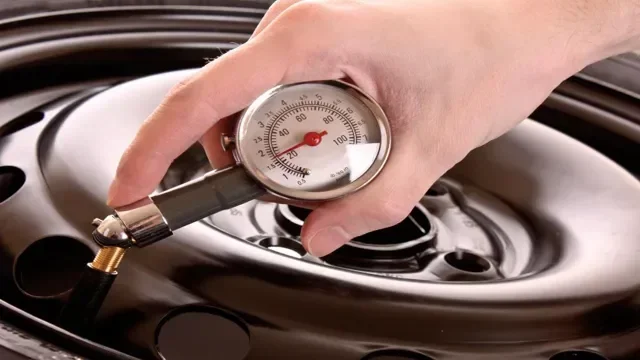
A tire pressure gauge is the most important tool. It measures the air pressure inside your tire in PSI (pounds per square inch). There are three main types:
- Pencil-style gauges: These are the most common and cheapest. They cost around $5 to $10. They are small and easy to keep in your glove box.
- Dial gauges: These have a round face with a needle indicator. They are more accurate than pencil styles and easy to read.
- Digital gauges: These give a precise digital readout. They are the most accurate option and usually backlit for nighttime use.
Any of these will work fine. The key is to get one that is well-made and easy to read. A digital tire gauge is a great choice if you want the most accurate readings.
Air Compressor or Inflation Station
Once you know your pressure is low, you need to add air. You can use a portable air compressor or visit a gas station air pump. Most gas stations have coin-operated inflators. They work fine in a pinch.
If you want the convenience of home inflation, a small portable compressor is a worthwhile investment. They plug into your car’s 12-volt outlet and fill tires quickly.
Your Vehicle Owner Manual
Before you check anything, grab your vehicle owner manual. Look for the recommended tire pressure. This number is usually listed on a sticker inside the driver’s door frame too. The manual gives you the exact tire pressure settings your car needs.
Do not guess. Do not use the number printed on the tire sidewall. That number is the maximum pressure the tire can handle, not the recommended pressure for your vehicle.
Step-by-Step Guide to Checking Tire Pressure Without TPMS
Now that you have your tools, let’s walk through the process. This is the core of how to check tire pressure without TPMS and it takes less than 10 minutes for all four tires.
Step 1: Check Tires When Cold
Always check your tire pressure when the tires are cold. That means the car has been parked for at least three hours or driven less than a mile. Driving heats up the air inside the tire, which raises the pressure reading. A cold reading gives you the most accurate result.
Step 2: Find the Recommended Pressure
Open your vehicle owner manual or look at the sticker on the driver’s door jamb. Write down the recommended PSI for both front and rear tires. Some cars require different pressures for the front and back.
Step 3: Remove the Valve Stem Cap
Each tire has a small cap on the valve stem. Twist it counterclockwise to remove it. Keep the cap in a safe place. These small caps prevent moisture and dirt from getting into the valve.
Step 4: Press the Gauge onto the Valve Stem
Press your tire pressure gauge firmly onto the valve stem. You should hear a brief hiss of air. That is normal. Hold the gauge steady and wait for a reading.
If you are using a pencil gauge, the bar will slide out to show the PSI number. A digital gauge will display the number on its screen. A dial gauge will show it on the face.
Step 5: Compare the Reading
Compare your reading to the recommended PSI. If it is close, your tire is fine. If it is low, you need to add air. If it is high, you need to let some air out.
Step 6: Add or Release Air as Needed
To add air, attach your air compressor hose to the valve stem. Press the trigger in short bursts. Check the pressure frequently so you do not overinflate.
To release air, press the small pin inside the valve stem with a key or a small tool. Let out a little air at a time and recheck. Tire pressure check is all about small, careful adjustments.
Step 7: Replace the Valve Stem Cap
Once your tire is at the right pressure, put the valve cap back on. This keeps debris out and helps prevent slow leaks.
Repeat this process for all four tires, including the spare if applicable.
Alternative Methods to Check Tire Pressure
Not everyone carries a gauge all the time. There are other ways to get a rough idea of your tire pressure. These methods are not as precise, but they can help in a pinch.
Visual Inspection
Look at each tire closely. Does one look noticeably flatter than the others? A tire that is clearly low on air is easy to spot. But visual inspection has limits. A tire can lose a significant amount of air and still look normal.
This is why visual checks should never replace a proper gauge reading. They are a quick first glance, not a substitute for accuracy.
Dashboard Warning Lights
If your car has a tire pressure light on the dash, pay attention to it. Some vehicles show individual tire pressures on the dashboard display. You can read these numbers without any extra tools.
You can also check tire pressure on the dashboard in some newer models. This feature varies by car, so refer to your manual for details. Keep in mind that the dashboard reading may not always be perfectly accurate.
The Penny Test
The penny test is a classic way to check tread depth, not pressure. But it does give you a quick overall tire health check. Insert a penny into the tread with Lincoln’s head pointing down. If you can see the top of his head, your tread is too worn. While this does not measure pressure, it tells you when it is time for new tires.
Gas Station Air Pumps
Most gas stations have air pumps with built-in gauges. These are convenient but not always the most accurate. The gauge on the pump may be worn or poorly calibrated. Use them for a quick top-off, but consider buying your own tire pressure gauge for regular use.
Common Mistakes People Make When Checking Tire Pressure
Even experienced drivers sometimes make mistakes with tire pressure. Knowing what to avoid can save you time and keep your tires in great shape.
Checking Tires After Driving
This is the most common mistake. Hot tires give a higher reading, which tricks you into thinking the pressure is fine when it is actually low. Always let your tires cool down first.
Using the Wrong PSI Number
The number molded into the tire sidewall is the maximum pressure, not the recommended pressure. Always use the number from your vehicle owner manual or the door jamb sticker.
Ignoring the Spare Tire
Your spare tire loses air too. It often sits unused for months or years. When you need it in an emergency, you do not want it to be flat. Check it at least once or twice a year.
Forgetting to Reset TPMS After Filling
If you recently filled your tires and the warning light stays on, you may need a TPMS reset. Some systems reset automatically after driving a few miles. Others require a manual reset. If you are unsure whether you need to reset your system, check out our guide on Do I Need To Reset Tpms After Filling Air for detailed instructions.
Relying Only on Dashboard Readings
Dashboard displays and warning lights are helpful. But they are not always 100% accurate. Some systems only warn you when pressure is already dangerously low. A manual tire pressure check with a gauge gives you more control and earlier warning.
When to See a Professional
Most tire pressure issues are easy to handle at home. But there are times when you should visit a professional. If you notice a tire losing air frequently, there may be a slow leak or damage to the tire or wheel.
A tire pressure sensor that keeps failing could indicate a deeper electrical or mechanical problem. If you are not comfortable working on your tires, there is no shame in asking for help.
Many tire shops offer free pressure checks and inflation. Some even have diagnostic equipment that can read your TPMS sensors. If your TPMS light is on and you are not sure why, a professional can help. You can also learn more about running diagnostics without a check engine light to understand what your car might be trying to tell you.
And if you are dealing with a faulty sensor yourself, check out our article on Can I Fix My Own Tire Pressure Sensor for practical DIY tips before you visit a shop.
Quick Tips for Maintaining Proper Tire Pressure
- Check your tires once a month. Air leaks slowly over time, even in good tires.
- Keep a tire gauge in your glove box. Having one handy makes regular checks effortless.
- Check before long trips. A quick pressure check before a road trip can prevent roadside problems.
- Track your readings. Write down your pressures each month. This helps you spot trends like a slow leak.
- Replace valve stems when needed. Old rubber valve stems can crack and leak air silently.
- Rotate your tires regularly. Even wear keeps all tires performing at their best.
How Tire Pressure Affects Your Driving Experience
Properly inflated tires change the way your car feels on the road. You will notice smoother handling, quieter rides, and better braking. These improvements come from having the right amount of air in each tire.
Underinflated tires tend to feel sluggish. The steering feels heavier, especially at low speeds. The car may pull to one side if only one tire is low. You might also hear a faint humming sound from the increased rolling resistance.
Overinflated tires feel harsh and bouncy. Every bump in the road transmits directly into the cabin. Traction suffers, particularly on wet or icy surfaces. The ride feels less comfortable and less safe.
Getting the tire pressure PSI right is the sweet spot. Your car handles predictably. Your fuel economy improves. Your tires last longer. It is a win-win-win that takes just a few minutes each month.
TPMS vs. Manual Checks: Which Is Better?
Both TPMS and manual checks have their place. A tire pressure monitoring system gives you real-time alerts. It catches problems you might not notice. But it depends on functioning sensors and batteries.
Manual checks give you direct, accurate readings. They do not rely on electronics. They let you catch slow leaks before the TPMS light even comes on. The best approach is to use both together.
Think of your TPMS as a backup system. Manual checks are your primary tool. This combination keeps your tires in the best possible condition.
Final Thoughts
How do you check tire pressure without TPMS? The answer is simpler than most people think. With a basic tire pressure gauge, your vehicle owner manual, and a few minutes of your time, you can keep your tires in excellent shape. No fancy equipment needed. No dealership visit required.
Make it a habit to check your tire pressure at least once a month. Do it when the tires are cold. Follow the recommended PSI from your manufacturer. These small steps add up to safer driving, better fuel economy, and longer-lasting tires.
Your tires are the only part of your car that touches the road. Treat them well, and they will take care of you. Start your tire pressure check routine today and feel the difference on your next drive.
Frequently Asked Questions
Can I check my tire pressure with the car running?
Yes, but it is best to check when the tires are cold. Driving heats up the air inside the tire and raises the pressure reading. Wait at least three hours after driving for the most accurate result. If you must check right after driving, add a couple of PSI to account for the heat expansion.
How often should I check my tire pressure?
You should check your tire pressure at least once a month. Temperature changes during the seasons can also affect pressure. Make it a habit to check before long road trips and whenever the weather shifts significantly.
What is the recommended tire pressure for most cars?
The recommended pressure varies by vehicle. Check your vehicle owner manual or the sticker on the driver’s door jamb. Most passenger cars recommend between 30 and 35 PSI, but your specific model may differ.
Can I use the number on the tire sidewall as my pressure target?
No. The number on the tire sidewall is the maximum pressure the tire can safely handle, not the recommended pressure for your vehicle. Always use the number from your vehicle owner manual or door jamb sticker.
What should I do if my TPMS light stays on after filling my tires?
Sometimes the system needs a reset after you fill your tires. You can try driving at a steady speed for a few miles to see if the light turns off. If it does not, you may need a manual TPMS reset or a check of the sensor batteries.
Do I need special tools to check tire pressure at home?
No special tools are needed. A basic tire pressure gauge costs between $5 and $20 and is available at any auto parts store or gas station. A pencil-style gauge is the most affordable option, while a digital gauge offers the most precise readings.
=== CONCLUSION ===
Checking tire pressure without TPMS is a straightforward skill that every driver should master. You do not need expensive equipment or technical expertise. A simple tire pressure gauge, your vehicle owner manual, and a consistent routine are all you need. Regular checks keep you safe, save you fuel, and extend the life of your tires.
Do not wait for a warning light or a flat tire to take action. Start checking your tire pressure today. Your future self, and your wallet, will thank you. Safe travels and happy driving.