How Can I Empty My Cars Gas Tank Quickly and Safely
Learning how to empty your car’s gas tank is a useful skill for every car owner. Whether you need to store your vehicle, fix a fuel system issue, or remove contaminated gas, this guide covers every method. You will discover safe draining techniques, siphoning tools, and proper fuel disposal steps. Each method is simple, practical, and easy to follow at home.
There are many reasons you might need to empty your car’s gas tank. Maybe you are storing the vehicle for winter. Perhaps the fuel has gone bad after sitting too long. Or maybe you accidentally filled up with the wrong type of fuel. Whatever the reason, knowing the right way to drain the tank saves time and money. This guide walks you through every safe and effective method.
You do not need to be a mechanic to do this. Most methods use simple tools you can find at any hardware store. I will show you step-by-step how each approach works. I will also cover safety tips, proper fuel disposal, and common mistakes to avoid. By the end, you will feel confident tackling the job yourself.
Key Takeaways
- Multiple Methods Available: You can drain your tank using a siphon pump, disconnect the fuel line, or use the vehicle’s fuel pump.
- Safety Comes First: Always work in a ventilated area away from open flames and wear protective gear.
- Proper Disposal Matters: Never dump gasoline on the ground. Use approved containers and local disposal centers.
- Tools Are Affordable: A basic siphon pump and fuel-safe container cost under $30 and work every time.
- Preventive Steps Help: Adding fuel stabilizer before storage keeps your tank and fuel system in good shape.
- Know Your Vehicle: Different cars have different access points for draining fuel. Check your owner’s manual first.
- Quick and Easy: Most methods take 30 to 60 minutes with basic tools you already own.
📑 Table of Contents
- Why You Might Need to Empty Your Gas Tank
- Tools and Materials You Will Need
- Method 1: Using a Siphon Pump (The Easiest and Safest Way)
- Method 2: Disconnecting the Fuel Line
- Method 3: Running the Engine Until It Is Empty
- Method 4: Using the Vehicle’s Built-in Fuel Drain Valve
- Proper Fuel Disposal and Safety
- Preventing Future Fuel Problems
- Comparison of Emptying Methods
- Conclusion
Why You Might Need to Empty Your Gas Tank
Before diving into the methods, it helps to understand why this task matters. A full or partially full tank can cause problems in several situations. Let us look at the most common reasons car owners need to drain their tanks.
Storing Your Vehicle for a Long Time
Gasoline breaks down over time. After about three to six months, old fuel loses its effectiveness. Bad fuel can clog your fuel filter and damage the fuel system. When you store a car, an empty tank prevents rust inside the tank and stops stale fuel from causing issues.
Wrong Fuel Type
Putting diesel in a gasoline engine or vice versa is a common mistake. If this happens, you need to drain the tank completely. Even a small amount of the wrong fuel can cause serious engine damage. Draining the tank quickly reduces the risk of costly repairs.
Contaminated or Water-Damaged Fuel
Water can enter your fuel tank through condensation or a loose cap. Water-contaminated fuel causes rough idling, stalling, and poor performance. Removing the bad fuel and replacing it with fresh gas restores smooth operation.
Carburetor or Fuel System Repairs
When working on the fuel pump or carburetor, you need an empty tank. Fuel spills during repairs create fire hazards and mess. Draining the tank first makes the job cleaner and safer.
Tools and Materials You Will Need
Before you start, gather the right tools. Having everything ready makes the process smooth and fast. Here is what you will need for most methods.
- Fuel-safe container: Use a container rated for gasoline storage. Never use a regular plastic jug.
- Hand-operated siphon pump: These cost around $15 to $25 and work great for draining fuel.
- Fuel-rated hose: A flexible rubber hose that fits your tank’s opening.
- Wrench set: You may need to disconnect fuel lines or fittings.
- Safety glasses and gloves: Protect your eyes and skin from fuel splashes.
- Absorbent rags: These clean up any spills quickly.
- Fire extinguisher: Keep one nearby as a safety precaution.
- Fuel stabilizer: Useful if you are storing the vehicle after draining.
Quick Tip: Always work outdoors or in a well-ventilated garage. Gasoline fumes are dangerous and can cause dizziness or nausea. Never smoke or use any open flame near fuel.
Method 1: Using a Siphon Pump (The Easiest and Safest Way)
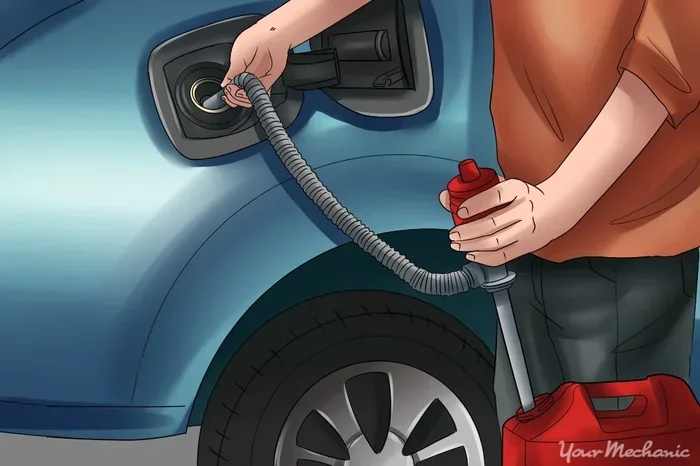
The siphon pump method is the most popular way to drain a gas tank. It is simple, clean, and does not require disconnecting any parts. This method works for most cars and trucks.
Step-by-Step Instructions
- Park your car on a flat surface and turn off the engine. Let it cool for at least 10 minutes.
- Open the fuel cap on top of the tank. This relieves pressure and allows the pump to work smoothly.
- Insert the siphon pump tube into the tank through the fuel opening. Push it down as far as it will go.
- Place the other end of the tube into your fuel-safe container on the ground.
- Pump the handle up and down several times to start the flow. You may need to prime it a few times.
- Once the siphon starts, fuel will flow by gravity into the container. Keep pumping occasionally to maintain the flow.
- Continue until the tank is empty or you have removed the amount of fuel you need.
- Remove the tube slowly and replace the fuel cap.
Tips for a Smooth Siphon
Make sure the container is lower than the tank. Gravity does the heavy lifting once the siphon starts. If the fuel is old or has sediment, let it settle for a few minutes before draining. This helps separate any water or debris from the usable fuel.
Hand-operated siphon pumps are inexpensive and reusable. They are a worthwhile investment for any car owner. You can find them at auto parts stores or online. Many models also work as fuel transfer pumps for moving gas between containers.
Method 2: Disconnecting the Fuel Line
This method works well if your car has an accessible fuel line underneath. It is a bit more involved than the siphon method but gets the job done quickly. You will need to get under the vehicle safely.
Step-by-Step Instructions
- Jack up the front of the car and secure it with jack stands. Never work under a vehicle supported only by a jack.
- Locate the fuel line near the engine or fuel filter. Refer to your owner’s manual for the exact location.
- Place a fuel-safe container directly beneath the fuel line connection point.
- Use the correct wrench to loosen the fuel line fitting. Fuel will begin to drain immediately.
- Allow the tank to empty completely into the container.
- Once drained, tighten the fitting back securely.
- Lower the vehicle and check for any leaks.
This method is especially useful when you need to completely remove gasoline for a fuel system repair. It also allows you to inspect the fuel line and filter for any blockages or damage while you are at it.
Expert Insight: If you notice rust or debris in the fuel, this is a sign your tank may need cleaning. Draining the tank gives you a chance to inspect the inside and address any issues before they become bigger problems.
Method 3: Running the Engine Until It Is Empty
Some people prefer to simply drive the car until the fuel gauge reads empty. Then they keep driving until the engine stalls. This method works but has some downsides you should know about.
How It Works
You start the car and drive until the fuel pump cannot pull any more fuel. The engine will sputter and eventually stop. At that point, most of the usable fuel is gone. However, this method leaves some residual fuel in the tank and fuel lines.
When This Method Works Best
- You only need to remove most of the fuel, not every last drop.
- You plan to fill up with fresh fuel right away.
- You do not have access to a siphon pump or other tools.
When to Avoid This Method
Do not use this method if the fuel is contaminated or if you are preparing the car for long-term storage. Residual fuel left in the tank can still degrade and cause problems over time. Also, running the engine dry repeatedly can damage the fuel pump over time.
Common Mistake: Many people run the tank completely dry too often. This causes the fuel pump to overheat because fuel acts as a coolant for the pump. Only run your tank empty when absolutely necessary.
Method 4: Using the Vehicle’s Built-in Fuel Drain Valve
Some vehicles, especially trucks and SUVs, have a drain valve at the bottom of the fuel tank. This is the simplest method if your car has one. Check your owner’s manual to see if your vehicle includes this feature.
How to Use the Drain Valve
- Find the drain valve underneath the tank. It is usually a small bolt or lever near the bottom.
- Place your fuel-safe container directly beneath the valve.
- Open the valve and let the fuel drain out.
- Close the valve tightly when the tank is empty.
This method is clean and requires no special tools. It is the fastest way to empty a fuel tank if your vehicle supports it. However, not all cars have this feature, so check before you rely on it.
Proper Fuel Disposal and Safety
Once you have drained your tank, you need to handle the old fuel responsibly. Improper disposal is illegal in many areas and harmful to the environment. Follow these guidelines to stay safe and compliant.
Where to Dispose of Old Gasoline
- Local hazardous waste centers: Most cities have designated drop-off locations for old fuel.
- Auto repair shops: Many shops will accept small amounts of old gasoline for proper disposal.
- Community recycling events: Check with your local government for scheduled collection days.
- Fire stations: Some fire departments accept used fuel for safe handling.
Can You Reuse Old Gasoline?
If the fuel looks clear and smells normal, you may be able to reuse it. Mix old fuel with fresh gasoline at a ratio of no more than 1-to-4. Add a fuel stabilizer to extend its life. However, if the fuel looks dark, has a sour smell, or contains water, dispose of it properly.
Safety Precautions to Always Follow
- Work in a well-ventilated area away from any ignition sources.
- Wear gloves and safety glasses to protect against splashes.
- Keep a fire extinguisher within reach.
- Never store gasoline in non-rated containers.
- Label all fuel containers clearly with the date and contents.
- Do not overfill containers. Leave some air space for expansion.
Quick Tip: If you have more than a few gallons of old fuel, contact your local waste management authority. They can direct you to the nearest approved disposal facility. Never pour gasoline down drains, onto the ground, or into regular trash.
Preventing Future Fuel Problems
Once you have successfully emptied your car’s gas tank, you can take steps to prevent future issues. A little maintenance goes a long way in keeping your fuel system healthy.
Use Fuel Stabilizer for Storage
If you plan to store your vehicle for more than a month, add fuel stabilizer to a full tank of fresh gas. The stabilizer slows down fuel breakdown and keeps your fuel system clean. This simple step can save you from a clogged fuel filter or a failing fuel pump.
Keep Your Tank at Least Half Full
Condensation forms more easily in a mostly empty tank. Water droplets can mix with your fuel and cause corrosion inside the tank. Keeping the tank at least half full reduces moisture buildup and extends the life of your fuel system components.
Replace Your Fuel Filter Regularly
A clogged fuel filter restricts fuel flow and reduces engine performance. Most manufacturers recommend replacing the fuel filter every 30,000 to 50,000 miles. Check your owner’s manual for the specific interval for your vehicle.
Buy Fuel from Reputable Stations
Cheap fuel from questionable sources may contain water or contaminants. Stick with well-known gas stations that have a good reputation. Quality fuel keeps your engine running smoothly and reduces the need for fuel removal or tank draining in the future.
Comparison of Emptying Methods
Here is a quick comparison of the methods discussed above. Use this table to decide which approach works best for your situation.
| Method | Difficulty | Time Required | Best For | Tools Needed |
|---|---|---|---|---|
| Siphon Pump | Easy | 30-45 min | Most car owners | Siphon pump, container |
| Disconnect Fuel Line | Medium | 20-40 min | Fuel system repairs | Wrenches, container, jack |
| Run Engine Dry | Very Easy | 1-2 hours | Quick partial drain | None |
| Built-in Drain Valve | Easy | 15-30 min | Vehicles with drain valve | Container |
Each method has its strengths. The siphon pump method offers the best balance of simplicity and effectiveness for most situations. If you are doing a repair, disconnecting the fuel line gives you the most complete drain. Choose the method that fits your needs and comfort level.
Conclusion
Now you know exactly how to empty your car’s gas tank safely and efficiently. Whether you choose the siphon pump method, disconnect the fuel line, or use a built-in drain valve, the key is to work carefully and follow all safety guidelines. Proper fuel disposal protects the environment and keeps you on the right side of local regulations.
Remember that prevention is always easier than cure. Using fuel stabilizer, keeping your tank at least half full, and buying quality fuel reduces the need to drain your tank in the first place. But when the situation does arise, you now have the knowledge and confidence to handle it yourself.
Take a few minutes to gather your tools and pick the method that works best for your vehicle. A little preparation goes a long way. Your car will thank you, and you will save time and money by doing the job right.
Frequently Asked Questions
Can I use a regular plastic container to store drained gasoline?
No, you should never use a regular plastic container for gasoline. Always use a container that is specifically rated for fuel storage. These containers are designed to handle gasoline vapors and prevent leaks. Using the wrong container can cause fires or explosions.
How long does it take to empty a gas tank using a siphon pump?
Most siphon pumps can drain a standard tank in 30 to 45 minutes. The time depends on the tank size and how much fuel is in it. A hand-operated siphon pump is faster and more reliable than gravity-only methods.
Is it safe to siphon gas by mouth?
No, siphoning gas by mouth is extremely dangerous. You can inhale toxic fumes or accidentally swallow gasoline. Always use a hand-operated siphon pump or another mechanical method. These tools are inexpensive and widely available at auto parts stores.
Can I put drained gasoline back in my car?
Yes, if the gasoline is not contaminated and has not gone bad. Check for discoloration, sour smell, or water separation. If it looks and smells normal, you can mix it with fresh fuel at a safe ratio. Add fuel stabilizer if you plan to store the mixed fuel for a while.
What should I do if I spill gasoline while draining the tank?
Clean up the spill immediately using absorbent rags. Do not let gasoline touch any hot surfaces or ignition sources. Dispose of the soiled rags safely in a metal container with a lid. If the spill is large, contact your local fire department for guidance on proper cleanup.
Do I need to empty my gas tank before long-term storage?
It depends on how long you plan to store the vehicle. For storage longer than three months, an empty tank is best. For shorter storage periods, keep the tank full and add fuel stabilizer. This prevents condensation and fuel breakdown while the vehicle sits unused.
=== META TITLE ===
Empty Your Cars Gas Tank Quickly and Safely | Guide
=== URL SLUG ===
/empty-my-cars-gas-tank-quickly-safely
=== SEO TITLE ===
How Can I Empty My Cars Gas Tank Quickly and Safely
=== OPENING SUMMARY ===
Learning how to empty your car’s gas tank is a practical skill every driver should have. Whether you are preparing for long-term storage, fixing a fuel problem, or dealing with contaminated gasoline, this guide gives you everything you need. We cover four proven methods that are safe, simple, and effective for any car owner. You will learn which tools to use, how to protect yourself, and how to dispose of old fuel the right way. This step-by-step guide makes the process easy to understand and quick to execute.