Does the Toyota Tacoma Have Full-Time 4WD – Explained
The Toyota Tacoma does not offer full-time 4WD. It uses a part-time 4WD system that requires manual engagement. The TRD Off-Road and TRD Pro trims provide the most advanced 4WD setups with locking differentials and crawl control.
The Toyota Tacoma has been one of the most popular midsize trucks on the road for decades. Buyers love its durability, off-road capability, and rugged design. But one question keeps coming up: does the Toyota Tacoma have full-time 4WD?
The short answer is no. The Toyota Tacoma does not offer a full-time 4WD system. Instead, it uses a part-time 4WD setup that requires the driver to manually engage four-wheel drive. This design choice has both advantages and trade-offs. In this article, we will break down everything you need to know about the Tacoma drivetrain.
Whether you are shopping for a new Tacoma or already own one, understanding the 4WD system is essential. It affects how you drive, what terrain you can tackle, and even your fuel economy. We will cover the Tacoma 4WD system in detail, compare it to full-time setups, and help you decide if the Tacoma is right for your needs.
Key Takeaways
- No Full-Time 4WD: The Toyota Tacoma only offers part-time 4WD across all trims and model years.
- Manual Engagement Required: You must shift the transfer case to engage 4WD on the Tacoma.
- TRD Trims Are Best: The TRD Off-Road and TRD Pro trims offer the most capable 4WD features.
- Locking Rear Differential: Available on higher trims for better traction off-road.
- 4WD High and Low: The Tacoma provides both modes for different terrain needs.
- Fuel Economy Matters: Part-time 4WD helps save fuel compared to full-time systems.
- Know Your System: Understanding how part-time 4WD works prevents drivetrain damage.
📑 Table of Contents
What Is Full-Time 4WD?
Before we dive into the Tacoma specifics, let us clarify what full-time 4WD actually means. Full-time 4WD sends power to all four wheels at all times. The system uses a transfer case to distribute torque between the front and rear axles. You do not need to switch between 2WD and 4WD modes.
This setup is common on vehicles like the Jeep Grand Cherokee and the Ford Explorer. Full-time 4WD provides constant traction and stability. It works well on mixed surfaces, including wet roads and light off-road terrain. The driver does not need to think about engaging or disengaging the system.
However, full-time 4WD has a downside. It tends to reduce fuel economy because all four wheels are always receiving power. The drivetrain components also experience more wear over time. For many truck buyers, this trade-off is not worth it.
Does the Toyota Tacoma Have Full-Time 4WD?
The Toyota Tacoma does not have full-time 4WD. Period. Every Tacoma model comes with a part-time 4WD system. This means the truck operates in two-wheel drive (2WD) by default. The driver must manually shift the transfer case to engage 4WD when needed.
The Tacoma’s part-time 4WD system connects the front and rear driveshafts through a transfer case. When in 2WD mode, power goes only to the rear wheels. When you shift into 4WD, power is distributed to all four wheels. This design is simple, reliable, and efficient.
Some people confuse part-time 4WD with automatic 4WD. The Tacoma does not have an automatic 4WD system that engages on its own. You have to physically move the transfer case shifter or push a button to switch modes. This gives the driver more control but requires more attention.
It is important to note that part-time 4WD is not the same as all-wheel drive (AWD). AWD systems are designed for on-road use and typically send power to the front wheels most of the time. The Tacoma’s part-time 4WD is built for off-road and challenging terrain. It locks the front and rear axles together for maximum traction.
Why Toyota Chose Part-Time 4WD for the Tacoma
Toyota made a deliberate choice to use part-time 4WD on the Tacoma. There are several reasons for this decision. First, part-time 4WD is simpler and more durable. Fewer moving parts means fewer things to break. The Tacoma is built to last, and a straightforward drivetrain supports that goal.
Second, part-time 4WD improves fuel economy. When the truck is in 2WD mode, it uses less fuel because only two wheels are being driven. For a truck like the Tacoma, which is often used for work and daily driving, this matters. Buyers want capability without sacrificing efficiency.
Third, part-time 4WD is better for the environment. Less energy wasted on drivetrain friction means a smaller carbon footprint. Toyota has been moving toward more efficient powertrains across its lineup, and the Tacoma’s 4WD system fits that philosophy.
Finally, part-time 4WD is less expensive to manufacture. This keeps the Tacoma’s price competitive in the midsize truck segment. Buyers get a capable off-road truck without paying a premium for full-time 4WD.
Tacoma 4WD System Explained
The Tacoma 4WD system is straightforward but effective. It uses a two-speed transfer case that provides both 4WD high and 4WD low modes. Each mode serves a different purpose and is designed for specific driving conditions.
Understanding how the system works helps you use it correctly. Misusing part-time 4WD can damage the drivetrain. So let us break down each mode and what it does.
4WD High Mode
4WD high is the most commonly used mode on the Tacoma. You engage it when driving at highway speeds on loose or slippery surfaces. This includes gravel roads, wet pavement, snow, and mud.
In 4WD high, the transfer case splits power between the front and rear axles. Both axles receive equal torque, which improves traction. The truck feels more stable and confident on challenging surfaces.
You can shift into 4WD high while driving at speeds up to about 55 mph. This makes it easy to engage 4WD when road conditions change suddenly. Just remember to shift back to 2WD when you return to dry pavement. Driving in 4WD high on dry roads can cause drivetrain binding and damage.
4WD Low Mode
4WD low is the Tacoma’s off-road mode. It provides maximum torque and crawling capability. You use this mode when rock crawling, navigating steep inclines, or crossing deep water.
In 4WD low, the transfer case multiplies torque. This gives the Tacoma incredible low-speed control. Each wheel receives maximum power, allowing the truck to crawl over obstacles with ease.
You must be at a complete stop to shift into 4WD low. The speed limit in 4WD low is typically around 25 mph. Exceeding this speed can damage the transfer case. Always use 4WD low only when you truly need it.
Part-Time 4WD vs Full-Time 4WD: Key Differences
The difference between part-time and full-time 4WD is significant. Here is a quick comparison to help clarify:
- Engagement: Part-time requires manual shifting. Full-time operates automatically.
- Fuel Economy: Part-time is better because 2WD mode reduces drivetrain drag.
- Durability: Part-time has fewer components, which means less wear.
- On-Road Use: Full-time is more convenient for daily driving on mixed surfaces.
- Off-Road Capability: Part-time 4WD locks the axles together, which is better for serious off-roading.
- Cost: Part-time systems are cheaper to build and maintain.
For the Toyota Tacoma, part-time 4WD is the right choice. It matches the truck’s intended use as a rugged, work-capable off-road vehicle. Full-time 4WD would add weight, complexity, and cost without meaningful benefits for most Tacoma owners.
Tacoma TRD Trims and Their 4WD Features
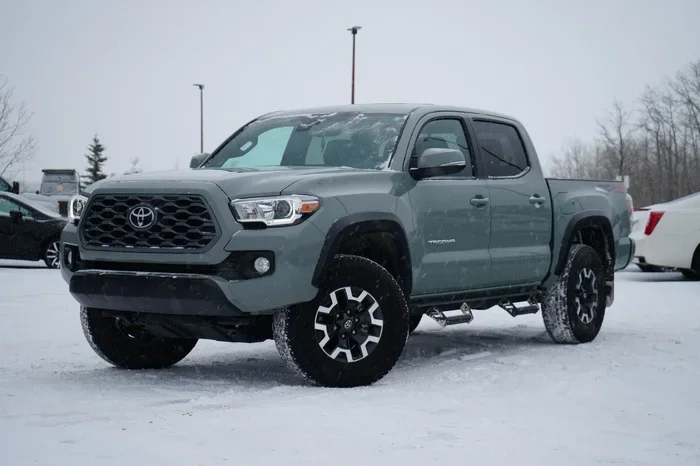
The Tacoma comes in several trim levels, and each offers different 4WD capabilities. The base SR and SR5 trims provide a basic part-time 4WD system. The TRD Off-Road and TRD Pro trims add advanced features that make the Tacoma even more capable off-road.
If you are looking for the best 4WD experience on a Tacoma, the TRD trims are the way to go. They include features that are not available on lower trims. Let us look at what each TRD trim offers.
TRD Off-Road 4WD Features
The TRD Off-Road trim is designed for serious off-road enthusiasts. It comes with part-time 4WD as standard. The standout feature is the locking rear differential. When engaged, this differential sends equal power to both rear wheels. This is incredibly helpful when one wheel loses traction on slippery or uneven surfaces.
The TRD Off-Road also includes multi-terrain select. This system lets you choose from different driving modes, including mud, sand, and rock. Each mode adjusts throttle response and braking to match the terrain. It makes the Tacoma more versatile and easier to drive off-road.
Another feature on the TRD Off-Road is the crawl control system. This automatically manages speed on steep or rough terrain. You focus on steering while the truck handles the throttle and braking. It is like having a low-speed cruise control for off-roading.
TRD Pro 4WD Features
The TRD Pro trim takes the Tacoma’s 4WD capability to the next level. It includes everything the TRD Off-Road offers, plus additional upgrades. The TRD Pro features a more advanced suspension system with FOX internal bypass shocks. These shocks provide better damping and control over rough terrain.
The TRD Pro also has a locking rear differential and multi-terrain select. The combination of these features makes the Tacoma virtually unstoppable off-road. Whether you are climbing rocks or crossing streams, the TRD Pro handles it with confidence.
One thing to note is that the TRD Pro does not add full-time 4WD. It still uses the part-time system. But the additional features make the part-time 4WD much more effective and user-friendly.
Who Should Choose 4WD on the Tacoma?
Not everyone needs 4WD on a Tacoma. The decision depends on how you plan to use the truck. Let us look at different scenarios to help you decide.
If you live in an area with harsh winters, 4WD is a smart choice. Snow and ice make two-wheel drive challenging. The Tacoma’s part-time 4WD gives you the traction you need to navigate safely. It also helps with steep driveways and unplowed roads.
If you enjoy off-roading, 4WD is essential. The Tacoma is one of the best off-road trucks in its class. The part-time 4WD system, combined with locking differentials and crawl control, makes it a trail-ready machine. Whether you are hitting local trails or planning a multi-day adventure, 4WD gives you the confidence to explore.
On the other hand, if you only use the truck for daily driving on paved roads, 4WD may not be necessary. The 2WD Tacoma is perfectly capable for commuting and running errands. It also costs less upfront and gets better fuel economy. How long can you drive with a full tank in a 2WD Tacoma? You will get more miles per gallon than in 4WD, which means fewer stops at the pump.
If you haul cargo or tow frequently, consider whether you need 4WD. For most towing situations, 2WD is sufficient. But if you are towing on unpaved roads or in difficult terrain, 4WD provides the extra traction you need. Just remember that part-time 4WD should not be used on dry pavement for extended periods.
The Tacoma also offers a great cargo area. If you need to know about bed dimensions, check out our article on whether all Tacoma beds are the same width to understand the available options.
Common Myths About Tacoma 4WD
There are several misconceptions about the Tacoma’s 4WD system. Let us clear up the most common ones.
Myth 1: The Tacoma has full-time 4WD. This is false. Every Tacoma uses part-time 4WD. There is no full-time option available on any trim or model year.
Myth 2: You can drive in 4WD on dry pavement. This is dangerous. Part-time 4WD locks the front and rear axles together. On dry pavement, this causes the drivetrain to bind. It can lead to serious damage to the transfer case, axles, and tires. Always switch back to 2WD when driving on dry roads.
Myth 3: 4WD means better braking. 4WD improves traction, but it does not improve braking. The Tacoma’s brakes work the same whether you are in 2WD or 4WD. Always allow extra stopping distance on slippery surfaces.
Myth 4: All Tacoma trims have the same 4WD system. Not true. Higher trims like the TRD Off-Road and TRD Pro offer additional features like locking differentials, multi-terrain select, and crawl control. The basic 4WD system on lower trims is simpler but still effective.
Myth 5: Part-time 4WD is inferior to full-time 4WD. This depends on your use case. For off-road capability, part-time 4WD is actually superior. It locks the axles together, which full-time systems cannot do. For daily driving on paved roads, full-time 4WD may be more convenient.
Maintenance Tips for the Tacoma 4WD System
Keeping your Tacoma’s 4WD system in good shape is essential for long-term reliability. Regular maintenance prevents costly repairs and keeps the system performing at its best.
First, check the transfer case fluid regularly. The transfer case contains fluid that lubricates the gears and bearings. Over time, this fluid breaks down and loses its effectiveness. Most Toyota experts recommend changing the transfer case fluid every 30,000 to 60,000 miles. Check your owner’s manual for the exact interval.
Second, inspect the front and rear differentials. These components also need fluid changes at regular intervals. Dirty or low differential fluid can cause premature wear and reduced performance.
Third, listen for unusual noises. Grinding, clicking, or whining sounds when shifting into 4WD can indicate a problem. Address these issues early before they become major repairs.
Fourth, make sure your engine oil is at the proper level. Low engine oil can affect the entire drivetrain, including the 4WD system. Does low engine oil show on the dashboard? In most Toyotas, yes. The dashboard will display a warning light if oil pressure drops below safe levels. Always check your oil regularly and address any warnings immediately.
Fifth, keep the 4WD system clean. The Tacoma is a rugged truck, but mud, dirt, and debris can accumulate around the transfer case and differentials. Regular washing helps prevent corrosion and keeps components functioning properly.
Finally, if you notice any issues with 4WD engagement, have the truck inspected by a qualified technician. Problems with the transfer case motor, shift linkage, or electronic controls can prevent proper 4WD operation. Early diagnosis saves money and prevents roadside breakdowns.
Tacoma 4WD vs Competitors
How does the Tacoma’s part-time 4WD stack up against the competition? Let us look at a few comparable trucks.
The Ford Ranger offers a part-time 4WD system similar to the Tacoma. Both trucks require manual engagement and provide strong off-road capability. The Ranger does offer an optional automatic 4WD system on some trims, which adds convenience.
The Chevrolet Colorado also uses part-time 4WD on most trims. It offers an optional two-speed transfer case with 4WD low, similar to the Tacoma. The Colorado’s off-road trim, the ZR2, provides features comparable to the Tacoma TRD Off-Road.
The Nissan Frontier is another competitor. It offers part-time 4WD on most trims and full-time 4WD on some higher trims. The Frontier’s full-time 4WD system is unique in the segment and may appeal to buyers who want on-road convenience.
Overall, the Tacoma’s part-time 4WD system holds its own in the midsize truck segment. It is proven, reliable, and highly capable. While competitors may offer more options, the Tacoma’s simplicity is a strength, not a weakness.
The Bottom Line on Tacoma 4WD
The Toyota Tacoma does not have full-time 4WD. It uses a part-time 4WD system that provides excellent off-road capability and strong reliability. The system is simple, efficient, and well-suited to the Tacoma’s intended use as a rugged midsize truck.
If you need full-time 4WD for daily driving on mixed surfaces, the Tacoma may not be the best fit. Consider a truck or SUV that offers full-time 4WD or AWD. But if you want a truck that can handle off-road trails, work sites, and challenging terrain, the Tacoma’s part-time 4WD system is hard to beat.
The TRD Off-Road and TRD Pro trims take the Tacoma’s 4WD capability to the next level. Features like locking differentials, multi-terrain select, and crawl control make these trims incredibly capable. They are the best choice for anyone who wants maximum off-road performance from a Tacoma.
Understanding your Tacoma’s 4WD system helps you use it correctly and get the most out of your truck. Always engage 4WD when conditions require it, and switch back to 2WD on dry pavement. Keep up with regular maintenance, and your Tacoma’s drivetrain will serve you well for years to come.
For more information about your Tacoma, check out our guide on whether adults can sit in the back of a Tacoma for seating and capacity details.
The Tacoma remains one of the best-selling trucks in America for good reason. It is tough, capable, and reliable. The part-time 4WD system is just one part of what makes this truck so special. Whether you are hauling gear, hitting the trails, or just getting to work on a snowy morning, the Tacoma has you covered.
Frequently Asked Questions
Can you drive a Toyota Tacoma in full-time 4WD?
No, the Toyota Tacoma does not have a full-time 4WD option. It uses a part-time 4WD system that you must engage manually. The truck operates in 2WD by default, and you shift into 4WD when needed.
What is the difference between part-time and full-time 4WD?
Part-time 4WD requires manual engagement and operates in 2WD by default. Full-time 4WD sends power to all four wheels at all times without driver input. The Tacoma uses part-time 4WD for better fuel economy and durability.
Which Tacoma trims have the best 4WD system?
The TRD Off-Road and TRD Pro trims offer the best 4WD systems on the Tacoma. They include features like locking rear differentials, multi-terrain select, and crawl control that are not available on lower trims.
Can you shift into 4WD while driving the Tacoma?
Yes, you can shift into 4WD high while driving at speeds up to about 55 mph. However, you must be at a complete stop to shift into 4WD low. Always switch back to 2WD when driving on dry pavement.
Is part-time 4WD good for off-roading?
Yes, part-time 4WD is excellent for off-roading. It locks the front and rear axles together, providing maximum traction on rough terrain. This is actually better than full-time 4WD for serious off-road use.
Does the Tacoma have a locking front differential?
The Tacoma does not offer a locking front differential on any trim. It does offer a locking rear differential on the TRD Off-Road and TRD Pro trims. The locking rear differential is the key feature for improved off-road traction.