Does Tesla Have Two Charging Ports And Why It Matters
No, Tesla vehicles do not have two charging ports. Every Tesla has a single charging port that handles both AC and DC charging through one connector. Understanding how this single-port system works helps Tesla owners charge faster, avoid confusion, and make smarter decisions about their electric vehicle charging setup.
If you have ever stood next to a Tesla and wondered about the charging port, you are not alone. Many new EV buyers ask the same question: does Tesla have two charging ports? The answer might surprise you. Tesla vehicles use a single charging port on each car, and that one port does a lot of heavy lifting. In this guide, we will break down everything you need to know about Tesla’s charging setup, why it works the way it does, and what it means for you as a current or future Tesla owner.
Understanding your Tesla charging port is more important than most people realize. It affects how fast you charge, where you can charge, and even which cables and adapters you need. Whether you drive a Tesla Model 3, Tesla Model Y, Tesla Model S, or Tesla Model X, the charging port works the same way. Let us dive into the details and clear up all the confusion.
Key Takeaways
- One Port, Many Options: Tesla vehicles use a single charging port that supports both AC and DC charging through one connection point.
- NACS Is the Standard: Tesla’s North American Charging Standard (NACS) connector handles all charging needs in one port, replacing older standards.
- No Second Port Exists: Despite common misconceptions, no current Tesla model comes with two separate charging ports.
- Adapters Expand Compatibility: With the right Tesla adapter, you can charge from non-Tesla EV charging stations using your single port.
- Location Matters: The charging port location is on the rear driver’s side across all Tesla models.
- Future-Proof Setup: Understanding your single port now helps you prepare for upcoming charging standards and infrastructure changes.
📑 Table of Contents
What Is Tesla’s Charging Port Setup?
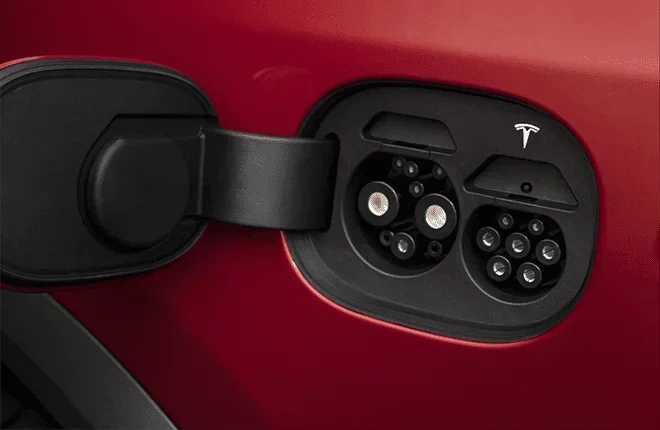
Every Tesla vehicle comes with exactly one charging port. This single port is located on the rear driver’s side of the car. It is a recessed socket that accepts different types of charging cables depending on what kind of charging you are doing. The design is clean, simple, and intentional. Tesla built this system to handle all your charging needs through one connection point.
Where Is the Charging Port Located?
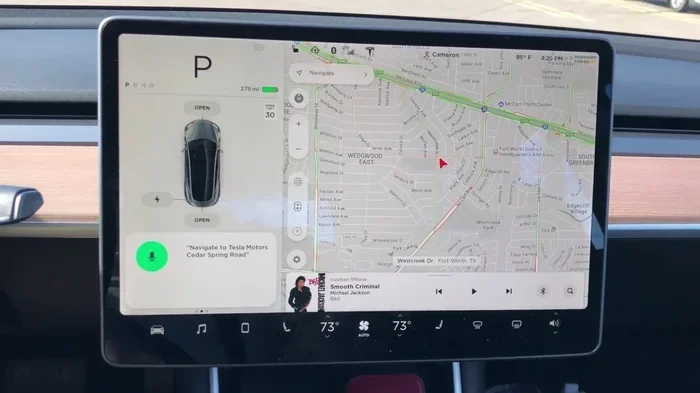
The charging port location on every Tesla model is on the rear driver’s side. You will find it near the rear tail light, tucked into the body of the car. The port door is flush with the bodywork and opens with a tap on the Tesla touchscreen or through the Tesla mobile app. This placement is consistent across all models, which makes it easy to remember no matter which Tesla you drive.
What Types of Charging Does a Single Port Support?
Here is where things get interesting. That single Tesla charging port supports multiple charging methods:
- AC Level 1 Charging: Uses a standard household outlet. Slow but convenient for overnight charging at home.
- AC Level 2 Charging: Requires a dedicated wall connector or public EV charging station. This is the most common home and destination charging method.
- DC Fast Charging: Uses Tesla Supercharger stations for rapid charging on the road. This is the fastest way to recharge your battery.
All three methods use the same single port on your car. You simply plug in the appropriate cable, and the car handles the rest. This elegant design is one of the reasons Tesla’s charging system has been so praised in the electric vehicle charging world.
Does Every Tesla Have Two Charging Ports?
The short answer is no. No current Tesla model has two charging ports. Every Tesla vehicle, from the compact Tesla Model 3 to the full-size Tesla Model X, uses a single charging port. This is true for all model years and all regions. If you see a Tesla with what looks like two ports, you are likely seeing something else entirely.
The Truth About Tesla’s Charging Port Count
Let us be very clear. Tesla does not install two separate charging ports on any of its vehicles. The single port is designed to be universal. It works with Tesla’s own charging cable ecosystem and with adapters for other charging standards. Having one port keeps the design simple, reduces manufacturing complexity, and gives owners one thing to remember when plugging in.
Why Do People Think Teslas Have Two Ports?
There are a few reasons this misconception exists. First, some people confuse the Tesla adapter setup with having multiple ports on the car itself. You might have a J1772 adapter in your trunk and the mobile connector cable, and it can look like two separate charging connections. But they all feed through the same single port on the car.
Second, some older EV brands did use two separate ports for AC and DC charging. For example, some early CCS charging standard vehicles had one port for AC and another for DC fast charging. Tesla chose a different path with a unified single-port design. This is actually a more modern and efficient approach.
Third, Tesla’s NACS connector looks different from other charging connectors. People unfamiliar with the design might assume there are two ports because the connector itself has a unique shape compared to the CCS or CHAdeMO connectors they are used to seeing.
| Feature | Tesla Single Port | Two-Port EV Systems |
|---|---|---|
| Number of Ports | One | Two (AC and DC separately) |
| Connector Type | NACS (North America) / CCS (Europe) | Varies by manufacturer |
| Charging Speed | Up to 250 kW DC fast | Varies |
| Adapter Needed for Other Networks | Yes | Sometimes |
| Design Simplicity | High | Lower |
| Used By | All current Tesla models | Some older EVs and non-Tesla brands |
Understanding NACS: Tesla’s Single-Port Solution
The NACS connector is at the heart of Tesla’s single-port design. NACS stands for North American Charging Standard. Tesla developed this connector years before other automakers adopted it. Now, NACS is becoming the dominant standard across the electric vehicle charging industry in North America.
What Does NACS Stand For?
NACS stands for North American Charging Standard. It is Tesla’s proprietary connector design that combines both AC and DC charging capabilities into one compact plug. The connector is smaller and more elegant than many competing designs. It has become so popular that major automakers like Ford, GM, Rivian, and Volvo have announced they will adopt NACS for their vehicles starting in 2025 and beyond.
How NACS Replaced the Older Standard
Before NACS, Tesla used a proprietary connector that was only compatible with Tesla Supercharger stations and Tesla wall connectors. As the EV charging station network grew, Tesla realized the industry needed a universal standard. NACS was born out of that need. It supports both AC charging at home and DC fast charging on the road through one port. This replaced the need for separate connectors and made the charging speed and compatibility much better for Tesla owners.
The shift to NACS also means that non-Tesla EV charging stations are now starting to offer NACS plugs. This is huge for the industry. It means Tesla owners can charge at more locations without needing an adapter, and other EV brands will eventually be able to use Tesla’s extensive Supercharger network.
How Tesla Charging Works in Practice
Now that you understand the single-port design, let us look at how charging actually works in everyday life. Whether you are charging at home or on the road, the process is straightforward and user-friendly.
AC Charging at Home
Most Tesla owners charge at home using a wall connector or a mobile connector plugged into a standard outlet. The charging cable connects to the single port on your car, and the AC charging process begins. Home charging is the most convenient and cost-effective way to keep your Tesla ready to go.
With a Tesla wall connector, you can get up to 44 miles of range per hour of charging. This means a full overnight charge is easy and reliable. The home charging setup is one of the biggest advantages of owning a Tesla. You wake up every morning with a full battery and never need to stop at a gas station.
DC Fast Charging on the Road
When you are on a road trip, DC fast charging at Tesla Supercharger stations is the way to go. The Supercharger cable connects directly to your single port, and the charging speed is impressive. Most Tesla models can charge from 10% to 80% in about 30 minutes at a Supercharger station.
Tesla has been rapidly expanding its Supercharger network. As of 2024, there are tens of thousands of Superchargers worldwide. The network is reliable, fast, and easy to use through the Tesla touchscreen or the Tesla app. This single-port system makes road trips in a Tesla simple and stress-free.
Charging Speed and Cable Compatibility
The charging speed you get depends on several factors. These include your Tesla model, the battery size, the charging station output, and the temperature. Generally, newer Tesla models support faster DC fast charging speeds. The Tesla Model S Plaid, for example, can charge at up to 250 kW at a Supercharger, which is among the fastest in the industry.
For AC charging at home, the wall connector delivers up to 48 amps on a dedicated circuit. The mobile connector is more flexible but slower, making it ideal for travel or situations where a wall connector is not available. Both cables use the same single port on your car.
Quick Tip: Always check your charging cable and adapter condition before a long trip. A damaged cable or loose adapter can slow down your charging speed or prevent charging altogether. Keep a spare Tesla adapter in your trunk for emergencies.
Common Confusions About Tesla Charging Ports
There are several misconceptions about Tesla charging ports that trip up new and even experienced owners. Let us clear up the most common ones.
Adapter Myths Debunked
One of the biggest myths is that you need two ports to use different adapters. This is not true. Tesla’s single port works with all of its adapters. The J1772 adapter lets you charge at non-Tesla AC charging stations. The CCS adapter (available in Europe) allows DC fast charging at non-Tesla stations. Both adapters plug into the same single port on your car. You do not need a second port for any of this.
Another common myth is that using adapters damages the charging port. Tesla designed the port and adapters to work together safely. As long as you use genuine Tesla adapters or certified third-party options, there is no risk of damage to your charging port.
Regional Differences in Charging Standards
It is worth noting that the connector type varies by region. In North America, Tesla uses the NACS connector. In Europe and other markets, Tesla vehicles use the CCS (Combined Charging System) connector. Both are single-port solutions. The underlying design philosophy is the same: one port, multiple charging capabilities. So whether you drive a Tesla in California or Norway, you still have just one charging port doing all the work.
Common Mistakes to Avoid:
- Forgetting to remove the adapter after charging. Leaving an adapter plugged into your port can expose it to moisture and damage.
- Using non-certified adapters. Cheap third-party adapters can cause charging issues or even damage your electrical system. Stick with Tesla-approved accessories.
- Assuming all Superchargers are the same speed. Charging speed varies by station and by how many other cars are charging at the same time.
- Ignoring the port door. Always close the charging port door firmly after plugging in. A loose door can let in water and debris.
What This Means for Tesla Owners and Buyers
Now that you know the answer to does Tesla have two charging ports, let us talk about what this means for you. Whether you already own a Tesla or are considering buying one, understanding the single-port system has real practical benefits.
Practical Tips for Charging
Here are some actionable tips to get the most out of your single Tesla charging port:
- Install a Wall Connector at Home: This gives you the fastest home charging speeds and the most convenience. It is the best investment you can make as a Tesla owner.
- Keep Adapters Organized: Store your Tesla adapter and charging cable in a dedicated spot in your garage or trunk. This prevents loss and damage.
- Plan Road Trips Around Superchargers: Use the Tesla navigation system to route your trips through Supercharger stations. The system automatically adds charging stops based on your battery level.
- Charge During Off-Peak Hours: If you have time-of-use electricity rates, charging at night is often cheaper. Set a scheduled charging time in your Tesla settings.
- Check Port Condition Regularly: Inspect the charging port for debris, moisture, or damage. A clean, dry port ensures reliable charging every time.
Future-Proofing Your Tesla Charging Setup
The electric vehicle charging landscape is changing fast. With more automakers adopting the NACS standard, the charging ecosystem is becoming more unified. This is great news for Tesla owners. You can expect even more EV charging stations to offer NACS plugs in the coming years, which means better compatibility and fewer adapters needed.
If you are buying a Tesla today, your single-port setup is already future-ready. Tesla has been ahead of the curve with its charging standard, and that lead is only growing. The Tesla Supercharger network is expanding, and non-Tesla EVs are starting to use it too. This means more reliable charging infrastructure for everyone.
Expert Insight: According to industry analysts, the adoption of NACS by major automakers is a game-changer for the EV charging industry. Tesla’s single-port design has proven to be more practical and user-friendly than dual-port systems used by some competitors. The trend toward a universal charging standard benefits all EV owners, not just Tesla drivers.
The bottom line is simple. Tesla’s single charging port is a deliberate design choice that works brilliantly. It simplifies your life, reduces clutter, and keeps your car looking clean. There is no need for two ports when one does everything you need.
Conclusion
So, does Tesla have two charging ports? The answer is a clear no. Every Tesla vehicle has one charging port that handles all your charging needs. Whether you are doing slow AC charging at home, fast DC fast charging at a Supercharger, or using adapters at non-Tesla stations, it all goes through that single port. This design is intentional, elegant, and ahead of its time.
Understanding how your Tesla charging port works gives you confidence as an owner. You know exactly what to expect, what equipment you need, and how to get the best charging speed every time. The single-port system is one of the many reasons Tesla has set the standard for electric vehicle charging. Embrace it, learn it, and enjoy the simplicity it brings to your daily driving.
Take some time to familiarize yourself with your port, keep your cables and adapters in good shape, and plan your charging around your lifestyle. With the right knowledge and a solid routine, your Tesla charging experience will be smooth, fast, and hassle-free for years to come.
Frequently Asked Questions
Can I charge my Tesla at a non-Tesla charging station?
Yes, you can charge your Tesla at non-Tesla stations using the appropriate Tesla adapter. For AC charging, use the J1772 adapter. For DC fast charging in Europe, use the CCS adapter. Tesla is also opening its Supercharger network to non-Tesla EVs, and the trend toward universal standards like NACS is making cross-brand charging easier every year.
How long does it take to charge a Tesla at a Supercharger?
Most Tesla models can charge from 10% to 80% in approximately 25 to 40 minutes at a Supercharger station. The exact charging speed depends on your model, battery size, temperature, and how many other cars are charging at the same time. Newer models with updated hardware tend to charge faster.
Do I need a special adapter for home charging?
For home charging, you do not need an adapter if you install a Tesla wall connector. If you are using a standard household outlet, the mobile connector that comes with your Tesla works directly with the single charging port. For public AC charging stations, you will need the J1772 adapter, which is sold separately by Tesla.
Is the Tesla charging port waterproof?
Yes, the Tesla charging port is designed to be water-resistant and safe to use in rain or snow. The port door seals tightly when closed, protecting the internal connectors from moisture and debris. You can confidently plug in your car in any weather condition.
What is the difference between NACS and CCS connectors?
NACS (North American Charging Standard) is Tesla’s proprietary connector used in North America. CCS (Combined Charging System) is the standard used by most other EV manufacturers in Europe and some other regions. Both are single-port solutions that support AC and DC charging. Tesla uses NACS in North America and CCS in Europe, but both work the same way with one port on the car.
Will future Teslas still use one charging port?
Yes, Tesla has confirmed that all future models will continue to use the single-port NACS design in North America. The company has been instrumental in pushing NACS as the industry-wide standard, and there is no indication that Tesla plans to change its single-port approach. This consistency ensures compatibility and simplicity for all Tesla owners.