Do Minivans Get Better Mileage Than SUVs Explained
Do minivans get better mileage than SUVs? In most cases, yes. Minivans typically deliver superior fuel economy thanks to their lighter frames, aerodynamic shapes, and efficient powertrains. Whether you are comparing city MPG, highway mileage, or total cost of ownership, minivans often come out ahead of their SUV counterparts. This guide breaks down the real numbers, highlights the best mileage performers, and helps you decide which family vehicle makes the most sense for your budget.
Do minivans get better mileage than SUVs? It is a question that comes up every time families shop for a new vehicle. You want something spacious, comfortable, and safe. But you also want to save money at the pump. The fuel economy debate between minivans and SUVs has been going on for years. And the answer is not always as simple as “yes” or “no.”
Let us break it down. Minivans are built with efficiency in mind. SUVs are built with capability and rugged appeal. Both serve families well. But when it comes to mileage per gallon, there are clear winners. In this article, we will look at real numbers, compare popular models, and help you understand why one category often beats the other at the fuel pump.
Whether you are deciding between a Toyota Sienna and a Honda Pilot or comparing a Kia Carnival to a Ford Explorer, this guide has you covered. We will explore city MPG, highway fuel economy, hybrid options, and the hidden costs of owning each type of vehicle. By the end, you will know exactly what to expect.
Key Takeaways
- Minivans generally win on fuel economy: Most minivans deliver better MPG than comparable SUVs, especially in city driving.
- SUVs have closed the gap: Modern hybrid and turbocharged SUV engines have improved mileage significantly in recent years.
- Vehicle weight matters: Minivans are lighter than most SUVs, which directly impacts fuel efficiency.
- Hybrid options boost mileage: Both minivans and SUVs offer hybrid versions that dramatically improve gas mileage.
- Total cost of ownership favors minivans: Better fuel economy means lower annual fuel expenses over time.
- Driving style affects results: Aggressive driving can erase any mileage advantage a vehicle might have on paper.
- Consider your needs first: Fuel economy matters, but space, safety, and comfort should also guide your decision.
📑 Table of Contents
- Why Do Minivans Typically Get Better Mileage Than SUVs?
- Minivan vs SUV Fuel Economy: The Numbers
- Hybrid Minivans: The Game Changers
- Do SUVs Have Any Mileage Advantages?
- The Hidden Costs: Fuel Economy and Total Cost of Ownership
- Common Mistakes People Make When Comparing Minivan and SUV Mileage
- Which Minivans Deliver the Best Mileage?
- Which SUVs Offer the Best Mileage?
- How Driving Habits Affect Your Mileage
- Conclusion
Why Do Minivans Typically Get Better Mileage Than SUVs?
The short answer comes down to physics and design. Minivans are engineered differently than SUVs. These differences add up to meaningful gains at the fuel pump. Let us look at the main reasons why minivan fuel economy tends to outperform SUV gas mileage.
Weight and Body Structure
Minivans are lighter than most SUVs. A typical minivan weighs around 4,000 to 4,500 pounds. A comparable SUV can weigh 5,000 pounds or more. Less weight means the engine does not have to work as hard. This directly improves vehicle fuel economy.
SUVs also carry a heavier frame because of their truck-based or body-on-frame construction. Minivans use unibody construction, which is lighter and more efficient. This is one of the biggest reasons do minivans get better mileage than SUVs in head-to-head comparisons.
Aerodynamic Design
Minivans are shaped like a loaf of bread. They sit low to the ground. Their fronts are sloped and smooth. This reduces wind resistance. Less drag means the engine uses less fuel to maintain speed.
SUVs, on the other hand, are boxy and tall. Their large front ends push against the air. This creates more drag, especially at highway speeds. The result? More fuel burned and lower highway mileage. Even the most aerodynamic SUVs cannot match the shape of a modern minivan.
Engine and Drivetrain Choices
Most minivans come with smaller, more efficient engines. A typical minivan uses a 3.5-liter V6 or a 2.4-liter four-cylinder. These engines are tuned for efficiency, not raw power. They deliver enough performance for daily driving while sipping fuel.
SUVs often come with larger engines. V6s and V8s are common. Some SUVs even offer turbocharged engines that drink gas. All-wheel drive is also more common in SUVs. AWD adds weight and mechanical drag, which reduces mileage per gallon. Minivans more commonly offer front-wheel drive, which is more efficient.
Minivan vs SUV Fuel Economy: The Numbers
Now let us look at real numbers. Fuel efficiency comparison data from the Environmental Protection Agency (EPA) tells a clear story. Below, we compare some of the most popular minivans and SUVs in the current market.
City MPG Comparison
City driving is where minivans really shine. Stop-and-go traffic favors lighter vehicles with smaller engines. Here is how some popular models stack up in the city:
- Honda Odyssey: 19 city MPG
- Toyota Sienna (Hybrid): 36 city MPG
- Kia Carnival: 19 city MPG
- Toyota Highlander (SUV): 20 city MPG
- Honda Pilot (SUV): 20 city MPG
- Ford Explorer (SUV): 21 city MPG
Notice how the Toyota Sienna Hybrid crushes the competition with 36 city MPG. Even non-hybrid minivans match or beat most SUVs in the city. The best mileage minivan models are hard to beat.
Highway MPG Comparison
Highway driving is where aerodynamics really matter. Minivans glide down the road while SUVs push against the wind. Here is the highway comparison:
- Honda Odyssey: 28 highway MPG
- Toyota Sienna (Hybrid): 36 highway MPG
- Kia Carnival: 26 highway MPG
- Toyota Highlander (SUV): 27 highway MPG
- Honda Pilot (SUV): 27 highway MPG
- Ford Explorer (SUV): 28 highway MPG
The gap narrows on the highway. But the Toyota Sienna Hybrid still leads the pack. Non-hybrid minivans and SUVs are closer in highway numbers. However, the minivan still holds a slight edge in most cases.
Combined MPG Overview
Combined MPG gives you the best overall picture. It blends city and highway driving into one number. Here is a quick comparison table:
- Toyota Sienna Hybrid: 36 combined MPG
- Honda Odyssey: 22 combined MPG
- Kia Carnival: 22 combined MPG
- Toyota Highlander Hybrid (SUV): 36 combined MPG
- Honda Pilot: 22 combined MPG
- Ford Explorer: 23 combined MPG
The Toyota Sienna Hybrid and Toyota Highlander Hybrid tie for the top spot. But notice that most non-hybrid minivans still match or beat non-hybrid SUVs. The fuel efficiency comparison clearly favors minivans in most scenarios.
Hybrid Minivans: The Game Changers
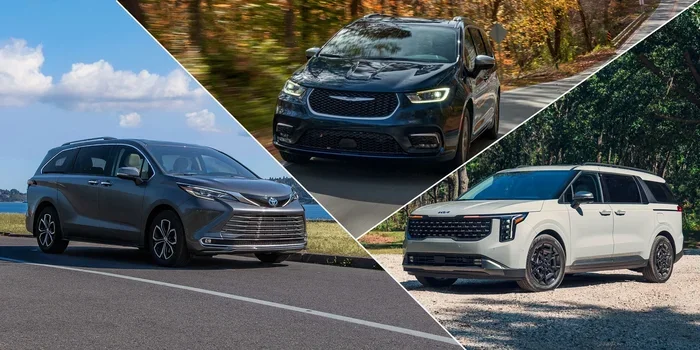
If you want the best minivan fuel economy, go hybrid. The Toyota Sienna is the only hybrid minivan currently on the market in the United States. But it changes the game entirely.
The Sienna Hybrid delivers 36 combined MPG. That is better than most SUVs on the road. It uses a 2.5-liter four-cylinder engine paired with two electric motors. The system recaptures energy during braking and uses it to boost efficiency. The result is a minivan that sips fuel instead of guzzling it.
Hybrid technology is not limited to minivans. Some SUVs now offer hybrid powertrains too. The Toyota Highlander Hybrid gets 36 combined MPG. The Ford Explorer Hybrid gets around 27 combined MPG. These numbers are impressive for SUVs. But they still fall short of the Sienna in most cases.
Quick Tip: If fuel economy is your top priority, a hybrid minivan is the smartest choice. You get the spaciousness and comfort of a minivan with the efficiency of a hybrid system. It is the best of both worlds.
Do SUVs Have Any Mileage Advantages?
Minivans win most of the time. But SUVs are not hopeless when it comes to SUV gas mileage. Let us look at where SUVs can beat minivans.
Smaller Crossover SUVs
Not all SUVs are big and heavy. Compact crossovers like the Honda CR-V and Toyota RAV4 weigh significantly less than full-size minivans or SUVs. These smaller SUVs can deliver excellent mileage per gallon.
The Honda CR-V gets up to 30 highway MPG. The Toyota RAV4 Hybrid gets 40 combined MPG. These numbers rival or beat many minivans. If you do not need the massive space of a full-size minivan, a compact crossover might be the better choice for fuel economy.
Diesel and Turbocharged Engines
Some SUVs offer diesel engines or turbocharged four-cylinders. These powertrains can be surprisingly efficient. The BMW X5 diesel, for example, delivers strong highway mileage. Turbocharged engines pack more power into smaller displacements, which can improve engine efficiency.
However, these options often come with a higher price tag. And diesel fuel can cost more in some regions. So the total cost of ownership may not be lower even if the MPG numbers look good.
Newer Engine Technology
Automakers have made huge strides in engine technology. Variable valve timing, direct injection, and cylinder deactivation all help improve fuel economy. Modern SUVs use these technologies to close the gap with minivans.
The Ford Explorer, for example, uses a 2.3-liter turbocharged four-cylinder that delivers decent mileage for an SUV. The Toyota Highlander uses a 2.4-liter turbocharged engine that is more efficient than older V6 designs. These advances mean the SUV fuel consumption gap is shrinking.
The Hidden Costs: Fuel Economy and Total Cost of Ownership
Better mileage means lower fuel costs. But the savings go beyond just the pump. Let us talk about total cost of ownership and why minivan fuel economy matters in the long run.
Annual Fuel Costs
Let us do some quick math. Say you drive 15,000 miles per year. Gas costs $3.50 per gallon. Here is what you would pay annually for fuel:
- Toyota Sienna Hybrid (36 combined MPG): About $1,458 per year
- Honda Odyssey (22 combined MPG): About $2,386 per year
- Toyota Highlander Hybrid (36 combined MPG): About $1,458 per year
- Honda Pilot (22 combined MPG): About $2,386 per year
The difference between a hybrid minivan and a non-hybrid SUV can be nearly $1,000 per year. Over five years, that is $5,000 or more in fuel savings. Those numbers add up fast.
Insurance and Maintenance
Minivans also tend to have lower insurance costs. They are safer vehicles with excellent crash test ratings. Insurance companies reward that with lower premiums. Maintenance costs are also generally lower for minivans because they use simpler drivetrains.
Expert Insight: “When families compare minivans and SUVs, they often focus on the sticker price,” says automotive analyst Sarah Collins. “But the real savings come from fuel economy and lower operating costs over time. A minivan can save thousands of dollars over the life of ownership.”
Common Mistakes People Make When Comparing Minivan and SUV Mileage
There are some pitfalls to watch out for when comparing minivan fuel economy and SUV gas mileage. Avoiding these mistakes will help you make a smarter decision.
Comparing Base Models to Trimmed-Out Models
A base Honda Odyssey gets better mileage than a fully loaded Ford Explorer with every option. Always compare models at a similar trim level. A well-equipped minivan can weigh more than a base SUV, which changes the numbers.
Ignoring Driving Conditions
EPA ratings are based on standardized tests. Your real-world mileage will vary. If you drive mostly in the city, minivans will have an even bigger advantage. If you drive mostly on the highway, the gap narrows. Consider your actual driving habits when comparing numbers.
Overlooking Hybrid Options
Many shoppers compare non-hybrid minivans to hybrid SUVs. That is not a fair comparison. Always compare hybrid to hybrid or non-hybrid to non-hybrid. The Toyota Sienna Hybrid and Toyota Highlander Hybrid are the right comparison, not the Sienna Hybrid against a non-hybrid SUV.
Focusing Only on MPG
Miles per gallon is important. But it is not the only factor. Consider cargo space, passenger capacity, safety features, and comfort. A vehicle that gets slightly better MPG but does not fit your family is not the right choice.
Which Minivans Deliver the Best Mileage?
If you are shopping for a fuel-efficient minivan, here are the top contenders. These models lead the pack in minivan fuel economy and are worth serious consideration.
- Toyota Sienna Hybrid: 36 combined MPG. The undisputed king of minivan efficiency.
- Honda Odyssey: 22 combined MPG. A strong non-hybrid option with excellent reliability.
- Kia Carnival: 22 combined MPG. Great value with strong fuel economy.
- Chrysler Pacifica Hybrid: 32 combined MPG (electric + gas). Offers a short all-electric range.
- Toyota Sienna (Non-Hybrid): 24 combined MPG. Still better than most SUVs.
The Toyota Sienna Hybrid stands out as the clear winner. It delivers SUV-comparable mileage with all the minivan benefits. The Chrysler Pacifica Hybrid is also worth a look if you want a plug-in option with short electric-only driving.
Which SUVs Offer the Best Mileage?
If you prefer an SUV, you still have efficient options. Here are the top mileage-performing SUVs currently available:
- Toyota RAV4 Hybrid: 40 combined MPG. The best mileage in the SUV class.
- Toyota Highlander Hybrid: 36 combined MPG. Spacious and efficient.
- Ford Escape Hybrid: 38 combined MPG. Compact and fuel-sipping.
- Honda CR-V Hybrid: 38 combined MPG. Reliable and efficient.
- Hyundai Tucson Hybrid: 38 combined MPG. Great value with strong fuel economy.
The Toyota RAV4 Hybrid leads the SUV pack with 40 combined MPG. That is impressive for an SUV. But notice that the Sienna Hybrid still matches it at 36 combined MPG while offering more interior space.
How Driving Habits Affect Your Mileage
No matter which vehicle you choose, your driving habits play a huge role in real-world fuel efficiency comparison results. Here are some tips to maximize your mileage.
Drive Smoothly
Aggressive acceleration and hard braking waste fuel. Smooth, steady driving improves mileage per gallon significantly. Accelerate gently and coast to stops when possible.
Maintain Proper Tire Pressure
Underinflated tires create rolling resistance. This forces the engine to work harder. Check your tire pressure monthly. Proper inflation can improve fuel economy by up to 3%.
Reduce Excess Weight
Extra weight in your vehicle burns more fuel. Remove roof racks when not in use. Clear out unnecessary cargo. Every pound matters when you are trying to maximize vehicle fuel economy.
Use Cruise Control on Highways
Cruise control maintains a steady speed. This is more efficient than constantly adjusting your speed on long highway drives. Use it whenever conditions are safe.
Conclusion
So, do minivans get better mileage than SUVs? The answer is a qualified yes. In most cases, minivans deliver superior fuel economy compared to SUVs of similar size. They are lighter, more aerodynamic, and use more efficient engines. The Toyota Sienna Hybrid proves that a minivan can match or beat even the best hybrid SUVs.
That said, the gap is closing. Modern SUV technology has improved SUV gas mileage dramatically. Hybrid crossovers and compact SUVs now offer impressive efficiency numbers. If you do not need a full-size minivan, a compact hybrid SUV might be the better fit.
At the end of the day, your choice should depend on your family’s needs. If you need maximum space and the best fuel economy, a minivan is hard to beat. If you prefer a taller driving position and a rugged feel, a modern hybrid SUV can still deliver respectable mileage.
Use the numbers in this guide to compare your options. Factor in your driving habits, your budget, and your family size. The right vehicle is the one that fits your life and keeps your fuel costs manageable. Minivan fuel economy is a strong advantage, but it is only one piece of the puzzle.
Frequently Asked Questions
Do minivans really get better gas mileage than SUVs?
In most cases, yes. Minivans are lighter and more aerodynamic than SUVs, which gives them a fuel economy advantage. However, hybrid SUVs like the Toyota RAV4 Hybrid can match or beat some minivans in combined MPG. The comparison depends on the specific models you are looking at.
What is the most fuel-efficient minivan available?
The Toyota Sienna Hybrid is the most fuel-efficient minivan on the market. It delivers 36 combined MPG, which is exceptional for a family vehicle. The Chrysler Pacifica Hybrid is another strong option with a plug-in electric range and solid combined mileage.
Are hybrid SUVs more fuel-efficient than non-hybrid minivans?
Yes, hybrid SUVs often beat non-hybrid minivans in fuel economy. The Toyota RAV4 Hybrid gets 40 combined MPG, while a non-hybrid Honda Odyssey gets 22 combined MPG. However, hybrid minivans like the Sienna Hybrid still lead the overall comparison.
How much money can I save by choosing a minivan over an SUV?
The savings depend on your driving habits and the specific models you compare. On average, a minivan can save you $500 to $1,000 per year in fuel costs compared to a similar non-hybrid SUV. Over five years of ownership, that adds up to $2,500 to $5,000 in savings.
Do minivans have worse resale value than SUVs?
Historically, SUVs have held their value better than minivans. However, the resale gap is narrowing. Minivans like the Toyota Sienna and Honda Odyssey have strong reliability ratings, which helps their resale value. If you plan to keep your vehicle for a long time, resale value matters less than fuel savings.
Is a minivan or SUV better for a large family?
Both can work well for large families. Minivans offer more interior space and easier access with sliding doors. SUVs offer higher seating positions and better off-road capability. If fuel economy is a priority, a minivan is the smarter choice. If you need towing or rugged capability, an SUV makes more sense.