Car Accessories Logo Design Guide for Creative Brands
A great car accessories logo design helps your brand stand out in a crowded market. This guide walks you through every step of creating a logo that looks professional, feels trustworthy, and connects with car lovers. You will learn about styles, colors, fonts, and real-world tips to build a logo your customers will remember.
Creating a car accessories logo design is one of the most exciting steps in building your brand. Whether you sell custom car decals, performance parts, or stylish seat covers, your logo is the first thing customers notice. It sets the mood. It builds trust. And it helps people remember you long after they visit your store.
But designing a logo that actually works is harder than it looks. You need to think about style, color, typography, and how the logo will look on different products. This guide breaks it all down in simple terms. By the end, you will have a clear roadmap to create a car logo design that truly represents your brand.
Let us dive in and explore everything you need to know about automotive branding and logo creation for the car accessories world.
Key Takeaways
- Know your audience: Your logo should speak directly to car enthusiasts and accessory shoppers.
- Choose the right style: Whether sleek, bold, or vintage, your style sets the tone for your brand.
- Colors and fonts matter: The right palette and typography make your logo instantly recognizable.
- Keep it simple: The best car accessory logos are clean, scalable, and easy to recognize at any size.
- Avoid common mistakes: Overcomplicating your design or following trends too closely can hurt your brand.
- Test everywhere: Your logo needs to work on packaging, websites, merchandise, and social media.
- Hire a pro or use smart tools: Both paths can lead to a great result if you know what to look for.
📑 Table of Contents
- Why Your Car Accessories Logo Design Matters
- Popular Logo Styles for Car Accessories Brands
- Colors and Fonts: The Secret Sauce of Car Logo Design
- Step-by-Step Process for Creating Your Car Accessories Logo
- Common Mistakes to Avoid in Car Logo Design
- Quick Tips for a Standout Car Accessories Logo
- Tools and Resources to Help You Design Your Logo
- How to Test Your Logo Before Launching
- Conclusion
Why Your Car Accessories Logo Design Matters
Your logo is not just a picture. It is the face of your business. In the automotive branding world, first impressions happen fast. Customers scroll through online shops and browse store shelves in seconds. A strong logo grabs attention and builds instant credibility.
Here is why getting your logo for car parts right is so important:
- Trust and recognition: A polished logo makes your brand look professional. Customers trust brands that look polished.
- Brand memory: People remember visuals better than words. A great automotive emblem design sticks in their minds.
- Market difference: The car accessories market is huge. Your logo helps you stand out from thousands of competitors.
- Customer loyalty: A consistent, recognizable logo builds a connection. People feel loyal to brands they can easily identify.
Think about famous car brands. You probably recognize their logos instantly. That is the power of excellent automotive visual identity. Your goal does not need to be as massive as those brands, but the same principles apply.
What Makes a Logo Memorable?
A memorable car brand logo has a few key traits. It is simple enough to draw from memory. It works in black and white as well as color. It scales well from a tiny favicon to a large banner. And it feels authentic to what your brand offers.
When you design your car accessory branding, keep these qualities in mind. Simplicity is your best friend. The most iconic automotive badge design pieces in history are clean and bold.
Popular Logo Styles for Car Accessories Brands
Not all logos look the same. Different styles send different messages. Choosing the right style for your car accessories logo design depends on your target audience and the vibe you want to create.
Bold and Modern
This style uses strong shapes, sharp lines, and minimal details. It works well for brands that sell performance car accessories or tech-driven products. Think of sleek geometric shapes and clean fonts. This style feels fast, confident, and futuristic.
Many wheel and tire logo design brands use this approach. It communicates strength and precision. If your brand focuses on speed or power, this style is a great fit.
Vintage and Retro
Vintage logos use classic fonts, muted colors, and old-school charm. They remind people of classic cars and nostalgic driving experiences. This style works beautifully for brands that sell retro-style accessories or restoration parts.
A vintage automotive logo often features circular badges, serif fonts, and aged textures. It creates a feeling of heritage and craftsmanship. Car enthusiasts who love old-school style respond strongly to this look.
Minimalist and Clean
Minimalist logos use very few elements. A single icon, a simple wordmark, and plenty of white space. This style is modern and versatile. It works across all platforms, from social media avatars to large storefront signs.
Many successful car accessory store logo designs follow this approach. The simplicity makes the logo easy to reproduce at any size. It also feels sophisticated and premium.
Illustrative and Detailed
Some brands love detailed illustrations in their automotive icon design. Think of intricate car drawings, engine parts, or road scenes. This style works well for brands with a strong visual identity and a story to tell.
However, detailed logos can be tricky. They may lose clarity when printed small. If you choose this path, make sure your design stays recognizable even at a tiny size.
Colors and Fonts: The Secret Sauce of Car Logo Design
Colors and fonts do more than make your logo look nice. They trigger emotions and send subconscious messages. Choosing the right car brand colors and automotive typography is a big part of your logo design for automotive industry success.
Choosing the Right Colors
Color psychology plays a huge role in branding. Here are some popular choices for vehicle accessories logo designs:
- Black: Power, elegance, and authority. It is a top choice for premium car accessory brands.
- Red: Energy, speed, and excitement. Perfect for performance-oriented brands.
- Silver and Gray: Modern, sleek, and tech-forward. Great for contemporary accessories.
- Blue: Trust, reliability, and professionalism. Works well for safety-focused or touring accessories.
- Chrome and Metallic Tones: These evoke the feel of car parts and shine. They connect directly to the automotive world.
Most successful car accessories logo design projects use two to three colors max. Too many colors create clutter and confusion. Stick to a simple palette that reflects your brand personality.
Picking the Perfect Font
Your font choice shapes how people perceive your brand. Here are some tips for automotive typography:
- Bold sans-serif fonts feel modern and clean. They work great for minimalist and modern logos.
- Serif fonts add a touch of tradition and elegance. They suit vintage and classic-style brands.
- Custom lettering makes your logo unique. But it costs more and takes more design skill.
- Avoid overly decorative fonts. They can be hard to read, especially at small sizes.
Your font should match your logo style. A bold racing font does not belong on a vintage boutique logo. And a delicate script font does not fit a high-performance parts brand. Keep the pairing intentional and consistent.
Step-by-Step Process for Creating Your Car Accessories Logo
Building a car accessories logo design does not have to be overwhelming. Follow these steps to create a logo you can be proud of.
Step 1: Define Your Brand Identity
Before you open any design software, sit down and think about your brand. Ask yourself these questions:
- Who is my ideal customer?
- What feeling do I want my brand to evoke?
- What makes my car accessories different from others?
- Do I want a modern, classic, or edgy look?
Write down your answers. These notes will guide every design decision. Your car brand identity is the foundation of everything.
Step 2: Research Competitor Logos
Look at other car accessory brands. Notice what works and what feels generic. You want your vehicle brand logo to stand out, not blend in. Take notes on color schemes, styles, and common themes.
But do not copy. Use competitor research as inspiration, not a template. The goal is to find your own unique voice in the automotive branding space.
Step 3: Sketch Your Ideas
Grab a pen and paper. Start sketching rough ideas. Do not worry about perfection at this stage. Focus on quantity and variety. Draw dozens of concepts. Some will be bad. Some will be okay. A few will spark excitement.
This step is crucial for logo design for automotive industry projects. Skipping it often leads to rushed, generic results.
Step 4: Refine Your Top Choices
Pick your three strongest sketches. Refine them digitally using design tools like Adobe Illustrator, Canva, or Figma. Experiment with different layouts, sizes, and color combinations.
Make sure each option works in different contexts. Does it look good on a business card? On a website header? On a product package? Test all of these scenarios during the refinement phase.
Step 5: Get Feedback and Finalize
Show your top options to trusted friends, customers, or fellow brand owners. Ask for honest feedback. Which logo feels most authentic? Which one is easiest to remember?
Use this feedback to make your final choice. Then create all the file formats you need, including PNG, SVG, and vector versions. Your car accessory packaging design and digital assets will depend on these files.
Common Mistakes to Avoid in Car Logo Design
Even experienced designers make mistakes. Here are some common pitfalls to watch out for when creating your car accessories logo design.
Overcomplicating the Design
More details do not mean a better logo. Overly complex designs become muddy when shrunk down. They are also harder to reproduce across different materials. Keep your automotive emblem design clean and focused.
Following Trends Too Closely
Trends come and go. A logo that looks cutting-edge today may feel dated in two years. Design for timelessness. Use trends as subtle influences, not the entire direction of your car brand logo.
Ignoring Scalability
Your logo will appear on many different surfaces. It needs to look great on a tiny mobile screen icon as well as on a large banner. Always test your design at multiple sizes before finalizing it.
Using Too Many Fonts or Colors
Stick to one or two fonts. Limit your color palette to two or three shades. Cluttered logos confuse customers and weaken your car accessory branding message.
Skipping the Black and White Test
A strong logo works without color. If your design falls apart in grayscale, it needs more work. The automotive visual identity should hold up in any format, including single-color prints and faxes.
Quick Tips for a Standout Car Accessories Logo
Here are some fast, actionable tips to elevate your car accessories logo design right away:
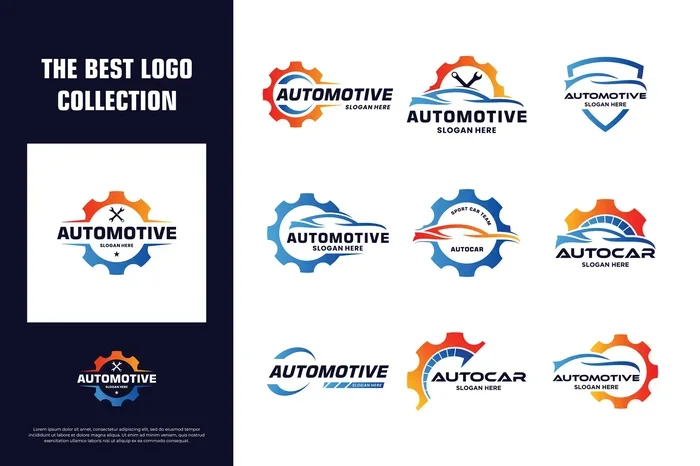
- Use car-related icons wisely. Gears, wheels, speed lines, and road curves can add meaning. But do not overload your design with too many symbols.
- Make your logo work on dark and light backgrounds. Create both a light and dark version of your logo for flexibility.
- Invest in vector files. Vector graphics scale without losing quality. They are essential for professional automotive badge design.
- Keep the file names organized. Use clear names like “brand-logo-primary.svg” and “brand-logo-monochrome.png” for easy use.
- Think about merchandise. Your logo will appear on stickers, hats, and apparel. Make sure it looks good embroidered or printed on fabric.
- Get inspired, but stay original. Browse design galleries for ideas, but always create something that is uniquely yours.
Tools and Resources to Help You Design Your Logo
You do not need to be a professional designer to create a great car accessories logo design. Many tools can help you get started.
DIY Design Tools
Platforms like Canva, Looka, and Hatchful offer user-friendly logo makers. They provide templates and drag-and-drop interfaces. These tools are perfect for beginners who want to explore automotive logo ideas without a steep learning curve.
However, DIY tools have limits. Your logo may look similar to others using the same platform. For a truly unique result, consider working with a professional designer.
Hiring a Professional Designer
A skilled designer brings expertise and fresh perspective to your car brand logo project. They understand automotive typography, color theory, and brand strategy. The investment pays off in a logo that truly represents your brand.
Look for designers who have experience in automotive branding or the car enthusiast community. They will understand the visual language that resonates with your audience.
How to Test Your Logo Before Launching
Before you finalize your car accessory branding, put your logo through a few real-world tests. Place it on your website mockup. Print it on a sticker. See how it looks on a business card. Share it on social media and watch how people react.
The vehicle accessories logo should feel natural in every context. If something feels off, go back and adjust. A little extra testing now saves headaches later.
Also, consider how your logo looks on different products. A logo that works on a t-shirt may need adjustment for a car decal. Think about all the places your automotive visual identity will appear and make sure it shines everywhere.
Conclusion
Designing a car accessories logo design is a journey, but it is one of the most rewarding parts of building your brand. Your logo tells your story at a glance. It communicates your values, your style, and your passion for cars.
Start with a clear understanding of your audience. Choose a style that fits your brand personality. Pick colors and fonts that reinforce your message. Follow the steps in this guide, avoid common mistakes, and always test your work. The result will be a car brand logo that connects with customers and stands the test of time.
Your car accessories logo design is more than artwork. It is the foundation of your brand identity. Invest the time and effort it deserves. Your future customers will notice the difference.
Frequently Asked Questions
What makes a good car accessories logo design?
A good car accessories logo design is simple, memorable, and scalable. It works in color and black and white. It looks great on products, websites, and merchandise. Most importantly, it reflects the personality and values of your brand.
What colors work best for automotive logos?
Black, red, silver, and blue are popular choices for automotive branding. Black conveys power and elegance. Red signals energy and speed. Silver and blue suggest trust and modernity. Stick to two or three colors for a clean, professional look.
Should I hire a designer or use a DIY tool for my car logo design?
It depends on your budget and goals. DIY tools like Canva are great for getting started and exploring ideas. But hiring a professional designer ensures a unique, high-quality result that truly represents your car brand identity. If your brand is a core part of your business, investing in professional design pays off.
How do I make my car logo design stand out from competitors?
Research your competitors first, then avoid copying their style. Focus on what makes your brand unique. Use custom typography, thoughtful color choices, and icons that reflect your specific niche. A vehicle accessories logo that feels authentic will always stand out.
Can I change my car accessories logo later?
Yes, you can update your car accessory branding at any time. However, frequent changes can confuse customers. If you do rebrand, make the transition gradual. Introduce the new logo alongside the old one for a few months to maintain recognition.
What file formats do I need for my automotive logo?
You should have vector files (SVG or AI) for scaling, PNG files with transparent backgrounds for web use, and JPEG files for general sharing. These formats cover all your needs for car accessory packaging design and digital marketing.