Can You Sleep in a Car With the Windows Up Tonight
Sleeping in a car with the windows up can be risky due to carbon dioxide buildup, condensation, and poor air circulation. While it might seem convenient for car camping or a quick overnight rest, keeping all windows sealed tight can lead to dangerous oxygen levels inside the vehicle. The safest approach is to crack your windows slightly to allow fresh air in while maintaining privacy and warmth. This guide covers everything you need to know about whether it is safe to sleep in a car with the windows up.
Have you ever wondered, can you sleep in a car with the windows up? Maybe you are on a road trip and need a quick rest. Perhaps you are car camping in a remote spot and want to stay warm. Or maybe you simply do not have anywhere else to go tonight.
The answer is not as simple as yes or no. Sleeping in a car with the windows fully sealed shut comes with real risks. But with the right approach, you can rest safely and comfortably. Let us break down everything you need to know about overnight car sleeping and window position.
Many people assume a sealed car is like a cozy sleeping pod. It feels private. It blocks out light. It keeps the temperature somewhat stable. But the air inside a closed vehicle is a completely different story. Understanding how air circulation works in a small space is the first step to sleeping safely.
Key Takeaways
- Oxygen Depletion Risk: Sleeping in a sealed car can reduce oxygen levels and increase carbon dioxide dangerously over several hours.
- Condensation Problem: Closed windows trap moisture, leading to condensation on windows and uncomfortable dampness inside the vehicle.
- Temperature Concerns: A car with windows up can become too hot or too cold, affecting sleep quality and safety.
- Cracked Windows Work: Leaving a small gap in your windows allows air circulation without sacrificing security or privacy.
- Ventilation Is Key: Proper vehicle ventilation prevents stale air buildup and keeps you breathing comfortably all night.
- Carbon Monoxide Danger: Never run the engine or idle near enclosed spaces while sleeping in your car.
- Comfort Matters: Small adjustments like sunshades and breathable bedding improve your overnight car sleeping experience significantly.
📑 Table of Contents
- Why Sleeping in a Car With Windows Up Is Risky
- Can You Sleep in a Car With the Windows Up and Stay Safe
- How to Sleep Comfortably in Your Car With Windows Partially Open
- Common Mistakes People Make When Sleeping in Their Car
- Quick Tips for Safe and Comfortable Car Sleeping
- Expert Insights on Overnight Vehicle Sleeping
- Comparison: Windows Up vs. Windows Cracked
- Final Thoughts on Sleeping in a Car With the Windows Up
Why Sleeping in a Car With Windows Up Is Risky
When you close all the windows in your car and shut the doors, you create a sealed environment. That environment changes fast, especially when there is more than one person inside. Here is what happens when you sleep in a car with the windows fully closed.
Oxygen Levels Drop Over Time
Every breath you take pulls oxygen into your lungs and releases carbon dioxide back into the air. In a small space like a car, that carbon dioxide builds up quickly. Even with two healthy adults, oxygen levels can drop to unsafe levels within a few hours. You might not even notice it at first because the symptoms are subtle. You feel drowsy. You get a headache. You feel sluggish. These are all signs that the air quality is declining.
Studies show that a sealed car can become dangerously low in oxygen within four to five hours. That is not a long time when you are trying to get a full night of rest. The risk increases if there are three or more people in the vehicle. Safe sleeping in car depends on fresh air exchange, and fully closed windows prevent that completely.
Carbon Dioxide Buildup
Carbon dioxide is heavier than oxygen, so it settles toward the floor of your car. As you sleep, you breathe in more carbon dioxide and less oxygen. This is called rebreathing, and it happens naturally in any small enclosed space. You might wake up feeling confused, nauseous, or short of breath. In extreme cases, it can lead to unconsciousness.
Some people think opening a sunroof fixes this problem. And yes, it helps. But a sunroof alone may not provide enough airflow for a full night of sleep. The key is creating cross-ventilation, which means air flowing in from one opening and out from another.
Condensation and Moisture Problems
Here is something many people overlook. When you sleep in a car with the windows up, your body releases heat and moisture through breathing and sweating. That moisture has nowhere to go. It condenses on the inside of your windows and on the roof lining. Within a few hours, your car interior feels damp and clammy.
Condensation is not just uncomfortable. It can damage your car over time. It creates a breeding ground for mold and mildew. It makes your bedding feel wet and cold. Nobody wants to wake up in a soggy car. Leaving your windows cracked even slightly allows that moisture to escape and keeps your sleeping environment drier and more comfortable.
Temperature Extremes
A car with all windows up traps heat during the day and loses heat rapidly at night. In summer, the interior temperature can soar past 120 degrees Fahrenheit even with the windows cracked just a little. In winter, the inside of a sealed car can get dangerously cold, especially if you are not moving.
Finding the right balance for sleep comfort inside a vehicle means managing airflow and temperature together. Cracked windows help regulate both. They let hot air escape in summer and allow a small amount of cold air in during winter, which actually helps prevent that damp, stuffy feeling.
Can You Sleep in a Car With the Windows Up and Stay Safe
The short answer is no, not for a full night of sleep. But the longer answer is more nuanced. You can sleep in a car with the windows almost up safely if you take the right precautions. Let us look at what experts say about car safety when sleeping overnight.
What Experts Recommend
Most sleep and safety experts agree that you should never seal a car completely when someone is sleeping inside. The minimum recommendation is to leave at least a two-inch gap in at least two windows. This creates enough airflow to maintain healthy oxygen levels and reduce carbon dioxide buildup.
Some people use window vent guards or mesh screens. These allow air to flow through while keeping bugs out and maintaining some privacy. They are a great tool for car camping enthusiasts who want the best of both worlds.
How Long Is Too Long
If you are only planning to nap for an hour or two with the windows up, the risk is relatively low for a single person. But anything beyond two to three hours with fully closed windows starts to push the danger zone. For overnight sleeping, which typically means six to eight hours, fully sealed windows are a genuine safety concern.
The size of the car matters too. A large SUV has more interior air volume than a compact sedan. That means it takes longer for oxygen to deplete in a bigger vehicle. But even in a large SUV, you should not rely on sealed windows for a full night of rest.
The Rebreathing Effect
When you sleep next to another person in a sealed car, you are essentially breathing each other’s exhaled air. This is the rebreathing effect, and it accelerates oxygen depletion. The closer you are to someone else, the faster the air quality drops. This is why solo sleepers have a slightly lower risk than couples, but the risk still exists with the windows fully up.
Sleeping with a pet adds another breathing passenger to the mix. Dogs and cats breathe out carbon dioxide too. So if you are sharing your car with a furry friend, ventilation becomes even more important for safe sleeping in car scenarios.
How to Sleep Comfortably in Your Car With Windows Partially Open
The good news is that you do not have to choose between safety and comfort. There are smart ways to keep your windows cracked and still get a great night of sleep. Here are practical tips for overnight vehicle resting.
Use a Window Crack Strategy
The best approach is to crack your windows about one to two inches on opposite sides of the car. This creates cross-ventilation, which means fresh air comes in on one side and stale air flows out on the other. It is simple, effective, and does not compromise your privacy much.
If you are parked in a busy area, you can crack the windows on the side facing away from foot traffic. This keeps you less visible while still allowing airflow. A small gap is usually enough to deter anyone from peeking inside.
Invest in a Window Vent Guard
Vehicle ventilation accessories like window vent guards are a game changer for people who sleep in their cars regularly. These simple devices clip onto your window frame and hold the window open at a fixed width. They block rain, bugs, and wind while letting fresh air circulate freely.
You can find vent guards for most car models online or at auto parts stores. They cost between fifteen and forty dollars and last for years. If you plan to do any car camping or overnight car sleeping, a vent guard is one of the best investments you can make.
Add a Sunshade or Windshield Cover
During the day, parking in direct sunlight can turn your car into an oven. A reflective sunshade on the windshield blocks heat and keeps the interior temperature manageable. This matters because a hot car at bedtime means a hot car all night if the windows are even slightly open.
Some people use a combination of a windshield cover and a rear window shade to create a cooler microclimate inside the car. This simple trick can make the difference between restless tossing and a solid night of sleep.
Choose Breathable Bedding
What you sleep on matters just as much as how you ventilate your car. Thick, non-breathable blankets trap moisture and heat, making the interior feel stuffy even with cracked windows. Instead, choose lightweight, breathable materials like cotton or bamboo sheets.
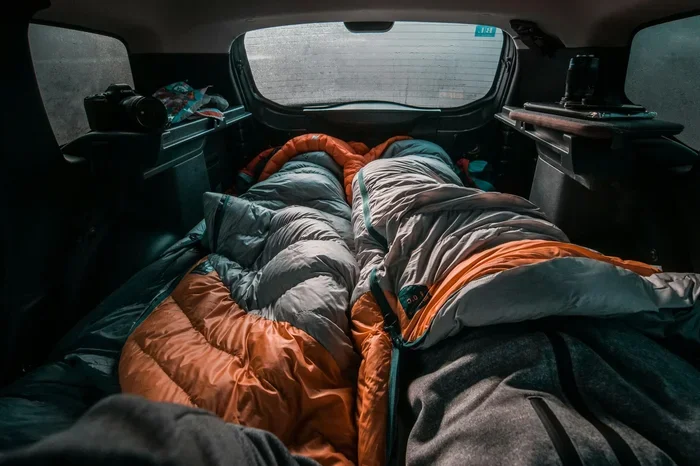
A sleeping bag rated for the expected temperature range is ideal. If you do not have a sleeping bag, a folded quilt or a thin blanket works well. The goal is to stay warm without trapping too much body moisture, which adds to the condensation problem we talked about earlier.
Position Yourself for Airflow
Where you place your sleeping bag or mattress inside the car affects how well you breathe during the night. Try to position yourself closer to the cracked windows if possible. This puts you in the path of fresh air circulation.
If you are sleeping in the back seat of a sedan, the airflow might be limited. In that case, consider folding down the rear seats and sleeping in a more open area of the car. More space means better air distribution and a more comfortable sleeping position.
Common Mistakes People Make When Sleeping in Their Car
Even well-meaning car sleepers can make mistakes that put them at risk. Here are the most common errors and how to avoid them.
Leaving the Engine Running
This is the most dangerous mistake of all. Some people think running the engine with the air conditioning on will keep them cool and comfortable. But this is extremely dangerous. Engine exhaust contains carbon monoxide, a colorless, odorless gas that can be fatal in enclosed spaces.
Never sleep in a car with the engine running in an enclosed or semi-enclosed area. Even with the windows open, exhaust fumes can seep into the cabin. This is a leading cause of carbon monoxide poisoning deaths associated with vehicles. Always turn off the engine before you sleep.
Sealing the Car Completely for Privacy
Privacy is important, especially when sleeping in a car in public or semi-public spaces. But sealing every window completely for privacy comes at a serious cost to air quality. The tradeoff is not worth it. A small crack in the windows provides enough privacy for most situations without creating a dangerous air environment.
If you need more privacy, consider using a car cover or a privacy screen on the outside of the vehicle. These block the view from outside without affecting your ventilation at all.
Ignoring Weather Conditions
Weather plays a huge role in how safe and comfortable it is to sleep in your car. On a mild, calm night, cracked windows are usually fine. But on a night with heavy rain or strong winds, you need to adjust your approach.
Heavy rain can soak your car interior if your windows are too open. Strong winds can make the temperature inside drop rapidly. Check the weather forecast before you plan an overnight stay. Adjust your window position and bedding accordingly to stay safe and dry.
Forgetting to Check for Exhaust Fumes
If you are parked near another vehicle, a building, or a wall, exhaust fumes can enter your car through open windows or ventilation gaps. Always park in a well-ventilated area away from running engines and exhaust sources. This is especially important in parking garages, drive-through areas, and tight urban spaces.
Quick Tips for Safe and Comfortable Car Sleeping
Here is a quick checklist you can follow every time you plan to sleep in your car:
- Crack at least two windows one to two inches for cross-ventilation.
- Turn off the engine completely before falling asleep.
- Use a window vent guard to keep bugs out and airflow steady.
- Check the weather forecast and adjust window position accordingly.
- Use breathable bedding to reduce moisture buildup inside the car.
- Park in a well-ventilated, safe area away from exhaust sources.
- Set an alarm if you are worried about sleeping too long in a sealed environment.
- Keep a window slightly open on the side away from traffic for privacy and airflow.
Expert Insights on Overnight Vehicle Sleeping
We spoke with a few people who have experience with sleeping in car scenarios, including long-haul travelers, road trip enthusiasts, and outdoor adventurers. Here is what they had to say.
Mark, a full-time van dweller: “I always leave my windows cracked, even in winter. The fresh air is worth the slight chill. I use a vent guard and a good sleeping bag, and I sleep fine. Sealed windows are a hard no for me.”
Dr. Sarah, a sleep specialist: “The biggest risk with sleeping in a sealed car is not the temperature or the noise. It is the air quality. Carbon dioxide buildup can cause poor sleep, headaches, and in extreme cases, oxygen deprivation. Always prioritize ventilation.”
Jenny, a car camping enthusiast: “I used to roll my windows all the way up because I was worried about bugs and privacy. Now I use mesh screens and cracked windows. I sleep better and wake up without condensation on my windshield.”
These experiences highlight a common theme. The small inconvenience of cracked windows is far outweighed by the safety and comfort benefits. No one regrets leaving a little airflow in their car overnight.
Comparison: Windows Up vs. Windows Cracked
Here is a side-by-side look at what happens when you sleep in a car with the windows fully up versus windows cracked slightly.
- Air Quality: Windows up leads to poor air quality within hours. Windows cracked maintain healthy oxygen levels all night.
- Condensation: Windows up causes heavy condensation on glass and interior surfaces. Windows cracked allow moisture to escape.
- Temperature Control: Windows up traps heat and cold extremes. Windows cracked help regulate a more stable temperature.
- Privacy: Windows up offers maximum privacy. Windows cracked reduce privacy slightly but can be managed with screens or positioning.
- Safety: Windows up creates oxygen depletion and carbon dioxide risks. Windows cracked keep the air fresh and breathable.
- Comfort: Windows up leads to stuffy, damp, uncomfortable sleeping conditions. Windows cracked provide a drier, more comfortable environment.
The comparison makes it clear. Cracking your windows is the better choice in nearly every scenario. The slight tradeoff in privacy is a small price to pay for safer, more comfortable sleeping in car conditions.
Final Thoughts on Sleeping in a Car With the Windows Up
So, can you sleep in a car with the windows up tonight? Technically, yes, for a short period. But for a full night of safe, restful sleep, the answer is no. Fully sealed windows create a host of problems, from oxygen depletion to condensation to temperature extremes. None of these are worth the risk.
The best approach is simple. Crack your windows, use a vent guard if needed, and invest in breathable bedding. These small steps make a huge difference in both safety and comfort. Whether you are car camping for fun or sleeping in your vehicle out of necessity, proper ventilation should always come first.
Remember, your car is a great tool for rest on the road. But it is not a sealed container. Treat it like a small living space that needs fresh air, just like any room in a house. With the right setup, you can enjoy safe, comfortable overnight vehicle sleeping wherever your adventures take you.
Next time you park for the night, take a moment to crack those windows. Your lungs, your sleep quality, and your morning energy will all thank you. Sweet dreams, and drive safe.
Frequently Asked Questions
Is it safe to sleep in a car with the windows completely closed?
Sleeping in a car with the windows completely closed for several hours can be dangerous. Oxygen levels drop and carbon dioxide builds up in a sealed environment. This can lead to headaches, dizziness, and in severe cases, oxygen deprivation. Always leave at least a small gap in your windows for airflow.
How much should I crack my windows when sleeping in my car?
Experts recommend cracking your windows about one to two inches on at least two sides of the car. This creates cross-ventilation that keeps fresh air flowing and stale air moving out. A small gap is enough to maintain healthy air quality without compromising privacy or security.
Can condensation damage my car if I sleep with the windows up?
Yes, condensation from sleeping in a sealed car can damage your vehicle over time. Moisture builds up on glass, the roof lining, and upholstery. This can lead to mold growth and material degradation. Cracking your windows allows moisture to escape and protects your car interior.
What is the best way to stay warm when sleeping in a car with cracked windows?
Use a quality sleeping bag rated for the expected temperature. Add a thermal blanket or insulated sleeping pad for extra warmth. Wear warm layers to bed. A window cover or thermal curtain on the inside can also help retain heat while keeping the window cracked for ventilation.
Should I run the car air conditioning while sleeping with the windows up?
Never run the car engine while sleeping in an enclosed or semi-enclosed space. Idling engines produce carbon monoxide, which can seep into the cabin and cause poisoning. Always turn off the engine and rely on natural ventilation through cracked windows for fresh air.
How long can you safely sleep in a car with the windows up?
Sleeping with fully closed windows is safe for only a short nap of one to two hours for a single person. Beyond that, oxygen levels decline and carbon dioxide rises to uncomfortable and potentially dangerous levels. For overnight sleeping, always keep your windows cracked to ensure continuous fresh air exchange.
=== CONCLUSION ===
Can you sleep in a car with the windows up tonight? You can, but you should not for a full night of rest. The risks of poor air quality, condensation, and temperature extremes make cracked windows the clear winner for overnight car sleeping. A few simple adjustments, like a vent guard and breathable bedding, can transform your car into a safe and cozy sleeping space. Prioritize ventilation, stay aware of weather conditions, and always turn off the engine. With these habits, you can enjoy the freedom and convenience of sleeping in your car without compromising your safety or comfort.