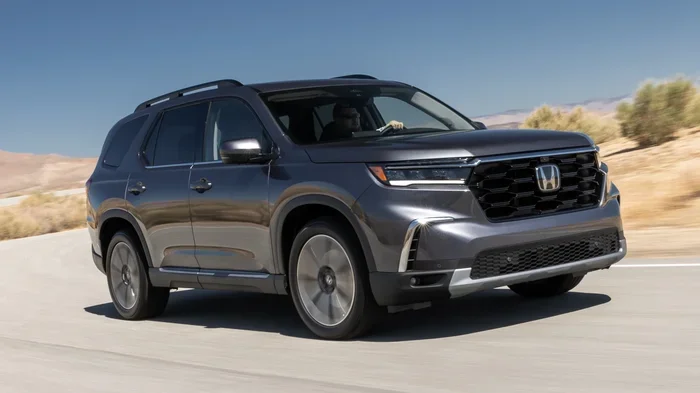
How Much Does a Honda Pilot Weigh and Why It Matters
The Honda Pilot weighs between 4,280 and 4,900 pounds depending on the trim and model year. Understanding your Pilot’s weight helps you make better decisions about towing, cargo limits, fuel economy, and safety. This guide breaks down the weight specs by generation, trim, and configuration so you know exactly what your SUV can handle.
The Honda Pilot is one of the most popular three-row SUVs on the market. Families love it for its spacious interior, strong towing ability, and reliable Honda engineering. But one question comes up again and again: how much does a Honda Pilot weigh?
The answer is not as simple as a single number. The weight changes depending on the model year, trim level, drivetrain, and extra features. A base two-wheel-drive Pilot weighs less than a fully loaded all-wheel-drive model with every option installed.
Knowing the weight of your Honda Pilot is important for more reasons than you might think. It affects your towing capacity, how much cargo you can safely carry, fuel economy, and even how the brakes and suspension perform. Whether you are hauling gear for a camping trip or towing a small trailer, the numbers matter.
In this guide, we break down the Honda Pilot weight by generation, explain what all the numbers mean, and show you why this information is essential for every Pilot owner. Let us dive in.
## What Is the Honda Pilot’s Weight?
When people ask about vehicle weight, they usually mean one of two things. The first is curb weight, which is the weight of the empty vehicle with a full tank of fuel but no passengers or cargo. The second is gross vehicle weight rating (GVWR), which is the maximum safe weight the vehicle can carry including passengers, cargo, and fuel.
For the Honda Pilot, curb weight typically falls between 4,280 and 4,900 pounds. The GVWR is higher and depends on the specific model and trim. You can find both numbers on the sticker inside the driver’s door frame or in the owner’s manual.
Here are the most common weight figures you will see for the Honda Pilot:
- Curb weight: 4,280 to 4,900 lbs
- Gross vehicle weight rating (GVWR): Around 6,000 to 6,500 lbs
- Towing capacity: Up to 5,000 lbs when properly equipped
- Payload capacity: Approximately 1,400 to 1,600 lbs
### Curb Weight vs. Gross Weight
These two terms often confuse people. Curb weight is basically the weight of the car sitting empty. Think of it as the baseline. Gross weight includes everything: passengers, luggage, roof rack, trailer hitch, and fuel.
Understanding this difference helps you avoid overloading your vehicle. If you load your Pilot with too much weight, you can strain the engine, brakes, and suspension. It also affects handling and stopping distance.
## Honda Pilot Weight by Generation
The Honda Pilot has gone through three main generations since it first launched. Each generation has different weight specs because of changes in size, materials, and features. Let us look at each one.
### First Generation (2003-2008)
The first-generation Honda Pilot was lighter than today’s models. The curb weight started around 4,280 lbs for the two-wheel-drive version. The all-wheel-drive models came in closer to 4,450 lbs. These early Pilots had a simpler feature set, which kept the weight down.
If you own or are buying a first-generation Pilot, the lower weight means better fuel economy but also less towing capacity compared to newer models.
### Second Generation (2009-2015)
Honda made the second-generation Pilot bigger and more refined. The curb weight increased to around 4,400 to 4,600 lbs. The added size and comfort features added pounds. However, the second generation also came with improved engines and better towing capabilities.
Many owners loved this generation because it struck a balance between size and drivability. The weight increase was noticeable but not excessive.
### Third Generation (2016-Present)
The current Honda Pilot is the heaviest of the three generations. The curb weight ranges from about 4,400 to 4,900 lbs depending on the trim. The third-row seating, advanced safety features, and heavier-duty components all contribute to the increased weight.
Despite being heavier, the third-generation Pilot offers the best towing capacity and the most refined driving experience. Honda also focused on keeping fuel economy respectable given the added weight.
### Weight by Trim Level
The trim level you choose also affects the weight. Here is a quick breakdown:
- LX: The lightest trim, starting around 4,280 to 4,400 lbs
- EX: Adds features and a few extra pounds
- Touring: Heavier due to leather seats, upgraded audio, and more equipment
- Elite: The heaviest trim, often exceeding 4,800 lbs with all-wheel drive
## How Vehicle Weight Affects Performance
Weight plays a huge role in how any vehicle performs. This is true for the Honda Pilot just as much as any other SUV. Let us look at the main areas where weight makes a difference.
### Fuel Economy
Heavier vehicles use more fuel. This is a basic physics principle. The Honda Pilot is not a lightweight SUV, so its fuel economy reflects that. The current generation gets around 20 to 22 miles per gallon in the city and 27 to 28 on the highway.
If you are comparing the Pilot to smaller SUVs, you will notice the difference at the pump. However, Honda has done a good job of keeping the fuel economy competitive for a vehicle in this weight class.
### Acceleration and Handling
A heavier vehicle takes more effort to accelerate. The Honda Pilot’s 3.5-liter V6 engine produces 280 horsepower, which is enough to move the weight comfortably. But you will not feel the same quickness as you would in a lighter crossover SUV.
Handling is also affected by weight. The Pilot feels stable and planted on the highway, which many families appreciate. However, in tight turns or winding roads, the weight can make it feel less nimble than smaller vehicles.
### Braking Distance
More weight means more momentum. This directly affects how far it takes your Pilot to stop. The Honda Pilot comes with good brakes, but when the vehicle is fully loaded with passengers and cargo, the stopping distance increases.
This is why it is so important to know your vehicle’s weight and load limits. Always stay within the recommended payload capacity to ensure your brakes can do their job effectively.
### Suspension and Ride Quality
The Pilot’s suspension system is designed to handle its weight. The multi-link rear suspension provides a smooth ride even when the vehicle is fully loaded. However, if you consistently exceed the payload limit, you will wear out suspension components faster.
## Honda Pilot Towing and Payload Capacity
One of the main reasons people care about vehicle weight is towing. The Honda Pilot is a capable tow vehicle, but its capacity depends on how the vehicle is configured.
### Towing Capacity Breakdown
Here is what the Honda Pilot can tow based on drivetrain and configuration:
- Two-wheel drive, base trim: Up to 5,000 lbs
- All-wheel drive, base trim: Up to 5,000 lbs
- With proper towing package: Up to 5,000 lbs
The towing capacity stays at 5,000 lbs across most configurations. Honda does not recommend towing above this limit for safety reasons.
### Payload Capacity
Payload capacity is the weight of passengers and cargo you can safely carry. For the Honda Pilot, this is typically around 1,400 to 1,600 lbs. This includes everyone in the vehicle plus any gear, luggage, or accessories.
If you have a full family of seven and lots of luggage, you can quickly approach the payload limit. Keep this in mind when planning road trips or moving trips.
### How This Compares to Other Vehicles
If you want to understand how the Pilot’s weight stacks up, consider that a regular car can carry much less total weight. The Honda Pilot is a mid-size SUV built for families who need space and hauling ability. It falls between a compact crossover and a full-size SUV in terms of weight and capacity.
You can learn more about how much weight a regular car can carry to understand where the Pilot fits in the broader vehicle landscape.
## Why Knowing Your Honda Pilot’s Weight Matters
Understanding your vehicle’s weight is not just a number game. It has real-world implications for safety, maintenance, and daily driving. Here are the key reasons why this matters.
### Safety
Overloading a vehicle is dangerous. It affects braking, steering, and stability. When you know your Honda Pilot’s weight limits, you can make safer choices about how much to load and what to tow.
### Insurance and Registration
Some insurance companies and state DMV offices use vehicle weight to determine rates and registration fees. Heavier vehicles may cost more to insure in some cases.
### Maintenance and Wear
A heavier vehicle puts more stress on tires, brakes, and suspension components. If you know your Pilot is on the heavier side, you can stay on top of maintenance schedules and replace parts before they fail.
### Resale Value
When it is time to sell your Honda Pilot, knowing the vehicle’s specifications including weight can help you present it accurately to buyers. You can also determine the actual cash value of your car more accurately when you understand all its specs.
### Fuel Costs
Heavier vehicles burn more fuel over time. If you are budgeting for your Honda Pilot ownership costs, factor in the weight and its impact on your monthly fuel expenses.
## Quick Tips for Managing Honda Pilot Weight
Here are some practical tips to help you manage your Honda Pilot’s weight effectively:
- Check the door jamb sticker for your specific model’s weight and load limits.
- Distribute cargo evenly between the front and rear of the vehicle for better handling.
- Remove unnecessary items from the trunk or cargo area to reduce weight and improve fuel economy.
- Use a weight distribution hitch if you tow frequently to balance the load.
- Check tire pressure regularly since properly inflated tires handle weight better and last longer.
- Consider your payload before loading up for a trip to avoid exceeding limits.
- Learn how to check your car battery as a heavy vehicle puts more strain on electrical systems too.
## How Much Stuff Can You Actually Put in a Honda Pilot?
This is a question many families ask. The Honda Pilot has a large cargo area, especially with the third-row seats folded down. But the total amount of stuff you can carry depends on the weight limits, not just the physical space.
As a general guideline, you can fit about 1,400 to 1,600 lbs of cargo and passengers combined. In practical terms, this means several large suitcases, camping gear, and a few passengers. If you want to understand the physical dimensions of cargo space, you can also look at how much stuff you can put in your car for general guidelines on cargo capacity.
## Conclusion
The Honda Pilot is a versatile, family-friendly SUV with a weight that ranges from 4,280 to 4,900 pounds depending on the trim and model year. Understanding how much a Honda Pilot weighs is essential for safe driving, efficient towing, and managing fuel costs.
Whether you are a first-time Pilot owner or have been driving one for years, knowing the weight specs helps you make smarter decisions every day. From payload limits to towing capacity, these numbers directly impact your experience behind the wheel.
Take a moment to check your specific model’s weight on the door jamb sticker. Use that information to plan your trips, load your cargo wisely, and keep your Honda Pilot running at its best for years to come.
Key Takeaways
- Honda Pilot weight ranges from 4,280 to 4,900 lbs depending on the trim level and model year.
- Curb weight and gross vehicle weight rating (GVWR) are two different numbers that both matter for safe driving.
- Heavier trims with all-wheel drive and third-row seating add significant weight to the vehicle.
- Knowing your Pilot’s weight helps you stay within safe towing and payload limits.
- Vehicle weight directly impacts fuel economy, so heavier Pilots will use more gas.
- You can find your Honda Pilot’s weight on the driver-side door jamb sticker or owner’s manual.
- Comparing weight across generations shows how Honda has evolved the Pilot’s design over time.
Frequently Asked Questions
What is the curb weight of a 2024 Honda Pilot?
The curb weight of a 2024 Honda Pilot ranges from about 4,400 to 4,900 pounds depending on the trim level and drivetrain. The base LX two-wheel-drive model is at the lower end, while the fully loaded Elite all-wheel-drive model is at the higher end. You can find the exact weight for your specific vehicle on the driver-side door jamb sticker.
How does the Honda Pilot’s weight affect towing capacity?
The Honda Pilot can tow up to 5,000 pounds when properly equipped with the towing package. The vehicle’s weight plays a role in this because a heavier vehicle has more stability when towing but also puts more strain on the engine and brakes. Always stay within the recommended towing limits for safety.
Where can I find my Honda Pilot’s exact weight?
You can find your Honda Pilot’s exact weight on the sticker inside the driver’s door frame. This sticker lists the curb weight, GVWR, and payload capacity. You can also check the owner’s manual for detailed weight specifications for your specific model year and trim.
Does adding a roof rack increase the Honda Pilot’s weight?
Yes, adding a roof rack adds weight to your Honda Pilot. A typical roof rack system adds between 30 and 60 pounds. While this may seem small, every pound counts when you are close to the payload limit. Always factor in the weight of accessories when calculating your total load.
Is the Honda Pilot heavier than the Toyota Highlander?
The Honda Pilot is generally heavier than the Toyota Highlander. The Pilot starts at around 4,280 to 4,900 pounds, while the Highlander starts at around 4,300 to 4,500 pounds depending on the trim. The difference is not huge, but the Pilot’s larger size and three-row configuration contribute to its higher weight.
Can exceeding the payload limit damage my Honda Pilot?
Yes, exceeding the payload limit can cause serious damage to your Honda Pilot. It puts extra stress on the suspension, brakes, tires, and transmission. Over time, this leads to premature wear and costly repairs. Always stay within the recommended payload and GVWR limits listed on your door jamb sticker.