How to Tell If a Key Fob Battery Is Starting to Die
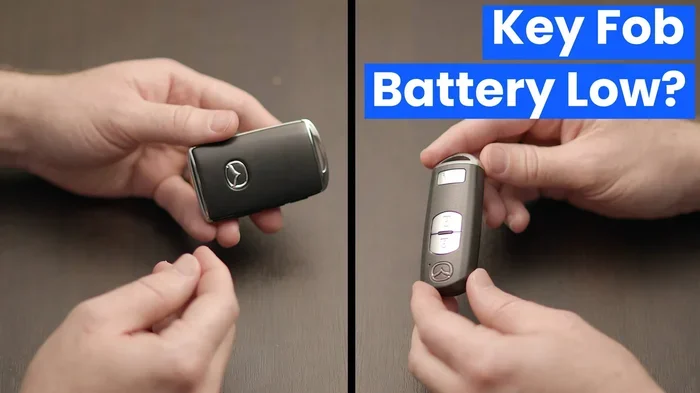
A dying key fob battery shows clear warning signs before it completely fails. You may notice reduced range, intermittent signal loss, or the need to press buttons multiple times. Recognizing these early symptoms helps you replace your key fob battery before you get stranded.
Have you ever stood in your driveway, pressing the unlock button on your remote key fob over and over, hoping your car finally hears you? It is frustrating, and it is usually a sign that your key fob battery is on its way out. Knowing how to spot the early warning signs can save you from getting locked out of your vehicle on a busy morning.
Your car’s electronic key fob is a small but essential piece of technology. It communicates with your vehicle from a distance, allowing you to lock, unlock, and even start your engine with the push of a button. When the fob battery starts to weaken, that communication breaks down. This guide walks you through every sign, test, and solution you need to know.
The good news is that replacing a key fob battery is one of the easiest and cheapest maintenance tasks you can do. Most batteries cost just a few dollars, and the whole process takes less than five minutes. But first, you need to know the signs that tell you it is time for a change.
Key Takeaways
- Reduced range is the first sign: If your remote key fob only works within a few feet of the car, the battery is likely weak.
- Multiple button presses help: Needing to press the unlock or lock button several times signals a dying battery.
- Warning lights on the dashboard: Some vehicles display a key fob or battery icon when signal strength drops.
- CR2032 is the most common battery: Most Toyota and other brand key fobs use this widely available coin cell battery.
- Dealerships can help: Many dealerships will test and replace your key fob battery, and some do it for free.
- Reset may be needed: After replacing the battery, you might need to reset the key fob to restore full function.
📑 Table of Contents
- Common Signs Your Key Fob Battery Is Dying
- How Key Fob Batteries Work
- Testing Your Key Fob Signal Strength
- When and How to Replace Your Key Fob Battery
- Can a Low Battery Key Fob Drain Your Car Battery?
- Where to Get Your Key Fob Battery Replaced
- Preventing Key Fob Battery Problems
- What to Do If Replacing the Battery Does Not Fix the Problem
- Key Fob Battery Replacement for Popular Toyota Models
- When to Seek Professional Help
- Conclusion
Common Signs Your Key Fob Battery Is Dying
Your car key fob will give you plenty of warnings before it stops working entirely. The trick is paying attention to the small changes that happen over days or weeks. Here are the most common signs that your fob battery is starting to lose power.
Reduced Working Range
This is the number one early warning sign. When your key fob battery is fresh, you can unlock your car from 30 to 50 feet away, sometimes even further. But as the battery weakens, that distance shrinks. You might find yourself standing right next to the door handle for the fob to work.
Think of it like your phone signal. When the battery is full, you get strong reception everywhere. When it drops low, the signal becomes spotty. The same thing happens with your remote key fob. If you notice you need to be much closer to your car for the buttons to respond, that is a clear signal.
Inconsistent Button Response
Sometimes the fob works perfectly, and other times it does not. This intermittent signal is a classic symptom of a low battery. You might press the lock button once and it works, then press it again a minute later and nothing happens.
This inconsistency happens because the battery cannot maintain a steady power output. It has enough juice for a strong signal sometimes, but not always. If you experience this kind of unpredictable behavior, it is time to test your battery or replace it.
Needing to Press Buttons Multiple Times
Do you find yourself mashing the unlock button two or three times before the doors respond? This is another strong indicator that the key fob battery is dying. A healthy fob sends a strong signal that registers with the car on the first press.
When the battery weakens, the signal becomes weaker too. The car’s vehicle recognition system may not pick up the weak signal on the first try. Multiple presses increase the chance that at least one signal gets through. If this becomes a habit, do not ignore it.
Dashboard Warning Lights
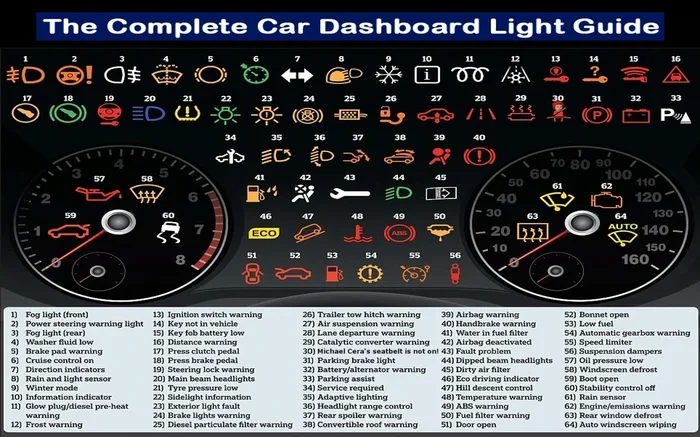
Many modern vehicles have a key fob warning light on the dashboard or instrument cluster. This light typically looks like a small key or a battery icon. When your car detects that the fob signal is weak, it may display this warning.
Not all cars have this feature, but if yours does, it is a very reliable indicator. Check your owner’s manual to learn what the key fob warning signs look like for your specific vehicle. Some Toyota models and other brands are especially good at alerting drivers about low fob battery levels.
Push Button Start Not Recognizing the Fob
If your car has a push button start system, a dying fob battery can cause real problems. The car may not recognize the fob when you are sitting in the driver’s seat. You might get a message saying “Key Not Detected” or the start button simply does not respond.
This happens because the push button start system relies on a strong, continuous signal from the fob to verify that the correct key is inside the vehicle. A weak battery means a weak signal, and the system cannot confirm the key is present. In many cases, you can still start the car by placing the fob directly against the start button, which bypasses the weak signal temporarily.
How Key Fob Batteries Work
Understanding how your key fob battery works helps you appreciate why these warning signs appear. A key fob is essentially a small radio transmitter. It sends a coded signal to your car’s receiver when you press a button.
The Role of the Battery
The battery powers the fob’s internal transmitter. When you press a button, the battery sends energy to the chip, which generates a radio signal. That signal travels through the air to your car’s antenna, which picks it up and tells the car to lock or unlock the doors.
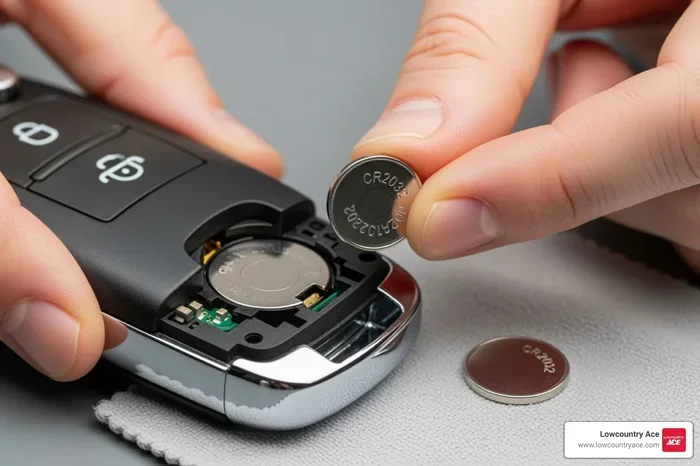
The CR2032 is the most common battery used in key fobs. It is a small, round, coin-shaped battery that you can find at almost any grocery store or pharmacy. Most Toyota key fobs, Honda key fobs, and other brand fobs use this same battery type. If you are unsure, check your owner’s manual or look at the old battery after you open the fob.
Why Batteries Lose Power Over Time
Like all batteries, the one in your key fob slowly loses charge over time. Cold weather can speed up this process significantly. If you live in an area where temperatures drop in winter, you may notice fob problems more during the colder months.
Other factors that affect battery life include how often you use the fob and how far away the fob is from the car when you press buttons. Heavy use naturally drains the battery faster. Most key fob batteries last between one and two years before needing replacement.
Testing Your Key Fob Signal Strength
You do not have to guess whether your fob battery is dying. There are several simple tests you can do at home to check the signal strength of your remote key fob.
The Distance Test
The easiest test is the distance test. Stand at the far end of your driveway or parking spot and try to unlock your car. If your fob works from 30 feet or more away, the battery is likely still good. If it only works when you are within 5 to 10 feet, the battery is probably weak.
For the most accurate results, try this test at the same time of day and in the same location each time. Environmental factors like buildings and other electronics can slightly affect the signal. But a dramatic drop in working distance is a reliable indicator.
The Slow Motion Test
This test works well for key fob troubleshooting. Stand right next to your car and slowly walk away while pressing the unlock button. Pay attention to the exact distance where the fob stops working. If that distance has shrunk significantly compared to a few months ago, your battery is on its way out.
You can also ask a friend or family member to watch from the car while you walk away. This makes it easier to pinpoint the exact distance where the signal drops off.
Using a Multimeter
If you want a precise reading, you can use a multimeter to test the battery voltage. A fresh CR2032 battery should read around 3 volts. If it reads below 2.5 volts, it is time for a replacement. This method is the most accurate but requires a basic multimeter, which you can pick up at any hardware store for a few dollars.
Some auto parts stores will test your fob battery for free. It is worth asking at your local store before you buy a new battery. This saves you from replacing a battery that may still have some life left in it.
When and How to Replace Your Key Fob Battery
Once you have confirmed that your key fob battery is dying, the next step is simple: replace it. The process is quick, inexpensive, and something you can do at home without any special tools.
What Battery You Need
Most key fobs use a CR2032 battery, but it is always smart to double check. Open your fob and look at the old battery. The number printed on it will tell you exactly what replacement to buy. You can also check your vehicle’s owner manual for the correct battery type.
CR2032 batteries cost about one to three dollars at most stores. They are widely available at grocery stores, pharmacies, auto parts stores, and online. Keep a spare one in your junk drawer so you are always ready when the old battery dies.
Step-by-Step Replacement
Replacing the battery is straightforward. First, use a small flathead screwdriver or a coin to pry open the fob case. Most key fobs have a small seam that you can gently split open. Be careful not to damage the internal components.
Once the fob is open, note the orientation of the old battery. There is usually a positive and negative side, and you need to match the new battery the same way. Pop the old battery out, insert the new one, and snap the fob back together. That is it.
After replacing the battery, test the fob right away. Stand a few feet from the car and press the buttons. If the fob works, you are all set. If it does not, the battery may not be seated correctly, or you may need to reset the fob.
Do You Have To Reset a Key Fob After Replacing the Battery?
In many cases, you do not need to do anything special after replacing the battery. The fob should work immediately. However, some vehicles require a reset process, especially if the fob was completely dead before you changed the battery.
For most Toyota models, you can reset the fob by sitting in the car, closing all doors, and pressing the start button with the fob held close to the ignition. Check your owner’s manual for the specific reset procedure for your vehicle. You can also learn more about whether you have to reset a key fob after replacing the battery in our detailed guide.
Can a Low Battery Key Fob Drain Your Car Battery?
This is a common concern among car owners, and the answer is yes, it can happen. A low battery key fob that is constantly searching for a signal can put extra strain on your car’s electrical system. If your fob battery is dying, the fob may transmit a weaker signal repeatedly, which forces the car’s antenna to work harder to pick it up.
While a single low fob battery will not drain your car battery overnight, it can contribute to problems over time, especially if the car sits unused for extended periods. If you notice your key fob battery is weak and your car will not be driven for a while, it is best to replace the fob battery right away or keep the fob away from the car.
You can learn more about the relationship between fob batteries and car batteries in our article can a low battery key fob drain a car battery.
Where to Get Your Key Fob Battery Replaced
If you prefer not to replace the battery yourself, you have several options. Many dealerships offer key fob battery replacement services. Some will do it for free as a courtesy, especially if you purchased the vehicle from them.
You can also visit local auto parts stores, locksmiths, or even some retail stores that carry key fob batteries. The process at any of these locations is usually quick and straightforward. You walk in, hand over your fob, and walk out with a fresh battery installed.
If you are wondering whether your dealership can handle this for you, the answer is yes. You can learn more about whether the dealership can change your key fob battery. And if you are curious about costs, check out our article on do dealerships replace key fob batteries for free to understand what to expect.
Preventing Key Fob Battery Problems
The best way to deal with a dying key fob battery is to prevent the problem before it starts. A little proactive maintenance can keep your fob working reliably for years.
- Replace the battery on a schedule: Even if the fob still works, consider replacing the battery every 12 to 18 months as a preventive measure.
- Keep spare batteries on hand: Store a spare CR2032 battery in your glove box so you are never caught off guard.
- Avoid extreme temperatures: Do not leave your fob in direct sunlight or in a freezing car overnight. Extreme heat and cold both shorten battery life.
- Do not press buttons unnecessarily: Every button press drains a small amount of battery. Only press buttons when you actually need to.
- Check the battery yearly: Once a year, do a quick distance test to make sure your fob signal is still strong.
These simple habits can extend the life of your key fob battery and keep you from being caught off guard. A little prevention goes a long way when it comes to fob battery maintenance.
What to Do If Replacing the Battery Does Not Fix the Problem
Sometimes you replace the battery and the fob still does not work. This can be confusing and frustrating, but it is not uncommon. Several issues could be causing the problem beyond a dead battery.
First, make sure the new battery is the correct type and is inserted with the right orientation. A battery that is the wrong size or inserted backwards will not work, even if it is brand new.
Second, the fob itself may be damaged. Water damage, drops, and general wear and tear can harm the internal electronics. If the fob has been through a lot, it may need to be replaced entirely rather than just the battery.
Third, the car’s receiver may have an issue. This is less common but possible. If you have tried a new battery and the fob still does not work, it may be time to visit a dealership or locksmith for professional diagnosis.
Key Fob Battery Replacement for Popular Toyota Models
Toyota vehicles are among the most popular on the road, and many Toyota owners wonder about the specifics of their key fob battery replacement. Most Toyota models including the Camry, RAV4, and Highlander use the same basic CR2032 battery. The replacement process is nearly identical across these models.
For Toyota owners who want more details on their specific model, you can check out our guides on using a CR2032 in a Toyota key and starting a Toyota Highlander with a key for additional tips and troubleshooting.
When to Seek Professional Help
Most of the time, a dying key fob battery is a simple fix you can handle yourself. But there are situations where professional help makes sense. If you have replaced the battery and the fob still shows no signs of life, a professional can help diagnose the issue.
Also, if your vehicle has a smart key system or a more advanced electronic key system, the fob may need programming after a battery change. Dealerships and qualified locksmiths can handle this quickly and efficiently. It is always better to seek help than to risk damaging the fob by trying to fix something you are not sure about.
If you are wondering whether your local dealership can handle this, many of them will test and replace fob batteries as part of routine service. You might even find that dealerships replace key fob batteries for free as part of a service visit.
Conclusion
Your key fob battery is a small but vital component of your vehicle’s daily operation. By learning to recognize the early warning signs, you can replace the battery before it leaves you stranded. Reduced range, inconsistent button response, dashboard warning lights, and difficulty with push button start are all clues that your fob is running low on power.
The replacement process is simple, affordable, and something you can do in minutes at home. Keep a spare battery handy, test your fob signal regularly, and do not ignore the small signs that tell you the battery is weakening. Taking care of your key fob battery today saves you from a lot of hassle tomorrow.
Stay proactive, stay informed, and keep your fob working like it should. A little attention to this small detail makes a big difference in your daily driving experience.
Frequently Asked Questions
How do I know if my key fob battery is dying?
The most common signs are reduced working range, needing to press buttons multiple times, and inconsistent signal response. Some vehicles also display a warning light on the dashboard when the fob battery is low. If you notice any of these symptoms, it is time to test or replace your battery.
What type of battery does a key fob use?
Most key fobs use a CR2032 battery, which is a small coin-shaped lithium battery. You can find this battery at almost any grocery store, pharmacy, or auto parts store. Check your owner’s manual or the old battery to confirm the exact type your fob needs.
Can I drive my car if the key fob battery dies?
In most modern vehicles, you can still drive with a dead fob battery by placing the fob directly against the push button start or the designated spot near the steering column. The car has a backup mode that reads the fob even without a battery signal. However, you will not be able to lock or unlock the doors remotely.
How often should I replace my key fob battery?
Most key fob batteries last between one and two years. If you use your fob frequently or live in an area with extreme temperatures, you may need to replace it more often. Replacing the battery on a yearly schedule is a good preventive habit.
Do dealerships replace key fob batteries for free?
Some dealerships offer free key fob battery replacement as part of a service visit or as a courtesy to customers. Others may charge a small fee. It is worth calling your dealership ahead of time to ask about their policy. You can read more about this in our article on whether dealerships replace key fob batteries for free.
Do I need to reset my key fob after replacing the battery?
In most cases, no. The fob should work immediately after you insert the new battery. However, some vehicles require a reset, especially if the fob was completely dead before the replacement. Check your owner’s manual for the specific reset procedure, or you can learn more about whether you need to reset your fob after a battery change.