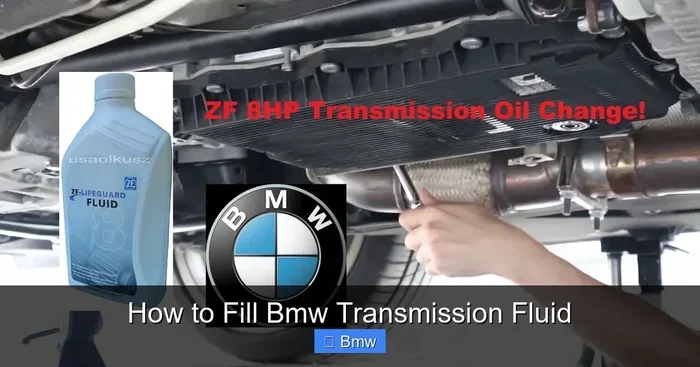
How to Fill BMW Transmission Fluid With These Tips
Filling your BMW transmission fluid correctly keeps your car running smoothly and prevents costly repairs. This guide covers everything you need to know, from choosing the right fluid type to the step-by-step filling process. Whether you are a DIY enthusiast or just curious about BMW transmission maintenance, these tips will help you get the job done right.
BMW transmissions are engineering marvels. They shift smoothly, handle high torque, and are built to last. But even the best transmission needs proper care. One of the most important things you can do is keep the fluid fresh and at the right level.
Many BMW owners overlook their transmission fluid. They change their engine oil but forget about the gearbox. This is a big mistake. Dirty or low transmission fluid causes rough shifting, overheating, and eventually, total transmission failure.
In this guide, we walk you through how to fill BMW transmission fluid the right way. We cover fluid types, tools you need, step-by-step instructions, and common pitfalls. By the end, you will feel confident tackling this job yourself.
Key Takeaways
- Use the correct BMW-spec transmission fluid: Using the wrong fluid can damage your transmission and void your warranty.
- Check your fluid level with the engine running: BMW transmission fluid levels are best checked when the engine is warm and running.
- Not all BMWs have a dipstick: Some models require a specialized procedure to check and fill the fluid.
- Change your fluid on schedule: Most BMWs need a transmission fluid change every 30,000 to 60,000 miles.
- Avoid common filling mistakes: Overfilling and underfilling both cause serious transmission problems over time.
- Gather the right tools first: Having everything ready makes the process faster and safer.
📑 Table of Contents
- Why BMW Transmission Fluid Matters
- Choosing the Right Transmission Fluid for Your BMW
- Tools and Preparation You Will Need
- Step-by-Step Guide to Filling BMW Transmission Fluid
- Common Mistakes to Avoid When Filling Transmission Fluid
- How Often Should You Change BMW Transmission Fluid?
- Expert Tips for Long-Lasting BMW Transmission Health
- Final Thoughts
Why BMW Transmission Fluid Matters
Transmission fluid does several critical jobs in your BMW. It lubricates the gears, cools the internal components, and provides hydraulic pressure for smooth shifts. Without clean fluid at the right level, your transmission works harder than it should.
Over time, transmission fluid breaks down. Heat and friction cause it to lose its properties. Dark, burnt-smelling fluid is a clear sign that it is time for a change. Ignoring this can lead to expensive repairs.
What Happens When Fluid Gets Old
Old transmission fluid becomes thick and gritty. It does not flow properly through the system. This means gears do not engage as smoothly. You might notice jerky shifts or delays when moving from park to drive.
In BMWs with the ZF 8-speed transmission, this is especially important. These transmissions rely on precise hydraulic pressure. Even slightly degraded fluid can affect performance.
Signs Your BMW Needs Fresh Fluid
Watch for these warning signs:
- Rough or delayed shifting
- Unusual whining or grinding noises
- Burning smell coming from under the car
- Transmission slipping between gears
- Check transmission warning light on the dashboard
If you notice any of these, check your fluid level and condition right away. Catching the problem early can save you hundreds of dollars.
Choosing the Right Transmission Fluid for Your BMW
Not all transmission fluids are the same. BMWs require specific formulations that meet their engineering standards. Using the wrong fluid can cause serious damage.
BMW-Approved Fluid Types
Most modern BMWs use BMW ATF (Automatic Transmission Fluid) or a specification-approved alternative. The most common types include:
- BMW ATF 3+: Used in many older BMW models
- BMW ATF 6: Found in newer models with ZF transmissions
- BMW ATF 7: The latest specification for the newest BMW gearboxes
Always check your owner’s manual before purchasing fluid. The manual will tell you the exact specification your BMW needs.
Can You Use Aftermarket Fluids?
Some aftermarket fluids meet or exceed BMW specifications. Brands like Pentosin, Motul, and Red Line offer BMW-compatible options. However, always verify the specification matches what your BMW requires.
Using generic ATF in a BMW is not recommended. The additive packages differ significantly. BMW transmissions have tighter tolerances and need fluids formulated for their specific valve bodies and clutch packs.
Checking Fluid Capacity
Transmission fluid capacity varies by BMW model and engine. Most BMWs hold between 8 and 13 quarts for a full change. You can find the exact capacity in your owner’s manual or by checking a BMW service database.
Tools and Preparation You Will Need
Before you start, gather everything you need. Being prepared makes the process much smoother.
Essential Tools
- BMW-spec transmission fluid (check the correct amount)
- Transmission fluid dipstick (if your model has one)
- Jack and jack stands or a lift
- Socket set and wrenches
- Drain pan (at least 10 quarts)
- Funnel with a narrow spout
- Rags and gloves
- Torque wrench
Safety First
Always work on a level surface. Use jack stands, never rely on a jack alone. Let the engine cool slightly before starting, but do not let it cool completely. BMW transmission fluid levels are best checked when warm.
If you are unsure about any step, consult a professional. Working under a car can be dangerous if safety precautions are not followed.
Step-by-Step Guide to Filling BMW Transmission Fluid
This is the core of our guide. Follow these steps carefully for a successful fluid fill.
Step 1: Warm Up the Engine
Start the engine and let it idle for about 5 to 10 minutes. This brings the transmission fluid to operating temperature. Warm fluid flows more easily and gives you a more accurate level reading.
Do not drive the car hard during this warm-up. Just let it idle in park.
Step 2: Lift the Vehicle Safely
Use a jack to lift the front of the car. Place jack stands under the designated lift points. Never work under a car supported only by a jack.
Step 3: Locate the Drain Plug
The transmission drain plug is on the bottom of the transmission case. Place your drain pan directly below it. Use the correct socket to loosen the plug and let the old fluid drain completely.
Step 4: Remove the Dipstick or Fill Plug
Some BMW models have a transmission dipstick. Others have a fill plug on the side of the transmission. Check your specific model.
If your BMW does not have a dipstick, you will fill through the fill plug hole. This is common in many newer BMW models.
Step 5: Replace the Drain Plug
Once the old fluid has fully drained, reinstall the drain plug. Torque it to the specification in your owner’s manual. Do not overtighten, as this can strip the threads.
Step 6: Fill with New Fluid
Insert a funnel into the dipstick tube or fill plug hole. Slowly pour in the new BMW-spec transmission fluid. Add about half of the total capacity first, then check the level.
If you are using a dipstick, pull it out, wipe it clean, reinsert it fully, then pull it out again to check the level. The fluid should be between the two marks on the dipstick.
If your BMW does not have a dipstick, you will fill until fluid just begins to seep out of the fill hole. Then reinstall the fill plug snugly.
Step 7: Check the Level Again
After filling, run the engine for a few minutes. Shift through all gears (P, R, N, D) and let the transmission cycle through. Then check the level one more time.
Top off if needed. Do not overfill. Overfilling causes fluid to foam and can lead to transmission damage.
Step 8: Dispose of Old Fluid Properly
Transmission fluid is hazardous waste. Take it to a recycling center or auto parts store that accepts used fluids. Never pour it down the drain or into the ground.
Common Mistakes to Avoid When Filling Transmission Fluid
Even experienced car owners make mistakes. Here are the most common ones and how to avoid them.
Using the Wrong Fluid Type
This is the number one mistake. Using generic ATF instead of BMW-spec fluid can cause clutch slip, rough shifts, and internal damage. Always double-check the specification.
Overfilling or Underfilling
Too much fluid causes foaming and pressure buildup. Too little fluid means the transmission does not get proper lubrication. Follow the fill procedure carefully and check the level twice.
Not Checking for Leaks
After filling, inspect the drain plug and fill plug for leaks. Also look under the car for any drips. Catching a leak early prevents fluid loss and transmission damage.
Skipping the Filter Change
Many BMW models have a transmission filter that should be replaced along with the fluid. Check if your model has one and replace it if needed. A clogged filter restricts fluid flow and reduces performance.
Forgetting to Reset the Service Indicator
Some BMW models have a transmission service reminder. After completing the fluid change, check if you need to reset the service interval through the iDrive system.
How Often Should You Change BMW Transmission Fluid?
BMW’s official recommendation varies by model and transmission type. Many newer BMWs claim their transmission fluid is “lifetime” and does not need changing. However, most BMW specialists disagree with this.
Recommended Service Intervals
Here is a general guide:
- BMW models with ZF 8HP transmission: Change every 50,000 to 60,000 miles
- BMW models with older 6-speed or 7-speed transmissions: Change every 30,000 to 50,000 miles
- BMW M models with high-performance transmissions: Change every 30,000 miles
If you drive in severe conditions, such as heavy traffic, towing, or extreme heat, you should change the fluid more frequently.
Why BMW Says “Lifetime” Fluid
BMW uses the term “lifetime” to mean the expected life of the transmission under normal driving conditions. But normal driving is rarely what most of us experience. City driving, short trips, and stop-and-go traffic all accelerate fluid degradation.
Changing your transmission fluid proactively is one of the best investments you can make for your BMW’s longevity.
DIY vs. Professional Service
Filling BMW transmission fluid yourself is doable if you have basic mechanical skills. However, a full transmission fluid change at a BMW dealership or independent specialist includes a complete flush and filter replacement. A professional service ensures every old fluid particle is removed.
If you are not comfortable doing it yourself, schedule a service at a reputable BMW repair shop. The cost of a fluid change is far less than the cost of a rebuilt transmission.
Expert Tips for Long-Lasting BMW Transmission Health
Beyond just filling the fluid, there are habits that keep your BMW transmission in top shape for years.
First, avoid slamming the gear selector between drive and reverse. Always come to a complete stop before shifting. This reduces stress on the transmission internals.
Second, pay attention to how your transmission shifts. If you notice any change in behavior, get it checked immediately. Early intervention prevents small problems from becoming big ones.
Third, keep up with regular BMW maintenance. The transmission is part of a larger system. Coolant system health, engine performance, and drivetrain condition all affect how your transmission operates.
Finally, do not ignore warning lights. If your BMW displays a transmission warning, address it promptly. Continuing to drive with a transmission problem can cause irreversible damage.
Final Thoughts
Filling BMW transmission fluid is not as complicated as it might seem. With the right fluid, the right tools, and a little patience, you can do it yourself and keep your BMW shifting like new. The key is to be methodical, follow the steps carefully, and never cut corners on fluid quality.
Regular transmission fluid changes are one of the simplest ways to protect your BMW. They extend the life of your transmission, improve driving feel, and prevent unexpected breakdowns. Your future self will thank you when your BMW continues to shift smoothly for years to come.
If you are ever unsure about any step, do not hesitate to consult a professional. A qualified BMW technician can walk you through the process or handle it for you. The most important thing is that you take action. Your transmission is worth it.
Frequently Asked Questions
Can I use regular ATF in my BMW transmission?
No. BMW transmissions require BMW-spec ATF or a fluid that meets the exact BMW specification for your model. Regular ATF has different additive packages and can cause damage to your transmission internals over time.
How do I know if my BMW has a transmission dipstick?
Not all BMW models have a dipstick. Many newer models, especially those with ZF transmissions, do not include one. Check your owner’s manual or look under the car for a dipstick tube near the transmission.
What happens if I overfill my BMW transmission fluid?
Overfilling causes the fluid to foam, which reduces its lubricating ability. It can also lead to increased pressure in the transmission, causing leaks and potential damage to seals and gaskets.
Is a BMW transmission fluid change expensive?
A DIY fluid change typically costs between $100 and $200 in fluid and materials. Professional service ranges from $200 to $400 depending on the model and whether a full flush is performed.
Can I check my BMW transmission fluid with the engine off?
It is best to check BMW transmission fluid with the engine running and warm. This gives you the most accurate reading because the fluid expands when hot and fills the transmission channels properly.
How long does a BMW transmission fluid change take?
A DIY fluid change takes about 30 to 45 minutes. A professional full fluid exchange, including a flush and filter replacement, may take 1 to 2 hours depending on the BMW model.