How Much It Costs to Replace the Mercedes-Benz Aux Battery
The Mercedes-Benz aux battery replacement cost typically ranges from $200 to $500, depending on your model and where you have the work done. This small 12V battery powers your car’s electronics when the engine is off and can cause strange electrical issues when it fails. Understanding the parts, labor, and factors that affect the price helps you budget and avoid surprises. Below, we break down the full cost, symptoms, and whether you can do it yourself.
If you own a Mercedes-Benz, you might be wondering about the Mercedes-Benz aux battery replacement cost. The auxiliary battery is a small 12V battery that powers your car’s electronics when the engine is off or during start-stop cycles. When it fails, you can experience strange electrical issues or even a no-start condition. In this guide, we’ll break down the exact cost, what factors influence the price, and whether you can do it yourself. Read on to learn everything you need to know about replacing your Mercedes aux battery.
The auxiliary battery is not the same as your main high-voltage starter battery. It acts as a dedicated power source for the car’s computers, sensors, and infotainment system. Think of it as the brain’s backup power supply. When the engine is running, the alternator keeps both batteries charged. But when you turn the ignition off, the aux battery takes over so your radio, memory settings, and alarm system stay active.
Over time, every battery loses its ability to hold a charge. Heat, age, and parasitic electrical draws all shorten the lifespan of this component. Mercedes-Benz vehicles are no exception. In fact, the complex electrical architecture of modern Mercedes models puts extra demand on the aux battery. Understanding how much it costs to replace this part can save you from unexpected breakdowns and expensive tow bills.
Key Takeaways
- Average Cost: Most owners pay between $200 and $500 for a full aux battery replacement.
- Parts vs. Labor: The battery itself costs $50–$150, while labor adds $100–$350 at a dealership.
- DIY Option: Replacing the aux battery is one of the few Mercedes repairs you can safely do at home with basic tools.
- Model Matters: Higher-end models like the S-Class or GLE may use a larger or more expensive battery unit.
- Prevention: Keeping terminals clean and avoiding parasitic drains extends the life of your auxiliary battery.
- No-Start Symptom: If your car won’t start but the main battery tests fine, the aux battery is a prime suspect.
📑 Table of Contents
- What Is the Mercedes-Benz Auxiliary Battery?
- Signs Your Auxiliary Battery Is Failing
- Mercedes-Benz Aux Battery Replacement Cost Breakdown
- Factors That Affect the Replacement Price
- Can You Replace the Aux Battery Yourself?
- Preventing Auxiliary Battery Failure
- What to Do If Your Car Won’t Start After a Battery Failure
- Common Mistakes to Avoid
- Expert Insight: The Hidden Cost of a Cheap Battery
- Final Thoughts on Mercedes-Benz Aux Battery Replacement Cost
What Is the Mercedes-Benz Auxiliary Battery?
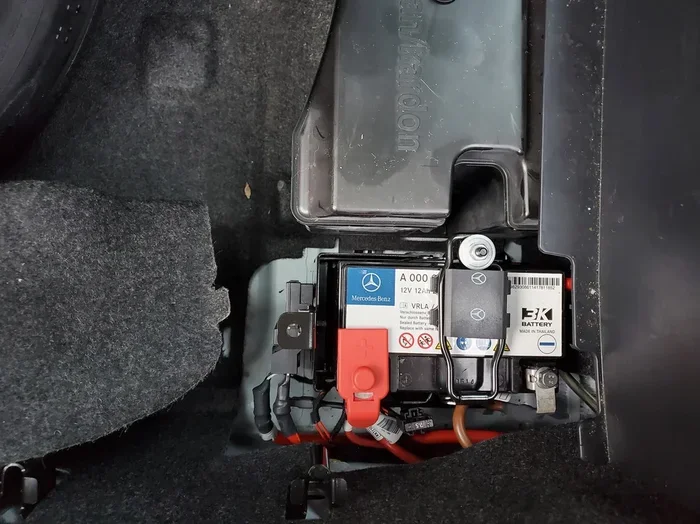
The auxiliary battery in a Mercedes-Benz is a standard 12V lead-acid or AGM battery. It is much smaller than the main engine starter battery and is usually located in the engine compartment or under a trunk panel. Its sole job is to provide stable power to the vehicle’s electronic systems when the engine is not running.
Role of the Aux Battery
When you park your car and turn the key off, the main high-voltage battery (in hybrid or mild-hybrid models) or the starter battery (in conventional models) shuts down most circuits. The aux battery keeps the GPS memory, radio presets, and onboard computer alive. It also provides the initial power needed to wake up the car’s systems when you open the door or press the start button.
In start-stop equipped Mercedes models, the aux battery plays an even bigger role. It powers the electrical systems while the engine automatically shuts off at traffic lights. If the aux battery is weak, the start-stop function may disable itself, and you might notice dimming lights or a sluggish infotainment screen.
Where Is It Located?
On most Mercedes-Benz sedans and SUVs, the auxiliary battery sits in the engine bay, often near the main battery or on the inner fender wall. In some rear-wheel-drive models, you may find it under the rear trunk floor or behind a plastic cover. Checking your owner’s manual will give you the exact location for your specific model year.
Signs Your Auxiliary Battery Is Failing
A failing aux battery rarely announces itself with a dramatic breakdown. Instead, it sends subtle warning signs that are easy to ignore at first. Catching these symptoms early can prevent a situation where your car will not start.
Common Symptoms
- Electrical Gremlins: Flickering dashboard lights, a dimming instrument cluster, or a radio that resets itself every time you turn off the engine.
- No-Start Condition: The engine cranks normally, but the car refuses to fire up. This happens when the aux battery cannot provide the initial signal to the engine control unit.
- Warning Messages: Your instrument cluster may display a battery warning light or a message saying “Auxiliary Battery Charge Level Low.”
- Start-Stop Malfunction: The automatic engine shut-off feature stops working, which can slightly reduce fuel economy.
- Parasitic Drain Symptoms: If you leave a door slightly ajar or a light on, a weak aux battery will drain faster than normal. Learn more about how parasitic drains affect your battery in our article on do car lights on auto drain the battery.
When to Replace It
Most Mercedes aux batteries last between three and five years. If your vehicle is older than four years and you notice any of the symptoms above, it is wise to have the battery tested. A simple voltage check at any auto parts store can confirm whether the battery is holding a proper charge. Do not wait until you are stranded. Replacing the battery proactively is far cheaper than paying for a roadside tow.
Mercedes-Benz Aux Battery Replacement Cost Breakdown
The total Mercedes-Benz aux battery replacement cost is made up of two main parts: the price of the battery itself and the labor charge. The exact split depends on whether you visit a dealership, an independent mechanic, or tackle the job yourself.
Parts Cost
The auxiliary battery part for a Mercedes-Benz typically costs between $50 and $150. The price varies based on the battery type and the model. For example, a standard flooded lead-acid battery is on the lower end, while an AGM (absorbent glass mat) battery costs more. Some models require a specific capacity or terminal configuration, which can push the parts price higher.
If you choose an OEM (original equipment manufacturer) battery from the dealership, expect to pay closer to $150. Aftermarket brands like Interstate, DieHard, or Odyssey offer reliable alternatives at a lower cost. Buying the battery online and picking it up at a local parts store can save you an additional $10 to $20.
Labor Cost
Labor is where the cost difference really appears. A dealership typically charges between $100 and $200 per hour of labor. The actual replacement job takes about 30 to 60 minutes, so the labor portion at a dealer usually runs $75 to $150. Independent shops often charge $50 to $100 per hour, bringing the labor cost down to $50 to $100.
Some Mercedes models make the aux battery easier to access than others. On models where the battery is tucked behind a plastic cover, the technician needs to remove trim pieces, which adds a few minutes to the job. On models with a clearly exposed battery, the replacement is a quick five-minute task.
Total Cost by Model
Here is a rough estimate of the total Mercedes-Benz aux battery replacement cost for popular models:
- Mercedes-Benz C-Class (W204/W205): $200–$350
- Mercedes-Benz E-Class (W212/W213): $220–$380
- Mercedes-Benz GLC (X253): $230–$400
- Mercedes-Benz S-Class (W221/W222): $250–$450
- Mercedes-Benz GLE (W166/W167): $250–$450
These figures include both parts and labor at an independent shop. Going to a Mercedes-Benz dealership will add roughly $50 to $100 to the total. Keep in mind that these are estimates and actual prices can vary by region and the specific battery required.
Factors That Affect the Replacement Price
Not every aux battery replacement costs the same. Several factors can push the price up or keep it affordable. Understanding these factors helps you make informed decisions and avoid overpaying.
Model and Year
Newer Mercedes models with advanced power management systems may require a battery with a specific rating or a battery that needs to be registered with the car’s computer. Older models with simpler electrical systems use a standard battery that needs no programming. The more complex the system, the higher the potential labor cost.
Dealership vs. Independent Shop
Dealerships charge a premium for their expertise and original parts. They also use Mercedes-specific diagnostic tools to reset the battery management system after replacement. Independent mechanics can often perform the same job for less money, especially if your car is out of warranty. If your car is still under warranty, the dealership may cover the cost entirely, so always check before paying out of pocket.
DIY vs. Professional
Replacing the aux battery yourself eliminates the labor cost entirely. You only pay for the battery part. This can bring the total cost down to $50–$150. However, not everyone is comfortable working on their car. If you are unsure, it is worth paying for professional installation to avoid damaging electrical connectors or triggering error codes.
Battery Type and Warranty
AGM batteries cost more than standard flooded batteries but last longer and handle deep discharges better. Some aftermarket batteries come with a longer warranty, which can add value even if the upfront cost is slightly higher. Always ask about the warranty period when purchasing a replacement battery.
Can You Replace the Aux Battery Yourself?
Yes, replacing the Mercedes-Benz aux battery is one of the most straightforward DIY repairs you can do. It requires no special tools beyond a basic socket set and a pair of gloves. The entire process usually takes less than 15 minutes.
Tools Needed
- Socket wrench set (usually 10mm or 13mm)
- Protective gloves and safety glasses
- A new auxiliary battery (correct part number for your model)
- Battery terminal cleaner or a wire brush
- Dielectric grease (optional, for preventing corrosion)
Step-by-Step Overview
- Locate the Aux Battery: Open the hood and find the small 12V battery. It is often marked with an “A” or “Aux” label. Refer to your owner’s manual if needed.
- Disconnect the Negative Terminal First: Use the socket wrench to loosen the nut on the negative (black) cable and pull it off the terminal. Always disconnect the negative terminal first to prevent short circuits.
- Disconnect the Positive Terminal: Repeat the process for the positive (red) cable.
- Remove the Battery Hold-Down: There is usually a bracket or strap holding the battery in place. Remove the bolt or release the clamp.
- Lift Out the Old Battery: Carefully lift the old battery out of its tray. Note the orientation of the positive and negative terminals.
- Place the New Battery: Set the new battery into the tray, matching the terminal positions. Secure the hold-down bracket.
- Connect the Positive Terminal First: Attach the red positive cable and tighten the nut.
- Connect the Negative Terminal: Attach the black negative cable and tighten the nut.
- Clean and Protect: Apply a thin layer of dielectric grease to the terminals to prevent future corrosion.
- Test the System: Turn the ignition on and check that the dashboard lights up normally. Verify that the radio and other electronics work.
Quick Tips
- Never let the wrench touch both terminals at the same time.
- If your car has a battery registration system, you may need to use a diagnostic scanner to reset the battery management module. Some independent shops will do this for free or a small fee.
- Dispose of the old battery properly. Most auto parts stores accept used batteries for recycling.
- After replacement, if you notice a “Battery Management System” warning, a quick reset or a short drive usually clears it.
Preventing Auxiliary Battery Failure
You cannot make an auxiliary battery last forever, but you can take simple steps to extend its life and avoid unexpected failure. Prevention is always cheaper than replacement.
Maintenance Tips
- Check Terminals Regularly: Look for white or blue powdery corrosion on the battery terminals. Clean it off with a wire brush or a baking soda solution.
- Keep the Battery Tight: A battery that vibrates loose can damage the internal plates. Ensure the hold-down bracket is snug.
- Avoid Short Trips: Frequent short trips do not give the alternator enough time to fully recharge the aux battery. Take your car on a longer drive at least once a week.
- Turn Off Accessories Before Shutdown: Switching off the headlights, interior lights, and audio system before turning off the engine reduces the load on the aux battery during startup.
How Hot Weather Affects Battery Life
Extreme heat is one of the biggest enemies of any car battery. High under-hood temperatures speed up chemical reactions inside the battery, causing it to degrade faster. If you live in a hot climate, your aux battery may need replacement more often. Learn more about how heat affects your vehicle in our article on how hot can a car get in the sun.
Avoiding Parasitic Drain
Parasitic draw occurs when electrical components continue to draw power after the engine is off. A faulty dome light, a stuck relay, or an aftermarket accessory can slowly drain the aux battery over weeks. If you notice your car has trouble starting after sitting for a few days, a parasitic drain is a likely cause. Our guide on do car lights on auto drain the battery explains how auto headlight settings can contribute to this issue.
What to Do If Your Car Won’t Start After a Battery Failure
If your Mercedes refuses to start and you suspect the aux battery is the culprit, do not panic. The main starter battery may still be fully charged, but the car’s computer cannot wake up without the aux battery providing the initial signal. In this situation, you have a few options.
First, you can try a jump-start using the main battery. Connect jumper cables to the main battery terminals and let the charge flow for a few minutes. This can sometimes provide enough power to wake the onboard computer and start the engine. However, this is only a temporary fix. The aux battery still needs to be replaced.
Second, if you have access to a battery maintainer or a trickle charger, you can connect it to the aux battery terminals and let it charge slowly overnight. This method is gentler on the battery and may restore enough charge for a short trip to the repair shop.
If neither of these works, you may need a roadside assistance service. A professional can provide a boost or replace the battery on the spot. If you find yourself in this situation frequently, it is a clear sign that the aux battery is reaching the end of its life and should be replaced soon.
Common Mistakes to Avoid
When dealing with an auxiliary battery replacement, many owners make avoidable mistakes that lead to extra costs or damage.
- Mixing Battery Types: Installing a standard flooded battery in a car designed for an AGM battery can cause charging issues and shorten the battery’s lifespan.
- Forgetting to Reset Systems: Some Mercedes models require a battery registration after replacement. Skipping this step can cause the car to misinterpret the new battery’s capacity and reduce its charging efficiency.
- Ignoring Corrosion: Simply swapping the battery without cleaning the corroded terminals can lead to a poor connection and the same symptoms returning within weeks.
- Over-tightening Terminals: Cranking the nut too hard can crack the battery terminal or strip the thread in the clamp. Tighten until snug, then give it a quarter turn.
- Disconnecting the Wrong Terminal First: Always disconnect the negative terminal first to prevent accidental short circuits that can fry sensitive electronics.
Expert Insight: The Hidden Cost of a Cheap Battery
It is tempting to grab the cheapest battery you can find at the auto parts store. However, a low-cost battery may not meet the power demands of a modern Mercedes-Benz. The car’s electronic systems require a stable voltage supply. A weak or low-quality battery can cause voltage drops that lead to erratic behavior in the infotainment system, power windows, or even the engine control module. Investing in a quality battery with the correct cold cranking amps and reserve capacity pays off in reliability and long-term savings.
Final Thoughts on Mercedes-Benz Aux Battery Replacement Cost
The Mercedes-Benz aux battery replacement cost is a manageable expense that most owners can budget for with confidence. Whether you choose a dealership, an independent shop, or a DIY approach, understanding the breakdown of parts and labor helps you make the best decision for your wallet and your vehicle. Remember that the auxiliary battery is a small but critical component that keeps your car’s electronic brain alive when the engine is off. Ignoring its failure can lead to frustrating no-start situations and costly towing fees. By staying proactive, recognizing the early warning signs, and replacing the battery before it leaves you stranded, you keep your Mercedes running smoothly and reliably for years to come.
Regular maintenance, clean terminals, and a little attention to your car’s electrical health can extend the life of your aux battery well beyond the average lifespan. The next time you hear a strange click or see a warning light on the dash, do not ignore it. Check the aux battery first. It could save you a lot of time, money, and inconvenience.
Frequently Asked Questions
How long does a Mercedes aux battery last?
Most Mercedes-Benz auxiliary batteries last between three and five years. Driving habits, climate, and the electrical load on your vehicle all play a role. If your car is four years old and showing electrical symptoms, it is a good time to have the battery tested.
Can I drive my Mercedes with a bad aux battery?
You might be able to drive short distances, but a failing aux battery can cause unpredictable electrical failures. The start-stop system may disable, and your radio or memory settings may reset. It is best to replace the battery as soon as possible to avoid being stranded.
Does the dealership have to replace the aux battery?
No, you do not have to go to the dealership. Any qualified mechanic or even a skilled DIYer can replace the aux battery. Dealerships are only necessary if your car is under warranty or if the battery requires special registration with the car’s computer.
What happens if I don’t replace a failing aux battery?
A completely dead aux battery will prevent your car from starting, even if the main battery is good. You may also experience flickering lights, a blank infotainment screen, or a loss of power window memory. Replacing it early prevents these inconvenient failures.
Is the Mercedes aux battery the same as the key fob battery?
No, they are completely different. The key fob uses a small coin-cell battery like a CR2032, while the Mercedes aux battery is a full-size 12V battery located in the engine bay or trunk.
Can a low key fob battery drain the car battery?
A low key fob battery does not directly drain the aux battery, but a faulty key fob that constantly searches for a signal can cause a small parasitic draw. If you notice your car battery is draining, it is worth checking both the key fob battery and the electrical system for hidden drains.
=== CONCLUSION ===
The Mercedes-Benz aux battery replacement cost is a straightforward expense that keeps your car’s electronics running reliably. At $200 to $500 for most models, it is one of the more affordable maintenance items you will face. Whether you pay a dealership or do it yourself, the key is to act quickly when you notice the warning signs. A healthy aux battery means no more surprise no-starts, no flickering lights, and no lost radio presets. Take care of your Mercedes aux battery today, and your car will reward you with smooth, dependable performance every time you turn the key.