Georgia Window Tint Law Everything You Must Know Today
Georgia window tint law sets specific rules for how dark or reflective your car windows can be. Sedans, SUVs, and vans each have different legal limits for front, side, and rear windows. Understanding these tint regulations helps you avoid fines and keep your vehicle street legal.
Key Takeaways
- VLT Limits Matter: Georgia sets specific visible light transmission percentages for each window based on your vehicle type.
- Medical Exemptions Exist: You can get a special permit for darker tint if you have a qualifying medical condition.
- Fines Are Real: Violating tint laws can result in fines up to $1,000 and even vehicle impoundment in some cases.
- Sticker Required: Georgia law requires a tint sticker on the driver’s side window to prove compliance.
- Tint Type Restrictions: Reflective and mirrored tints are not allowed on any vehicle in Georgia.
- Know Your Vehicle Class: Sedans, SUVs, and vans all have different tint rules under Georgia law.
- Professional Installation Helps: Choosing a certified installer ensures your tint meets Georgia standards.
📑 Table of Contents
- What Is Georgia Window Tint Law?
- Legal Tint Limits for Different Vehicle Types
- Tint Exemptions and Special Permits
- Pennalties and Common Violations
- Tint Installation: What You Need to Know
- Tips for Staying Compliant with Georgia Tint Laws
- Why Georgia Has These Tint Regulations
- Final Thoughts on Georgia Window Tint Law
What Is Georgia Window Tint Law?
Georgia window tint law controls how dark and reflective you can tint your car windows. These rules exist for safety and visibility reasons. The state sets specific limits for every window on your vehicle. If you tint your windows too dark, you can face serious penalties.
The law looks at something called VLT, which stands for visible light transmission. This is the percentage of light that passes through your window tint. Lower VLT means darker tint. Higher VLT means lighter tint. Georgia has different VLT limits depending on your vehicle type and which window you are tinting.
Many car owners tint their windows for privacy, heat reduction, or UV protection. That is perfectly fine. But you must stay within the legal limits. Georgia window tint law is clear about what is allowed and what is not. This guide breaks it all down so you know exactly what to expect.
Understanding these rules before you tint your car saves you time and money. You will avoid costly fines and keep your vehicle compliant. Let us walk through every detail you need to know.
Legal Tint Limits for Different Vehicle Types
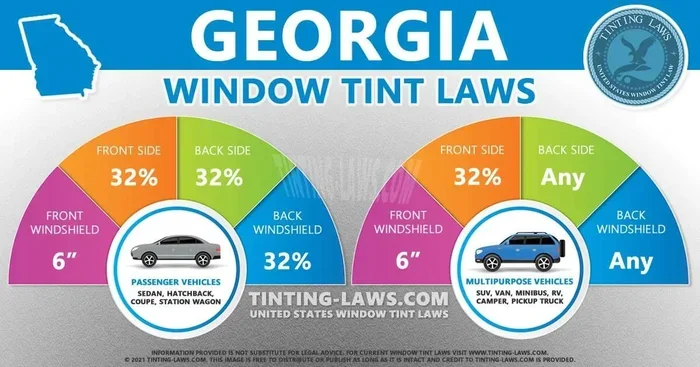
Georgia does not use one-size-fits-all rules for tint darkness. The law separates vehicles into two main categories. Each category has its own set of limits for front side windows, rear side windows, and rear windows.
Sedan Tint Rules
For sedans in Georgia, the front windshield must allow more than 32 percent of light through. You can apply a non-reflective tint to the top six inches of the windshield. The front side windows must also allow more than 32 percent VLT. This means the front doors and front side windows need to stay fairly light.
The rear side windows and rear window on a sedan can be any darkness. You can go as dark as you want on these back windows. There is no VLT minimum requirement for the rear windows on sedans. However, you must have dual side mirrors if the rear window is tinted.
SUV and Van Tint Rules
SUVs and vans follow a slightly different set of rules in Georgia. The front windshield still needs a non-reflective tint on the top six inches. The front side windows must allow more than 32 percent of light through.
Here is where it gets different. For SUVs and vans, the rear side windows and rear window can also be any darkness. Just like sedans, there is no minimum VLT for back windows on these larger vehicles. Dual side mirrors are required if the rear window is tinted.
Comparison Table: Sedan vs. SUV/Van Tint Rules
| Window | Sedan VLT Limit | SUV/Van VLT Limit |
|---|---|---|
| Front Windshield | Top 6 inches only, non-reflective | Top 6 inches only, non-reflective |
| Front Side Windows | Over 32% VLT | Over 32% VLT |
| Rear Side Windows | Any darkness allowed | Any darkness allowed |
| Rear Window | Any darkness allowed | Any darkness allowed |
| Reflective Tint | Not allowed | Not allowed |
Tint Reflectivity Rules in Georgia
Georgia law does not allow reflective or mirrored tint on any vehicle window. This applies to all windows, front and back. Reflective tint can blind other drivers, which is why the state bans it. If your tint has a mirror-like finish, it is illegal regardless of the VLT percentage.
Stick with matte or semi-gloss finishes. These are safe and legal. Your installer should know this, but it is always good to double-check before you commit.
Tint Exemptions and Special Permits
Not everyone can tint their windows to the standard legal limit. Georgia window tint law includes exemptions for certain situations. These exemptions allow darker tint than the usual rules permit.
Medical Exemption for Darker Tint
If you have a medical condition that makes you sensitive to sunlight, you may qualify for a darker tint. Conditions like lupus, photosensitivity disorder, or certain skin conditions can qualify. You need a signed letter from a licensed physician to apply.
The application goes through the Georgia Department of Public Safety. If approved, you will receive a tint exemption permit. This permit must be kept in your vehicle at all times. You can tint your front side windows darker than the 32 percent limit with this permit.
Other Exemptions
Certain vehicles may also qualify for exemptions. Law enforcement vehicles and emergency vehicles follow different tint rules. Some commercial vehicles also have special provisions. However, for regular passenger cars, the medical exemption is the most common exception.
Quick Tips for Exemptions
- Always carry your exemption certificate in your vehicle.
- Renew your exemption before it expires.
- Do not assume your tint is legal just because you have a condition.
- Get the exemption approved before you install your tint.
Pennalties and Common Violations
Breaking Georgia window tint law can cost you more than just a warning. The state takes tint violations seriously. Understanding the penalties helps you stay on the right side of the law.
Fines for Illegal Tint
A first-time tint violation in Georgia can result in a fine of up to $1,000. Repeat offenders may face even higher penalties. In some cases, your vehicle could be impounded if the violation is severe. Police officers can pull you over if they suspect your tint is too dark.
During a routine traffic stop, an officer may use a tint meter to measure your window’s VLT. If the reading shows your tint is below the legal limit, you will receive a citation. This is not something you want to deal with.
Common Mistakes That Lead to Violations
Many car owners get tint violations because of simple mistakes. One common error is buying tint online without checking the VLT percentage. Another is assuming all tint shops know Georgia’s exact legal limits. Some installers may apply tint that is too dark without telling you.
Here are the most common mistakes people make:
- Buying tint without checking VLT: Not all tint films are labeled clearly.
- Skipping the sticker requirement: Georgia requires a compliance sticker on the driver’s side window.
- Tinting the front windshield incorrectly: Only the top six inches can be tinted.
- Using reflective tint: This is illegal on all windows in Georgia.
- Forgetting dual mirrors: Required when the rear window is tinted on sedans and SUVs.
Expert Insight
Most tint shops in Georgia are familiar with local regulations. However, it is always your responsibility to confirm that your tint is legal. Ask your installer for a written guarantee that your tint meets Georgia VLT standards. Keep that paperwork with your vehicle documents.
Tint Installation: What You Need to Know
Installing window tint is not just about picking a dark shade. There are practical steps you need to follow to ensure your tint is legal and long-lasting. Proper installation makes a big difference in how your tint performs and how long it lasts.
Choosing the Right Tint Film
Not all tint films are created equal. Some films block more heat than others. Some offer better UV protection. When choosing a film for your vehicle, consider what matters most to you. Do you want maximum heat rejection? Better privacy? UV protection?
Make sure the film you choose meets the VLT requirements for your vehicle type. Ask the supplier or installer for the exact VLT percentage. If you are unsure, go with a lighter tint to stay on the safe side.
Do You Need a Tint Certificate?
Georgia requires a tint sticker on the driver’s side window. This sticker proves your tint is legal. Your installer should place this sticker on the window after installation. If they do not, ask them to do it before you leave the shop.
The sticker must be placed between the glass and the film. It should be visible and clearly readable. Without this sticker, you may be pulled over and questioned about your tint compliance.
Professional vs. DIY Installation
You can install window tint yourself, but professional installation is recommended. Professional installers know the legal limits and application techniques. They also have the right tools to avoid bubbles, peeling, and uneven edges.
DIY tint kits are cheaper, but they come with risks. Poor installation can lead to bubbling, peeling, and reduced visibility. This can create safety hazards on the road. If you choose DIY, make sure you follow all Georgia tint regulations carefully.
Quick Tips for Tint Installation
- Choose a certified and reputable tint installer in Georgia.
- Ask for a written warranty on the tint film and installation.
- Verify the VLT percentage before the film is applied.
- Make sure the compliance sticker is placed correctly.
- Avoid rolling down your windows for at least three to four days after installation.
Tips for Staying Compliant with Georgia Tint Laws
Staying compliant with Georgia window tint law is straightforward once you know the rules. A few simple habits can keep you out of trouble and save you from unexpected fines.
Know Your Vehicle’s Legal Limits
The first step is knowing what is legal for your specific vehicle. Sedans and SUVs have different rules. Front windows have stricter limits than rear windows. Write these limits down and keep them in your phone or glove box.
Keep Your Documents Handy
If you have a medical exemption, always carry the documentation. If your tint shop provided a compliance certificate, keep it in your vehicle. These documents can help you avoid unnecessary hassle during traffic stops.
Get Regular Inspections
Consider having your tint inspected periodically. Some tint shops offer free compliance checks. This is a good habit, especially if you live in an area with strict enforcement. A quick check can confirm your tint is still within legal limits.
Stay Updated on Law Changes
Laws can change. Georgia may update its tint regulations from time to time. Stay informed by checking the Georgia Department of Public Safety website or consulting with a local tint professional. Being proactive keeps you compliant and avoids surprises.
Common Mistakes to Avoid
- Assuming all tint is the same: Different films have different VLT levels. Always check.
- Ignoring the sticker requirement: The compliance sticker is mandatory in Georgia.
- Using aftermarket tint without checking VLT: Even if the original tint was legal, aftermarket films may not be.
- Tinting the front windshield below the top six inches: This is illegal in Georgia.
- Not having dual side mirrors: Required when the rear window is tinted.
Why Georgia Has These Tint Regulations
You might wonder why Georgia has specific rules for window tint. The answer comes down to safety. Tinted windows can reduce visibility for the driver, especially at night. They can also make it harder for police officers to see inside your vehicle during a traffic stop.
Excessively dark tint can also be a safety risk for other drivers on the road. If a driver cannot see through your windows, it can lead to accidents. The state balances personal preferences with public safety by setting clear limits.
Another reason is enforcement. Police officers need to be able to see inside vehicles during routine stops. This helps keep both officers and drivers safe. The tint regulations make it easier for law enforcement to do their jobs effectively.
Final Thoughts on Georgia Window Tint Law
Georgia window tint law is designed to keep everyone safe on the road. By following the VLT limits, avoiding reflective tint, and getting the proper stickers and exemptions, you can enjoy tinted windows without any legal trouble. The rules are clear, and they apply equally to sedans, SUVs, and vans.
Whether you tint your windows for style, comfort, or UV protection, staying compliant should always come first. Choose a reputable installer, verify the VLT percentage, and keep your documentation in order. These simple steps go a long way in keeping your vehicle legal and your driving experience enjoyable.
Remember, the consequences of illegal tint can be costly. Fines, vehicle impoundment, and the hassle of fixing the issue are all avoidable. Do your research before you tint your windows. Follow the rules, and you will have nothing to worry about. Enjoy your tinted windows the right way and drive with confidence knowing you are compliant with Georgia law.
Frequently Asked Questions
What is the legal tint percentage for front windows in Georgia?
The legal VLT for front side windows on both sedans and SUVs in Georgia must be over 32 percent. This means at least 32 percent of visible light must pass through the window tint. The front windshield can only have a non-reflective tint on the top six inches.
Can I tint my rear windows as dark as I want in Georgia?
Yes, for both sedans and SUVs, the rear side windows and rear window can be any darkness. There is no minimum VLT requirement for these back windows. However, you must have dual side mirrors if the rear window is tinted.
Is reflective tint legal in Georgia?
No, reflective or mirrored tint is not legal on any vehicle window in Georgia. The state bans reflective tint because it can blind other drivers and create safety hazards. Stick with matte or semi-gloss finishes for a legal and safe option.
How do I get a medical exemption for window tint in Georgia?
You need a signed letter from a licensed physician stating that you have a qualifying medical condition. Submit this letter to the Georgia Department of Public Safety for approval. If approved, you will receive a tint exemption permit that allows darker tint than the standard legal limit.
What happens if I get caught with illegal window tint in Georgia?
A first-time violation can result in a fine of up to $1,000. Repeat offenders may face higher penalties. In serious cases, your vehicle could be impounded. Police officers can measure your tint VLT during a traffic stop and issue a citation if it does not meet legal limits.
Do I need a tint sticker in Georgia?
Yes, Georgia law requires a compliance sticker on the driver’s side window. This sticker proves your tint meets the legal VLT requirements. Your installer should place it between the glass and the film. Without this sticker, you could be questioned during a traffic stop.
=== CONCLUSION ===
Understanding Georgia window tint law is essential for any car owner who wants to tint their windows. The rules are clear and they protect everyone on the road. By following the VLT limits, avoiding reflective tint, and keeping proper documentation, you stay compliant and avoid costly fines.
Whether you drive a sedan, SUV, or van, the legal limits apply to you. Take the time to research your options, choose a quality tint film, and work with a professional installer. Your tinted windows will look great and keep you safe on Georgia roads.