California Window Tint Law Explained and What It Means for You
The California window tint law sets strict rules on how dark or reflective your car windows can be. Knowing these rules helps you avoid costly tickets and keeps you on the right side of the law. Whether you drive a sedan, SUV, or truck, this guide breaks down every requirement so you can tint with confidence.
This is a comprehensive guide about California Window Tint Law Explained.
Key Takeaways
- Front windshield tint: Only a non-reflective strip at the top is allowed, and it cannot extend below the AS-1 line.
- Front side windows: Must allow more than 70% of light in for all vehicle types.
- Rear side and back window: Can be tinted darker, but must have dual side mirrors if the rear window is tinted.
- Reflective tint: Not allowed on front or rear side windows in California.
- Medical exemptions: Available for those with specific health conditions that require extra sun protection.
- Tint ticket fines: Can cost $25 or more per violation, and you may be ordered to remove illegal tint.
- Sticker requirement: A legal tint sticker must be placed between the film and glass on the driver’s side window.
[FEATURED_IMAGE_PLACEHOLDER]
California Window Tint Law Explained and What It Means for You
Have you ever driven past a car with beautifully tinted windows and thought, “I want that”? You are not alone. California window tint law is one of the most discussed topics among car owners in the Golden State. But here is the thing: the rules are not as simple as “you can or you cannot.” They depend on which window you are tinting, what type of vehicle you drive, and how dark the film actually is.
Understanding California tint regulations before you roll into a shop can save you hundreds of dollars in fines. It can also save you the headache of having to peel off tint you paid good money for. This guide walks you through every rule, every exception, and every practical detail you need to know. By the end, you will feel confident about your choices.
Let us be real. Nobody wants a tint ticket. Nobody wants to pull over and explain to a officer why their windows are too dark. The good news is that once you understand the legal tint limits, staying compliant is straightforward. So let us break it all down in plain, simple language.
What Is the California Window Tint Law?
The California window tint law governs how much light must pass through your car windows. The key measurement is called Visible Light Transmission, or VLT. VLT tells you what percentage of light the tint film allows to pass through the glass. The lower the number, the darker the tint.
California law applies to passenger vehicles, SUVs, vans, and trucks. The rules differ slightly depending on the vehicle type and which window you are tinting. Here is what the law says in plain terms.
Front Windshield Tint Rules
The front windshield is the most restricted window in your car. California law only allows a non-reflective tint strip at the top of the windshield. This strip cannot extend below the manufacturer’s AS-1 line, which is usually marked on your windshield. No other part of the front windshield can be tinted. This rule keeps your view of the road clear, especially during sunrise and sunset.
Front Side Window Tint Rules
For the front side windows, California tint regulations require that at least 70% of visible light must pass through. That means your tint film can only block up to 30% of light. This applies to sedans, SUVs, and vans alike. If your front side windows are tinted darker than 70% VLT, you are breaking the law. It is that simple.
Rear Side and Back Window Tint Rules
Here is where things get a bit more flexible. The rear side windows and the back window can be tinted darker than the front. There is no specific VLT limit for these windows in California. You can go as dark as you want. However, there is one important catch. If you tint the rear window, you must have dual side mirrors on the vehicle. This ensures the driver can still see what is happening behind the car.
VLT and Tint Darkness Explained
Understanding VLT percentage is the foundation of tint compliance. VLT stands for Visible Light Transmission. It measures how much light passes through your window film and glass combined. Let us look at what different numbers mean for your car.
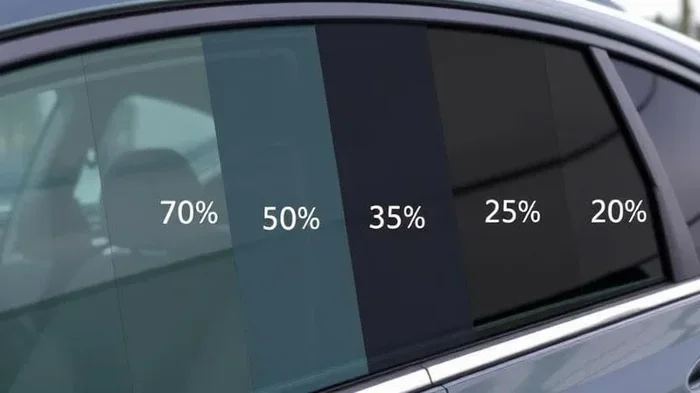
A 70% VLT film is very light. You can barely tell it is there. It blocks some glare and heat but keeps your windows mostly clear. A 50% VLT film is noticeably darker. It reduces glare and heat more effectively. A 35% VLT film is quite dark and offers great privacy and heat rejection. A 5% VLT film, often called “limo tint,” is extremely dark and almost completely blocks light.
In California, the legal tint darkness for front side windows is 70% VLT or higher. For rear side and back windows, there is no limit. But remember, you need dual side mirrors if the rear window is tinted. The front windshield can only have a non-reflective strip at the top.
How VLT Is Measured
Tint shops use a tint meter to measure the VLT of your windows. This device shines a light through the glass and film and calculates the percentage of light that passes through. It is quick, accurate, and the standard way shops check compliance. When you get your tint done, ask the installer to measure and confirm the VLT for your records.
Reflective and Colored Tint Restrictions
Not all tint is created equal. California law also restricts the type of tint film you can use. Reflective tint is a big one. Reflective films have a mirror-like finish that bounces light away from the car. They look sleek, but they can blind other drivers. Because of this, California prohibits reflective tint on both front and rear side windows.
Colored tint is another restricted category. Red, amber, and blue tint films are not allowed on any vehicle windows in California. The law only permits neutral gray, brown, or green tint colors. These colors reduce glare and heat without distorting the colors other drivers see through your windows.
Why These Restrictions Exist
The reasoning behind these rules is safety. Reflective and colored tints can distort colors and create glare for other drivers. They can also make it harder for law enforcement to see inside your vehicle during a traffic stop. The California Department of Motor Vehicles and law enforcement agencies work together to enforce these rules and keep roads safe for everyone.
Tint Exemptions and Special Cases
Not everyone fits into the standard rules. Some drivers qualify for exemptions that allow darker tint than the law normally permits. Understanding these exceptions can be a game-changer if you have a specific need for extra window shading.
Medical Exemption for Window Tint
California offers a medical exemption for window tint. If you or a passenger has a condition that makes you sensitive to sunlight, you may qualify. Conditions like lupus, eczema, psoriasis, or certain photosensitivity disorders can make you eligible. To get this exemption, you need a signed letter from a licensed physician. This letter must state that darker tint is medically necessary.
You must carry this letter in your vehicle at all times. The exemption allows darker tint than the standard 70% VLT limit on front side windows. However, even with a medical exemption, reflective tint and certain colors are still not allowed. The exemption only covers tint darkness, not tint type.
Other Special Cases
Some vehicles may qualify for different tint rules. For example, certain law enforcement and emergency vehicles have their own tint regulations. Classic and antique cars may also have different rules depending on the model year and registration status. Always check with the California DMV or a trusted tint shop if you are unsure about your specific situation.
Penalties for Tint Law Violations
Breaking the California window tint law comes with real consequences. Nobody wants to deal with a tint ticket, but it happens more often than you might think. Here is what you need to know about the penalties.
A tint violation ticket in California typically costs around $25 for a first offense. That might sound minor, but the real issue is that you will be ordered to remove the illegal tint. If you do not fix the problem, you could face additional fines. Repeated violations can lead to higher costs and more serious consequences.
Here are some common penalties you should be aware of:
- Fine: Usually $25 or more per violation, depending on the county.
- Fix-it ticket: You must remove the illegal tint and get it certified.
- Failed smog check: Illegal tint can cause your vehicle to fail a smog inspection.
- Insurance issues: Some insurers may view illegal tint as a risk factor.
How to Avoid a Tint Ticket
The easiest way to avoid a tint ticket is to work with a reputable tint shop. A good installer will know the California tint regulations inside and out. They will recommend films that meet the legal VLT requirements. Always ask for a tint compliance certificate after installation. This document proves your tint meets state standards and can protect you if you ever get pulled over.
Tint Sticker Requirements and Certification
California law requires a specific sticker to prove your tint is legal. This legal tint sticker must be placed on the driver’s side window, between the film and the glass. The sticker certifies that your tint meets the state’s VLT requirements. It is a small detail, but it makes a big difference if you ever get questioned by law enforcement.
Make sure your tint installer applies this sticker during the installation process. If you buy a used car with tinted windows and there is no sticker, you may want to have the VLT measured and a sticker applied if the tint is compliant. This simple step can save you from unnecessary trouble on the road.
Best Tint Options for California Drivers
Now that you know the rules, let us talk about what actually works well for California drivers. You want tint that keeps you cool, blocks UV rays, and stays within the law. Here are some practical options to consider.
Ceramic Tint
Ceramic window tint is the gold standard for California drivers. It blocks up to 99% of UV rays and rejects a lot of heat without darkening the window too much. Ceramic tint does not interfere with electronic signals, so your GPS, phone, and radio work without interruption. It is more expensive than other options, but it is worth every penny.
Carbon Tint
Carbon window film is another excellent choice. It offers a matte finish that looks sleek and professional. Carbon tint blocks infrared light effectively, which means less heat inside your car. It does not fade or turn purple over time, which is a common problem with cheaper dyed films.
Dyed Tint
Dyed tint is the most affordable option. It blocks some heat and provides decent privacy. However, dyed film tends to fade over time, especially in the California sun. It can also bubble or peel after a few years. If you are on a tight budget, dyed tint works, but you may need to replace it sooner.
Hybrid Tint
Hybrid tint combines dyed and metallic layers. It offers better heat rejection than dyed tint alone and costs less than ceramic or carbon. It is a solid middle-ground option for drivers who want good performance without a premium price tag.
Common Mistakes People Make with Car Window Tint
Even well-meaning car owners make mistakes when it comes to window tint. Avoiding these common errors can save you time, money, and the stress of dealing with a violation.
One of the biggest mistakes is buying tint online without checking the VLT. Many online sellers do not clearly state the exact VLT percentage. What looks like a medium tint in the product photo might actually be 50% or even 35% VLT. Always verify the exact VLT before purchasing.
Another mistake is choosing the cheapest installer. A low price often means low-quality film and poor installation. Bubbles, peeling, and uneven application are common with budget installers. Worse, they may not know the California window tint law well enough to ensure compliance.
Some people forget about the rear window and mirrors. If you tint the back window dark, you must have dual side mirrors. Forgetting this requirement can lead to a ticket even if your front windows are perfectly legal.
Finally, do not assume your tint is legal just because it looks fine. Only a tint meter can accurately measure VLT. Get your tint measured and certified by a professional to be safe.
Quick Tips for Staying Compliant with California Tint Laws
Staying on the right side of California tint regulations does not have to be complicated. Here are some quick tips that make a big difference:
- Ask for the VLT percentage before you buy any tint film. Do not guess.
- Choose a certified installer who knows California law and applies the legal sticker.
- Keep your medical exemption letter in the glove box if you have one.
- Check your state laws annually since regulations can change.
- Do not tint the front windshield below the AS-1 line. It is illegal and unsafe.
- Get a tint compliance certificate after installation and keep it with your registration.
- When in doubt, go lighter. A 70% VLT film on the front windows keeps you safe and legal.
How California Window Tint Law Compares to Neighboring States
California is not the only state with tint laws, and its rules are not the strictest or the most lenient. Understanding how California window tint law compares to neighboring states can give you useful context.
Arizona, for example, allows darker tint on front side windows than California does. Oregon requires a higher VLT on front side windows than California. Nevada allows slightly more reflective tint than California permits. If you frequently travel across state lines, knowing these differences can help you stay compliant everywhere.
The key takeaway is that every state has its own rules. What is legal in one state may get you a ticket in another. If you live in California, always follow California law. Do not assume that tint you applied legally in another state will pass muster here.
Frequently Asked Questions
What is the legal tint percentage for front windows in California?
The legal VLT for front side windows in California is 70% or higher. This means the tint film can block no more than 30% of visible light. The front windshield can only have a non-reflective strip at the top, above the AS-1 line.
Can you tint the rear windows darker than 70% in California?
Yes, you can tint the rear side windows and back window as dark as you want in California. However, if the rear window is tinted, you must have dual side mirrors on the vehicle. This ensures the driver has adequate visibility behind the car.
Is reflective tint legal in California?
No, reflective tint is not legal on any side windows in California. The law prohibits mirror-like or metallic finishes on both front and rear side windows. Only non-reflective tint is permitted.
Can you get a medical exemption for darker tint in California?
Yes, California offers a medical exemption for window tint. You need a signed letter from a licensed physician explaining why darker tint is medically necessary. Carry this letter in your vehicle at all times to present if asked by law enforcement.
How much is a tint ticket in California?
A tint violation ticket in California typically costs around $25 for a first offense. You will likely receive a fix-it ticket requiring you to remove the illegal tint. Additional fines may apply if the violation is not corrected.
Does tint affect a smog check in California?
Yes, illegal tint can cause your vehicle to fail a smog inspection in California. The California DMV checks tint darkness as part of the smog check process. Make sure your tint is compliant before your inspection to avoid delays.
Conclusion
The California window tint law may seem complex at first glance, but it becomes simple once you understand the basics. Front side windows must stay at 70% VLT or higher. The front windshield can only have a small non-reflective strip at the top. Rear windows can be tinted darker, but you need dual side mirrors. Reflective and colored tints are not allowed. And if you have a medical condition, a medical exemption can give you more flexibility.
Staying compliant with California tint regulations is not just about avoiding fines. It is about safety. Clear windows mean better visibility for you and everyone on the road. When you work with a reputable installer, choose the right film, and get your compliance sticker, you can enjoy the benefits of window tint without any worries.
Use this guide as your go-to resource whenever you have questions about window tinting rules in California. Share it with friends who are thinking about tinting their cars. And most importantly, make informed decisions that keep you safe, legal, and comfortable on every drive.
Frequently Asked Questions
What is California Window Tint Law Explained?
California Window Tint Law Explained is an important topic with many practical applications.