How Long Will a Wrap Last on a Car Before It Fades
A car wrap typically lasts between 5 and 7 years before noticeable fading occurs, but its lifespan depends heavily on material quality and care. How long a wrap will last on a car is shaped by UV exposure, climate, and how often you wash it. With proper maintenance, a premium vinyl wrap can hold its vibrant color for up to a decade, making it a smart investment for any vehicle.
You just spent money on a car wrap and now you wonder, how long will a wrap last on a car before it fades? It is a smart question. The answer is not a simple number. Many factors play a role in wrap longevity. A high-quality vinyl wrap can protect your original paint and turn heads for years. But without proper care, even the best material will lose its shine too soon.
Most vehicle wraps last between five and seven years. Premium films with advanced UV inhibitors can push that limit to ten years or more. The key is understanding what speeds up fading and what slows it down. This guide breaks down every detail so you can get the most from your investment. You will learn about material types, maintenance routines, and warning signs that mean replacement time is near.
Whether you chose a bold full wrap or a subtle partial design, durability matters. I will walk you through the science of wrap fading and share practical steps to keep your car looking fresh. Let us dive into the real lifespan of a car wrap and how you can extend it.
Key Takeaways
- Lifespan Range: Most wraps last 5–7 years, while premium films can reach 10 years with excellent care.
- UV Exposure Is the #1 Enemy: Sunlight breaks down vinyl dyes, causing fading and dullness over time.
- Maintenance Matters: Regular hand washing, proper drying, and avoiding harsh chemicals dramatically extend wrap life.
- Full Wraps Offer More Protection: They shield the entire paint surface, whereas partial wraps leave some areas exposed.
- Watch for Warning Signs: Peeling edges, bubbling, and color fading are clear signals it is time for a replacement.
- Professional Installation Pays Off: A flawless install reduces the risk of premature adhesive failure and bubbling.
📑 Table of Contents
How Long Will a Wrap Last on a Car? The Real Answer
The honest answer is that there is no single number. A vehicle wrap is a large investment, and its life expectancy depends on several moving parts. Most installers will tell you five to seven years for a standard vinyl wrap. If you chose a paint protection film or a premium cast vinyl, you may stretch that to eight or ten years. The difference comes down to material grade, installation quality, and how you treat the exterior wrap over time.
What Affects Wrap Lifespan?
Several key factors determine how long your exterior wrap will look its best. Understanding these helps you set realistic expectations and take control of the outcome.
- Vinyl Quality: Premium cast vinyls are thinner, more conformable, and resist fading better than economy calendered films. They use advanced polymers that block UV rays more effectively.
- Installation Skill: A professional install ensures the adhesive bonds evenly. Air pockets or misaligned edges create pockets where moisture seeps in, leading to wrap bubbling and premature peeling.
- Climate and Sun Exposure: Cars parked in hot, sunny climates fade faster. Salt air, heavy rain, and extreme temperature swings also stress the vinyl.
- Maintenance Routine: Regular cleaning removes contaminants that eat into the surface. Neglecting wash cycles allows grime to bond and dull the finish.
- Adhesive Type: High-quality wrap adhesive remains flexible and holds strong for years. Cheap adhesives dry out, shrink, and cause edge lift.
Average Lifespan by Wrap Type
Not all wraps are created equal. The table below shows typical lifespans based on material type and coverage level. These numbers assume proper care and average weather conditions.
| Wrap Type | Typical Lifespan | Best For |
|---|---|---|
| Full Gloss Vinyl Wrap | 5–7 years | Complete color change, high-gloss finish |
| Matte Vinyl Wrap | 4–6 years | Sleek, non-reflective look; shows imperfections more easily |
| Partial Wrap (Accents, Hood, Roof) | 5–7 years | Branding, partial design elements; less surface area |
| Paint Protection Film (PPF) | 7–10 years | Full front-end or full-car protection; self-healing properties |
| Carbon Fiber Wrap | 4–6 years | Textured look; often used on hoods and mirrors |
As you can see, a full wrap covers more surface but also faces more UV exposure. A partial wrap protects only certain panels, so the uncovered paint may fade while the wrapped areas stay vibrant. This contrast can make the entire car look uneven over time, which is why many owners eventually choose a full vehicle wrap.
What Causes a Car Wrap to Fade?
Fading does not happen overnight. It is a gradual process driven by environmental and chemical factors. Knowing the causes helps you take preventive action before the color dulls.
UV Rays and Sun Damage
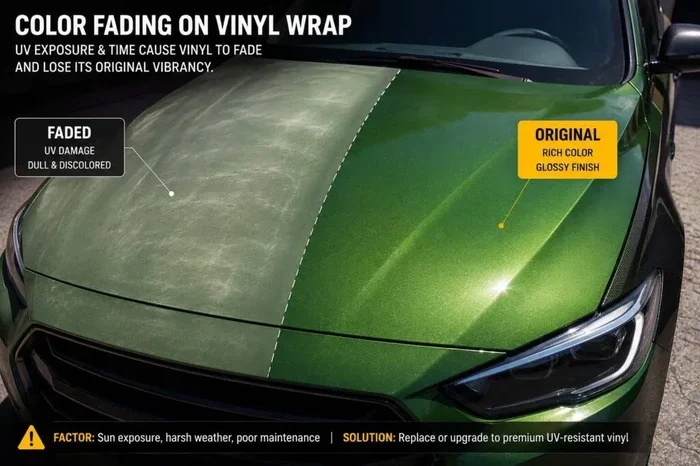
Ultraviolet radiation is the biggest enemy of any vinyl wrap. Sunlight breaks down the chemical bonds in the dye layer, causing the color to shift from vivid to muted. Cars parked outdoors year-round fade faster than those kept in garages. Even a wrap warranty often does not cover excessive UV damage if the car was consistently exposed to direct sunlight. Parking in the shade or using a UV-protective car cover can slow this process significantly.
Environmental Contaminants and Road Grime
Bird droppings, tree sap, bug splatter, and industrial fallout all contain acids that attack the vinyl surface. When left untreated, these contaminants etch into the film and create permanent dull spots. Hard water spots from rain or hose water leave mineral deposits that scatter light and make the wrap look faded. Regular washing removes these threats before they bond permanently. A quick rinse after a rainstorm or a bird dropping incident makes a big difference in wrap longevity.
The Role of Adhesive Quality
When the adhesive fails, the wrap peels away from the paint, exposing it to the elements. Low-quality adhesives dry out, shrink, and lose their grip. This leads to edge lifting and wrap peeling. Once the adhesive bond breaks, moisture seeps underneath and causes wrap bubbling. The bubbles trap dirt and accelerate fading beneath the lifted edges. A professional installer uses high-quality adhesive and applies the right amount of heat to ensure a permanent bond that lasts the life of the wrap.
How to Make Your Car Wrap Last Longer
Proper care is the single most powerful tool you have for extending wrap durability. A consistent routine protects the vinyl, keeps the adhesive strong, and preserves the glossy or matte finish. Here is how to build a maintenance habit that pays off.
Daily Washing and Drying Habits
Wash your wrapped car every two weeks, or more often if it is exposed to road salt, bird droppings, or heavy pollution. Follow these steps for safe cleaning:
- Rinse thoroughly with cool water to remove loose dirt and grit. Never skip this step—rubbing dry particles across the surface creates micro scratches.
- Use a pH-neutral car wash soap and a soft microfiber mitt. Avoid dish soap, which strips the protective release layer on the vinyl.
- Wash in straight lines rather than circular motions. This reduces the chance of swirl marks that dull the finish.
- Dry with a clean, soft microfiber towel or a rubber squeegee. Pat gently around edges and seams where water can pool.
- Avoid automatic car washes with rotating brushes. The harsh bristles can scratch the vinyl and force water under the edges, causing wrap bubbling.
Seasonal Care and Weather Protection
Each season brings unique challenges for car wrap maintenance. In summer, UV rays are strongest, so park in shaded areas whenever possible. In winter, road salt and brine are highly corrosive. Rinse the undercarriage and wheel wells regularly. In autumn, falling leaves and tree sap can stain the wrap if left too long. A seasonal application of a vinyl-safe sealant adds an extra layer of UV protection and makes future washes easier.
Avoiding Common Mistakes
Even well-meaning owners can shorten their wrap’s life with simple errors. Never use a high-pressure washer directly at the edges of the wrap. The force can lift the adhesive and let water seep underneath. Avoid petroleum-based cleaners, abrasive polishes, and waxes with solvents. Do not pick at small scratches or chips—let a professional assess them. Over time, these habits preserve the wrap shine and prevent premature wear.
Partial Wraps vs. Full Wraps: Which Lasts Longer?
Many car owners debate between a partial wrap and a full wrap. The answer depends on your goals, budget, and how much protection you want for the original paint.
Coverage and Protection Differences
A partial wrap covers only specific panels, such as the hood, roof, or side skirts. It protects those areas from UV fading and road grime, but the uncovered paint remains exposed. Over several years, the contrast between the vibrant wrapped panels and the sun-faded uncovered areas can be stark. A full wrap eliminates this problem by shielding the entire vehicle. The exterior wrap acts as a sacrificial layer, absorbing UV rays and chemical exposure so your original paint stays pristine underneath.
Cost vs. Longevity Trade-Offs
A partial wrap costs less upfront, often 30 to 50 percent less than a full vehicle wrap. However, if you want a uniform look, you may need to wrap additional panels later. A full wrap provides a complete transformation and often comes with a better wrap warranty from the manufacturer. When you consider the car wrap cost per year of protection, a full wrap frequently delivers better long-term value because it preserves the entire paint job and lasts longer without visible contrast.
When Should You Replace a Faded Wrap?
Even with the best care, every wrap eventually reaches the end of its useful life. Recognizing the signs early helps you plan the replacement without risking damage to the underlying paint.
Signs It’s Time for a New Wrap
Watch for these clear indicators that your wrap fading has progressed beyond simple cleaning fixes:
- Color Loss: The wrap looks washed out or chalky, especially in direct sunlight. A simple polish will not restore the original vibrancy.
- Edge Lifting: The corners or edges of the wrap start to curl or peel away from the surface. This is a sign that the adhesive is failing.
- Persistent Bubbling: Bubbles that do not disappear after a temperature change indicate moisture trapped under the film. This can lead to mold or adhesive breakdown.
- Cracking or Creasing: The vinyl becomes brittle and develops fine cracks, especially around curves and body lines.
- Staining That Will Not Budge: Industrial fallout, rust marks from rain chips, or deep etching from bird droppings that resist all cleaning attempts.
Safe Removal and Preparing for a Fresh Wrap
Removing an old wrap should be done carefully to protect the factory paint. A professional uses a heat gun to gently warm the vinyl, which softens the adhesive and allows for clean peeling. After removal, any leftover adhesive residue is cleaned with a specialized solvent that will not harm the paint. The surface is then decontaminated and polished before the new wrap is applied. This preparation ensures the fresh vinyl wrap bonds perfectly and lasts its full expected lifespan.
Expert Tips for Maximizing Wrap Durability
Going the extra mile with your car wrap care routine can add years of life. These expert-backed strategies make a measurable difference in how your wrap looks day after day.
Invest in Quality Vinyl and Professional Installation
Never underestimate the value of top-tier materials. Brands like 3M, Avery Dennison, and LLumar offer vinyl wrap durability that economy films simply cannot match. Their paint protection film and premium vinyl lines come with extended wrap warranty coverage, often up to ten years. Pair that with a certified installer who follows manufacturer guidelines, and you create the ideal foundation for a long-lasting finish. A flawless installation eliminates the micro-creases and air pockets that become weak points for fading and peeling.
Regular Professional Detailing
Every six months, have your wrapped car professionally detailed. Experts use non-abrasive polishes and ceramic coatings designed specifically for vinyl. These coatings add a hydrophobic layer that repels water, dirt, and UV rays. A professional detailer also inspects the edges and seams for early signs of lift, catching small issues before they become costly repairs. This proactive approach keeps your exterior wrap looking showroom-fresh and significantly extends its functional life.
Understanding how long a wrap will last on a car gives you the confidence to invest wisely. With the right material, professional installation, and consistent care, your wrap will maintain its brilliant color and protective barrier for many years. Treat it well, and it will reward you with a flawless look that turns heads every time you drive.
Frequently Asked Questions
Does a car wrap fade over time?
Yes, all wraps experience some degree of fading eventually. UV radiation, weather exposure, and chemical contaminants gradually break down the vinyl dyes. However, premium materials and proper maintenance can slow this process significantly, keeping the wrap vibrant for five to ten years.
Can you wax a wrapped car?
Yes, but only with a wax formulated for vinyl or synthetic surfaces. Avoid abrasive polishes and harsh solvents. A gentle, non-cleaning wax applied every few months adds a protective layer that enhances the wrap shine and helps repel contaminants.
How often should you wash a wrapped car?
Wash your wrapped car every two weeks under normal conditions. If the vehicle is exposed to salt, heavy rain, or bird droppings, rinse it more frequently. Regular cleaning prevents contaminants from bonding to the vinyl and causing permanent dull spots.
Is a wrap cheaper than repainting?
A car wrap cost is often comparable to a quality paint job, but a wrap offers the advantage of reversibility. You can change the color or remove the wrap entirely without altering the original factory paint, which helps preserve resale value.
What is the average cost of a full car wrap?
The price varies based on vehicle size, vinyl quality, and design complexity. A standard full wrap typically ranges from $2,500 to $5,000. Premium cast vinyls and custom designs may cost more, but they also offer superior vinyl wrap durability and longer lifespan.
Can you remove a wrap without damaging paint?
Yes, when removed correctly by a professional. The process uses controlled heat to soften the adhesive, allowing the vinyl to peel away cleanly. Any remaining residue is treated with a safe solvent that will not harm the underlying factory paint, leaving the surface intact and ready for a fresh wrap.