Can You Jump-Start a Hybrid Battery Without a Problem
Yes, you can jump-start a hybrid battery in most situations, but the process is different from a traditional car. The hybrid battery system combines a high-voltage pack with a standard 12-volt battery, and each needs different handling. Knowing the right jump start procedure keeps you safe and prevents costly damage to your hybrid vehicle.
Can You Jump-Start a Hybrid Battery without a problem? The answer is yes, and it is far simpler than most car owners assume. Hybrid vehicles use a smart two-battery system that separates the high-voltage traction pack from the standard 12-volt auxiliary battery. Understanding this difference is the first step toward handling any jump-start situation with confidence.
Whether you are dealing with a dead auxiliary battery after a long vacation or a sluggish start on a freezing winter morning, knowing the right jump start procedure makes all the difference. This guide covers everything from the inner workings of a hybrid battery system to the exact steps you should follow in an emergency. We also highlight the common mistakes that trip up even experienced drivers.
The goal is simple: give you the knowledge and tools to handle a hybrid battery emergency safely and effectively. By the end of this article, you will understand when a jump-start is appropriate, how to perform one correctly, and how to prevent battery problems before they start.
Can You Jump-Start a Hybrid Battery safely? Absolutely. Let us walk through the complete process together.
Key Takeaways
- You can jump-start a hybrid battery: The process is safe when done correctly, but you must follow specific steps for hybrid systems.
- Focus on the 12-volt battery first: Most hybrid jump-start issues relate to the traditional 12-volt battery, not the high-voltage pack.
- Never touch the orange cables: High-voltage components in hybrid vehicles are color-coded orange and should always be avoided.
- Use proper equipment: A quality portable jump starter or another vehicle with a working battery is essential for a safe jump-start.
- Know when to call a pro: If the hybrid battery warning light is on or you smell burning, seek professional help immediately.
- Prevention is key: Regular hybrid battery maintenance and smart driving habits extend your hybrid battery lifespan significantly.
📑 Table of Contents
- How Hybrid Batteries Actually Work
- Can You Jump-Start a Hybrid Battery? The Full Answer
- Step-by-Step Jump-Start Procedure for Hybrid Vehicles
- Comparison: Traditional Car vs. Hybrid Jump-Start
- Common Mistakes When Jump-Starting a Hybrid
- When to Call a Professional for Help
- Preventing Hybrid Battery Problems Before They Start
- Quick Tips for Hybrid Battery Jump-Starting Success
- Expert Insights on Hybrid Battery Longevity
- Conclusion
How Hybrid Batteries Actually Work
Before you attempt any jump start procedure, it helps to understand what makes a hybrid car different from a standard vehicle. Hybrid vehicles use two separate energy sources to move the car forward. Each one serves a distinct purpose, and both play a role in the starting process.
The first source is a high-voltage battery pack, usually made of nickel-metal hydride or lithium-ion cells. This pack powers the electric motor that assists the gasoline engine during acceleration and cruising. The second source is a standard 12-volt battery, which runs the car’s computer, lights, radio, and other accessories. Most hybrid car battery problems actually involve this smaller 12-volt unit rather than the main traction pack.
The Role of the High-Voltage Battery Pack
The high-voltage pack stores energy created by regenerative braking. When you slow down or coast, the electric motor reverses and acts as a generator, sending power back to the battery. This clever system improves fuel economy and reduces wear on your brake pads. These packs operate at hundreds of volts, which is why they use bright orange cables to warn anyone working on the car. You should never touch these components directly. The hybrid battery warning light on your dashboard will flash if there is a serious issue with the high-voltage system.
Why the 12-Volt Battery Matters So Much
Here is something many hybrid owners do not realize. The 12-volt battery controls the contactor that connects the high-voltage pack to the electric motor. If the 12-volt battery dies, your car will not start at all, even if the high-voltage pack is fully charged. This is why most hybrid car troubleshooting begins with checking the 12-volt battery. A dead 12-volt battery is the most common reason hybrid owners need a jump start procedure. The good news is that jump-starting the 12-volt battery is straightforward and safe when you follow the right steps.
Can You Jump-Start a Hybrid Battery? The Full Answer
The short answer is yes. You can jump-start a hybrid vehicle, but you must be careful about which battery you are targeting. Most of the time, you are jump-starting the 12-volt auxiliary battery, not the high-voltage traction pack. The hybrid battery itself rarely goes completely dead. What usually happens is that the 12-volt battery loses its charge after the car sits unused for a long time. Cold weather makes this problem worse because batteries struggle to hold power in freezing temperatures.
If your hybrid will not start, do not panic. Follow the steps below carefully, and you will have your car running again in minutes. Always refer to your owner’s manual first, as different hybrid vehicle models have slightly different procedures and terminal locations.
When Jump-Starting Is Safe
Jump-starting is safe when the problem is a discharged 12-volt battery. You will know this is the issue if the dashboard lights come on but the car will not crank. The hybrid battery warning light may or may not be illuminated. A jump-start is also safe when the battery is simply old and can no longer hold a charge. In both cases, the high-voltage system is unaffected, and a standard jump-start procedure will restore power to the car’s electrical systems.
When Jump-Starting Is NOT Safe
There are situations where you should never attempt a jump-start. If the high-voltage battery pack has been damaged in a collision, stay away from the vehicle. The orange cables indicate high-voltage components that can be lethal if mishandled. Also avoid jump-starting if your hybrid battery has been sitting unused for months and the cells have deeply discharged. Deep discharge can cause permanent damage to the battery cells, and a jump-start will not fix that problem. You would need a hybrid battery replacement in such cases. If you notice swelling, leaking, or a strong chemical smell, call a professional immediately.
Step-by-Step Jump-Start Procedure for Hybrid Vehicles
Follow these steps carefully to safely jump-start your hybrid vehicle. The process is similar to jump-starting a regular car, but with a few important differences. Take your time and do not rush through any step.
Step 1: Gather Your Equipment
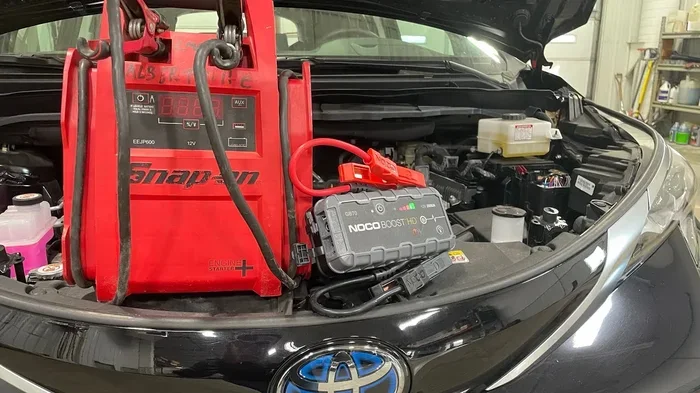
You will need either another vehicle with a working battery or a portable jump starter. Make sure your jump starter is rated for at least 200 amps. Some manufacturers recommend specific portable jump starters for hybrid models, so check your owner’s manual. You will also need a set of quality jumper cables. Look for cables with thick gauge wiring and clean, secure clamps. Dirty or corroded battery terminals can prevent a proper connection and make the jump-start fail. Keeping a portable jump starter in your trunk is one of the best investments you can make for hybrid car maintenance.
Step 2: Position the Vehicles
Park the working vehicle close to your hybrid, but do not let the two cars touch. Turn both vehicles off and engage the parking brakes. Open the hood of both cars to locate the batteries. In most hybrids, the 12-volt battery is located in the trunk or under a seat, not under the hood. Check your owner’s manual to find the exact location. Some models have a remote jump-start terminal under the hood that connects to the hidden battery. Finding this terminal before you start saves time and frustration.
Step 3: Connect the Jumper Cables
Always connect the cables in this exact order to avoid electrical damage:
- Attach the red clamp to the positive terminal of the dead hybrid battery.
- Attach the other red clamp to the positive terminal of the working battery.
- Attach the black clamp to the negative terminal of the working battery.
- Attach the remaining black clamp to an unpainted metal surface on your hybrid’s engine block, away from the battery.
Never let the cable clamps touch each other once they are connected to a battery. This can create sparks and potentially damage the electrical systems. If you are unsure about terminal locations, consult your owner’s manual or look for the positive and negative symbols printed on the battery itself.
Step 4: Start the Working Vehicle First
Start the working vehicle and let it idle for about five minutes. This allows the alternator to send a charge through the cables to your dead battery. In cold weather, let it idle for a few extra minutes to build up a stronger charge. Keep the working vehicle at a steady idle and avoid revving the engine too high.
Step 5: Start Your Hybrid
Press the start button on your hybrid as you normally would. If the car starts, let it run for at least 15 minutes to recharge the 12-volt battery. Do not turn it off immediately, or the battery may die again. If the car does not start after two attempts, wait another five minutes before trying again. Repeated attempts can overheat the jump starter or cables and cause additional problems.
Step 6: Disconnect the Cables in Reverse Order
Once your hybrid is running smoothly, disconnect the cables in the reverse order:
- Remove the black clamp from the unpainted metal surface.
- Remove the black clamp from the working battery’s negative terminal.
- Remove the red clamp from the working battery’s positive terminal.
- Remove the red clamp from your hybrid battery’s positive terminal.
Keep the clamps from touching each other during this process. Store your cables properly after use and coil them neatly to prevent tangling and damage.
Comparison: Traditional Car vs. Hybrid Jump-Start
| Feature | Traditional Car | Hybrid Vehicle |
|---|---|---|
| Battery Type | Single 12-volt battery | 12-volt battery plus high-voltage pack |
| Jump-Start Target | Main battery only | 12-volt auxiliary battery |
| Battery Location | Usually under the hood | Often in trunk or under seat |
| High-Voltage Risk | None | Yes — avoid orange cables at all times |
| Recovery Time | 10 to 15 minutes | 15 to 20 minutes |
| Special Equipment Needed | Standard jumper cables | 200+ amp jump starter recommended |
| DIY Difficulty | Easy | Moderate — follow the manual closely |
This table shows why hybrid jump-starting requires extra care. The presence of a high-voltage battery adds a safety layer that does not exist in traditional vehicles. Always respect the power systems in your hybrid vehicle and never assume the process is identical to a regular car.
Common Mistakes When Jump-Starting a Hybrid
Even experienced car owners make mistakes when jump-starting a hybrid. Knowing these errors ahead of time can save you from expensive repairs or personal injury. Here are the most common pitfalls and how to avoid them.
Mistake 1: Connecting Cables to the Wrong Terminals
One of the most frequent errors is attaching the red clamp to the negative terminal or the black clamp to the positive terminal. This reverses the electrical current and can fry your car’s computer systems. Always double-check terminal markings before connecting. If you are unsure, refer to your owner’s manual or look for the plus and minus symbols on the battery case.
Mistake 2: Ignoring the Hybrid Mode
Many hybrids have a ready mode that keeps the electrical systems active even when the car is off. Before jump-starting, make sure the car is fully off and the key is removed. Leaving it in ready mode can interfere with the jump-start process and create unexpected electrical behavior.
Mistake 3: Using Too Thin Jumper Cables
Thin cables cannot handle the current draw of a hybrid 12-volt battery. Use cables rated for at least 6 gauge, preferably 4 gauge. Thin cables will heat up, melt, and potentially cause a fire. Invest in quality cables that will last for years and perform reliably in emergencies.
Mistake 4: Jump-Starting Near the High-Voltage Pack
Never place your jumper cables near the orange high-voltage components. Keep all connections focused on the 12-volt battery or its remote terminals. The high-voltage system is completely separate and should never be involved in a jump-start. If you are unsure where the high-voltage components are located, ask a professional for guidance.
Mistake 5: Giving Up Too Quickly
If your hybrid does not start on the first try, do not keep cranking the engine. Wait a few minutes between attempts. Continuous cranking drains the jump starter and can damage the starter motor. Patience is your best friend during a jump-start.
When to Call a Professional for Help
There are times when a jump-start is not the right solution. Knowing when to call for professional help can save you from costly mistakes and keep you safe on the road.
Warning Signs That Need Expert Attention
Watch for these red flags that indicate a deeper problem with your hybrid battery or electrical system:
- The hybrid battery warning light stays on after a successful jump-start.
- You hear a clicking sound but the engine will not turn over, even after multiple attempts.
- There is a burning smell coming from the battery area or under the hood.
- The dashboard displays multiple warning lights at once.
- The car started but immediately died again within minutes.
These symptoms suggest a problem beyond a simple dead 12-volt battery. A professional technician has the diagnostic tools to test both the hybrid battery and the 12-volt system safely. Trying to force a start when there is a deeper issue can turn a simple fix into an expensive repair.
Finding the Right Service Provider
Not all mechanics are qualified to work on hybrid vehicles. Look for a shop that specifically advertises hybrid vehicle maintenance and has trained technicians. Ask about their experience with your specific hybrid brand before booking an appointment. Many dealerships also offer roadside assistance that includes hybrid-specific jump-start services. If your car is still under warranty, check whether roadside assistance is included before paying for a service call out of pocket.
Preventing Hybrid Battery Problems Before They Start
The best way to deal with a dead hybrid battery is to prevent the problem from happening in the first place. A little regular maintenance goes a long way toward keeping your hybrid vehicle running smoothly and avoiding unexpected breakdowns.
Keep Your 12-Volt Battery Healthy
The 12-volt battery in a hybrid does not get recharged the same way it does in a traditional car. Because the gasoline engine may not run as frequently, the alternator has fewer opportunities to recharge the 12-volt battery. Use a battery maintainer or trickle charger if you plan to leave your car unused for more than two weeks. This simple habit prevents the slow discharge that leads to dead batteries and frustrating mornings.
Drive Regularly to Support Regenerative Braking
Your hybrid battery stays healthier when you drive regularly. The regenerative braking system recharges the high-voltage pack every time you slow down. Short trips and infrequent driving can cause the battery to lose its charge over time. Try to take your hybrid on a 20- to 30-minute drive at least twice a week. This keeps the battery cells active and helps maintain the proper charge level across all cells.
Monitor Battery Health Through Your Dashboard
Most modern hybrids display battery health information on the dashboard or infotainment screen. Check this regularly and look for any drops in capacity or changes in the hybrid battery warning light behavior. Early detection of battery degradation can help you plan for hybrid battery replacement before you get stranded. Keep track of your mileage and note any changes in fuel economy, as these can be early indicators of battery wear.
Store Your Hybrid Properly in Cold Weather
Cold weather is the enemy of all batteries, including hybrid car battery systems. If you live in a climate with freezing winters, consider parking your car in a garage or using a battery blanket. These simple steps can make the difference between a smooth start and a frustrating morning. Before cold weather starting becomes a seasonal problem, have your battery tested at a local auto parts store. Most shops offer free battery testing and can recommend a replacement if your battery is aging.
Quick Tips for Hybrid Battery Jump-Starting Success
- Always read your owner’s manual before attempting any jump-start procedure on a hybrid vehicle.
- Keep a portable jump starter in your trunk. It works even if another vehicle is not available.
- Wear insulated gloves when handling battery terminals to protect your hands from sparks.
- Clean battery terminals with a wire brush before connecting cables for a better connection.
- Never attempt a jump-start if the battery is visibly damaged or leaking fluid.
- Let the car run for 15 minutes after a successful jump-start before turning it off.
- Check your 12-volt battery every six months as part of routine hybrid car maintenance.
Expert Insights on Hybrid Battery Longevity
According to automotive experts, most hybrid battery systems last between 100,000 and 150,000 miles before requiring hybrid battery replacement. However, proper care can extend that lifespan significantly and save you thousands of dollars over the life of the vehicle.
Dr. Sarah Chen, a hybrid powertrain specialist, explains: “The biggest mistake hybrid owners make is assuming the battery will take care of itself. Regular maintenance of the 12-volt system and mindful driving habits are the best ways to protect both battery systems in your vehicle.”
Another expert tip from certified hybrid technicians: “If your hybrid sits idle for long periods, use a trickle charger on the 12-volt battery. This prevents the slow discharge that leads to dead batteries and unexpected hybrid car troubleshooting situations.”
Keep in mind that the hybrid battery lifespan depends on driving habits, climate, and maintenance. Hot climates tend to degrade battery cells faster, while moderate temperatures help preserve battery health. Understanding these factors helps you make smarter decisions about your vehicle’s care and reduces the likelihood of being stranded with a dead battery.
Conclusion
So, can you jump-start a hybrid battery? Yes, you absolutely can — and it is a straightforward process once you understand the basics. The most important thing to remember is that you are almost always jump-starting the 12-volt auxiliary battery, not the high-voltage traction pack. This distinction keeps you safe and prevents accidental damage to the expensive components that make your hybrid unique.
Follow the steps carefully, avoid the common mistakes we covered, and know when to call a professional. With the right knowledge and a bit of preparation, you can handle a dead hybrid battery situation confidently and safely. Regular maintenance and smart driving habits are your best defense against battery problems. Keep your cables handy, stay on top of battery health checks, and your hybrid vehicle will reward you with years of reliable service. Now you have everything you need to tackle a hybrid battery jump-start with complete confidence.
Frequently Asked Questions
Can you jump-start a hybrid with a traditional car?
Yes, you can use a traditional car to jump-start a hybrid. The process is the same as jump-starting any vehicle, but you must connect the cables to the 12-volt auxiliary battery, not the high-voltage pack. Always follow the correct cable connection order to avoid electrical damage.
Is it safe to jump-start a hybrid in the rain?
It is generally safe if you take proper precautions. Keep all cable connections dry and avoid standing in standing water. Make sure your hands are dry and the cables are not lying in puddles. If the weather is severe, it is better to wait for conditions to improve or call for roadside assistance.
How long should I let my hybrid run after a jump-start?
Let your hybrid run for at least 15 minutes after a successful jump-start. This allows the alternator to recharge the 12-volt battery fully. If your hybrid has a charge indicator, wait until it shows a healthy level before turning the car off.
What happens if I hook up jumper cables wrong on a hybrid?
Connecting cables incorrectly can cause serious electrical damage to your car’s computer systems, fuses, and sensors. It can also create sparks that may damage the battery or cause injury. Always double-check the positive and negative connections before making any contact.
Can a hybrid battery be too dead to jump-start?
Yes, if the high-voltage battery has been deeply discharged or physically damaged, a jump-start will not work. The 12-volt battery can usually be jump-started, but a severely damaged high-voltage pack requires professional diagnosis or hybrid battery replacement.
How much does hybrid battery replacement cost?
Hybrid battery replacement costs typically range from 1,000 to 6,000 depending on the vehicle model and battery type. Labor costs add to the total, and some dealerships offer refurbished battery options that can lower the price significantly.