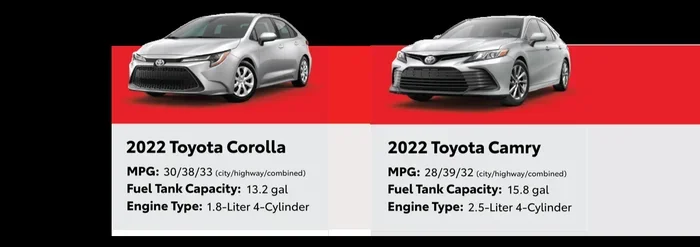
How Many MPG Does the New Toyota Corolla Actually Get
The new Toyota Corolla delivers impressive fuel economy across all trims, with the hybrid model leading the pack at up to 53 combined MPG. Whether you drive the base L, the sporty SE, or the efficient hybrid, this compact sedan offers some of the best miles per gallon in its class. We cover every trim level, real-world expectations, and tips to maximize your Toyota Corolla MPG.
So you are shopping for a new sedan, and one question keeps popping up: how many MPG does Toyota Corolla get? It is a smart question. Fuel economy affects your wallet every single week, and nobody wants to waste money at the pump. The good news is that the new Toyota Corolla brings strong numbers to the table no matter which trim you choose.
From the base L sedan to the hybrid LE, this car was designed with efficiency in mind. Toyota has spent years perfecting its powertrains, and the result is a lineup that competes with the best in the compact sedan segment. In this guide, we will break down the Toyota Corolla MPG numbers for every trim, talk about real-world expectations, and share practical tips to help you squeeze every mile out of each gallon.
Whether you commute 20 miles a day or take long road trips on the highway, understanding your car’s fuel economy helps you plan better and save more. Let us dive into the numbers and see what the new Corolla really delivers.
Key Takeaways
- Toyota Corolla hybrid MPG leads the lineup with up to 53 combined miles per gallon, making it one of the most fuel-efficient sedans available.
- The base Corolla L still delivers solid fuel economy at around 31 MPG combined, proving you do not need a hybrid for great mileage.
- Highway MPG is consistently higher than city MPG across all trims, which is typical for most gasoline and hybrid sedans.
- Real-world MPG may vary by 3 to 5 MPG depending on driving habits, terrain, and maintenance.
- Using the right fuel and keeping up with regular maintenance can help you get the most out of every tank.
- The Corolla outperforms many competitors in its segment, including the Honda Civic and Mazda3 in terms of combined fuel economy.
📑 Table of Contents
- Toyota Corolla MPG by Trim Level
- City vs Highway MPG: What to Expect
- Real-World MPG vs EPA Estimates
- How to Maximize Your Toyota Corolla MPG
- How the Corolla Compares to Competitors
- Common Mistakes That Hurt Your MPG
- Is the Toyota Corolla the Best MPG Sedan for You?
- Final Thoughts on Toyota Corolla MPG
Toyota Corolla MPG by Trim Level
The new Toyota Corolla comes in several trims, and each one has its own fuel economy rating. Here is a quick look at what you can expect from each version. Keep in mind that these numbers come from EPA estimates, which are tested under controlled conditions. Your real-world results may differ slightly.
Corolla L (Base Trim)
The base Corolla L comes with a 2.0-liter four-cylinder engine paired with a CVT transmission. This setup produces about 169 horsepower and delivers an EPA estimated 31 MPG in the city and 40 MPG on the highway. That gives you a combined rating of about 34 MPG, which is very respectable for a non-hybrid compact sedan.
Corolla LE
The LE trim uses the same engine and transmission as the L, so the fuel economy numbers are nearly identical. You can expect around 31 MPG city, 40 MPG highway, and 34 MPG combined. The LE adds a few extra comfort features, but it does not change how much fuel the car uses.
Corolla SE
The SE trim is the sportier option. It still uses the same 2.0-liter engine, so the MPG rating stays in the same ballpark. You will see around 30 MPG city, 38 MPG highway, and 33 MPG combined. The slightly lower highway number comes from the sport-tuned suspension and different gearing, but the difference is small.
Corolla Hybrid (LE Hybrid, SE Hybrid, XLE Hybrid)
The hybrid versions are where things get really exciting. The Toyota Corolla hybrid MPG numbers are best-in-class for this segment. The hybrid system pairs a 1.8-liter four-cylinder engine with an electric motor to deliver up to 53 MPG combined. In the city, you can expect around 53 MPG, and on the highway, about 52 MPG. These numbers are outstanding and make the hybrid Corolla one of the most efficient sedans you can buy.
Corolla Cross (Crossover Variant)
For those who prefer a slightly taller ride, the Corolla Cross offers a hybrid version as well. It delivers around 37 MPG combined, which is excellent for a small crossover SUV. The gasoline-only version is still efficient but does not match the hybrid’s numbers.
City vs Highway MPG: What to Expect
Every car burns fuel differently depending on where you drive. Understanding the difference between city MPG and highway MPG helps you set realistic expectations for your daily routine.
City Driving MPG
City driving involves lots of stops, starts, and lower speeds. This means the engine works harder in stop-and-go traffic, and fuel economy drops. For the base Corolla, expect around 31 MPG in the city. The hybrid version shines here, delivering up to 53 MPG in city conditions because the electric motor handles low-speed driving beautifully.
Highway Driving MPG
Highway driving is where most cars perform their best. Steady speeds and less braking mean the engine can work efficiently. The base Corolla gets around 40 MPG on the highway, while the hybrid version stays strong at about 52 MPG. If you do a lot of highway commuting, the Corolla is a fantastic choice.
Combined MPG Explained
The combined MPG is a weighted average of city and highway numbers. It gives you a single number to compare across vehicles. Most drivers will see their real-world combined MPG land somewhere between the city and highway ratings. For the base Corolla, that is around 34 MPG combined, and for the hybrid, it is around 53 MPG combined.
Real-World MPG vs EPA Estimates
EPA estimates are a great starting point, but they do not tell the whole story. Real-world MPG depends on many factors, and understanding these can help you get closer to the advertised numbers or even exceed them.
Factors That Affect Your MPG
Several things influence how many miles per gallon your Corolla actually delivers:
- Driving style: Aggressive acceleration and hard braking lower fuel economy significantly. Smooth, steady driving helps you get the best numbers.
- Speed: Driving above 65 mph increases aerodynamic drag, which burns more fuel. Keeping your speed steady and moderate helps.
- Temperature: Cold weather reduces fuel efficiency because the engine takes longer to reach optimal operating temperature.
- Air conditioning: Running the AC puts extra load on the engine, which uses more fuel, especially in city driving.
- Tire pressure: Underinflated tires create more rolling resistance, which means the engine works harder and uses more gas.
- Payload: Carrying heavy loads or towing increases fuel consumption.
What Real Owners Are Reporting
Many Corolla owners report getting within 1 to 3 MPG of the EPA estimates. Some hybrid owners even report exceeding the rated numbers, especially in favorable driving conditions. If you drive gently and keep up with maintenance, you can expect similar results. To put this in perspective, if you fill up with a 12-gallon tank, you can roughly calculate your range using the miles per 12 gallons method to estimate how far you can go on a full tank.
How to Maximize Your Toyota Corolla MPG
Want to get the best possible fuel economy from your Corolla? These practical tips can help you save gas and stretch every mile.
Drive Smoothly and Predictorily
One of the easiest ways to improve your MPG is to drive smoothly. Accelerate gently, coast to stops when safe, and maintain a steady speed. Aggressive driving can lower your fuel economy by 15 to 30 percent at highway speeds. Smooth driving can make a real difference over time.
Keep Your Tires Properly Inflated
Underinflated tires are one of the most common reasons for reduced fuel economy. Check your tire pressure at least once a month and before long trips. The recommended pressure is listed on the driver’s side door jamb. Properly inflated tires also last longer and improve safety.
Use the Right Fuel
The Toyota Corolla is designed to run on regular unleaded gasoline. You do not need premium fuel, and using it will not improve your MPG or performance. If you have ever wondered whether premium gas is worth it for your Corolla, the answer is no. Check out our detailed guide on whether you can put premium gas in your Toyota Corolla for more details.
Reduce Excess Weight
Extra weight in your car means the engine has to work harder. Remove unnecessary items from your trunk and back seat. Every extra pound adds up over thousands of miles and can quietly reduce your fuel economy.
Keep Up with Maintenance
Regular oil changes, air filter replacements, and spark plug checks keep your engine running efficiently. A well-maintained engine burns fuel more cleanly and delivers better MPG. If you notice your fuel economy dropping suddenly, it might be time to check your air filter or schedule a service visit.
Use Cruise Control on the Highway
Using cruise control at a steady speed on the highway helps maintain consistent fuel consumption. It prevents unnecessary acceleration and braking, which both waste fuel. Just make sure you stay alert and ready to take control when needed.
How the Corolla Compares to Competitors
The Toyota Corolla does not just compete with itself. It goes head-to-head with several popular compact sedans, and its fuel economy is a major selling point.
Corolla vs Honda Civic MPG
The Honda Civic is one of the Corolla’s biggest rivals. The Civic LX gets about 33 MPG combined with its base engine, while the Civic Hybrid delivers around 50 MPG combined. The Corolla hybrid edges out the Civic hybrid slightly with 53 MPG combined, while the base Corolla matches the Civic LX closely at 34 MPG combined.
Corolla vs Mazda3 MPG
The Mazda3 is known for its sporty handling, but it is not as fuel-efficient as the Corolla. The base Mazda3 gets around 30 MPG combined, while the turbo version drops to about 29 MPG combined. The Corolla clearly wins in this comparison, especially with the hybrid option.
Corolla vs Hyundai Elantra MPG
The Hyundai Elantra offers competitive fuel economy with about 33 MPG combined for the base model. However, the Elantra Hybrid delivers around 53 MPG combined, which ties with the Corolla Hybrid. Both are excellent choices if fuel economy is your top priority.
| Vehicle | City MPG | Highway MPG | Combined MPG |
|---|---|---|---|
| Toyota Corolla (Base) | 31 | 40 | 34 |
| Toyota Corolla Hybrid | 53 | 52 | 53 |
| Honda Civic (Base) | 33 | 42 | 36 |
| Honda Civic Hybrid | 50 | 54 | 50 |
| Mazda3 (Base) | 30 | 40 | 33 |
| Hyundai Elantra (Base) | 33 | 43 | 36 |
| Hyundai Elantra Hybrid | 52 | 53 | 53 |
As you can see from the comparison table, the Corolla holds its own against the competition. The hybrid version ties with the Elantra Hybrid for the top spot, and the base model is competitive as well. If you want the best fuel economy in a compact sedan, the Corolla is hard to beat.
Common Mistakes That Hurt Your MPG
Even with the most efficient car, bad habits can eat into your fuel economy. Here are some common mistakes Corolla owners should avoid.
Ignoring the Check Engine Light
If your check engine light comes on, do not ignore it. A faulty oxygen sensor, loose gas cap, or failing catalytic converter can all reduce fuel economy. Addressing these issues quickly keeps your car running efficiently. If you are dealing with an engine warning light, check out our guide on how to get rid of the engine management light for helpful steps.
Skipping Oil Changes
Dirty or old oil increases engine friction, which reduces efficiency. Stick to Toyota’s recommended oil change schedule, which is typically every 5,000 to 10,000 miles depending on your driving conditions. Fresh oil keeps the engine running smoothly and helps maintain optimal fuel economy.
Using the Wrong Gas Grade
The Corolla does not require premium gas. Using it will not improve performance or fuel economy. Stick with regular unleaded and save your money for something that actually matters.
Rooftop Cargo Carriers
Roof racks and cargo carriers create aerodynamic drag, which significantly reduces fuel economy. If you are not using yours, remove them. Even empty roof racks can lower your MPG by 2 to 5 percent.
Letting the Car Idle
Idling burns fuel without moving you anywhere. If you are parked for more than a minute, turn off the engine. Modern engines use less fuel restarting than idling for extended periods. This is especially true for hybrid Corollas, which use the electric motor at idle anyway.
Is the Toyota Corolla the Best MPG Sedan for You?
The answer depends on your driving habits, budget, and priorities. If you want the absolute best fuel economy and do not mind a slightly higher upfront cost, the Corolla Hybrid is the clear winner. With up to 53 combined MPG, it is one of the most efficient sedans on the road today.
If you prefer a lower purchase price and still want good fuel economy, the base Corolla L or LE delivers a solid 34 MPG combined. That is excellent for a non-hybrid compact sedan and will save you a noticeable amount of money at the pump over time.
Either way, the Corolla offers a compelling combination of efficiency, reliability, and value. Toyota has built a name for making cars that last, and the Corolla continues that tradition while keeping fuel costs low. When you factor in how far you can go on a single tank, the numbers really add up. To help you estimate your range, you can use the step-by-step guide to pumping gas to track your fill-ups and calculate your actual MPG over time.
The Corolla also holds its value well, which means when it is time to sell or trade in, you will get more back compared to many competitors. Add in Toyota’s reputation for reliability and low maintenance costs, and the fuel economy advantage becomes even more meaningful over the life of the vehicle.
Final Thoughts on Toyota Corolla MPG
The new Toyota Corolla delivers impressive fuel economy across the board. Whether you choose the efficient hybrid or the capable base model, you are getting a car that will save you money at the pump. The hybrid version leads the way with up to 53 combined MPG, while the base trims offer a solid 34 MPG combined.
Real-world results may vary, but with smooth driving habits, regular maintenance, and the right fuel, you can expect to get close to the EPA estimates. The Corolla competes well against the Honda Civic, Mazda3, and Hyundai Elantra, and in many cases comes out ahead on fuel economy.
If you are in the market for a new compact sedan and fuel efficiency matters to you, the Toyota Corolla deserves a spot at the top of your list. It is a car that delivers where it counts, and the numbers speak for themselves. Drive smart, maintain your car, and the Toyota Corolla MPG will reward you for years to come.
Frequently Asked Questions
What is the best MPG trim for the Toyota Corolla?
The Corolla Hybrid is the best MPG trim, delivering up to 53 combined MPG. If you want a non-hybrid option, the base Corolla L or LE still offers a solid 34 MPG combined, which is excellent for its class.
Does the Toyota Corolla hybrid really get 53 MPG?
Yes, the EPA rates the Corolla Hybrid at 53 MPG combined under controlled testing conditions. Real-world results may vary by 1 to 3 MPG depending on driving conditions, but many owners report getting close to or even exceeding this number.
How can I improve my Corolla’s MPG?
You can improve your Corolla’s MPG by driving smoothly, keeping tires properly inflated, using regular unleaded fuel, reducing excess weight, staying current on maintenance, and using cruise control on the highway. These simple habits can make a noticeable difference over time.
Does the Toyota Corolla require premium gas?
No, the Toyota Corolla is designed to run on regular unleaded gasoline. Using premium fuel will not improve performance or fuel economy and is simply an unnecessary expense for this vehicle.
How does city MPG compare to highway MPG for the Corolla?
Highway MPG is always higher than city MPG for the Corolla. The base model gets 31 MPG in the city and 40 MPG on the highway. The hybrid gets even better numbers at 53 MPG city and 52 MPG highway, showing how efficient the hybrid system is in stop-and-go traffic.
Is the Toyota Corolla more fuel-efficient than the Honda Civic?
It depends on the trim. The Corolla Hybrid matches or beats the Honda Civic Hybrid in combined MPG. The base Corolla and base Civic are close, with the Civic LX offering slightly higher combined MPG at 36 versus the Corolla’s 34. However, the Corolla Hybrid clearly leads with 53 combined MPG compared to the Civic Hybrid’s 50.