Why Is My VSC and Check Engine Light On Toyota Highlander
The VSC light and check engine light on a Toyota Highlander can signal anything from a loose gas cap to a serious sensor failure. Vehicle Stability Control and the engine management system share components, so when both lights appear together, it often points to a shared root cause. Understanding what triggers these warnings helps you decide whether to drive safely or seek immediate help.
You are driving your Toyota Highlander down the road, and suddenly two warning lights pop up on your dashboard at the same time. The VSC light and the check engine light both glow bright, and your heart drops a little. What does it mean? Is your Highlander about to break down? Should you pull over right now?
Don’t panic. This is one of the most common warning combinations Toyota Highlander owners face, and it usually has a straightforward explanation. The Vehicle Stability Control system and the engine management system are deeply connected. When something goes wrong in one, the other often reacts too. In this article, we will walk through every reason these two lights might come on together, what you should do about it, and whether it is safe to keep driving.
Whether you are a seasoned Toyota owner or this is your first time seeing both lights stare back at you, this guide covers everything you need to know. We will break down the causes, the fixes, the costs, and the safety considerations in plain, easy-to-understand language. Let us get into it.
Key Takeaways
- Shared Systems: The VSC and check engine lights often activate together because they rely on overlapping sensors and modules in your Toyota Highlander.
- Common Culprits: Loose gas caps, faulty oxygen sensors, wheel speed sensor issues, and ignition problems are the most frequent triggers.
- Drive Safely: In most cases, you can drive cautiously with both lights on, but certain conditions demand immediate attention.
- DIY Fixes Exist: Simple issues like a loose gas cap or a dead 12V battery can be resolved at home without a mechanic.
- Use an OBD-II Scanner: Reading the diagnostic trouble codes is the fastest way to pinpoint the exact problem.
- Don’t Ignore the Lights: Prolonged driving with both lights on can lead to worsening damage and costly repairs.
📑 Table of Contents
- What Does the VSC Light Mean on a Toyota Highlander?
- Why Are Both the VSC Light and Check Engine Light On?
- Can You Still Drive Your Toyota Highlander with Both Lights On?
- How to Diagnose the Problem
- How to Fix and Reset the VSC and Check Engine Lights
- Preventing VSC and Check Engine Lights in the Future
- How Much Does It Cost to Fix the VSC and Check Engine Lights?
- Final Thoughts
What Does the VSC Light Mean on a Toyota Highlander?
Understanding Vehicle Stability Control
The VSC system stands for Vehicle Stability Control. It is a safety feature that helps your Highlander stay stable during slippery conditions or sudden maneuvers. When the system detects a loss of traction or skidding, it automatically reduces engine power and applies the brakes to individual wheels. This helps you maintain control of the vehicle.
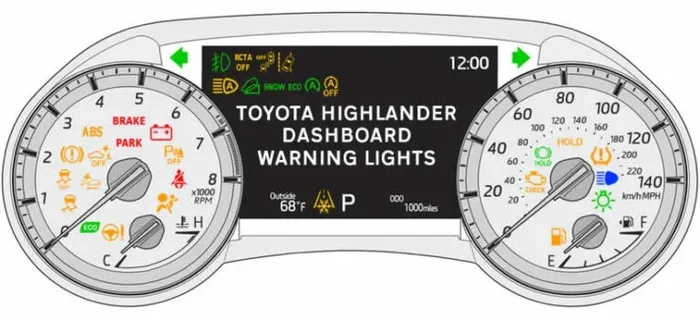
The VSC light on your dashboard looks like a car with wavy lines behind it. When this light stays on, it means the stability control system has been deactivated or has detected a malfunction. Many drivers confuse the VSC light with the traction control light, but they are related systems. To learn more about how VSC compares to traction control, you can read our guide on Is VSC the Same as Traction Control.
How VSC Works in Your Highlander
Your Toyota Highlander uses a network of sensors to monitor wheel speed, steering angle, yaw rate, and lateral acceleration. The VSC module processes all of this data in real time. If it senses the vehicle is sliding or losing grip, it intervenes within milliseconds. The system relies on the same wheel speed sensors used by the ABS (Anti-lock Braking System). This shared sensor network is one reason why problems with these sensors can trigger both the VSC light and the check engine light simultaneously.
When the VSC light illuminates, your Highlander is still driveable in most cases. However, you lose the stability assist features that could save you in an emergency. Think of it like driving without a safety net on a windy road. You can still drive, but you need to be more careful.
Why Are Both the VSC Light and Check Engine Light On?
Common Causes for Dual Warning Lights
When both the VSC light and the check engine light appear on your Toyota Highlander, the root cause usually falls into one of several categories. Here are the most common reasons:
- Loose or Faulty Gas Cap: This is the simplest and most overlooked cause. A loose gas cap lets fuel vapors escape, which triggers the engine management system and can also affect the VSC system indirectly.
- Faulty Oxygen Sensor: The oxygen sensor measures exhaust gases. When it fails, the engine runs inefficiently, and the check engine light comes on. The VSC light may follow because the engine’s performance affects stability.
- Wheel Speed Sensor Failure: Since VSC and ABS share wheel speed sensors, a bad sensor can trip both warning systems at once.
- Ignition Coil or Spark Plug Issues: A misfiring engine sends irregular data to the VSC module, which can activate both lights.
- Catalytic Converter Problems: A failing catalytic converter affects exhaust flow and engine performance, often triggering both lights.
- Low Battery Voltage: A weak 12V battery can cause erratic sensor readings that confuse both the VSC and engine management systems.
Sensor Failures and Electrical Issues
Your Toyota Highlander depends on dozens of sensors to run properly. When one or more of these sensors send incorrect data, the onboard computer flags it as a problem. The engine management light and the VSC light are both connected to the same central computer, known as the Engine Control Module (ECM). When the ECM receives conflicting or out-of-range data, it activates both warning lights to alert you.
Electrical issues like corroded connectors, damaged wiring harnesses, or a failing ground strap can also cause both lights to come on. These problems are more common in older Highlanders or vehicles that have been exposed to road salt and moisture. If you live in a harsh climate, regular undercarriage inspections can help prevent these issues.
Can You Still Drive Your Toyota Highlander with Both Lights On?
Safety Considerations
The short answer is yes, you can usually drive with both lights on, but with important caveats. If your Highlander is running smoothly, accelerating normally, and not making strange noises, you can likely drive it to a safe location or a nearby mechanic. However, you should avoid highway driving or aggressive maneuvers because your stability control system is compromised.
If you notice any of the following symptoms along with both lights, you should pull over safely and turn off the engine:
- Engine stalling or jerking
- Unusual sounds from the engine bay
- Smoke or steam coming from under the hood
- Loss of power that does not improve
- The temperature gauge climbing into the red zone
If you are dealing with an overheating situation, check out our article on Is My Car Overheating for guidance on what to do next.
When to Pull Over Immediately
Not every dual-light situation is the same. Some causes are urgent and demand immediate action. For example, if you smell burning rubber or gasoline, see fluid leaking under the vehicle, or experience a sudden loss of power, stop driving right away. These could indicate serious mechanical failures that can worsen quickly and become expensive repairs.
On the other hand, if the lights appeared after you filled up at the gas station, a loose gas cap is the likely culprit. In that case, you can drive carefully to your next destination and tighten or replace the cap. The lights should turn off after a few drive cycles.
How to Diagnose the Problem
Using an OBD-II Scanner
The best way to figure out exactly why both lights are on is to use an OBD-II scanner. This small device plugs into the diagnostic port under your Toyota Highlander’s dashboard. It reads the Diagnostic Trouble Codes (DTCs) stored in the Engine Control Module. Each code corresponds to a specific problem, making diagnosis much faster and more accurate.
You can buy a basic OBD-II scanner for under $30 at most auto parts stores. Some scanners even connect to your smartphone via Bluetooth, giving you real-time data and code definitions. If you do not want to buy one, many auto parts stores like AutoZone and O’Reilly will read the codes for free.
Once you have the codes, you can look them up online or share them with your mechanic. Common codes that trigger both the VSC and check engine lights include P0300 (random misfire), P0420 (catalyst efficiency), P0171 (system too lean), and P0500 (vehicle speed sensor malfunction).
Common Diagnostic Trouble Codes for Toyota Highlander
Here is a quick reference table of codes you might encounter:
- P0300 – P0304: Engine misfire detected. These codes point to ignition or fuel delivery problems.
- P0401: Insufficient EGR flow. This affects exhaust recirculation and engine performance.
- P0440 – P0446: EVAP system malfunction. Often caused by a loose gas cap or faulty purge valve.
- P0500: Vehicle speed sensor error. Directly impacts the VSC system.
- P0135 – P0160: Oxygen sensor heater circuit issues. These sensors monitor exhaust and affect engine efficiency.
How to Fix and Reset the VSC and Check Engine Lights
Simple Fixes You Can Do at Home
Some causes of both lights are easy to address without any special tools or mechanical knowledge. Here are a few DIY fixes you can try right now:
- Tighten or Replace the Gas Cap: Remove the gas cap, check the seal for cracks, and screw it back on until it clicks. Drive for a few days and see if the lights go off.
- Check the Battery: A weak battery can cause all kinds of electrical gremlins. Use a multimeter to check the voltage. It should read around 12.6 volts when the engine is off. If it is below 12.0 volts, consider replacing the battery.
- Reset the System: Disconnect the negative battery terminal for about 15 minutes, then reconnect it. This can reset the ECM and clear minor fault codes. However, this should only be a temporary fix if the underlying problem persists.
When to Visit a Mechanic
If the simple fixes above do not work, it is time to see a professional. Some repairs require specialized tools and expertise. For example, replacing an oxygen sensor, fixing a catalytic converter, or repairing a wheel speed sensor involves accessing parts that are difficult to reach and require proper torque specifications.
Before you visit a mechanic, consider whether you want to take your Highlander to a Toyota dealership or an independent shop. Both options have pros and cons. Dealerships have factory-trained technicians and access to the latest diagnostic software. Independent shops often charge less and can be more flexible with scheduling. If you are wondering about taking your Toyota to a different dealer for warranty work, check out our article on Can I Take My Toyota to Any Dealership for Warranty Work.
For clearing diagnostic codes after a repair, you may want to learn more about the process. Our article on How Can I Clear a Check Engine Code walks you through the steps in detail.
Preventing VSC and Check Engine Lights in the Future
Once you have resolved the issue, you probably want to avoid seeing those two lights again. Regular Toyota Highlander maintenance is the best prevention. Here are some proactive steps you can take:
- Check the gas cap every time you fill up. Make sure it clicks tightly and the seal is intact.
- Follow the maintenance schedule. Stick to the recommended oil change intervals, spark plug replacements, and sensor inspections.
- Address warning lights promptly. Do not ignore even a single warning light. What starts as a minor issue can snowball into a major repair if left unchecked.
- Keep your battery terminals clean. Corrosion on battery terminals can cause voltage drops that confuse sensors.
- Use the right fuel. Using the correct octane rating for your Highlander helps the engine run smoothly and reduces the chance of misfires.
Taking care of small issues early saves you money and keeps your Highlander running reliably for years. A well-maintained vehicle is also safer on the road, and that is what the VSC system is all about in the first place.
How Much Does It Cost to Fix the VSC and Check Engine Lights?
The cost of repairing the problem behind both lights varies widely depending on the cause. Here is a rough breakdown of common repair costs for a Toyota Highlander:
- Loose or faulty gas cap: $0 to $25 for a replacement cap.
- Oxygen sensor replacement: $200 to $400 per sensor, including parts and labor.
- Wheel speed sensor replacement: $100 to $300 per sensor.
- Ignition coil pack replacement: $150 to $350 per coil, depending on the engine.
- Catalytic converter replacement: $500 to $2,500, as this is one of the most expensive repairs.
- Battery replacement: $100 to $250 for a standard replacement.
These are estimates and can vary based on your location, the model year of your Highlander, and whether you use OEM or aftermarket parts. Always get a detailed quote before authorizing any major repair.
Final Thoughts
Seeing both the VSC light and the check engine light on your Toyota Highlander can be intimidating, but it does not always mean disaster. In most cases, the cause is something simple and affordable to fix. A loose gas cap, a failing oxygen sensor, or a weak battery are all common culprits that you can address without breaking the bank.
The key is to take action quickly. Ignoring warning lights almost always leads to bigger problems and higher repair bills. Use an OBD-II scanner to get the codes, start with the simple fixes, and visit a mechanic if the lights persist. Your Highlander is a reliable vehicle, and with the right care, it will keep serving you well for many miles to come.
Stay proactive with your maintenance, pay attention to what your dashboard is telling you, and do not let those warning lights keep you up at night. You have the knowledge now to handle this situation with confidence.
Frequently Asked Questions
Can I drive my Toyota Highlander with both the VSC and check engine lights on?
In most cases, yes, you can drive cautiously with both lights on. However, you should avoid aggressive driving, highway speeds, or slippery road conditions because your stability control system is not fully functional. If you notice any unusual symptoms like stalling, loss of power, or strange noises, pull over safely and seek help.
What is the most common reason both the VSC and check engine lights come on in a Toyota Highlander?
The most common cause is a loose or faulty gas cap. A bad gas cap allows fuel vapors to escape, which triggers the engine management system and can also affect the VSC system. Other frequent causes include faulty oxygen sensors, wheel speed sensor failures, and ignition coil issues.
Will the VSC and check engine lights turn off on their own?
If the root cause is minor, such as a loose gas cap, the lights may turn off after a few drive cycles once the system confirms the issue is resolved. However, if the underlying problem persists, the lights will stay on. You can also use an OBD-II scanner to clear the codes after fixing the problem.
How much does it cost to diagnose why both lights are on?
Many auto parts stores offer free diagnostic code reading. If you take your Highlander to a mechanic, the diagnostic fee typically ranges from $50 to $150. The actual repair cost depends entirely on what the codes reveal.
Is it safe to reset the VSC and check engine lights without fixing the problem?
Resetting the lights without fixing the underlying issue is not recommended. The lights will simply come back on once the system detects the same problem again. Worse, you may be driving with a known issue that could worsen over time or compromise your safety on the road.
Can a dead battery cause both the VSC and check engine lights to come on?
Yes, a weak or dead 12V battery can cause erratic sensor readings that trigger both warning lights. Voltage drops can confuse the Engine Control Module and the VSC module simultaneously. If your battery is old or has not been replaced in several years, it is worth checking first before diving into more complex repairs.