Why Cant I Open My Car Trunk Common Causes And Fixes
Having trouble opening your car trunk is frustrating, but it happens to almost every driver at some point. The most common culprits include a dead key fob battery, a broken trunk release lever, a faulty trunk latch, or a jammed trunk lock cylinder. This guide walks you through every possible cause and gives you clear, step-by-step fixes you can try right now.
You walk up to your car after a long day. You grab your keys. You press the trunk button. Nothing happens. You try again. Still nothing. Your car trunk won’t open, and now you’re standing in the parking lot wondering what went wrong.
Don’t panic. This problem is way more common than you think. Thousands of drivers deal with a stuck car trunk every single week. The good news is that most causes are simple and cheap to fix. You don’t need to be a mechanic to solve them. In this article, we’ll cover every reason your trunk might be refusing to cooperate. We’ll also give you practical fixes you can try right now.
Whether your trunk release button is unresponsive, your key won’t turn in the lock, or the lid just sits there stubbornly closed, we’ve got you covered. Let’s dive in and get your trunk working again.
Key Takeaways
- Dead key fob battery: The #1 reason trunks won’t open. A quick battery swap often solves the problem instantly.
- Broken trunk release lever: The interior handle can snap or detach, leaving you unable to pop the trunk from inside the car.
- Faulty trunk latch or actuator: Electrical or mechanical failures in the latch mechanism can completely lock your trunk shut.
- Jammed trunk lock cylinder: Rust, dirt, or a worn-out cylinder can prevent your key from turning in the trunk lock.
- Tripped child safety lock: Some vehicles have safety features that can accidentally prevent trunk access from the cabin.
- When to call a pro: If basic fixes don’t work, a certified mechanic can diagnose hidden electrical or wiring issues safely.
📑 Table of Contents
Common Reasons Your Trunk Won’t Open
A trunk that refuses to open can come from several different sources. Some problems are electrical. Others are mechanical. A few are just plain wear and tear. Let’s look at the most common reasons first so you can start troubleshooting right away.
Dead Key Fob Battery
This is the number one reason people can’t open their trunk. Your key fob uses a small battery to send signals to your car. When that battery dies, the trunk release command never reaches the car. You might still be able to unlock the doors if you use the physical key, but the trunk function often stops working entirely.
Most car key fobs use a CR2025 or CR2032 coin battery. These batteries last about two to four years. If your trunk suddenly stops responding, try replacing the fob battery first. It takes about thirty seconds and costs less than five dollars.
Quick Tip: Keep a spare key fob battery in your glove box. You’ll thank yourself the next time this happens at the worst possible moment.
Broken Trunk Release Lever Inside the Car
Every car has an interior trunk release lever or button. You’ll usually find it on the driver’s side dashboard or on the driver’s door panel. When you pull or press this lever, it sends a signal to release the trunk latch.
Over time, the plastic lever can crack, snap, or detach from the cable that connects it to the latch. When this happens, pulling the lever does nothing. The trunk stays locked shut no matter how hard you pull.
This is especially common in older vehicles or cars that see a lot of use. The good news is that replacing a trunk release lever is usually inexpensive and straightforward.
Faulty Trunk Latch Mechanism
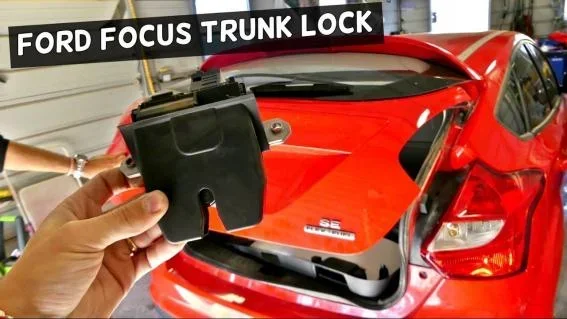
The trunk latch is the metal piece that holds your trunk lid securely closed. It works like a lock and key system. When the latch is engaged, the trunk stays shut. When you send the release signal, the latch pops open and the lid lifts.
Trunk latches can fail for several reasons. Rust and corrosion build up over time, especially if you live in a rainy or snowy climate. Dirt and debris can also get stuck inside the latch mechanism. In some cases, the latch simply wears out after years of use.
A stuck trunk latch often makes a clicking sound when you try to open the trunk. If you hear clicking but the trunk won’t budge, the latch is probably the problem.
Trunk Lock Cylinder Issues
Many cars have a physical trunk lock that you access with a key. The lock cylinder is the small metal cylinder where you insert your key. When the cylinder works properly, you turn the key and the trunk opens.
But lock cylinders can jam. Dirt, debris, or moisture can get inside and prevent the key from turning. A worn-out cylinder can also become stiff or completely stuck. If your key won’t turn in the trunk lock, don’t force it. Forcing the key can break it off inside the cylinder, which makes the problem much worse.
Try spraying a small amount of graphite lubricant into the lock cylinder. Let it sit for a minute, then try turning the key again. This simple trick fixes the problem more often than you’d think.
Jammed Trunk Release Cable
Your trunk release lever connects to the latch through a thin metal cable. This cable pulls the latch open when you activate the release. Sometimes, this cable can fray, stretch, or become misaligned.
When the cable is damaged, pulling the interior lever might feel loose or empty. You won’t feel the usual resistance that tells you the latch is being engaged. A frayed cable can also get stuck in the wrong position, which keeps the trunk locked even when you try to release it.
Replacing a trunk release cable is a moderately easy repair. You can often do it yourself with basic tools. A new cable usually costs between fifteen and thirty dollars.
Electrical Problems That Lock Your Trunk
Modern cars rely heavily on electrical systems to operate the trunk. When something goes wrong in the electrical chain, your trunk can stop working even if everything looks fine on the outside. Let’s explore the electrical culprits.
Blown Fuse
Every car has a fuse box that protects its electrical circuits. The trunk release system has its own fuse. If too much current flows through the circuit, the fuse blows and cuts power to the trunk release entirely.
A blown fuse is one of the easiest problems to fix. You just need to locate your fuse box, find the trunk release fuse, and swap it out for a new one. Your owner’s manual will tell you exactly which fuse controls the trunk release. Replacement fuses cost just a couple of dollars each.
Quick Tip: Always keep a few spare fuses in your car. They take up almost no space, and they can save you a lot of hassle.
Faulty Trunk Actuator
The trunk actuator is a small electric motor that powers the trunk latch. When you press the trunk release button, the actuator receives a signal and physically moves the latch to open the trunk.
Actuators can fail over time. The motor burns out, the gears strip, or the wiring connection corrodes. When the actuator dies, you lose all power to the trunk release system. The trunk stays locked no matter what you do.
Replacing a trunk actuator typically costs between one hundred and three hundred dollars, depending on your car model. It’s a repair best left to a professional if you’re not comfortable working with car electrical systems.
Wiring Problems
Your car has a complex network of wires that connect the trunk release button to the latch and actuator. These wires run through the body of the car and can get damaged over time.
Vibrations from driving, exposure to moisture, and general wear can cause wires to fray or disconnect. A broken wire in the trunk release circuit means the signal never reaches the latch, even if you press the button or pull the lever.
Diagnosing wiring problems requires a multimeter and some basic electrical knowledge. If you’re not confident working with car wiring, it’s best to take your car to a mechanic who can trace the problem quickly.
Child Safety Lock Interference
Some vehicles have a child safety lock feature that can prevent the trunk from being opened from the inside. This feature is designed to keep children from accidentally opening the trunk while playing in the car.
However, this safety lock can sometimes get engaged accidentally. If you’ve tried the trunk release lever and button and nothing works, check your owner’s manual for instructions on how to disable the child safety lock. This is a quick fix that many drivers overlook.
Mechanical Issues With Trunk Locks and Latches
Not every trunk problem is electrical. Many issues are purely mechanical. These problems involve the physical parts that hold and release your trunk lid. Let’s break down the most common mechanical failures.
Trunk Lid Alignment Problems
Your trunk lid needs to be properly aligned with the latch in order to open and close smoothly. Over time, the hinges that hold the trunk lid can loosen or bend. When the lid is out of alignment, the latch can’t engage or release properly.
You might notice that your trunk lid sits crooked or doesn’t line up with the rest of the car. This misalignment can prevent the trunk from opening even when the release mechanism works perfectly.
Adjusting trunk lid alignment usually involves tightening or repositioning the hinges. This is a job you can do yourself if you have basic mechanical skills. Otherwise, a mechanic can handle it quickly.
Rust and Corrosion Buildup
Rust is the enemy of moving parts. The trunk latch, hinges, and release cable all have metal components that can rust over time. When rust builds up, these parts become stiff and eventually stop working.
Living in a coastal area or a place with harsh winters increases your risk of rust. Road salt in winter is especially damaging to car metal parts. Regularly lubricating your trunk latch and hinges can help prevent rust from taking hold.
Quick Tip: Apply a silicone-based lubricant to your trunk latch and hinges every six months. This simple habit keeps rust at bay and extends the life of your trunk components.
Trunk Latch Replacement
If your trunk latch is severely damaged or worn out, you may need to replace it entirely. A new trunk latch costs between fifty and two hundred dollars for the part, depending on your car’s make and model.
Replacing a trunk latch involves removing the old latch, installing the new one, and reconnecting the release cable. If you’re handy with tools, this is a repair you can do at home. Otherwise, a mechanic can complete the job in about an hour.
Broken Trunk Lift Supports
Trunk lift supports (also called trunk struts or gas struts) help you open and close the trunk lid smoothly. These hydraulic or gas-filled cylinders can leak or fail over time.
When a lift support fails, the trunk lid might not stay open or might feel extremely heavy to lift. In some cases, a broken lift support can prevent the trunk from opening fully, which makes it look like the trunk is locked when it’s actually just stuck.
Replacing trunk lift supports is relatively affordable. Most cars need two supports, and a pair usually costs between thirty and eighty dollars.
How to Fix a Stuck Trunk Step by Step
Now that you know the common causes, let’s walk through the fixes in order. Start with the simplest solutions and work your way up to the more complex ones.
Step One: Check Your Key Fob Battery
Replace the battery in your key fob. Use the correct battery type for your fob model. After replacing the battery, try opening the trunk again. This fixes the problem more than half the time.
Step Two: Try the Physical Key
If the fob isn’t working, use the physical key to access the trunk lock. Insert the key into the trunk lock cylinder and turn it gently. If the key turns and the trunk opens, your fob was the problem.
Step Three: Check the Interior Trunk Release
Locate the interior trunk release lever or button. Pull or press it firmly. If it feels loose or doesn’t engage, the release cable might be broken or detached. You may need to replace the cable or the lever itself.
Step Four: Inspect the Trunk Latch
Look at the trunk latch from the outside. Check for visible damage, rust, or debris. Clean the latch with a wire brush and apply lubricant. Try opening the trunk again after lubricating.
Step Five: Check the Fuse Box
Locate your car’s fuse box and find the trunk release fuse. Inspect the fuse for a broken filament. If the fuse is blown, replace it with a new one of the same amperage.
Step Six: Call a Professional
If none of the steps above work, it’s time to call a mechanic. A professional can diagnose electrical and mechanical issues that are beyond basic troubleshooting. Don’t keep forcing the trunk open, as this can cause more damage.
When to Call a Professional Mechanic
Some trunk problems are simple enough to handle on your own. But others require the skills and tools of a trained mechanic. Here are the signs that you should stop troubleshooting and call for help.
If you’ve tried replacing the fob battery, checking the fuse, and lubricating the latch, and the trunk still won’t open, there’s likely a deeper issue. Electrical problems like a faulty actuator or damaged wiring need professional diagnosis. Similarly, if you suspect the trunk lock cylinder is broken or the latch is severely damaged, a mechanic can fix it safely.
Another reason to call a pro is if the trunk is stuck in a position that’s hard to access. Some trunks are located in tight spaces under the rear window or behind the rear seats. Working in these areas without the right tools can lead to accidental damage.
Expert Insight: A certified mechanic has diagnostic tools that can read error codes from your car’s computer system. These codes can pinpoint exactly which part of the trunk release system has failed, saving you time and guesswork.
Also, if your car is still under warranty, attempting repairs on your own could void the warranty. Always check your warranty terms before diving into trunk repairs. When in doubt, let the professionals handle it.
Preventing Trunk Problems Before They Start
The best way to deal with a trunk that won’t open is to prevent the problem from happening in the first place. Regular maintenance can keep your trunk release system working smoothly for years.
Lubricate your trunk latch and hinges every six months. Use a silicone-based spray or white lithium grease. This prevents rust and keeps the moving parts operating freely.
Replace your key fob battery every two to three years, even if it still seems to work. A weak battery can cause intermittent trunk problems that come and go without warning. Staying ahead of the battery life saves you from unexpected surprises.
Keep your trunk clean. Dirt and debris can accumulate in the latch mechanism and release cable over time. A quick wipe-down and inspection every few months goes a long way.
Finally, address small problems early. If your trunk starts feeling stiff or the release lever feels loose, don’t ignore it. Small issues can turn into big problems if left unchecked. A quick visit to the mechanic when you first notice trouble can save you from a completely stuck trunk later.
Key Takeaways:
- Dead key fob battery is the most common reason a trunk won’t open. Always try this fix first.
- Broken trunk release lever and jammed trunk latch are the top mechanical causes.
- Blown fuses, faulty actuators, and wiring problems account for most electrical trunk failures.
- Rust and corrosion can slowly destroy trunk components if you don’t maintain them.
- Regular lubrication and battery replacement prevent most trunk problems before they start.
- Call a professional when basic fixes don’t work or when the problem involves complex electrical systems.
Dealing with a trunk that won’t open is never fun. But with the right knowledge, most causes are easy to identify and fix. Start with the simplest solutions and work your way up. Your trunk will be back to working smoothly in no time.
Frequently Asked Questions
Can a dead key fob battery prevent me from opening the trunk?
Yes, absolutely. A dead key fob battery is the most common reason the trunk release stops working. The fob can’t send the signal to your car to unlock the trunk. Replacing the battery usually fixes the problem right away.
How much does it cost to repair a trunk latch?
A trunk latch replacement typically costs between fifty and two hundred dollars for the part alone. If you hire a mechanic to install it, labor charges add another fifty to one hundred dollars. The total cost depends on your car’s make and model.
Is it safe to force a stuck trunk open?
No, forcing a stuck trunk open can cause further damage. You risk breaking the trunk lid, damaging the latch, or tearing the release cable. Always troubleshoot the problem calmly and try the recommended fixes before applying extra force.
What should I do if my trunk is stuck open?
A trunk stuck open is often caused by a broken lift support or a misaligned latch. You can try repositioning the latch by hand, but be careful. If the trunk lid is heavy and hard to manage, get help or call a mechanic to avoid injury.
Can weather affect my trunk’s ability to open?
Yes, cold weather and moisture can cause trunk components to freeze or rust. Ice can build up around the trunk latch in winter, making it impossible to open. Regular maintenance and lubrication help prevent weather-related trunk problems.
How do I know if my trunk actuator needs replacement?
Signs of a failing trunk actuator include a humming sound when you press the release button, a trunk that opens slowly or inconsistently, or a trunk that doesn’t open at all. If you hear the actuator running but the trunk doesn’t move, the actuator is likely the problem.