Oklahoma Window Tint Law Explained What You Need to Know
Oklahoma window tint law sets specific rules for how dark you can tint your car windows. The state regulates visible light transmission (VLT) percentages for windshield, side windows, and rear windows. Knowing these rules helps you avoid tickets, fines, and failed inspections. This guide breaks down every requirement in simple terms.
Have you ever driven through Oklahoma on a hot summer day and wished your car had darker windows? Tinted windows look great. They reduce glare. They keep your car cooler. But before you roll down the window tinting aisle at your local shop, you need to know the rules. Oklahoma window tint law is clear about what is allowed and what is not. Ignorance is not a valid excuse if you get pulled over.
This guide covers everything you need to know about Oklahoma window tint law. We will break down the legal darkness levels, reflectivity limits, medical exemptions, and penalties. By the end, you will know exactly what is legal for your vehicle. You will also learn how to choose the right tint film that keeps you compliant and looking great.
Key Takeaways
- Front side windows must allow more than 25% light transmission.
- Windshield tint is only allowed on the top 5 inches.
- No reflective or mirrored tint is permitted on any window.
- Medical exemptions can grant exceptions to standard tint rules.
- Violations can result in fines up to $500 per offense.
- All tinted vehicles need a compliance sticker from the installer.
- Factory tint from the manufacturer follows different rules than aftermarket film.
📑 Table of Contents
- What Does Oklahoma Window Tint Law Cover?
- Legal Tint Darkness Levels for Each Window
- Tint Reflectivity and Other Restrictions
- Medical Exemptions and Special Exceptions
- Penalties for Breaking Oklahoma Tint Laws
- How to Choose a Compliant Tint Film
- Common Mistakes People Make With Window Tinting
- Frequently Asked Questions About Oklahoma Window Tint Law
- Conclusion
What Does Oklahoma Window Tint Law Cover?
Oklahoma window tint law governs the darkness and reflectivity of window film on passenger vehicles. The rules apply to all cars, trucks, and SUVs registered in the state. They also apply to any aftermarket tint you add after purchasing the vehicle. The law is designed to balance driver comfort with safety. After all, overly dark windows can make it hard for police officers to see inside your car during a traffic stop. They can also reduce your ability to see pedestrians and other vehicles.
The key measurement in window tinting is visible light transmission, or VLT. VLT refers to the percentage of light that passes through your window. A higher VLT means more light gets through. A lower VLT means the window is darker. For example, a window with a 50% VLT lets in half of the available light. A window with a 5% VLT is very dark and lets in very little light.
Oklahoma uses specific VLT percentages to define legal tint levels. These percentages vary depending on which window you are tinting. The windshield has its own set of rules. The front side windows, rear side windows, and rear windshield each have their own limits. Understanding these differences is essential before you commit to any tint job.
Factory Tint vs. Aftermarket Tint
Some vehicles come with factory tint from the manufacturer. This tint is built into the glass during production. Factory tint usually has a VLT between 70% and 80%. Oklahoma law treats factory tint differently from aftermarket tint. Aftermarket tint is the film applied to the inside of your windows after you buy the car. When you add aftermarket tint, the combined VLT of the factory tint plus the film must meet the legal limit. This is an important distinction that many people overlook.
Legal Tint Darkness Levels for Each Window
The Oklahoma window tint law specifies different VLT requirements for each window on your vehicle. Let us break this down window by window so there is no confusion.
Windshield Tint Rules
You can tint your windshield, but only on the top 5 inches. This strip is often called the sun visor strip. The tint on this strip must be non-reflective. You cannot use any reflective or mirrored film on the windshield. The rest of the windshield must remain clear and allow full light transmission. This rule ensures that your view of the road ahead is not obstructed.
Front Side Window Tint Rules
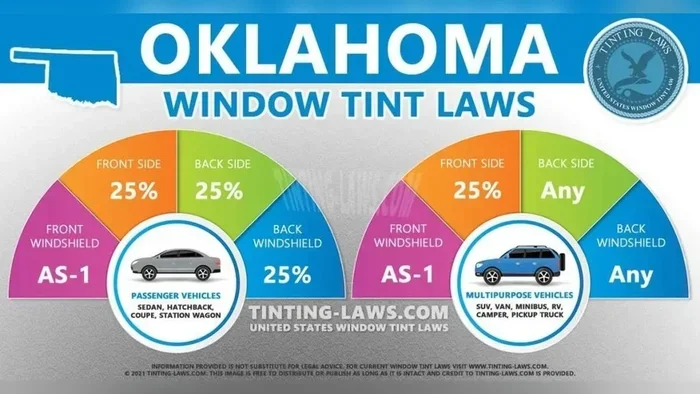
The front side windows on your vehicle must allow more than 25% of light to pass through. This means the VLT must be greater than 25%. If your front windows have factory tint, you need to measure the combined VLT of the glass and any added film. If the combined VLT falls below 25%, you are breaking the law. This is one of the most commonly violated rules in Oklahoma.
Rear Side Window and Rear Windshield Tint Rules
Good news. You have much more flexibility with your rear windows. The rear side windows and rear windshield can be tinted to any darkness level. There is no minimum VLT requirement for these windows. You can use very dark film on your back windows if you want. This applies to both sedans and SUVs. The only requirement is that your vehicle must have both rearview mirrors if the rear windows are tinted dark.
Summary Table of Legal Tint Darkness
| Window | Legal VLT Requirement | Reflective Tint Allowed? |
|---|---|---|
| Windshield | Top 5 inches only, non-reflective | No |
| Front Side Windows | Must be over 25% VLT | No |
| Rear Side Windows | No minimum VLT | No |
| Rear Windshield | No minimum VLT | No |
Keep in mind that these rules apply to passenger vehicles. Different rules may apply to larger vehicles like vans and SUVs, but the same general principles apply. Always check the latest regulations before getting your windows tinted.
Tint Reflectivity and Other Restrictions
Oklahoma window tint law does not only regulate darkness. The state also has rules about how reflective your tint can be. Reflective tint can create problems for other drivers. It can blind oncoming traffic. It can also interfere with traffic cameras and law enforcement cameras. For these reasons, Oklahoma restricts reflective tint.
Reflectivity Limits
No window on your vehicle can have a reflective or mirrored appearance. The tint film cannot look like a mirror from the outside. This rule applies to all windows, including the rear windows. Even if your rear windows can be as dark as you want, they still cannot be reflective. If you are shopping for tint film, make sure the product is labeled as non-reflective. Most reputable tint installers will only use non-reflective film anyway.
Tint Color Restrictions
Oklahoma law does not specifically ban certain tint colors. However, red and amber tints are generally discouraged because they can interfere with visibility. Some tint films also come with a colored backing that could raise questions during inspection. Stick with neutral shades like gray, charcoal, or bronze. These colors reduce glare and heat without drawing unwanted attention from law enforcement.
Dual Side Mirrors Requirement
If you tint your rear windows to a dark shade, Oklahoma law requires your vehicle to have dual side mirrors. This ensures you have adequate visibility from the driver’s seat. If your vehicle only has a rearview mirror and no side mirrors, you should not tint the rear windows dark. This rule exists for safety reasons and is enforced regularly.
Sticker and Certification Requirements
Oklahoma requires a compliance sticker on your vehicle if you have aftermarket tint. This sticker must be placed between the tint film and the glass on the driver’s side window. The sticker proves that your tint meets legal requirements. Without this sticker, you could be pulled over and cited. Always ask your tint installer to provide the compliance sticker. A reputable installer will include this as part of the service.
Medical Exemptions and Special Exceptions
Not everyone can tolerate standard levels of sunlight. Some people have medical conditions that make them extremely sensitive to UV light. For these individuals, Oklahoma window tint law provides a pathway for exemptions. If you have a qualifying medical condition, you may be allowed to tint your windows darker than the legal limit.
Who Qualifies for a Medical Exemption?
Several medical conditions may qualify you for a tint exemption in Oklahoma. These include lupus, eczema, porphyria, and other photosensitive disorders. People who have undergone organ transplants and are on immunosuppressive medications may also qualify. The key requirement is that your condition is documented by a licensed physician.
How to Apply for a Medical Exemption
To get a medical exemption, you need a signed letter from your doctor. The letter must explain your condition and why darker tint is medically necessary. You should carry this letter in your vehicle at all times. If you are pulled over, you can show the letter to the officer. The exemption letter does not expire, but you should keep it updated with your current physician’s information.
It is important to note that a medical exemption does not give you unlimited freedom. You still need to use tint that is commercially available and properly installed. The exemption simply allows you to go darker than the standard legal limit. Always work with a licensed tint installer who understands the exemption process.
Exemptions for Law Enforcement and Other Vehicles
Certain vehicles are exempt from standard tint laws. Police vehicles, ambulances, and other emergency vehicles may have different tint requirements. Commercial vehicles and government-owned vehicles may also have special rules. These exemptions are typically outlined in separate regulations and are not relevant to most private vehicle owners.
Penalties for Breaking Oklahoma Tint Laws
What happens if you get caught with illegal window tint in Oklahoma? The consequences are not just a warning. Oklahoma takes tint violations seriously, and the penalties can add up quickly.
Fines and Citations
A tint violation in Oklahoma can result in a fine of up to $500. This is a misdemeanor offense. If you are pulled over and your tint does not meet legal requirements, you will receive a citation. The fine amount may vary depending on the county and the severity of the violation. Some counties may also require you to remove the illegal tint before your vehicle registration can be renewed.
Failed Vehicle Inspection
Oklahoma requires annual vehicle inspections for registration renewal. If your window tint does not meet legal standards, your vehicle will fail inspection. This means you cannot register your car until the tint is brought into compliance. Removing and replacing illegal tint can be costly. It is much cheaper to do your research before you get tinted.
Points on Your Driving Record
In some cases, a tint violation can result in points on your driving record. While a single tint ticket may not seem serious, accumulating points can lead to higher insurance premiums. It can also lead to license suspension if you rack up too many points. Staying compliant with Oklahoma window tint law is an easy way to avoid these consequences.
What If You Just Moved to Oklahoma?
If you recently moved to Oklahoma from another state, your old tint may not be legal here. Every state has different tint laws. A tint that is perfectly legal in Texas or Arkansas might be illegal in Oklahoma. If you have recently relocated, it is a good idea to check your current tint against Oklahoma standards. You may need to remove or lighten your tint to comply with local laws.
How to Choose a Compliant Tint Film
Now that you know the rules, how do you choose the right tint film? The market is full of options. Not all tint films are created equal. Some are designed for maximum heat rejection. Others focus on UV protection. Your goal should be to find a film that meets legal requirements while delivering the benefits you want.
Understanding VLT Ratings
When shopping for tint film, look for the VLT rating on the product packaging. The VLT rating tells you how much light the film allows through. For your front side windows, you need a film with a VLT that keeps your combined light transmission above 25%. Many quality tint films come in VLT options of 35%, 50%, and 70%. A 35% VLT film is a popular choice for front windows because it provides good heat rejection while staying legal.
Ceramic vs. Dyed vs. Metalized Film
Tint films come in several types. Ceramic film is the premium option. It blocks heat and UV rays without interfering with electronic signals. Dyed film is the most affordable option but may fade over time. Metalized film offers good durability but can interfere with GPS and cell phone signals. For most Oklahoma drivers, ceramic or high-quality dyed film is the best choice.
Working with a Licensed Installer
Always hire a licensed and experienced tint installer. A professional installer will know the Oklahoma window tint law requirements inside and out. They will help you choose the right film for each window. They will also ensure the compliance sticker is properly placed. A good installer will stand behind their work and offer warranties on both materials and labor.
Quick Tips for Choosing Tint
- Ask your installer for the VLT rating of each film option.
- Choose a film that meets or exceeds the legal VLT for front windows.
- Request a compliance sticker as part of the installation service.
- Check online reviews of the tint shop before booking an appointment.
- Ask about warranties on both the film and the installation work.
- Do not let anyone pressure you into choosing a tint that is too dark for your front windows.
Common Mistakes People Make With Window Tinting
Even with good intentions, many people make mistakes when tinting their windows. Avoiding these common errors can save you time, money, and headaches.
- Assuming factory tint is always legal. Factory tint varies by vehicle. You still need to check if the combined VLT meets Oklahoma standards.
- Buying tint online without checking VLT ratings. Online tint kits may not provide accurate VLT information. Always verify the legal compliance of any film before installation.
- Forgetting the compliance sticker. Without the sticker, you have no proof that your tint is legal. Always insist on getting the sticker.
- Tinting the rear windshield without dual mirrors. If your car does not have dual side mirrors, dark rear window tint is illegal.
- Using reflective or mirrored film. This is a common mistake that leads to immediate citations. Always choose non-reflective film.
Frequently Asked Questions About Oklahoma Window Tint Law
Can I tint my windshield in Oklahoma?
Yes, but only the top 5 inches of the windshield. This strip must be non-reflective. The rest of the windshield must remain clear. Tinting below the 5-inch mark on the windshield is illegal and will result in a citation.
How dark can my front side windows be in Oklahoma?
Your front side windows must allow more than 25% of visible light to pass through. This means the VLT must be over 25%. If your front windows have factory tint, the combined VLT of the glass and any added film must still exceed 25%.
Are there medical exemptions for window tint in Oklahoma?
Yes. Oklahoma allows medical exemptions for individuals with photosensitive conditions. You need a signed letter from your physician explaining why darker tint is necessary. Carry this letter in your vehicle at all times.
What is the penalty for illegal window tint in Oklahoma?
You can be fined up to $500 for illegal window tint. Your vehicle may also fail its annual inspection until the tint is brought into compliance. In some cases, points may be added to your driving record.
Do I need a compliance sticker for my tinted windows?
Yes. Oklahoma requires a compliance sticker on the driver’s side window. This sticker must be placed between the tint film and the glass. It proves that your tint meets the state’s legal requirements.
Can I use reflective or mirrored tint in Oklahoma?
No. Reflective or mirrored tint is not allowed on any window in Oklahoma. All tint must be non-reflective. This rule applies to both front and rear windows.
Conclusion
Understanding Oklahoma window tint law does not have to be complicated. The rules are clear and straightforward. Your front side windows must allow over 25% light transmission. Your windshield can only have tint on the top 5 inches. Your rear windows can be as dark as you want, as long as you have dual side mirrors. Avoid reflective tint and always get a compliance sticker from your installer.
Whether you are tinting your car for comfort, style, or UV protection, staying compliant should be your top priority. The penalties for illegal tint are not worth the risk. A little research goes a long way. Work with a licensed professional who knows the Oklahoma window tint law inside and out. Choose the right film for each window. Get your compliance sticker. And enjoy your tinted windows with peace of mind.
Take the time to understand the rules before you commit to any tint job. Your future self will thank you when you breeze through your next vehicle inspection without a single issue. Stay informed, stay compliant, and enjoy the benefits of properly tinted windows on your Oklahoma vehicle.