How to Remove Cigarette Smoke From Inside a Car Windshield
Cleaning cigarette smoke off your car windshield is easier than you think. With the right supplies and a few simple steps, you can restore crystal-clear visibility and banish lingering smoke odor. This guide covers everything from DIY cleaning solutions to long-term prevention tips.
There is nothing worse than getting into your car after a long drive and being hit with a wall of stale cigarette smoke. Your windshield looks foggy, your seats smell sour, and the entire cabin feels like a trapped ashtray. Whether you are a former smoker or just inherited a smoke-filled vehicle, this problem is more common than you might think.
The good news is that you can fix it. Removing cigarette smoke from inside a car windshield is a straightforward process that does not require expensive products or professional help. With a few household items and some elbow grease, your car can smell fresh again and your glass can shine like new. In this guide, we walk you through every step in detail.
We will cover why smoke clings to glass, what supplies you need, the actual cleaning process, odor removal techniques, and how to prevent future buildup. By the end, you will have a clear game plan to restore your car’s interior to its best condition.
Key Takeaways
- White vinegar and baking soda are your best friends: These household items tackle both smoke residue and stubborn odors effectively.
- Clean the interior first, then the glass: Tackling smoke buildup on surfaces before the windshield gives you better results.
- Replace your cabin air filter regularly: A clogged filter traps smoke particles and keeps odors circulating inside your car.
- Prevent future buildup with simple habits: Rolling down windows slightly and using a car air purifier goes a long way.
- Avoid harsh chemical cleaners: They can damage your windshield coating and leave harmful fumes inside your vehicle.
- Consistency is key: Regular interior car cleaning prevents smoke stains from becoming permanent.
📑 Table of Contents
- Why Cigarette Smoke Sticks to Your Car Windshield
- What You Will Need: Supplies and Tools
- Step-by-Step Guide to Cleaning Smoke Off Your Windshield
- Removing Smoke Odor from the Car Interior
- Preventing Smoke Buildup Inside Your Vehicle
- Common Mistakes to Avoid When Cleaning Smoke Stains
- Expert Insights on Car Interior Detailing for Smoke Removal
- Key Takeaways
- Conclusion
Why Cigarette Smoke Sticks to Your Car Windshield
Understanding why smoke residue builds up on your windshield helps you fight it more effectively. Cigarette smoke contains tiny tar and nicotine particles that are sticky by nature. When smoke fills a small enclosed space like a car cabin, these particles settle on every surface, including glass.
The Science Behind Smoke Residue
Smoke contains thousands of chemical compounds. Many of them are sticky and oily. When they touch a cool surface like a car windshield, they condense and cling to the glass. Over time, this creates a yellowish or brownish film that is hard to ignore.
Your car’s interior is a closed system. Unlike your living room, there is limited airflow. This means smoke particles have nowhere to go except onto surfaces. The windshield often takes the brunt of it because it is the largest flat surface inside the car.
How Smoke Affects Visibility and Safety
A smoke-coated windshield does not just look bad. It reduces your visibility while driving. Even a thin film can scatter light and cause glare, especially at night. This is a real safety concern that many people overlook.
Beyond visibility, the odor itself can be distracting. Strong smoke smell inside the cabin can make driving uncomfortable for you and your passengers. It can also lower the resale value of your vehicle. Nobody wants to buy a car that smells like an ashtray.
What You Will Need: Supplies and Tools
Before you start cleaning, gather everything you need. Having the right supplies makes the process faster and more effective. You do not need anything fancy, but a few specific items will make a big difference.
Essential Cleaning Supplies
- White distilled vinegar: A natural acid that cuts through grease and neutralizes odors.
- Baking soda: A powerful odor absorber that removes lingering smoke smell.
- Microfiber cloths: These are gentle on glass and do not leave lint behind.
- Spray bottle: For mixing and applying your cleaning solution.
- Rubbing alcohol or isopropyl solution: Great for cutting through tough nicotine stains.
- Soft-bristle brush or old toothbrush: Useful for scrubbing textured surfaces like dashboard trim.
- Car glass cleaner: A quality commercial option for a final polish.
Optional but Helpful Items
- Steam cleaner: Deep cleans fabric and upholstery without chemicals.
- Activated charcoal bags: These absorb trapped odors over time.
- Interior detailing spray: Helps protect surfaces after cleaning.
- Cabin air filter replacement: If your filter is old, swapping it out removes a major source of trapped smoke.
Step-by-Step Guide to Cleaning Smoke Off Your Windshield
Now for the part you have been waiting for. Follow these steps in order for the best results. Each step builds on the previous one to ensure you remove every trace of smoke residue.
Step 1: Ventilate Your Car
Open all the doors and windows before you start. Let fresh air circulate for at least 10 to 15 minutes. This loosens up some of the trapped smoke particles and makes the cleaning process easier. If the weather allows, leave the car open for a while before you begin.
Step 2: Dust and Dry Wipe the Windshield
Use a dry microfiber cloth to wipe down the entire windshield. This removes loose dust and surface-level particles. Do not press too hard or you might grind dirt into the glass. Use gentle, sweeping motions from top to bottom.
Step 3: Apply Your Cleaning Solution
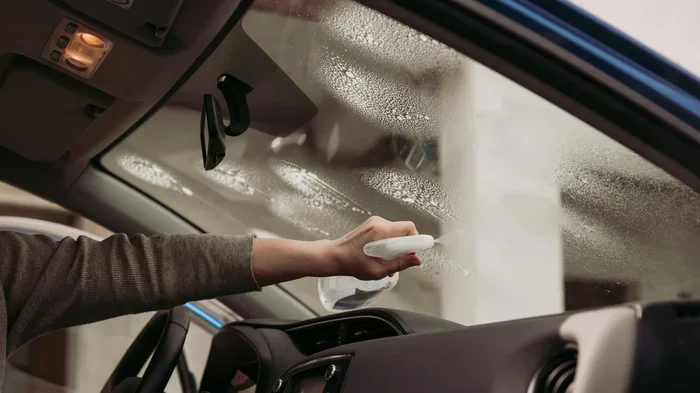
Mix equal parts white vinegar and water in your spray bottle. Spray the solution generously onto the windshield. Let it sit for about two to three minutes. The acid in the vinegar breaks down the sticky nicotine and tar residue.
For tougher stains, you can use a mix of one part rubbing alcohol and one part water. This stronger solution cuts through heavy smoke buildup. Just be sure to rinse it off thoroughly afterward.
Step 4: Scrub Gently
Using a clean microfiber cloth, wipe the windshield in circular motions. Apply light pressure. You should see the yellowish film start to come off on the cloth. If the stain is stubborn, dip a soft toothbrush in your solution and gently scrub the affected area.
Do not use paper towels or rough rags. They can scratch the glass or leave behind fibers that make the problem worse.
Step 5: Rinse and Dry
Wipe the windshield with a clean, damp cloth to remove any vinegar or alcohol residue. Then dry it immediately with a fresh microfiber towel. A streak-free finish is the goal here. Take your time with this step because rushing often leaves behind marks.
Step 6: Final Polish
For an extra-clear finish, spray a small amount of commercial car glass cleaner and buff with a dry microfiber cloth. This removes any remaining haze and gives your windshield a professional-looking shine.
Removing Smoke Odor from the Car Interior
Cleaning the windshield is only half the battle. The smoke odor lives in your seats, carpet, dashboard, and air vents. If you do not address these areas, the smell will return no matter how clean your glass is.
Cleaning Fabric Seats and Upholstery
Start by vacuuming your seats thoroughly. Use the crevice tool to reach seams and folds where smoke particles hide. Next, sprinkle baking soda generously over all fabric surfaces. Let it sit for at least 30 minutes, preferably overnight. Vacuum it up afterward.
For a deeper clean, mix a small amount of vinegar with water in a spray bottle. Lightly mist your fabric seats and blot with a clean cloth. Do not soak the fabric. Let it air dry completely with the windows open.
Tackling the Dashboard and Hard Surfaces
Wipe down the dashboard, center console, and door panels with a damp microfiber cloth. Add a few drops of mild dish soap to the water for extra cleaning power. For textured plastic surfaces, use a soft toothbrush to get into the grooves.
After wiping, spray a light mist of interior detailing spray. This not only cleans but also leaves a fresh scent that replaces the smoke odor.
Cleaning the Air Vents
Your car’s ventilation system is a major culprit for trapping smoke smell. Use a soft brush to clean between the vent slats. You can also use a can of compressed air to blow out dust and particles from deep inside the vents.
Consider running your car’s air conditioning on high with the windows down for 10 minutes after cleaning. This helps push out any remaining trapped odors.
Using Activated Charcoal and Odor Absorbers
Place a few bowls of activated charcoal inside your car overnight. Charcoal is a natural odor absorber that pulls smoke particles out of the air. You can also use specialized car odor absorbers that hang from your rearview mirror.
Another great option is placing an open box of baking soda under a seat. Leave it there for a day or two. It will absorb a surprising amount of lingering smell.
Preventing Smoke Buildup Inside Your Vehicle
Once you have put in the effort to clean your car, you want to keep it that way. Prevention is always easier than cleaning. A few simple habits can keep your car free from smoke damage for a long time.
Keep Windows Cracked Open
If you or your passengers smoke in the car, keep a window cracked open slightly. This gives smoke somewhere to go instead of letting it settle on every surface. Even a small gap makes a noticeable difference in reducing buildup.
Use a Car Air Purifier
A small portable air purifier designed for cars can do wonders. These devices filter out smoke particles and keep the air inside your cabin cleaner. Look for one with a HEPA filter for the best results.
Replace Your Cabin Air Filter
Your car’s cabin air filter catches dust, pollen, and yes, smoke particles. Over time, it gets saturated and stops working effectively. Replacing it regularly, especially if you have been a smoker, keeps your car’s air fresh and clean.
Avoid Smoking Inside the Car
This might seem obvious, but the single best way to prevent smoke buildup is to not smoke inside the car at all. Step outside instead. Your lungs, your passengers, and your car’s interior will all thank you.
Regular Interior Car Cleaning Schedule
Make interior car cleaning a regular habit. A quick wipe-down of the windshield and surfaces once a week prevents buildup from becoming a major issue. Set a reminder on your phone if you need to. Consistency is what keeps your car looking and smelling great.
Common Mistakes to Avoid When Cleaning Smoke Stains
Even with the best intentions, people make mistakes when tackling smoke residue. Here are some pitfalls to watch out for.
Using Harsh Chemical Cleaners
Strong household cleaners like bleach or ammonia can damage your windshield’s protective coating. They can also release fumes that make the air inside your car worse. Stick to gentle, natural solutions like vinegar and baking soda.
Skipping the Cabin Air Filter
Many people focus only on visible surfaces and forget about the air filter. If your cabin filter is saturated with smoke particles, the smell will keep coming back no matter how much you clean the glass.
Using Rough Materials on Glass
Scrubbing your windshield with paper towels, old t-shirts, or abrasive pads can create micro-scratches. These scratches collect dust and make the glass look cloudy faster. Always use microfiber cloths for glass cleaning.
Not Cleaning Long Enough
Smoke buildup does not go away in one pass. Some people wipe once, see no immediate results, and give up. Be patient. Multiple applications of your cleaning solution and repeated wiping will get the job done.
Ignoring the Source of the Smell
If you only clean the windshield but leave the seats and vents untouched, the odor will return. Always tackle the entire interior, not just the glass.
Expert Insights on Car Interior Detailing for Smoke Removal
Professional car detailers have shared some tips that can elevate your smoke removal game. These are small additions that make a big impact.
One pro tip is to steam clean your fabric seats before applying baking soda. The heat opens up the fabric fibers and releases trapped smoke particles deeper inside. After steaming, the baking soda absorbs what has been loosened.
Another expert suggestion is to use a clay bar on hard interior surfaces. This removes a layer of embedded contaminants that regular wiping cannot reach. It is especially effective on the dashboard and center console where smoke residue builds up over time.
Detailers also recommend applying a ceramic coating or glass sealant to your windshield after cleaning. This creates a protective barrier that makes it harder for smoke particles to stick. Future cleaning becomes much easier as a result.
Finally, many professionals suggest running a vinegar soak through your car’s air conditioning system. Spray vinegar into the vents while the AC is running on the recirculate setting. This helps kill bacteria and neutralize odors from the inside of the ventilation system.
Key Takeaways
- White vinegar and baking soda are your best friends: These household items tackle both smoke residue and stubborn odors effectively.
- Clean the interior first, then the glass: Tackling smoke buildup on surfaces before the windshield gives you better results.
- Replace your cabin air filter regularly: A clogged filter traps smoke particles and keeps odors circulating inside your car.
- Prevent future buildup with simple habits: Rolling down windows slightly and using a car air purifier goes a long way.
- Avoid harsh chemical cleaners: They can damage your windshield coating and leave harmful fumes inside your vehicle.
- Consistency is key: Regular interior car cleaning prevents smoke stains from becoming permanent.
Conclusion
Removing cigarette smoke from inside a car windshield is a task anyone can handle with the right approach. You do not need expensive products or a trip to the detailer. Vinegar, baking soda, a few microfiber cloths, and a little patience are all it takes. Start by cleaning the glass using the step-by-step method we outlined, then move on to tackling the odor throughout the entire cabin.
Remember that prevention plays a huge role. Keeping your car ventilated, replacing your cabin air filter, and avoiding smoking inside the vehicle will save you from repeating this process. A clean car interior not only looks better but also drives safer and feels more enjoyable.
Take action today. Open your car doors, grab those supplies, and give your windshield the attention it deserves. Your nose, your eyes, and your passengers will notice the difference immediately. A smoke-free car is a better car in every way.
Frequently Asked Questions
Can I use a household glass cleaner to remove cigarette smoke from my windshield?
Yes, most household glass cleaners work for light smoke residue. However, heavy smoke buildup often requires a stronger solution like vinegar and water or rubbing alcohol. For best results, start with a natural cleaner and escalate to stronger solutions if needed.
How long does it take to remove smoke smell from a car?
The cleaning process itself takes about one to two hours. However, eliminating deep-set odors may take several days of using odor absorbers like baking soda or activated charcoal. Consistency with cleaning and airing out the car speeds up the process significantly.
Is it safe to use vinegar on a car windshield?
Yes, white distilled vinegar is safe and effective for cleaning car windshields. It cuts through grease and nicotine buildup without damaging the glass or any protective coatings. Just avoid using it on tinted windows in large quantities, as it may affect the tint over time.
How often should I replace my cabin air filter to prevent smoke buildup?
Ideally, replace your cabin air filter every 12,000 to 15,000 miles. If you smoke inside the car or frequently drive with smokers, consider replacing it every 6,000 to 8,000 miles. A fresh filter traps fewer particles and keeps your car’s air cleaner.
What is the best way to prevent cigarette smoke from settling on my car windshield?
The best prevention is to avoid smoking inside the car entirely. If that is not possible, keep windows cracked open for ventilation, use a car air purifier with a HEPA filter, and clean your interior regularly. These habits greatly reduce smoke buildup on glass surfaces.
Can smoke damage be permanent on a car windshield?
Light smoke stains are easy to remove with regular cleaning. However, heavy, long-term buildup can etch into the glass or damage protective coatings. If stains are deeply embedded, a professional detailer may need to buff or treat the windshield. Acting quickly prevents permanent damage.