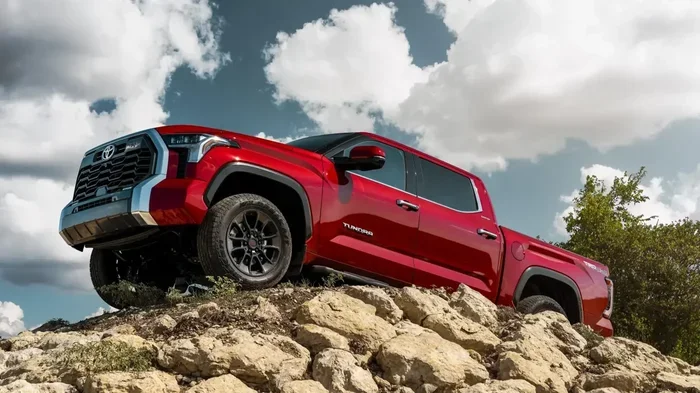
How Heavy Is a Toyota Tundra And What You Need To Know
The Toyota Tundra weight varies by trim, bed length, and engine, but most models sit between 5,000 and 7,000 pounds. Understanding your Tundra’s curb weight helps you plan towing, payload, and safe driving. This guide covers every generation and configuration so you know exactly what your truck weighs.
If you have ever stood next to a Toyota Tundra and thought, “This thing is massive,” you are not alone. The Toyota Tundra weight is something every truck owner and buyer should understand. Whether you are towing a trailer, hauling cargo, or just curious about your vehicle’s specs, knowing how much your truck weighs matters more than most people realize.
So, how heavy is a Toyota Tundra exactly? The answer depends on the model year, trim level, bed length, and engine option. A base Tundra can weigh as little as 5,000 pounds, while a fully loaded TRD Pro or Platinum trim can push past 7,000 pounds. In this guide, we will break down every detail so you know exactly what your truck weighs and why it matters.
We will also look at how Tundra weight affects towing, payload, fuel economy, and overall safety. By the end, you will have a complete picture of the Toyota Tundra curb weight and how it impacts your daily driving and hauling needs. Let us get into it.
Key Takeaways
- Weight Range: A Toyota Tundra typically weighs between 5,000 and 7,000 pounds depending on trim and configuration.
- Trim Matters: Higher trims like the TRD Pro and Platinum add significant weight due to extra features and equipment.
- Bed Length Affects Weight: Longer bed configurations add curb weight compared to short bed models.
- Payload and Towing: Knowing your Tundra’s weight helps you calculate safe payload and towing limits.
- Generation Differences: Newer Tundra models are heavier than older ones thanks to updated safety and tech features.
- Regular Cars vs. Trucks: A Tundra weighs far more than a standard passenger car, which affects fuel economy and handling.
📑 Table of Contents
- Understanding Toyota Tundra Weight Basics
- Toyota Tundra Weight By Trim Level
- How Bed Length and Cab Style Affect Tundra Weight
- Toyota Tundra Weight Across Generations
- How Tundra Weight Impacts Performance
- Common Mistakes People Make With Tundra Weight
- How to Find Your Tundra’s Exact Weight
- Final Thoughts
Understanding Toyota Tundra Weight Basics
Before we dive into specific numbers, let us talk about what “weight” actually means when it comes to trucks. There are several terms you will hear, and they all mean different things.
Curb Weight
Curb weight is the weight of your truck with a full tank of fuel but no passengers or cargo. This is the baseline number manufacturers use. For the Toyota Tundra, curb weight ranges from about 5,000 pounds for a basic single cab to over 6,500 pounds for a crew cab with a long bed.
Gross Vehicle Weight Rating (GVWR)
GVWR is the maximum total weight your Tundra can safely carry, including itself, passengers, cargo, and trailer tongue weight. Exceeding this number is dangerous and can damage your truck. Always check your owner’s manual for your specific model’s GVWR.
Payload Capacity
Payload capacity is how much weight you can safely put in the truck bed and cabin combined. This is calculated by subtracting curb weight from GVWR. A heavier Tundra means less payload capacity, which is something many buyers overlook.
Towing Capacity
Towing capacity tells you how much weight your Tundra can pull behind it with a trailer. This number depends heavily on engine choice, transmission, and whether you have the right towing package installed.
Toyota Tundra Weight By Trim Level
Different Tundra trims come with different features, and those features add weight. Here is a breakdown of what you can expect across the popular trim levels.
Base SR Trim
The SR trim is the entry-level Tundra. It keeps things simple with basic features and lighter materials where possible. Curb weight for the SR typically starts around 5,000 to 5,300 pounds depending on cab and bed configuration. This makes it the lightest Tundra you can buy.
SR5 Trim
The SR5 adds more comfort and convenience features. Upgraded wheels, better sound systems, and additional insulation add roughly 100 to 200 pounds compared to the SR. Expect curb weight in the 5,200 to 5,600 pound range for most SR5 configurations.
Limited and Platinum Trims
These are the luxury-oriented Tundra trims. They come with leather seats, premium audio, advanced driver assistance features, and larger wheels. All of that adds up. A Platinum Tundra can weigh over 6,500 pounds, sometimes approaching 6,800 pounds depending on the bed and cab setup.
TRD Pro Trim
The TRD Pro is the off-road focused variant. It comes with upgraded suspension, skid plates, off-road tires, and specialized accessories. These additions make the TRD Pro one of the heaviest Tundra trims, often weighing in at 6,400 to 6,800 pounds. If you want serious off-road capability, you pay for it in weight.
For comparison, a regular passenger car like a Camry weighs around 3,300 to 3,600 pounds. That means even the lightest Tundra is nearly twice as heavy as a midsize sedan. This huge difference affects everything from fuel economy to how the truck handles on the road.
How Bed Length and Cab Style Affect Tundra Weight
The configuration of your Tundra plays a big role in its overall weight. Not all Tundras are created equal, and the numbers can surprise you.
Single Cab (Regular Cab)
The single cab Tundra has just two doors and a single row of seats. It is the simplest and lightest configuration. A single cab with a short bed can weigh as little as 5,000 pounds. This setup is popular among work truck buyers who prioritize function over comfort.
Double Cab (Crew Cab)
The double cab adds two extra doors and a second row of seating. This means more metal, more glass, and more features. A double cab Tundra typically weighs between 5,500 and 6,200 pounds depending on trim and bed length. The added space comes at a weight cost.
Bed Length Options
Tundra bed lengths come in short and long configurations. A long bed adds several hundred pounds compared to a short bed because of the extra metal and structural reinforcement. If you need a long bed truck for hauling, keep in mind that bed length directly impacts your curb weight.
Toyota Tundra Weight Across Generations
The Tundra has gone through several generations since its debut in 1999. Each generation brought changes in weight due to updated safety standards, new technology, and evolving consumer expectations.
First Generation (1999-2006)
The original Tundra was lighter than modern models. First generation Tundras weighed between 4,700 and 5,800 pounds depending on configuration. These trucks were simpler and had fewer electronic features, which kept the weight down.
Second Generation (2007-2021)
The second generation Tundra saw a weight increase. Updated safety features, more powerful engines, and improved comfort systems added pounds. Second generation models typically weighed between 5,200 and 6,500 pounds.
Third Generation (2022-Present)
The newest Tundra is the heaviest yet. It features a fully redesigned platform, advanced safety technology, and a hybrid powertrain option. Current Tundra models weigh between 5,600 and 7,000 pounds. The hybrid system adds battery weight, which contributes to the higher numbers.
If you are looking at a used Tundra, weight differences between generations can affect how you use the truck. Heavier does not always mean better, but it does mean you need to be more mindful of payload and towing limits.
How Tundra Weight Impacts Performance
Weight is not just a number on a spec sheet. It directly affects how your Tundra drives, handles, and performs in real-world situations.
Fuel Economy
Heavier trucks burn more fuel. A heavier Tundra will always get slightly worse gas mileage than a lighter one. This is especially noticeable when comparing a base SR to a fully loaded Platinum. If fuel economy matters to you, consider the weight implications before choosing a trim.
Braking Distance
A heavier truck takes longer to stop. The extra mass means your brakes have to work harder, especially when the truck is fully loaded. Always maintain your brake pads and rotors, and allow extra following distance when your Tundra is carrying a heavy load.
Handling and Stability
Weight distribution matters. A Tundra with a heavy load in the bed handles differently than an empty one. Uneven weight can cause swaying, especially at highway speeds. Always distribute cargo evenly and never exceed your payload rating.
Tire Wear
Heavier trucks wear tires faster. The additional weight puts more stress on every tire, which means you may need to replace them more often. Keep your tires properly inflated to help offset the weight and extend tread life.
Common Mistakes People Make With Tundra Weight
Even experienced truck owners make mistakes when it comes to understanding and managing their Tundra’s weight. Here are some common errors to avoid.
Ignoring Payload Limits
Many people assume their Tundra can carry whatever they put in it. That is not true. Every Tundra has a specific payload rating printed on the door jamb sticker. Exceeding this limit strains the suspension, brakes, and engine.
Forgetting About Tongue Weight
When towing, the trailer’s tongue weight counts toward your Tundra’s payload. Many people forget this and overload the truck without realizing it. A good rule is to keep tongue weight at about 10 to 15 percent of your total trailer weight.
Not Checking Weight Before Upgrades
Adding aftermarket parts like larger wheels, bull bars, or upgraded bumpers increases your Tundra’s weight. Before installing any upgrades, factor in the additional weight and how it affects your payload and towing capacity.
Assuming All Tundras Weigh the Same
As we covered above, Tundra weight varies significantly by trim, cab, and bed. Do not assume your neighbor’s Tundra weighs the same as yours. Always check the specific weight for your exact configuration.
How to Find Your Tundra’s Exact Weight
If you want to know your specific Tundra’s weight, you have several options. The most accurate source is your owner’s manual, which lists curb weight, GVWR, and payload capacity for your exact model. You can also find a sticker on the driver’s door jamb that provides weight information.
Another option is to visit a truck scale at a weigh station or truck stop. This gives you the actual current weight of your truck, including any modifications or cargo. This is especially useful if you regularly haul heavy loads and want to make sure you stay within safe limits.
For those shopping for a used Tundra, checking the weight of the specific model year and trim is essential. A Toyota Tundra with high mileage may also have worn components that affect its overall weight distribution and performance. Understanding the full picture helps you make a smarter purchase decision.
Final Thoughts
The Toyota Tundra weight is more than just a spec to glance at before buying. It affects how you drive, what you can safely carry, and how the truck performs on and off the road. From the lightweight base SR to the heavily equipped TRD Pro and Platinum trims, every Tundra configuration has its own weight profile.
Whether you are towing a trailer to a jobsite or hauling gear for a weekend camping trip, knowing your truck’s weight helps you stay safe and get the most out of your vehicle. Always check your owner’s manual for the exact numbers, and never exceed your payload or towing limits.
The Tundra is a capable, hardworking truck. Understanding its weight is the first step toward using it safely and effectively for years to come.
Frequently Asked Questions
How much does a 2024 Toyota Tundra weigh?
A 2024 Toyota Tundra weighs between approximately 5,600 and 7,000 pounds depending on trim, cab style, and bed length. The hybrid models tend to be on the heavier side due to the battery system. Always check the specific configuration for the most accurate number.
What is the towing capacity of a Toyota Tundra?
Most Tundra models can tow between 8,000 and 10,500 pounds when properly equipped. The Max Tow package available on certain trims boosts towing capacity to the upper end of that range. Your exact towing capacity depends on your engine, transmission, and whether you have the right hitch installed.
Does a longer bed Tundra weigh significantly more?
Yes, a long bed Tundra weighs several hundred pounds more than a short bed model. The extra metal and structural support for the longer bed add to the overall curb weight. If weight is a concern for your usage, a short bed configuration is a lighter option.
How does Tundra weight compare to other half-ton trucks?
The Tundra sits in the middle of the half-ton truck weight range. It is heavier than some competitors like the Ford F-150 in base configurations but lighter than certain fully loaded rivals. Weight varies widely across the truck segment, so always compare specific models.
Can I find my Tundra’s weight on the door jamb?
Yes, the driver’s door jamb sticker lists your Tundra’s curb weight, GVWR, and payload capacity. This is the most accurate source for your specific truck. You can also find this information in your owner’s manual or on the Toyota website for your model year.
Does adding a tonneau cover change my Tundra’s weight?
A tonneau cover adds a small amount of weight, typically between 30 and 80 pounds depending on the type and material. While this is a minor addition, it still counts toward your total payload if you are carrying heavy cargo. Always factor in all additions when calculating your truck’s total weight.
=== CONCLUSION ===
The Toyota Tundra weight varies widely based on trim, configuration, and model year. From the lightweight single cab SR to the heavy-duty fully loaded Platinum, understanding your truck’s weight is essential for safe and effective use. Always respect your payload and towing limits, and make informed decisions about upgrades and cargo.
If you are interested in learning more about your Tundra’s longevity or how mileage affects truck health, check out our guide on 000 Miles A Lot For A Toyota Tundra. For those comparing truck weight to everyday vehicles, our article on how much weight a regular car can carry provides helpful context.
Knowing your truck is the first step to getting the most out of it. Stay safe, stay informed, and enjoy the road ahead.