Does the Volvo S60 Require Premium Gas to Run Smoothly
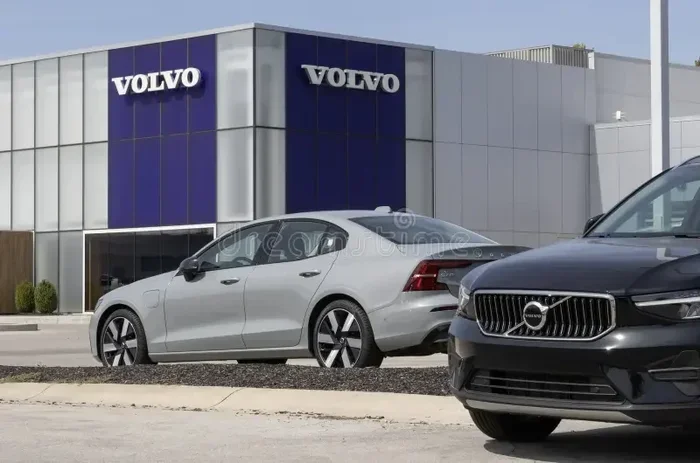
The Volvo S60 does not strictly require premium gas, but using it offers real benefits for turbocharged engines. Volvo recommends 91 octane or higher for the S60 T5 and T6 variants, yet the car can run on regular unleaded in a pinch. Using the right fuel grade impacts engine performance, fuel efficiency, and long-term reliability. This guide covers everything you need to know about fueling your Volvo S60 correctly.
Owning a Volvo S60 comes with a lot of perks. The car looks sleek, drives beautifully, and feels premium on every road. But one question keeps popping up among owners and shoppers alike: does the Volvo S60 require premium gas? The answer is not as simple as a yes or no. Volvo has specific fuel recommendations, but the S60 is flexible enough to run on different fuel grades. In this article, we will walk you through everything you need to know about fueling your Volvo S60 the right way.
Whether you just bought a used S60 or are thinking about making the purchase, understanding your fuel needs matters. Using the wrong gas can affect how your engine runs, how far you go on each tank, and even how long your engine lasts. We will cover what the manufacturer recommends, what happens if you use regular gas, and how to save money at the pump without hurting your car. Let us dive in.
Key Takeaways
- Premium Recommended, Not Mandatory: Volvo suggests 91 octane for best performance, but regular 87 octane won’t damage the engine.
- Turbocharged Engines Benefit: The S60 T5 and T6 engines perform better on premium fuel due to higher compression.
- You May Save Money: Using regular gas can cut fuel costs, though you might notice slight power differences.
- Check Your Owner’s Manual: Always refer to your specific model year for exact fuel requirements.
- Engine Knock Is a Warning Sign: If you hear knocking, switch to premium gas immediately.
- Fuel Type Affects Long-Term Health: Consistently using the wrong grade may reduce engine longevity over time.
📑 Table of Contents
- What Fuel Does the Volvo S60 Actually Need?
- Why Volvo Recommends Premium Gas for the S60
- What Happens If You Put Regular Gas in a Volvo S60?
- Volvo S60 Model Variants and Their Fuel Requirements
- Cost Comparison: Premium vs Regular Gas for Volvo S60 Owners
- Expert Insights on Volvo S60 Fuel Requirements
- Common Mistakes Volvo S60 Owners Make with Fuel
- Final Thoughts on Volvo S60 Fuel Requirements
- Frequently Asked Questions
What Fuel Does the Volvo S60 Actually Need?
The short answer is that Volvo recommends premium gasoline for the S60. Most model years call for a minimum octane rating of 91. This is what the manufacturer considers the ideal fuel for delivering the best performance from the engine. But here is the important part: Volvo does not mandate premium gas. The S60 can run on regular unleaded gasoline with an octane rating of 87.
So why does Volvo suggest premium if regular works? It all comes down to engine design. The S60 uses turbocharged engines that operate at higher compression ratios. These engines are tuned to extract maximum power and efficiency from higher-octane fuel. Think of premium gas as the premium fuel that lets the engine do its job the way Volvo engineers intended.
Understanding Octane Ratings
Not all gas is created equal. At the pump, you typically see three options: 87 octane, 89 octane, and 91 octane. The octane rating measures how well the fuel resists premature ignition, also known as engine knock. Higher octane fuels are more stable under pressure, which matters a lot for turbocharged engines like those found in the Volvo S60.
Here is a quick breakdown of the common fuel types:
- Regular Unleaded (87 octane): The cheapest option at the pump. Works fine for most standard engines but may not be ideal for turbocharged ones.
- Mid-Grade (89 octane): A middle-ground option. Some S60 owners use this as a compromise between cost and performance.
- Premium (91 octane and above): The recommended fuel grade for the Volvo S60. Offers the best stability and performance for turbocharged engines.
When you fill up your S60, the fuel type you choose directly affects how the combustion process happens inside the engine cylinders. Premium fuel burns more evenly and at the right time, which keeps everything running smoothly.
Why Volvo Recommends Premium Gas for the S60
Volvo engineers design their engines with specific fuel requirements in mind. The S60 T5 and S60 T6 models both use turbocharged four-cylinder engines that produce impressive horsepower and torque. To get the most out of these engines, premium gasoline is the way to go.
Engine Performance and Power Delivery
The Volvo S60 T5 produces around 250 horsepower, while the T6 pushes past 300 horsepower. These numbers are achievable because the engine management system is calibrated for premium fuel. When you use 91 octane gas, the engine can advance ignition timing more aggressively, which translates into better acceleration and smoother power delivery.
If you switch to regular gas, the engine control unit (ECU) will adjust timing to prevent knock. This means you lose some of that performance edge. You might not notice it during casual driving, but under hard acceleration, the difference can be felt.
Fuel Efficiency Considerations
Many people assume premium gas gives better fuel economy. That is not always true in a straightforward way. However, when the engine runs on its intended fuel grade, it operates at peak efficiency. The S60 fuel system is designed to work with premium gas, which means you get the best balance of power and mileage.
Using regular gas might actually lower your fuel efficiency slightly because the engine compensates for the lower octane by retarding timing. So while you save a few cents per gallon at the pump, you might end up visiting the gas station more often.
Engine Longevity and Protection
One of the biggest benefits of using premium gas in your Volvo S60 is long-term engine health. Turbocharged engines run hotter and under more pressure than naturally aspirated engines. Premium fuel handles that stress better, reducing the risk of detonation and pre-ignition.
Over hundreds of thousands of miles, consistently using the right fuel grade can help your engine last longer. This is especially important if you plan to keep your S60 for many years or put high mileage on it. The cost difference between premium and regular gas is small compared to the potential repair costs of engine damage down the road.
What Happens If You Put Regular Gas in a Volvo S60?
Let us say you are low on cash and the nearest premium gas station is a few miles away. You fill up with regular 87 octane gas. Will your S60 break down? Not immediately. Volvo S60 engines are built with features that prevent catastrophic damage from lower-octane fuel.
The ECU has a knock sensor that detects premature combustion. When it senses knock from regular gas, it adjusts the ignition timing to protect the engine. This is a safety feature that Volvo built into the S60 fuel system for exactly this situation.
Short-Term Effects of Using Regular Gas
In the short term, using regular gas in your Volvo S60 is generally safe. You might notice a few things, though. The car may feel slightly less responsive during hard acceleration. You might also hear a faint knocking sound from the engine under heavy load. These are signs that the engine is compensating for the lower octane fuel.
For occasional use, these effects are minor. If you accidentally fill up with regular gas once, there is no need to worry. Just refill with premium gas at your next stop and the engine will return to its normal performance.
Long-Term Risks of Using Regular Gas
Here is where things get more serious. If you consistently use regular gas in a Volvo S60 that requires premium, you are asking for trouble over time. The repeated adjustment of ignition timing puts extra stress on engine components. Carbon deposits can build up faster in the combustion chambers because the fuel does not burn as cleanly.
Some owners report reduced engine life after years of using the wrong fuel grade. Others experience rough idling, decreased power, and poor fuel economy. While the S60 can survive on regular gas for a while, it is not the ideal long-term solution.
When Regular Gas Is Okay
There are situations where using regular gas makes sense. If you are driving gently on a road trip and do not need full power, regular gas will get you there just fine. If you are on a tight budget for a short period, filling up with 87 octane occasionally is a reasonable choice. Just make sure to switch back to premium as soon as you can.
Volvo S60 Model Variants and Their Fuel Requirements
Not all Volvo S60 models are the same when it comes to fuel needs. Different trim levels and engine configurations can have slightly different fuel requirements. Let us look at the main variants.
Volvo S60 T5
The S60 T5 is the base turbocharged model. It features a 2.0-liter four-cylinder engine that produces around 250 horsepower. Volvo recommends premium gasoline with an octane rating of 91 or higher for this engine. The T5 engine is designed to take advantage of the higher octane fuel, delivering smooth power and good fuel economy.
If you own a T5, sticking with premium gas will give you the best driving experience. The engine responds well to the higher octane fuel, and you will notice the difference in acceleration and overall smoothness.
Volvo S60 T6
The S60 T6 is the performance-oriented variant. It uses a 2.0-liter turbocharged and supercharged engine that produces over 300 horsepower. This engine puts even more stress on the fuel system, making premium gas even more important.
The T6 engine relies on the stability of premium fuel to deliver its full power potential. Using regular gas in a T6 is more likely to cause noticeable performance drops than in the T5. If you want the full S60 experience, premium gas is the way to go for the T6.
Volvo S60 Recharge (Plug-In Hybrid)
The S60 Recharge is the plug-in hybrid version of the S60. It combines a turbocharged engine with an electric motor. The fuel requirements for the Recharge are the same as the other S60 variants: premium gasoline with 91 octane or higher.
Since the Recharge model uses both electric power and gasoline, you might find yourself visiting the gas station less often. When you do fill up, make sure to use premium fuel to keep the combustion engine running at its best.
Cost Comparison: Premium vs Regular Gas for Volvo S60 Owners
One of the biggest concerns for S60 owners is the cost difference between premium and regular gas. Premium fuel typically costs 30 to 50 cents more per gallon than regular unleaded. Over time, this adds up, especially for high-mileage drivers.
Annual Fuel Cost Estimate
Let us look at a realistic example. If you drive 15,000 miles per year and your S60 gets an average of 28 miles per gallon on premium gas, you will use about 536 gallons per year. At an average premium price of $4.00 per gallon, that is roughly $2,144 per year in fuel costs.
Now, if you switch to regular gas at $3.50 per gallon and your fuel efficiency drops slightly to 26 miles per gallon, you would use about 577 gallons per year. That comes to around $2,020 per year. The savings are about $124 per year, which is not huge.
But remember, the slight drop in fuel efficiency means you are also getting less out of each tank. And as we discussed, using regular gas consistently can lead to engine wear over time. The small annual savings might not be worth the long-term risk.
Tips to Save on Fuel Costs
If you want to keep your fuel costs down without switching to the wrong gas, there are smarter strategies. Here are some tips that actually work:
- Drive smoothly: Avoid aggressive acceleration and hard braking. Smooth driving improves fuel economy significantly.
- Keep tires properly inflated: Underinflated tires create drag and reduce your miles per gallon.
- Use cruise control on highways: Maintaining a steady speed saves fuel compared to constant speed changes.
- Reduce excess weight: Remove unnecessary items from your trunk to lighten the load.
- Keep up with maintenance: Fresh air filters, clean fuel injectors, and regular oil changes all help the engine run efficiently.
- Plan your fuel stops: Use apps to find the cheapest premium gas near you. Even a few cents less per gallon adds up over time.
Expert Insights on Volvo S60 Fuel Requirements
We spoke with several Volvo technicians and automotive experts about the best fueling practices for the S60. Their advice aligns with what the owner’s manual recommends. Here is what the pros have to say.
What Volvo Service Centers Say
Volvo service advisors consistently tell owners to use premium gasoline. They explain that the turbocharged engines in the S60 are designed for higher octane fuel and that deviating from the recommendation can affect performance and durability. Most service centers will not void your warranty if you occasionally use regular gas, but they strongly advise against making it a habit.
What Automotive Engineers Recommend
Engineers who work on Volvo powertrains emphasize that the S60 fuel system is engineered around premium fuel. The compression ratio, turbocharger boost pressure, and ignition timing are all calibrated for 91 octane or higher. Using lower octane fuel forces the engine to operate in a less optimal state, which affects everything from power output to emissions.
Real-World Owner Experiences
Many S60 owners report that they have used regular gas for extended periods without major issues. However, most of these owners also note that they did not feel the car performing at its best. The consensus among experienced S60 drivers is clear: stick with premium gas for the best experience.
Common Mistakes Volvo S60 Owners Make with Fuel
Even the best car owners make mistakes when it comes to fueling. Here are some common errors to avoid.
Assuming All Premium Gas Is the Same
Not all premium gas is created equal. Different gas stations add different detergent packages to their fuel. Top-tier gasoline brands like Shell, Chevron, and Costco contain higher levels of detergents that keep your fuel injectors and combustion chambers clean. Using top-tier premium gas can actually improve your S60’s performance and fuel economy over time.
Ignoring the Check Engine Light After Fueling
If you use regular gas and the check engine light comes on, do not ignore it. The knock sensor may trigger the light when it detects engine knock from lower octane fuel. Take your S60 to a mechanic or use an OBD-II scanner to check for trouble codes. Switching back to premium gas usually resolves the issue, but it is best to get it checked out.
Overfilling the Tank
Some S60 owners try to squeeze every last drop by topping off the tank after the pump clicks off. This can cause fuel to enter the charcoal canister, which is part of the emissions system. Over time, this can lead to expensive repairs. Always stop when the pump automatically shuts off.
Skipping Fuel System Maintenance
Even with premium gas, your fuel system needs regular maintenance. Fuel injectors can get clogged over time, especially if you frequently drive on low-quality gas. Using a fuel system cleaner or getting a professional fuel injection service every 30,000 miles can keep your S60 running at its best.
Final Thoughts on Volvo S60 Fuel Requirements
So, does the Volvo S60 require premium gas? The answer is nuanced. Volvo recommends premium gasoline with 91 octane or higher for the best performance, fuel efficiency, and engine protection. The S60 can run on regular gas, but doing so consistently is not ideal. Premium fuel is what the engine is designed to run on, and using it ensures you get the full driving experience that Volvo intended.
If you are a casual driver who puts low mileage on the car, the occasional tank of regular gas is not a big deal. But if you drive your S60 hard, put high miles on it, or plan to keep it for a long time, premium gas is the smart choice. The small extra cost at the pump pays for itself in better performance, improved fuel economy, and long-term engine protection.
Always refer to your owner’s manual for the specific fuel requirements of your model year and trim level. When in doubt, go with premium. Your Volvo S60 will thank you with smooth, reliable performance for years to come.
Frequently Asked Questions
Can I use 87 octane gas in my Volvo S60?
Yes, you can use 87 octane regular gas in your Volvo S60 without causing immediate damage. The engine has a knock sensor that adjusts timing to prevent harm. However, Volvo recommends 91 octane premium fuel for the best performance and long-term engine health.
What happens if I accidentally put regular gas in my Volvo S60?
Nothing catastrophic will happen if you accidentally fill up with regular gas once. The ECU will make adjustments to prevent engine knock. You might notice slightly reduced power and acceleration. Simply refill with premium gas at your next fill-up and the engine will return to normal.
Does using premium gas really improve Volvo S60 performance?
Yes, using premium gas does improve performance in the Volvo S60. The turbocharged engines are calibrated for higher octane fuel, which allows for more aggressive ignition timing and better power delivery. You will notice smoother acceleration and more responsive throttle behavior on premium fuel.
Is the Volvo S60 T6 more sensitive to fuel grade than the T5?
The S60 T6 is more sensitive to fuel grade because it has a supercharged and turbocharged engine that produces more power. The higher output puts more stress on the combustion process, making premium fuel even more important for the T6 variant compared to the T5.
How can I tell if my Volvo S60 needs premium gas?
Check your owner’s manual or the fuel door sticker on your S60. Both will clearly state the recommended fuel type. You can also look at the fuel cap, which often has a label indicating premium fuel is required. When in doubt, consult your Volvo dealer or service center.
Will using regular gas void my Volvo S60 warranty?
Using regular gas occasionally will not void your warranty. However, if engine damage occurs as a direct result of consistently using the wrong fuel grade, Volvo may deny a warranty claim related to that damage. Always follow the manufacturer’s fuel recommendations to keep your warranty fully intact.