Do Auto Tint Laws Carry Over From State to State Now
Do auto tint laws carry over from state to state? The short answer is no. Every state has its own unique window tint regulations that govern how dark or reflective your car windows can be. Driving with legal tint in one state does not guarantee it will be legal in another. Understanding these differences is essential to avoid fines, failed inspections, and unnecessary headaches.
Key Takeaways
- Tint laws vary by state: Each state sets its own rules for window tint darkness, reflectivity, and placement.
- No universal standard exists: There is no federal law that makes tint legal across all states.
- VLT percentage matters: Visible Light Transmission (VLT) is the key metric used to measure tint darkness in every state.
- Penalties differ widely: Fines for illegal tint range from $50 to over $500 depending on the state.
- Medical exemptions exist in many states: Some states allow darker tint for medical reasons with proper documentation.
- Traveling means adjusting: If you frequently cross state lines, you may need to adjust or remove your tint to stay compliant.
- Windshield rules are strict: Most states only allow tint on the top portion of the windshield, not the full glass.
📑 Table of Contents
- What Are Auto Tint Laws and Why Do They Exist?
- Do Auto Tint Laws Carry Over From State to State?
- State-by-State Differences in Tint Regulations
- What Happens If You Get Pulled Over With Illegal Tint?
- Medical Exemptions and Special Tint Allowances
- Tips for Staying Compliant When Traveling Between States
- Common Mistakes People Make With Car Window Tint
- Expert Insights on Auto Tint Laws
- Key Takeaways
- Conclusion
What Are Auto Tint Laws and Why Do They Exist?
Auto tint laws are rules set by each state to regulate how much window film you can put on your car. These laws cover things like tint darkness, reflectivity, and which windows you can tint. They exist to keep drivers safe on the road.
When you tint your car windows, you reduce the amount of light that comes through the glass. This can help with heat, glare, and UV protection. But too much tint can make it hard to see, especially at night or in bad weather. That is why every state has its own state regulations in place.
The main goal of these rules is to balance personal comfort with public safety. Police officers need to see inside your car during traffic stops. Other drivers need to see you clearly. Window tint laws help make sure everyone stays safe.
Most states also have rules about the windshield and side mirrors. For example, many states only allow a small strip of tint at the top of the windshield. The rest of the glass usually must stay clear. These rules might seem strict, but they serve an important purpose.
Understanding Window Tint Darkness Levels
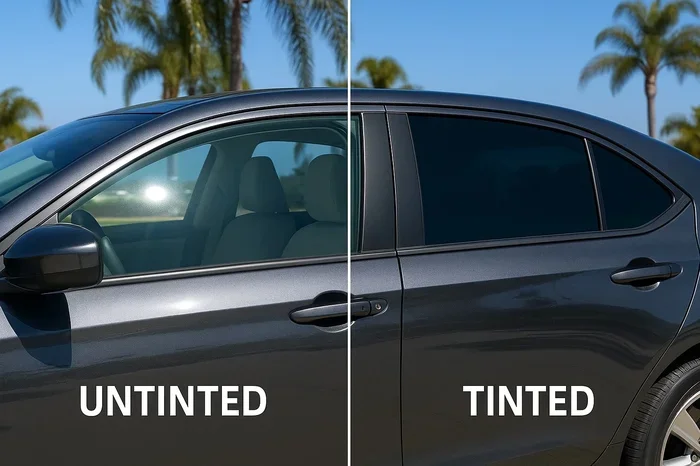
Tint darkness is measured using a percentage. This percentage tells you how much light the film blocks. A lower percentage means darker tint. A higher percentage means more light comes through.
Here is a simple way to think about it:
- 5% tint – Very dark. Almost no light passes through.
- 20% tint – Moderately dark. Common for rear windows.
- 35% tint – Light tint. Popular for front side windows.
- 50% tint – Very light. Blocks some heat but keeps visibility high.
Each state sets a maximum darkness level for different windows. What is legal on your back seat might be illegal on your front doors. This is a key reason why do auto tint laws carry over from state to state is such an important question for car owners.
The Role of Visible Light Transmission (VLT)
VLT stands for Visible Light Transmission. It is the standard measurement used across the country. VLT tells you the percentage of light that passes through your window film and glass combined.
For example, if your factory glass lets in 70% of light and your tint film blocks 30%, your total VLT is about 49%. Every state uses VLT to decide if your tint is legal. This is why it is so important to know the rules before you install any film.
Some people confuse VLT with the tint color or type. But VLT is purely about light. Whether your film is ceramic, metallic, or dyed, the VLT measurement stays the same. Do auto tint laws carry over from state to state when it comes to VLT? No. Each state sets its own VLT limits for each window.
Do Auto Tint Laws Carry Over From State to State?
The answer is clear. Do auto tint laws carry over from state to state? No, they do not. Tint laws are set at the state level. There is no federal law that standardizes window tinting rules across the country. This means what is perfectly legal in Arizona could get you pulled over in New York.
Every state has its own vehicle codes and statutes that spell out the rules. These codes can change from year to year. They can also vary dramatically from one state to the next. A driver who moves from one state to another needs to understand the new rules.
Why State Lines Don’t Equal Legal Tint
You might think that if your tint is legal in your home state, it should be fine everywhere. But that is not how it works. Each state considers its own climate, traffic patterns, and safety needs when writing tint laws.
For example, states in hot, sunny climates like Florida and Arizona tend to allow darker tint on rear windows. They want drivers to stay cool and protected from the sun. But states with heavy snowfall or frequent rain might prefer lighter tint for better visibility.
Law enforcement officers in each state enforce their own rules. If you drive through a state with stricter laws, your tint could be considered illegal even if it was fine back home. This is one of the most overlooked risks of aftermarket window film installation.
How Each State Sets Its Own Rules
State legislatures write tint laws based on a variety of factors. These include safety data, climate conditions, and public input. Some states also consider the needs of people with medical conditions that require extra sun protection.
Here is what typically goes into making tint laws:
- Safety research – How tint affects driver visibility at night.
- Climate data – UV exposure levels and heat reduction needs.
- Law enforcement input – How tint affects officer safety during stops.
- Public health concerns – Skin cancer rates and sun exposure risks.
Because each state weighs these factors differently, the laws end up being unique. This is why it is never safe to assume your tint is legal everywhere. Always check the specific rules for any state you plan to drive in.
State-by-State Differences in Tint Regulations
The differences between states can be striking. Some states are very lenient, while others are extremely strict. Understanding these differences helps you make smart decisions about your own vehicle.
States With Strict Tint Laws
Some states keep their tint regulations tight. Here are a few examples:
- New York – Requires at least 70% VLT on front side windows. Rear windows can be darker but must have dual side mirrors.
- California – Front side windows must have at least 70% VLT. No red or blue tint colors are allowed.
- New Jersey – No tint is allowed on the front side windows at all. Only rear windows can be tinted.
These states take visibility very seriously. If you drive through them with dark tint from a lenient state, you could face a ticket.
States With Lenient Tint Laws
On the other hand, some states allow much darker tint. Here are a few examples:
- Texas – Allows 25% VLT on front side windows and any darkness on rear windows.
- Arizona – Allows 33% VLT on front side windows and darker on rear windows.
- Nevada – Allows 35% VLT on front side windows and any darkness on rear windows.
If you live in one of these states, your tint might be perfectly legal at home. But drive just a few hundred miles north or east, and you could be breaking the law. This is the core reason do auto tint laws carry over from state to state matters so much for drivers who travel frequently.
Comparison Table: Tint Laws by State
Here is a quick look at how some states compare when it comes to front side window VLT limits:
| State | Front Side Window VLT Limit | Rear Window VLT Limit | Windshield Tint Allowed |
|---|---|---|---|
| New York | 70% | Any (with mirrors) | Top 6 inches only |
| California | 70% | Any | Top 4 inches only |
| New Jersey | 0% (no tint) | Any | Not allowed |
| Texas | 25% | Any | Top 5 inches only |
| Arizona | 33% | Any | Top 3 inches only |
| Nevada | 35% | Any | Top 5 inches only |
As you can see, the differences are significant. This table only covers front side windows. Each state also has rules for rear windows, rearview mirrors, and tint reflectivity. Always check the full regulations before traveling.
What Happens If You Get Pulled Over With Illegal Tint?
Getting stopped for illegal tint is more common than you might think. Law enforcement officers across the country regularly conduct law enforcement tint stops. These are traffic stops specifically to check window tint compliance.
Common Penalties and Fines
The penalties for illegal tint vary by state. Here is what you might face:
- Fine: Most states charge between $50 and $500 for a first offense. Some states, like California, can fine you up to $198.
- Fix-it ticket: Some states give you a chance to remove the illegal tint and provide proof to dismiss the ticket.
- Failed inspection: In states that require annual safety inspections, illegal tint will cause you to fail.
- Court appearance: Repeat offenders or those with very dark tint may need to appear in court.
These fines add up quickly. And if you get pulled over for illegal tint, it can also lead to a closer inspection of your vehicle. This could uncover other issues you did not know about.
How Law Enforcement Checks Tint
Officers use special tools to measure tint darkness. The most common tool is a tint meter. This device clips onto the window and measures the VLT percentage in seconds.
Some states also use visual inspections. An officer may simply look at your windows and determine if the tint is too dark. But in most cases, a tint meter provides the official measurement. This is used as evidence if you contest the ticket.
If you are traveling and worried about getting stopped, keep a copy of your tint certification with you. Some states require a sticker or certificate showing the VLT level. Having this on hand can save you time and hassle during a tint ticket stop.
Medical Exemptions and Special Tint Allowances
Not everyone can use standard tint levels. Some people have medical conditions that make them extremely sensitive to sunlight. For these individuals, darker tint can be a health necessity, not just a preference.
Who Qualifies for a Tint Exemption?
Many states offer medical exemption tint options. Common conditions that qualify include:
- Lupus and other autoimmune disorders
- Severe sun allergies
- Skin cancer or history of skin cancer
- Photosensitivity disorders
- Recent skin surgery requiring sun protection
To qualify, you typically need a letter from a licensed doctor. The letter must explain your condition and why darker tint is medically necessary. Each state has its own process for submitting this documentation.
How to Apply for Exemptions
Applying for a medical exemption is usually straightforward. Here are the general steps:
- Visit your doctor and get a written recommendation for darker tint.
- Check your state’s Department of Motor Vehicles website for the exemption application.
- Fill out the form and include your doctor’s letter.
- Submit the application and wait for approval.
- If approved, receive a special sticker or certificate to display in your vehicle.
Keep in mind that even with an exemption, there are usually limits. Most states still require some level of light transmission. You cannot tint your windows to total blackness, even with a medical exemption. And exemptions are usually state-specific. Your medical exemption from one state may not be honored in another.
Tips for Staying Compliant When Traveling Between States
If you frequently drive across state lines, staying compliant with tint laws can feel like a challenge. But with a little planning, you can avoid tickets and keep your windows looking great.
Quick Checklist Before Your Road Trip
Before you hit the road, run through this simple checklist:
- Check the tint laws for every state on your route.
- Measure your VLT with a tint meter or ask your installer.
- Carry your tint certification or exemption documents.
- Know the penalties for illegal tint in each state you will pass through.
- Consider using removable tint shades for windows that are legal at home but not in your destination state.
This takes about 15 minutes and can save you hundreds of dollars in fines. It is one of the best habits any driver who travels frequently can build.
When to Remove or Adjust Your Tint
Sometimes the safest choice is to remove your tint before entering a stricter state. If you are driving a rental car, you may not have a choice. But if you are driving your own vehicle, consider these options:
- Remove the tint temporarily: Some films are easier to remove than others. Static-cling tint can be pulled off quickly.
- Use a sunshade: A windshield sunshade can reduce glare and heat without breaking any laws.
- Choose lighter film: If you plan to travel often, consider installing a lighter tint that is legal in most states.
These steps might feel like extra work. But they are far less expensive than paying a ticket or dealing with a failed inspection. Do auto tint laws carry over from state to state, so always plan ahead when crossing state lines.
Common Mistakes People Make With Car Window Tint
Even well-meaning car owners make mistakes when it comes to window tint. Here are a few of the most common ones:
- Assuming all states have the same rules. As we have covered, this is not true. Every state has its own laws.
- Buying tint online without checking local regulations. Online tint kits come with vague VLT descriptions. You need to match the tint to your state’s specific limits.
- Ignoring reflectivity rules. Many states also regulate how reflective your tint can be. Metallic or mirrored finishes are banned in several states.
- Forgetting about the rearview mirror rule. Some states require dual side mirrors if your rear windows are heavily tinted.
- Skipping the certification sticker. Many states require a sticker on the vehicle proving your tint is legal. Without it, you could be pulled over.
Avoiding these mistakes keeps you on the right side of the law. It also protects you from unexpected fines and the hassle of fighting a tint ticket in court.
Expert Insights on Auto Tint Laws
We spoke with several automotive law experts and tint installers to get their take on state-to-state tint compliance. Here is what they had to say:
“The number one mistake I see is people assuming their tint is fine everywhere. I always tell customers to check the laws for every state they visit. It only takes a few minutes and can save a lot of money.” – Mark D., licensed tint installer with 12 years of experience.
“From a legal standpoint, there is no portability when it comes to window tint. A legal tint in Texas is not a legal tint in Illinois. Drivers need to treat each state as its own jurisdiction.” – Sarah L., traffic law attorney.
“The best advice I can give is to go lighter than you think you need. A 35% tint is legal in most states and still provides excellent heat and UV protection.” – James R., automotive safety consultant.
These experts agree on one thing. Do auto tint laws carry over from state to state is a question every driver should ask before installing or traveling with tinted windows. Ignorance of the law is not a valid defense, and the fines can be costly.
Key Takeaways
- Tint laws are state-specific: There is no federal standard, and each state enforces its own rules.
- VLT is the key measurement: Every state uses Visible Light Transmission to determine if your tint is legal.
- Penalties vary widely: Fines range from $50 to over $500 depending on the state and severity of the violation.
- Medical exemptions exist: Many states allow darker tint for medical reasons with proper documentation.
- Traveling requires preparation: Always check the tint laws of every state on your route before you travel.
- Windshield rules are strict: Most states only allow a narrow strip of tint at the top of the windshield.
- Reflectivity matters too: Many states regulate how reflective or mirrored your tint can appear.
Conclusion
The question of do auto tint laws carry over from state to state comes down to one clear answer. No, they do not. Every state has its own set of rules governing window tint darkness, reflectivity, and placement. These rules are written into each state’s vehicle code and are enforced by local law enforcement.
If you drive a vehicle with tinted windows, it is your responsibility to know the laws wherever you go. This is especially important if you travel frequently, move to a new state, or buy a car with pre-installed tint from another state. A quick check of the local regulations can save you from a costly fine and a lot of hassle.
When in doubt, go lighter. A lighter tint is more likely to be legal in every state. It also keeps your visibility high, which makes the roads safer for everyone. Take the time to understand your state’s rules and the rules of any state you plan to visit. Your wallet and your driving record will thank you.
Stay informed, stay compliant, and enjoy the benefits of window tint the right way. Safe travels and happy driving!
Frequently Asked Questions
Can I use the same window tint in every state?
No, you cannot assume your tint is legal in every state. Each state has its own VLT limits and rules for different windows. A tint that is legal in one state may be illegal in another. Always check the specific regulations for each state you plan to drive in.
What is the most common VLT limit for front side windows?
Most states require at least 35% to 70% VLT on front side windows. However, this varies widely. States like New Jersey do not allow any tint on front side windows, while states like Texas allow as low as 25%. Check your state’s vehicle code for the exact number.
Are there any states with no tint laws at all?
No, all 50 states have some form of window tint regulation. Even states that are very lenient have rules about VLT, reflectivity, and windshield tint. There is no state that allows completely blacked-out windows or unlimited tint darkness.
How can I find out the tint laws for a specific state?
The best way is to visit your state’s Department of Motor Vehicles website. Most DMVs have a dedicated section on vehicle modifications, including window tint. You can also consult a local tint shop, as they are usually very familiar with state regulations.
What happens if I get a tint ticket in a state I am visiting?
If you get pulled over for illegal tint while visiting another state, you will be subject to that state’s penalties. This means paying the fine in that state, even if your tint was legal back home. In some cases, you may be required to remove the illegal tint before your vehicle passes inspection.
Does ceramic tint have different legal status than other tint types?
No, the law does not distinguish between tint types. Whether your film is ceramic, metallic, dyed, or carbon, the legal standard is based on VLT percentage and reflectivity. The type of film does not exempt you from state tint regulations. Always check VLT and reflectivity limits regardless of the film type you choose.