How Heavy Is a Toyota Tundra Weight Facts Revealed
How Heavy Is a Toyota Tundra? The answer depends on the model year, trim, and bed size. A standard Toyota Tundra weighs between 5,000 and 6,000 pounds curb weight, with payload capacities exceeding 1,700 pounds. This guide breaks down every weight spec you need to know.
Have you ever asked yourself, how heavy is a Toyota Tundra? It is a question many truck buyers and owners want answered. The weight of a Tundra affects everything from fuel economy to towing safety. Whether you are buying a used model or just curious, knowing the numbers helps you make smart decisions. In this guide, we break down every weight fact you need. You will learn about curb weight, payload, towing limits, and how different trims compare. We also cover why weight matters for your daily driving and hauling plans.
The Toyota Tundra is a full-size pickup truck that has been around since 1999. It competes with the Ford F-150, Chevrolet Silverado, and Ram 1500. But the Tundra has its own unique weight profile. The truck comes in several cab styles, bed lengths, and engine options. Each combination changes the total weight. Understanding these differences is key to picking the right Tundra for your needs. How Heavy Is a Toyota Tundra is not just a number—it is a range that depends on many factors.
In the sections below, we will walk through each weight category step by step. You will see tables, quick tips, and real-world examples. By the end, you will know exactly what your Tundra weighs and why it matters. Let us dive into the details.
Key Takeaways
- Curb weight ranges from 5,000 to 6,000 lbs: The exact number depends on the generation, cab style, and bed length.
- Payload capacity can exceed 1,700 lbs: This is the weight of passengers and cargo you can safely add.
- Towing capacity reaches up to 10,500 lbs: Proper hitch setup and tongue weight are critical.
- Third-generation models are lighter: The 2022+ Tundra uses a hybrid powertrain and aluminum body, reducing weight.
- Bed length and cab style matter: A long bed adds several hundred pounds over a short bed.
- GVWR sets the limit: Never exceed the gross vehicle weight rating for safety.
- Regular maintenance keeps weight specs accurate: Check your owner’s manual for the exact figures.
📑 Table of Contents
How Heavy Is a Toyota Tundra: Curb Weight Explained
Curb weight is the weight of a vehicle with no passengers or cargo. It includes a full tank of fuel, all fluids, and standard equipment. For the Toyota Tundra, curb weight is the baseline number you will see in spec sheets. It does not include anything you add later. Knowing your curb weight helps you understand the truck’s empty load.
Gross vehicle weight rating (GVWR) is the maximum safe total weight of the truck. It includes curb weight plus passengers, cargo, and trailer tongue weight. The difference between GVWR and curb weight is your available capacity. You must stay within the truck’s limits to avoid damage or unsafe driving conditions.
Why Curb Weight Matters
Curb weight affects fuel economy, acceleration, and braking. A heavier truck uses more gas. It also takes longer to stop. If you are comparing Tundra models, curb weight gives you a clear starting point. You can then add the weight of your typical load to see if you stay within safe limits. Always check your owner’s manual for the exact curb weight of your specific Tundra.
Toyota Tundra Weight by Generation
The Tundra has gone through three main generations. Each generation brought changes in size, materials, and powertrain. These changes directly affected the truck’s weight. Below, we look at the weight ranges for each era.
First Generation (1999–2006)
The original Tundra was a sturdy full-size truck. It used a steel body and frame, which made it relatively heavy. Curb weight for the first generation ranged from about 5,000 to 5,700 pounds. The double cab and long bed models were on the higher end. If you are looking at a used first-gen Tundra, expect it to be near the upper weight range.
Second Generation (2007–2021)
The second generation Tundra saw some weight savings. Toyota introduced new engine options and refined the design. Curb weight for the 2007–2021 Tundra typically fell between 5,100 and 5,900 pounds. The TRD Pro and 1794 Edition trims added features that pushed weight higher. Still, these models remained solid workhorses with strong towing and payload numbers.
Third Generation (2022–Present)
The all-new 2022 Tundra is a big leap forward. It uses a hybrid powertrain and a lighter aluminum-intensive body. Curb weight for the third-generation Tundra starts around 5,400 pounds and can go up to 6,000 pounds depending on configuration. The hybrid system adds battery weight, but the overall truck is lighter than its predecessor. This generation also offers a new i-FORCE MAX twin-turbo hybrid that changes the weight distribution.
| Generation | Years | Curb Weight Range | Key Weight Factors |
|---|---|---|---|
| First | 1999–2006 | 5,000–5,700 lbs | Steel body, frame, basic trim levels |
| Second | 2007–2021 | 5,100–5,900 lbs | Refined design, more engine options, heavier trims |
| Third | 2022–Present | 5,400–6,000 lbs | Hybrid system, aluminum body, i-FORCE MAX |
As you can see, the question how heavy is a Toyota Tundra does not have a single answer. It depends on the generation, trim, and options you choose.
Payload and Towing Capacity Explained
Payload and towing are the two big reasons truck buyers care about weight. Payload is the weight you can put in the truck. Towing is the weight you can pull behind it. Both are directly tied to the Tundra’s curb weight and overall design.
How Much Can a Tundra Carry?
The payload capacity of a Toyota Tundra varies by model. Most configurations allow you to carry between 1,400 and 1,800 pounds of cargo and passengers. The maximum payload number is listed on the door jamb sticker. It is called the GVWR or gross vehicle weight rating. To find your payload, subtract curb weight from GVWR. For example, if a Tundra has a GVWR of 7,400 lbs and a curb weight of 5,500 lbs, your payload is 1,900 lbs.
Always load your truck evenly. Put heavy items over the axle. Uneven loading can cause swaying and poor handling. If you are unsure about your truck’s limits, consult the owner’s manual or a Toyota dealer.
Towing Weight and Tongue Weight
Towing capacity for the Tundra can reach up to 10,500 pounds when properly equipped. This requires the right hitch, wiring harness, and braking controller. Tongue weight is the downward force the trailer puts on the hitch. A good rule of thumb is that tongue weight should be about 10 to 15 percent of the total trailer weight. Too much tongue weight can lift the rear of the Tundra and make steering dangerous.
Before you tow, verify your Tundra’s towing package. Not all trims come with the heavy-duty cooling and transmission features needed for maximum towing. The weight of the trailer combined with the Tundra’s curb weight must stay within the truck’s limits.
Common Mistakes When Loading a Tundra
One common mistake is overloading the truck beyond the payload rating. Another is ignoring tongue weight. A third is forgetting that passengers and fuel add weight. A full tank of gas adds about 100 pounds. Four adults add around 600 pounds. These small additions quickly eat into your available capacity. Always leave a safety margin and never assume the numbers on the spec sheet are exact for your loaded truck.
How Tundra Weight Compares to Other Trucks
If you are shopping for a full-size pickup, you might wonder how the Tundra’s weight stacks up against the competition. The Tundra is in the same class as the Ford F-150, Chevrolet Silverado 1500, and Ram 1500. Each truck has a different weight profile based on its engineering and materials.
For a general idea of how a Tundra compares to a regular car, you can check how much weight a regular car can carry. Most sedans and crossovers have payload capacities under 1,000 pounds, while a Tundra can handle over 1,700 pounds. That is a huge difference. The Tundra’s weight is part of what gives it its strength and stability on the road.
When you are comparing trucks, do not just look at curb weight. Look at the weight-to-capacity ratio. A lighter truck with a strong frame can still tow and carry a lot. The Tundra’s design balances weight with durability. It is built to handle tough jobs without being unnecessarily heavy.
Factors That Influence a Tundra’s Weight
Several factors determine the final weight of a Toyota Tundra. Understanding these helps you choose the right configuration for your needs.
Engine and Drivetrain Options
The Tundra offers different engines, and each has a different weight. The traditional 5.7-liter V8 is a proven powerhouse. The newer i-FORCE MAX hybrid system adds a motor and battery, which changes the weight distribution. The hybrid system adds about 100 to 200 pounds compared to the standard V8. Drivetrain also matters. A four-wheel-drive model weighs more than a rear-wheel-drive model because of the extra drivetrain components.
Bed Length and Cab Configuration
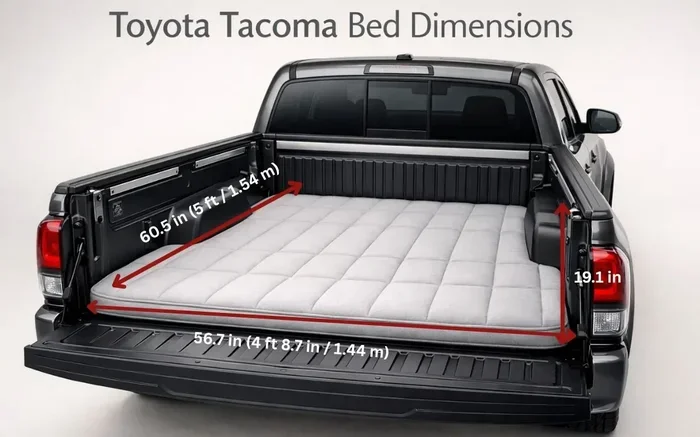
Bed length has a direct impact on weight. A long bed adds several hundred pounds over a short bed. If you are trying to keep your Tundra lighter, a short bed might be the way to go. Cab style also matters. A double cab is heavier than an access cab because it has more structure and seating. When you are planning your truck, think about how long a long bed truck is and how that extra length translates into extra pounds.
Expert Insight: Many buyers focus only on engine power and forget about weight. A heavier truck can feel less responsive and use more fuel. Always consider the total weight when comparing trims and options. The difference between a short bed and a long bed can be 200 to 400 pounds, which affects everything from braking to fuel economy.
Additional Features and Accessories
Options like a tonneau cover, running boards, and a tow hitch add weight. A factory tow package includes a heavy-duty radiator and wiring, which also adds pounds. Even the wheels and tires matter. Larger alloy wheels are heavier than steel wheels. If you are trying to minimize weight, stick to the base trim and avoid unnecessary accessories.
Why Knowing Your Tundra’s Weight Is Important
Weight is not just a number on a spec sheet. It affects your safety, fuel costs, and truck longevity. Here is why you should care about your Tundra’s weight.
Safety First
Overloading a truck is dangerous. It can cause tire blowouts, reduced braking performance, and loss of control. The Tundra is designed to carry a specific amount of weight. Exceeding that limit puts stress on the frame, suspension, and brakes. Always know your curb weight and payload before you load up the truck.
Fuel Economy and Performance
A heavier truck uses more fuel. If you are hauling a heavy load, you will notice a drop in mpg. Conversely, keeping your Tundra closer to its curb weight improves fuel economy. If you are wondering whether weight affects reliability, you might ask if 000 miles a lot for a Toyota Tundra, but weight is a separate factor that affects wear and tear on components like brakes and suspension.
Quick Tips for Managing Tundra Weight
- Weigh your truck fully loaded at a truck scale at least once a year.
- Keep a copy of your door jamb sticker with the GVWR and curb weight.
- Distribute cargo evenly and secure it to prevent shifting.
- Check tire pressure regularly; underinflated tires add rolling resistance.
- Remove unnecessary items from the truck bed to reduce weight.
Knowing your Tundra’s weight helps you stay safe and get the most out of your truck. Whether you are towing a trailer or just hauling groceries, the numbers matter.
Conclusion
How Heavy Is a Toyota Tundra? The answer is clear: it ranges from about 5,000 to 6,000 pounds curb weight, with payload and towing capacities that make it a capable full-size truck. The exact weight depends on the generation, trim, bed length, and engine choice. By understanding curb weight, payload, and towing limits, you can use your Tundra safely and efficiently. Always refer to your owner’s manual and the door jamb sticker for the official numbers. Keep your truck within its rated limits, and it will serve you well for many miles to come.
Frequently Asked Questions
What is the curb weight of a 2024 Toyota Tundra?
The curb weight of a 2024 Toyota Tundra varies by configuration, but it starts around 5,400 pounds for the base model and can reach up to 6,000 pounds for higher trims with the hybrid powertrain and full options. Always check the specific trim spec sheet for the exact number.
How much weight can a Toyota Tundra carry in its bed?
A Toyota Tundra can typically carry between 1,400 and 1,800 pounds in its bed and cabin combined, depending on the model year and trim. The payload capacity is listed on the door jamb sticker as part of the GVWR. Never exceed this limit to avoid damaging the truck or compromising safety.
Does the Toyota Tundra hybrid weigh more than the V8 model?
Yes, the hybrid i-FORCE MAX system adds roughly 100 to 200 pounds compared to the standard 5.7-liter V8. However, the hybrid also uses an aluminum-intensive body that helps offset some of that extra weight. The net result is a truck that is competitive in weight with the previous generation.
How does bed length affect Tundra weight?
A long bed adds approximately 200 to 400 pounds over a short bed. The extra length of the bed structure, including the additional crossmembers and sheet metal, contributes to the higher weight. If you are trying to keep your Tundra lighter, a short bed or access cab configuration can help.
Can I tow 10,000 pounds with a Toyota Tundra?
Yes, when properly equipped with the towing package, a Toyota Tundra can tow up to 10,500 pounds. You need the right hitch, wiring harness, and transmission cooling. Always verify your specific model’s towing capacity in the owner’s manual and ensure your trailer is within the rated limit.
Where can I find the exact weight specs for my Toyota Tundra?
The exact weight specs are listed on the door jamb sticker inside the driver’s door frame. You will find the GVWR, curb weight, and payload capacity there. You can also check the owner’s manual or the Toyota website for detailed spec sheets by model year and trim.