Can You Put A Class 3 Hitch On A RAV4 Here Is The Answer
Yes, Can You Put A Class 3 Hitch On A RAV4? Absolutely, with the right setup. The RAV4 can handle a Class 3 hitch when equipped with the towing package. This hitch supports up to 6,000 pounds of gross trailer weight, well above the RAV4’s max towing capacity. You’ll need the right receiver, ball mount, and wiring to tow safely.
So, can you put a Class 3 hitch on a RAV4? The answer is a clear yes, but there are a few things you need to know first. The Toyota RAV4 is one of the most popular compact SUVs on the road, and many owners want to tow a trailer, boat, or cargo carrier. A Class 3 hitch opens up more towing possibilities, but it’s not a one-size-fits-all solution. You’ll need to check your model year, trim level, and whether your RAV4 came with the factory towing package. This guide walks you through everything you need to know about installing a Class 3 hitch on your RAV4, from weight ratings to safety tips.
If you’ve ever wondered about the difference between a Class 2 and Class 3 hitch, you’re in the right place. The RAV4 can handle a Class 3 setup, but only when it’s built for towing. Let’s break down the requirements, the safety limits, and the steps to get your RAV4 ready for the road with a trailer in tow.
Key Takeaways
- Class 3 hitch fits the RAV4: A Class 3 hitch is compatible with the Toyota RAV4 when you have the towing package.
- Towing capacity matters: The RAV4 can tow up to 5,000 pounds, which is within the Class 3 hitch’s 6,000-pound rating.
- Factory vs aftermarket: You can use a factory towing package or an aftermarket hitch, but proper installation is key.
- Weight limits are strict: Never exceed the RAV4’s payload and towing limits, even with a Class 3 hitch.
- Wiring and safety: A proper wiring harness and trailer brakes are essential for safe towing.
- Hybrid models work too: RAV4 Hybrid can tow with the right setup, but check your specific year.
📑 Table of Contents
Understanding Class 3 Hitches and Towing Capacity
What Is a Class 3 Hitch?
A Class 3 hitch is a heavy-duty trailer hitch that typically supports a gross trailer weight (GTW) of up to 6,000 pounds. It uses a 2-inch receiver tube, which is the standard size for most mid-size SUVs and trucks. The hitch attaches to the vehicle’s frame or reinforced body mounts, providing a strong point for a trailer ball mount. Class 3 hitches are common for towing travel trailers, small boats, and cargo carriers. They’re rated for more than a Class 2 hitch, which usually handles up to 3,500 pounds. If you’re planning to tow anything substantial with your RAV4, a Class 3 hitch gives you a solid safety margin.
For comparison, how much weight can a regular car carry is a different number than towing capacity. A regular car can carry around 1,000 pounds of payload, but towing capacity involves the entire trailer weight. The RAV4’s towing capacity is a separate figure that depends on the engine, transmission, and towing package.
RAV4 Towing Capacity by Model Year
The RAV4 towing capacity varies by model year and trim. Here’s a quick look at the numbers for recent years:
| Model Year | Engine | Towing Capacity (lbs) | Class 3 Hitch Compatible? |
|---|---|---|---|
| 2019 | 2.5L 4-cyl | 1,500 (base) / 3,500 (tow pkg) | Yes, with tow pkg |
| 2020 | 2.5L 4-cyl | 1,500 / 3,500 | Yes, with tow pkg |
| 2021 | 2.5L 4-cyl | 1,500 / 3,500 | Yes, with tow pkg |
| 2022 | 2.5L 4-cyl | 1,500 / 3,500 | Yes, with tow pkg |
| 2023 | 2.5L 4-cyl / Hybrid | 5,000 (tow pkg) | Yes, with tow pkg |
| 2024 | 2.5L 4-cyl / Hybrid | 5,000 (tow pkg) | Yes, with tow pkg |
As you can see, the RAV4’s max towing capacity reaches 5,000 pounds with the towing package. A Class 3 hitch rated for 6,000 pounds GTW is perfectly safe because it exceeds the vehicle’s towing limit. The hitch provides a buffer, but you should never tow at the maximum rating without the proper equipment.
The RAV4 also offers a heads-up display on higher trims, which can help you keep your eyes on the road while towing. This feature is a nice bonus for RAV4 owners who plan to tow regularly.
Can You Put A Class 3 Hitch On A RAV4?
Factory Towing Package Requirements
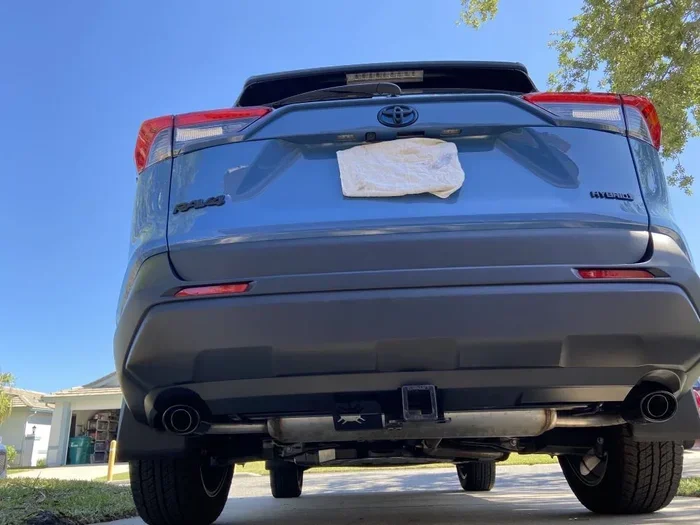
The easiest way to put a Class 3 hitch on a RAV4 is to have the factory towing package. This package is designed by Toyota engineers to handle the weight and stress of towing. It includes a Class 3 hitch receiver, a wiring harness, and sometimes a transmission cooler. The wiring harness connects your RAV4’s brake lights and turn signals to the trailer, which is a legal requirement in most states.
Not all RAV4 trims come with the towing package. The base L and LE trims often leave it as an option, while the XSE and XLE trims may include it standard or offer it as a convenience package. If you’re buying a used RAV4, check the window sticker or ask the dealer for the tow package code. Adding a Class 3 hitch to a RAV4 without the factory towing package is possible, but you’ll need to install the wiring and receiver yourself or pay a shop.
Adding a tow hitch to a Toyota Sienna follows a similar process, but the RAV4 requires specific attention to its lower bumper clearance and frame mounting points. Always use a hitch that is listed for your exact RAV4 model year.
Aftermarket Hitch Options
If your RAV4 doesn’t have the factory towing package, an aftermarket Class 3 hitch is a great solution. Brands like Curt, Draw-Tite, and Reese make bolt-on hitches that don’t require cutting or welding. These hitches come with all the necessary hardware and often include a wiring harness adapter for easy connection to the vehicle’s electrical system.
When shopping for an aftermarket hitch, look for one that is specifically rated for your RAV4’s year and model. Using a universal hitch can lead to improper fit and safety issues. A proper RAV4 trailer hitch will align with the frame mounting points and provide the correct drop or rise for level towing.
Quick Tip: Choose a hitch that includes a wiring harness with a plug-and-play connector. This saves time and ensures your trailer lights work correctly from day one.
Installation Steps Overview
Installing a Class 3 hitch on a RAV4 is a weekend project for most DIYers. Here’s the basic process:
- Gather your tools: socket set, torque wrench, wiring kit, and the hitch hardware.
- Remove the rear bumper or fascia if it blocks access to the frame mounting points.
- Position the hitch receiver against the frame brackets and mark the bolt holes.
- Drill pilot holes if needed and secure the hitch with the provided bolts.
- Torque all bolts to the manufacturer’s specification. This is critical for safety.
- Install the wiring harness and route it along the undercarriage to the rear lamp connections.
- Connect the wiring to the vehicle’s electrical system and test all trailer lights.
- Install the ball mount and trailer ball, then check the height with a trailer coupled.
While the steps look simple, a certified mechanic can ensure the hitch is aligned correctly and that the wiring doesn’t interfere with the exhaust or fuel lines. If you’re not comfortable working under the car, a professional installation is worth the peace of mind.
Key Takeaways
- Factory towing package: The easiest and safest route for RAV4 towing.
- Aftermarket hitch: A viable option if your RAV4 lacks the factory package.
- Proper installation: Torque specs and wiring are critical for safety.
Weight Ratings and Safety Considerations
Gross Trailer Weight vs Tongue Weight
Understanding the difference between gross trailer weight (GTW) and tongue weight is essential. GTW is the total weight of the loaded trailer. Tongue weight is the downward force the trailer puts on the hitch ball. As a rule, tongue weight should be 10 to 15 percent of the GTW. A Class 3 hitch is rated for 6,000 pounds GTW, so tongue weight is typically 600 to 900 pounds.
The RAV4’s tongue weight capacity is around 350 to 500 pounds depending on the year. This means you should not load a trailer to the full 6,000-pound GTW if the tongue weight exceeds the RAV4’s limit. Overloading the tongue can cause the trailer to sway and make the RAV4 unstable. Always distribute cargo evenly and use a weight distribution hitch if needed.
RAV4 Payload Capacity
Payload capacity is the weight of passengers and cargo inside the vehicle. It’s different from towing capacity. The RAV4’s payload is typically around 1,000 to 1,200 pounds. This number includes the weight of the driver, passengers, gear, and the tongue weight of the trailer. If your RAV4 is already loaded with four adults and their luggage, your available towing capacity drops significantly.
Just as a regular car can carry a limited payload, the RAV4’s payload must account for the hitch weight and ball mount. Always subtract the hitch and ball weight from your payload calculation before loading the trailer.
Braking Requirements for Trailers
If your trailer exceeds 1,500 pounds GTW, many states require a trailer brake controller. A Class 3 hitch often pairs with trailers that need brakes. There are two main types: inertial brake controllers and proportional brake controllers. Inertial controllers use a pendulum to detect deceleration and apply the trailer brakes. Proportional controllers match the braking force to the vehicle’s braking intensity, which is smoother and safer.
Quick Tip: Check your state’s laws regarding trailer brakes before towing. Some states require brakes on any trailer over 1,000 pounds, while others set the threshold at 1,500 or 3,000 pounds.
The RAV4 can be equipped with a brake controller wiring harness from the factory or as an aftermarket add-on. This harness plugs into the vehicle’s electrical system and sends signal to the trailer brake controller mounted on the dashboard.
Expert Insight: According to towing experts, the most common mistake is assuming the hitch alone determines towing capacity. The vehicle’s engine, transmission, and frame all play a role. The RAV4’s towing package is engineered to handle the heat and stress of towing, so always use it if you plan to tow regularly.
Common Mistakes When Installing a Class 3 Hitch on a RAV4
Overlooking the Wiring Harness
The wiring harness connects your RAV4’s brake lights and turn signals to the trailer. Without it, other drivers can’t see when you’re slowing down or turning, which is dangerous. Some hitches come with a wiring harness included, but others require a separate purchase. Always verify what’s in the box before you start the installation.
Quick Tip: Test all trailer lights before hitting the road. A simple trailer light tester can save you from a ticket or an accident. Plug the harness in, walk around the trailer, and check the brake lights, turn signals, and running lights.
Ignoring Payload Limits
Adding a hitch and ball mount adds weight to the vehicle. The RAV4’s payload must account for the hitch weight, ball mount, and any cargo in the trailer. If your RAV4 is already loaded with passengers and gear, you may have less capacity for towing. Always subtract the hitch and ball weight from your payload.
Exceeding payload can damage the suspension, brakes, and tires. It also affects handling and braking distance. The RAV4 is a capable SUV, but it has limits. Respect them and you’ll have a safe towing experience.
Using the Wrong Ball Mount
Ball mounts come in different rise and drop sizes. If the trailer is not level, towing can be dangerous. A trailer that’s nose-up puts too much weight on the rear of the RAV4 and lifts the front axle, reducing steering control. A trailer that’s nose-down puts too much weight on the hitch and can cause the RAV4 to sag.
Quick Tip: Measure from the ground to the bottom of the trailer coupler and compare it to the hitch receiver height. The difference determines the ball mount drop or rise you need. A level trailer is a safe trailer.
A Class 3 hitch uses a 2-inch ball, which is the standard for most trailers. Make sure the ball size matches the trailer coupler. Using a 1-7/8 inch ball on a 2-inch coupler can cause the trailer to pop off, which is a serious safety hazard.
Key Takeaways
- Wiring harness: Essential for trailer light operation and safety.
- Payload limits: Hitch weight counts toward your RAV4’s payload capacity.
- Ball mount selection: A level trailer prevents sway and improves handling.
Expert Tips for RAV4 Towing
Choose the Right Ball Size
A Class 3 hitch uses a 2-inch ball. Most trailers use a 2-inch ball, but some smaller trailers use a 1-7/8 inch ball. Always match the ball size to the trailer coupler. A 2-inch ball with a 2-inch coupler is the standard for Class 3 towing. If you’re using a cargo carrier or bike rack that attaches to the hitch receiver, the 2-inch receiver is the universal size.
Regular Maintenance Checks
Towing puts extra stress on your RAV4, so regular maintenance is important. Here’s a quick checklist:
- Check hitch bolts for tightness before every trip.
- Inspect the wiring harness for frayed wires or corrosion.
- Grease the ball mount and trailer ball to prevent wear.
- Check tire pressure on both the RAV4 and the trailer.
- Verify that the trailer brakes are functioning properly.
A loose hitch bolt can cause the trailer to detach. A 5-minute inspection before you leave can prevent a catastrophic failure. Make it a habit and your RAV4 will reward you with years of safe towing.
Towing with a RAV4 Hybrid
The RAV4 Hybrid has a slightly different towing setup. The hybrid battery adds weight, which can affect payload capacity. The RAV4 Hybrid’s towing capacity is typically 5,000 pounds with the towing package, the same as the gas model. However, the added battery weight means you have less payload for passengers and gear.
If you have a RAV4 Hybrid, make sure the towing package includes the proper wiring and cooling for the hybrid system. The hybrid powertrain handles towing well, but you should avoid towing at maximum capacity for long distances, especially in hot weather. Let the transmission cool down periodically if you’re towing in mountainous terrain.
Expert Insight: Hybrid models can tow, but the added battery weight means you have less payload for passengers and gear. Plan accordingly and don’t overload your RAV4 Hybrid.
Final Verdict: Is a Class 3 Hitch Worth It for a RAV4?
So, can you put a Class 3 hitch on a RAV4? The answer is a definitive yes. A Class 3 hitch expands your RAV4’s towing capability and gives you the confidence to haul trailers, boats, and cargo carriers. The RAV4’s max towing capacity of 5,000 pounds is well within the Class 3 hitch’s 6,000-pound rating, providing a safe margin. Whether you choose the factory towing package or an aftermarket hitch, the key is proper installation and respect for weight limits.
The RAV4 is a versatile SUV that can do more than just commute. With the right hitch setup, it becomes a capable towing machine for weekend adventures. Just remember to check your model year, install the wiring harness, and stay within the payload and towing limits. A Class 3 hitch on a RAV4 is a smart investment for anyone who loves to explore.
In short, Can You Put A Class 3 Hitch On A RAV4? Yes, and with the right setup, it’s a game-changer for your towing adventures.
Conclusion
Installing a Class 3 hitch on a Toyota RAV4 is entirely possible and can unlock a world of towing potential. The RAV4’s towing capacity, combined with a properly rated Class 3 hitch, gives you a safe and reliable setup for hauling trailers and cargo. Always use the factory towing package if your RAV4 has it, and if you go aftermarket, choose a hitch that matches your specific model year. Pay attention to wiring, payload limits, and ball mount selection, and you’ll enjoy worry-free towing for years to come.
Can You Put A Class 3 Hitch On A RAV4? Yes, and now you know exactly how to do it right. Grab your tools, follow the steps, and hit the road with confidence.
Frequently Asked Questions
Can a RAV4 tow with a Class 3 hitch without the towing package?
You can install a Class 3 hitch without the towing package, but you’ll need to add the wiring harness yourself. The RAV4’s max towing capacity still depends on the engine and model year. Without the factory towing package, you may not have the proper wiring or cooling for sustained towing, so it’s best to use the package whenever possible.
What is the difference between a Class 2 and Class 3 hitch on a RAV4?
A Class 2 hitch is rated for up to 3,500 pounds GTW and uses a 1-1/4 inch receiver. A Class 3 hitch is rated for up to 6,000 pounds GTW and uses a 2-inch receiver. The RAV4 can use a Class 3 hitch when equipped with the towing package, giving you more towing capability and compatibility with larger trailers.
Does the RAV4 Hybrid have a different towing capacity?
The RAV4 Hybrid has a towing capacity of up to 5,000 pounds with the towing package, similar to the gas model. However, the hybrid battery adds weight, which reduces payload capacity. Always check your specific model year and trim for the exact towing and payload numbers.
Do I need a brake controller for a Class 3 hitch on a RAV4?
If your trailer weighs more than 1,500 pounds GTW, most states require a trailer brake controller. A Class 3 hitch is often used with trailers in that weight range. You can install an aftermarket brake controller or use a factory-installed one if your RAV4 has the towing package.
Can I tow a boat with a RAV4 using a Class 3 hitch?
Yes, a RAV4 with a Class 3 hitch can tow a small to mid-size boat. The 2-inch receiver and 6,000-pound GTW rating provide plenty of capacity for most aluminum and fiberglass boats. Just make sure the boat’s weight and tongue weight stay within the RAV4’s limits, and always use the proper wiring and trailer brakes.
How much does it cost to install a Class 3 hitch on a RAV4?
Aftermarket Class 3 hitches range from $150 to $400 for the hitch itself. Professional installation typically costs $100 to $300 depending on the shop and any wiring needed. If you have the factory towing package, the hitch is already installed, and you may only need to add a ball mount and wiring harness for a few extra dollars.