How to Jump-Start a Honda Civic – Simple Steps for Beginners
Jump-starting a Honda Civic is easier than most people think and can save you from a frustrating roadside situation. This guide walks you through the entire jump start car process safely, from preparing your Honda Civic battery to connecting the jumper cables correctly. Follow our simple steps and you’ll be back on the road in no time.
There’s nothing worse than turning the key and hearing nothing but silence. Your Honda Civic won’t start, and suddenly your whole day feels off track. A dead battery is one of the most common car problems, and it can happen to anyone at any time. The good news? Jump-starting a Honda Civic is a skill anyone can learn.
Whether you’re a complete beginner or just need a quick refresher, this guide covers everything you need to know. We’ll walk you through each step in plain language, share important safety tips, and help you avoid the mistakes that trip up so many drivers. By the end, you’ll feel confident handling a dead battery situation on your own.
Jump start car procedures have changed very little over the decades, but safety standards have improved. That’s why we focus on the safest, most reliable method for your Honda Civic. No guesswork, no confusion, just clear instructions you can follow even if you’ve never done this before.
Key Takeaways
- Safety first: Always wear gloves and follow precautions before touching any cables or battery terminals.
- Correct cable order matters: Connecting positive and negative cables in the wrong sequence can damage your electrical system.
- Know your battery location: Some Honda Civic models have the battery under the hood while others may have it in the trunk.
- Alternative options exist: A portable jump starter or roadside assistance can help if you don’t have another vehicle nearby.
- Prevent future problems: Regular car battery maintenance can reduce the chances of a dead battery.
- Hybrid models need special care: If you own a hybrid Honda Civic, the jump start procedure differs slightly from standard models.
- Timing is everything: Let the donor car run for a few minutes before attempting to start your Honda Civic.
📑 Table of Contents
- Understanding Your Honda Civic Battery
- What You’ll Need to Jump-Start a Honda Civic
- Step-by-Step Guide to Jump-Starting Your Honda Civic
- Common Mistakes to Avoid When Jump-Starting
- Alternative Methods When You Don’t Have Another Car
- How to Prevent Future Battery Problems
- Special Considerations for Honda Civic Hybrid Models
- When to Seek Professional Help
- Conclusion
Understanding Your Honda Civic Battery
Before you try to jump-start anything, it helps to understand what you’re working with. The Honda Civic battery is the heart of your car’s electrical system. It powers the starter motor, lights, radio, and every electronic component when the engine is off.
Where Is the Battery Located?
In most Honda Civic models, the battery sits under the hood near the front of the engine bay. However, some newer models and certain trim levels place the battery in the trunk or under a rear seat. Check your owner’s manual to find the exact location. Knowing where the battery is before you need it is a simple step that saves a lot of stress.
What Causes a Dead Battery?
Several things can drain your battery and leave you stranded:
- Leaving lights or accessories on overnight
- Extreme cold weather reducing battery efficiency
- An old battery that needs replacement
- A faulty alternator not charging properly
- Corrosion building up on the battery terminals
Understanding the cause helps you prevent it from happening again. If your battery keeps dying, it might be time for a replacement or a check of your car’s electrical system.
What You’ll Need to Jump-Start a Honda Civic
Gathering your tools before you start is a smart move. You don’t want to be standing in a parking lot searching for what you need. Here’s a simple checklist of everything required for a successful jump start procedure.
Jumper Cables
A good set of jumper cables is the most essential tool. Look for cables that are at least 12 feet long with thick gauges (4 or 6 AWG). Cheap, thin cables can overheat and fail mid-process. Quality cables make the job safer and faster.
A Donor Vehicle
You’ll need another car with a working battery. The donor car should have a similar voltage system, typically 12 volts. Most modern cars fit this requirement, but it’s worth double-checking. If you’re driving a hybrid, you might want to check whether a hybrid can jump-start another car for reference on hybrid-to-hybrid jump starts.
Safety Gear
Don’t skip protective equipment. Wear rubber gloves and safety glasses to protect yourself from sparks or acid exposure. Keep a clean cloth nearby to wipe any corrosion off the terminals.
Step-by-Step Guide to Jump-Starting Your Honda Civic
Now for the part you’ve been waiting for. Follow these steps carefully and in the correct order. Rushing through this process can lead to sparks, damage, or even injury.
Step 1: Position the Cars Correctly
Park the donor car close to your Honda Civic, but make sure they don’t touch. Both cars should be in park (or neutral for manual transmissions) with the engines off. Turn off all accessories in both vehicles, including the radio, lights, and air conditioning. This reduces the electrical load and helps prevent surges.
Step 2: Open the Hoods and Locate the Batteries
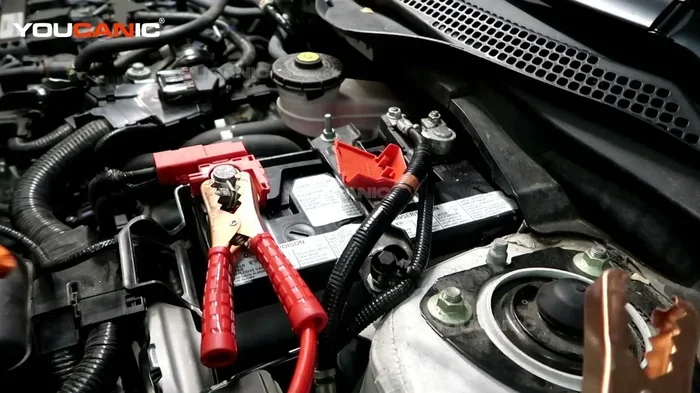
Pop the hoods on both cars. Find the battery on your Honda Civic and identify the positive and negative terminals. The positive terminal is usually marked with a plus sign and often has a red cover or cable. The negative terminal has a minus sign and typically a black cable. Clean any visible corrosion from the terminals with a cloth before proceeding.
Step 3: Connect the Jumper Cables in the Right Order
This is the most critical part. Connecting cables in the wrong order can cause serious damage to both vehicles. Follow this sequence exactly:
- Red clamp to dead battery positive terminal on the Honda Civic
- Red clamp to donor car positive terminal
- Black clamp to donor car negative terminal
- Black clamp to an unpainted metal surface on the Honda Civic, away from the battery
Never connect the black clamp directly to the dead battery’s negative terminal. This reduces the risk of sparking near the battery, which could ignite hydrogen gas. Always ground the final black clamp on a metal part of the engine block or frame.
Step 4: Start the Donor Car and Wait
Start the donor vehicle and let it idle for about 3 to 5 minutes. This allows the alternator in the donor car to send power to your dead battery. Don’t rev the engine, just let it run at a normal idle speed. During this time, you’re essentially giving your Honda Civic’s battery a boost.
Step 5: Try Starting Your Honda Civic
After waiting a few minutes, turn the key or press the start button on your Honda Civic. If the engine turns over and starts, great! If it doesn’t start on the first try, don’t keep cranking. Wait another 2 to 3 minutes and try again. Repeated cranking can overheat the starter motor.
Step 6: Disconnect the Cables in Reverse Order
Once your Honda Civic is running, disconnect the cables in the exact reverse order of how you connected them:
- Black clamp from the Honda Civic’s metal surface
- Black clamp from the donor car negative terminal
- Red clamp from the donor car positive terminal
- Red clamp from the Honda Civic positive terminal
Remove each clamp carefully and keep them from touching each other or any metal surfaces. Let your Honda Civic’s engine run for at least 15 to 20 minutes to recharge the battery fully.
Common Mistakes to Avoid When Jump-Starting
Even with good instructions, mistakes happen. Here are the most common errors people make when attempting a jump start car procedure, and how to avoid them.
Connecting Cables in the Wrong Order
This is the number one mistake. Connecting the black clamp to the dead battery’s negative terminal first can create a spark right next to the battery. Always follow the positive-positive-negative-ground sequence we outlined above.
Letting the Clamps Touch
Never let the red and black cable clamps touch each other while any clamp is still attached to a battery terminal. This creates a short circuit that can melt cable insulation or damage the electrical systems in both cars.
Forgetting to Turn Off Accessories
Leaving the radio, headlights, or phone chargers on during the jump-start process puts extra strain on the electrical system. Turn everything off in both cars before you begin.
Not Letting the Donor Car Run Long Enough
Some people try to start the dead car immediately after connecting the cables. This rarely works and puts unnecessary stress on the donor car’s battery. Be patient and wait at least 3 minutes before attempting to start your Honda Civic.
Ignoring Battery Age and Condition
If your battery is more than 4 to 5 years old, a jump start might only be a temporary fix. The battery could be failing and may need replacement soon. After a successful jump start, have your battery tested at an auto parts store or mechanic. Many stores offer free battery testing.
Alternative Methods When You Don’t Have Another Car
What if you’re alone and don’t have a donor vehicle nearby? Don’t panic. You have several options for getting your Honda Civic started again.
Portable Jump Starter
A portable jump starter is a compact battery pack you can keep in your trunk. These devices are affordable and incredibly convenient. They work just like another car’s battery and connect directly to your Honda Civic’s battery terminals. Some models even include built-in USB chargers for your phone.
Roadside Assistance
If you have a roadside assistance membership, call them for help. They can send a technician with a portable jump pack or tow you to a nearby service center. This is a great option if you’re uncomfortable doing the jump start yourself or if the battery is completely dead.
Push Starting (Manual Transmissions Only)
If your Honda Civic has a manual transmission, you can push-start it. Get the car rolling to about 5 to 10 mph, press the clutch pedal all the way down, and put the car in second gear. Release the clutch quickly, and the engine should turn over and start. This method doesn’t work with automatic transmissions.
How to Prevent Future Battery Problems
Jump-starting your Honda Civic once is manageable, but you don’t want to make it a habit. Prevention is always better than cure when it comes to car battery maintenance.
Regular Inspections
Every few months, pop the hood and check your battery terminals. Look for white or greenish buildup, which indicates corrosion. Clean it off with a mixture of baking soda and water and a small wire brush. Also check that the cables are tight and secure.
Drive Your Car Regularly
Your Honda Civic’s alternator charges the battery while you drive. If your car sits unused for long periods, the battery slowly loses its charge. Try to drive your car at least once a week for 20 to 30 minutes to keep the battery healthy.
Replace Old Batteries Promptly
Most car batteries last 3 to 5 years. If your battery is approaching that age, consider replacing it proactively rather than waiting for it to fail completely. A new battery costs between $100 and $200 for most Honda Civic models and gives you peace of mind.
Watch for Warning Signs
Your car often gives you hints before a battery dies completely. Slow cranking when you turn the key, dim headlights when idling, or a clicking sound without the engine starting are all warning signs. Address these early and you can avoid being stranded.
Special Considerations for Honda Civic Hybrid Models
If your Honda Civic is a hybrid model, the jump start procedure has a few extra considerations. Hybrid vehicles have both a conventional 12-volt battery and a high-voltage hybrid battery pack.
The 12-volt battery in a hybrid is what powers the starter and electrical systems. When jump-starting a hybrid Honda Civic, you follow the same basic steps as a regular model. However, never attempt to jump-start the high-voltage hybrid battery itself. That system operates at several hundred volts and should only be handled by trained technicians.
If you’re unsure whether your Honda Civic is a hybrid or need guidance specific to hybrid models, checking resources on hybrid battery care can be helpful. For related information on hybrid systems, you might find it useful to learn how to make your hybrid battery last longer.
Always refer to your owner’s manual for model-specific instructions. Honda includes detailed jump-start diagrams for each Civic variant, and following those instructions ensures you stay safe and avoid warranty issues.
When to Seek Professional Help
Most of the time, jump-starting a Honda Civic goes smoothly and you’re back on the road within 30 minutes. But there are situations where professional help is the right call.
If you’ve attempted the jump start two or three times and the engine still won’t turn over, stop trying. Repeated failed attempts can damage the starter motor or further drain the donor car’s battery. Similarly, if you notice a strong smell of sulfur or rotten eggs coming from the battery area, that indicates a leaking battery that needs immediate professional attention.
Visible damage to the battery case, cracks, or bulging are also signs that the battery needs replacement, not just a jump start. A professional mechanic can test your entire electrical system and recommend the right solution.
Finally, if you’re ever unsure about any step in the process, don’t hesitate to call for help. There’s no shame in asking for assistance, and it’s always better to be safe than sorry when dealing with car batteries and electrical systems.
Conclusion
Jump-starting a Honda Civic doesn’t have to be intimidating. With the right tools, a little knowledge, and careful attention to safety, you can handle this common situation like a pro. Remember the cable connection order, take your time, and don’t rush through the steps.
The key to success is preparation. Keep a set of jumper cables in your trunk, know where your battery is located, and understand the basic process before you ever need it. Regular car battery maintenance and timely replacement will reduce your chances of dealing with a dead battery in the first place.
Next time your Honda Civic won’t start, take a deep breath and follow these steps. You’ve got this. And if you ever want to learn more about related topics like jump-starting other hybrid vehicles or understanding your car’s electrical system, there’s always more to explore.
Stay prepared, stay safe, and keep your Honda Civic running strong for years to come.
Frequently Asked Questions
Can I jump-start a Honda Civic by myself without another car?
Yes, you can use a portable jump starter, which is a small battery pack you keep in your trunk. These devices connect directly to your Honda Civic’s battery terminals and provide enough power to start the engine. They are affordable, easy to use, and work without needing another vehicle nearby.
How long should I let the donor car run before starting my Honda Civic?
Let the donor car idle for 3 to 5 minutes after connecting the cables. This gives your Honda Civic’s battery time to receive a charge from the donor car’s alternator. Waiting a few minutes increases the chances of a successful start on your first attempt.
Is it safe to jump-start a Honda Civic in the rain?
Yes, it is generally safe as long as you take proper precautions. Keep the cable clamps as dry as possible and avoid standing in puddles. The jumper cables are insulated, so light rain won’t cause electrical issues. However, if conditions are severe, it’s better to wait for shelter or call for roadside assistance.
What should I do if my Honda Civic starts but the battery keeps dying?
A battery that keeps dying after a jump start usually indicates a deeper problem. The alternator might not be charging the battery properly, or the battery itself may be old and worn out. Have a mechanic test both the battery and alternator to identify the root cause and prevent repeated failures.
Can I use any set of jumper cables to jump-start my Honda Civic?
Not all jumper cables are equal. Use cables that are at least 12 feet long with a thick gauge of 4 or 6 AWG. Thin or cheap cables can overheat and fail during the jump-start process. Quality cables ensure a safe, reliable power transfer between the donor car and your Honda Civic.
Do I need to reset anything after jump-starting my Honda Civic?
In most cases, no reset is needed after a jump start. Your Honda Civic’s computer systems should return to normal once the engine is running and the battery is recharging. However, if you notice warning lights on the dashboard after a jump start, it’s a good idea to have the electrical system checked by a professional.
=== INTERNAL LINKS ===