How to Check Tire Pressure on Volkswagen the Easy Way
Checking your Volkswagen tire pressure is one of the simplest maintenance tasks you can do. It keeps you safe, improves fuel economy, and extends tire life. This guide walks you through every step, from finding the recommended PSI to resetting your TPMS light. You do not need a mechanic or expensive tools.
Knowing how to check tire pressure on Volkswagen models is a skill every owner should have. It takes just a few minutes and costs almost nothing. Yet it makes a huge difference in how your car drives, how much fuel you use, and how long your tires last.
Many Volkswagen drivers skip this simple task until the tire pressure light comes on. By then, the tires may already be underinflated enough to cause problems. This guide shows you exactly how to check your tire pressure the easy way, every single time.
Whether you drive a Jetta, Golf, Tiguan, Passat, or any other Volkswagen, the basic process is the same. We will cover everything from finding your recommended PSI to using a gauge and resetting your TPMS. Let us get started.
Key Takeaways
- Find the correct PSI: Your Volkswagen’s recommended tire pressure is listed on the driver-side door jamb or owner’s manual.
- Check when tires are cold: Always measure tire pressure after the car has been parked for at least three hours for the most accurate reading.
- Use a quality tire pressure gauge: A digital or dial gauge gives you precise readings compared to gas station air pumps.
- Reset your TPMS after filling: You will need to reset the tire pressure monitoring system after adding air to your tires.
- Check tire pressure monthly: Regular checks prevent uneven wear, improve gas mileage, and keep you safe on the road.
- Do not ignore the tire pressure light: A flashing or steady warning light means you should check your tires right away.
📑 Table of Contents
- Why Checking Tire Pressure Matters for Your Volkswagen
- Where to Find Your Volkswagen Recommended Tire Pressure
- How to Check Tire Pressure on Volkswagen Step by Step
- Understanding the Tire Pressure Monitoring System (TPMS) in Your Volkswagen
- How to Reset the TPMS After Checking Tire Pressure
- Common Tire Pressure Mistakes Volkswagen Owners Make
- When to Seek Professional Help for Tire Pressure Issues
- Final Thoughts on Checking Tire Pressure on Volkswagen
Why Checking Tire Pressure Matters for Your Volkswagen
Tire pressure might seem like a small detail. But it affects almost every part of how your Volkswagen performs. Underinflated tires create more rolling resistance, which means your engine works harder. This leads to worse fuel economy and uneven tire wear.
Overinflated tires are just as bad. They reduce the contact patch with the road, which hurts traction and ride comfort. They also wear out the center of the tread faster than the edges.
Here is why regular tire pressure checks matter:
- Safety: Properly inflated tires grip the road better, especially in wet or icy conditions.
- Fuel Economy: The Department of Energy says correctly inflated tires can improve gas mileage by up to 3 percent.
- Tire Life: Underinflated tires wear out up to 50 percent faster than properly inflated ones.
- Ride Comfort: The right pressure gives you a smoother, more comfortable ride.
- Handling: Your Volkswagen handles best when the tires have the correct amount of air.
Many drivers do not realize that temperature changes affect tire pressure too. On a hot day, the air inside your tires expands and the pressure goes up. On a cold day, it contracts and the pressure drops. This is why checking your tires regularly is so important. If you want to learn more about how heat affects your vehicle, read our article on how hot a car can get in the sun.
Where to Find Your Volkswagen Recommended Tire Pressure
Every Volkswagen model has a specific recommended tire pressure. You need to find this number before you check or add air. The good news is it is easy to locate.
Check the Driver-Side Door Jamb
The most common place to find your Volkswagen tire pressure specifications is on a sticker inside the driver’s door. Open the door and look along the frame or the door itself. You will see a sticker or plate with several numbers. Look for the one labeled “Tire Pressure.”
This sticker usually lists two numbers: one for the front tires and one for the rear tires. Some Volkswagen models use the same pressure all around, while others have different specs for the front and rear. Make sure you note the correct number for each axle.
Check the Owner’s Manual
If you cannot find the door jamb sticker, your owner’s manual has the information. Look in the section about tires or maintenance. The manual will also tell you where the tire pressure sensor is located for your specific model.
Do Not Use the Number on the Tire Sidewall
This is a common mistake. The number printed on the tire sidewall is the maximum pressure the tire can handle, not the recommended pressure for your Volkswagen. Always use the number from the door jamb or owner’s manual instead.
How to Check Tire Pressure on Volkswagen Step by Step
Now that you know your recommended PSI, here is the simple process for checking your tire pressure. You can do this at home with a basic gauge or at a gas station.
Step 1: Check Tires When They Are Cold
The best time to check your tire pressure is in the morning or after the car has been parked for at least three hours. Driving heats up the tires and the air inside them, which raises the pressure reading. A warm tire will give you a falsely high number.
If you must check your tires after driving, wait at least 30 minutes and subtract about 3 to 4 PSI from the reading to account for the heat.
Step 2: Remove the Valve Stem Cap
Each tire has a small valve stem with a cap on it. Twist the cap counterclockwise to remove it. Set the cap aside in a safe place so you do not lose it.
Step 3: Press the Gauge Firmly onto the Valve Stem
Place your tire pressure gauge squarely onto the valve stem. Press down firmly until you hear no more air escaping. If you use a digital gauge, the reading will appear on the screen. If you use a dial or pencil gauge, the needle or bar will extend to show the pressure.
Hold the gauge steady and read the number. Compare it to your Volkswagen’s recommended PSI.
Step 4: Add or Release Air as Needed
If the pressure is too low, use an air pump to add air. Most gas stations have air pumps with a built-in gauge. If the pressure is too high, press the small pin inside the valve stem to release a little air. Then recheck the pressure.
Step 5: Replace the Valve Stem Cap
Once the pressure is correct, put the valve stem cap back on. This small cap keeps dirt and moisture out of the valve, which helps prevent slow leaks.
Quick Tips for Accurate Readings
- Check all four tires, including the spare, every time.
- Use the same gauge each time for consistency.
- Do not rely on the gauges at gas stations alone. They are often inaccurate.
- Keep a small tire pressure gauge in your glove box for quick checks.
- Check your tire pressure at least once a month.
Understanding the Tire Pressure Monitoring System (TPMS) in Your Volkswagen
Most modern Volkswagens come equipped with a tire pressure monitoring system, commonly known as TPMS. This system uses sensors inside each tire to monitor the air pressure and alert you when it drops below a safe level.
What the TPMS Light Looks Like
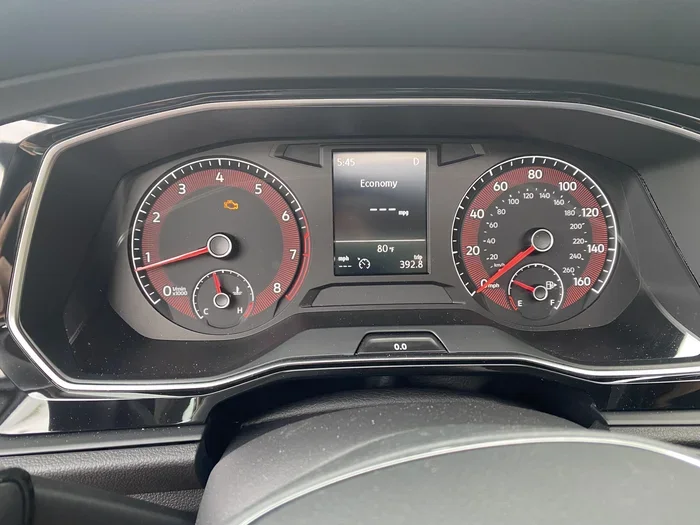
The TPMS warning light looks like a horseshoe shape with an exclamation point in the center. It appears on your dashboard when one or more tires are significantly underinflated.
If the light comes on and stays solid, at least one tire is low on air. If the light flashes, there may be a problem with the TPMS system itself, such as a faulty tire pressure sensor. In that case, you might want to read our guide on fixing your own tire pressure sensor for helpful tips.
Can You Check Tire Pressure on the Dashboard?
Some Volkswagen models display the individual tire pressure readings right on the dashboard or instrument cluster. This feature makes it very easy to see which tire is low without even getting out of the car. However, not all models have this display. Check your owner’s manual to see if your specific Volkswagen has a digital tire pressure readout.
For models that do not show pressure readings on the screen, the TPMS light is your only warning until the pressure gets dangerously low. This is why manual checks are still important even if your car has TPMS.
How to Reset the TPMS After Checking Tire Pressure
Once you have checked and corrected your tire pressure, you will need to reset the TPMS light. The reset process varies slightly depending on your Volkswagen model and year, but the general steps are similar.
First, make sure all tires are at the correct pressure. Then, with the engine running, locate the TPMS reset button. On most Volkswagens, this button is located beneath the steering column or on the left side of the dashboard.
Press and hold the reset button until the TPMS light on the dashboard blinks three times. Release the button and start driving. The system should recalibrate within a few minutes of driving.
If the light does not reset or comes back on, the tire pressure may still be off, or there could be a sensor issue. In that case, you may need to visit a mechanic or try a diagnostic tool.
For more details on the reset process, read our article on whether you need to reset TPMS after filling air.
Common Tire Pressure Mistakes Volkswagen Owners Make
Even the best-intentioned car owners make mistakes when it comes to tire pressure. Here are the most common ones to avoid:
Only Checking Tires When the Light Comes On
By the time the TPMS light turns on, your tires are already significantly underinflated. This means they have been driving on low pressure for a while, which can cause damage. Make checking your tires a regular habit instead of waiting for a warning.
Ignoring the Spare Tire
Your spare tire also needs air. A flat spare is useless when you need it most. Check the spare tire pressure at least twice a year.
Overinflating to the Maximum PSI on the Tire Sidewall
The number on the tire sidewall is the maximum, not the target. Overinflating makes the ride harsh and reduces traction. Always use the recommended pressure from the door jamb sticker.
Forgetting to Check All Four Tires
It is easy to check only the front tires and forget the rears. All four tires need to be at the correct pressure for safe driving and optimal performance.
Not Accounting for Temperature Changes
As temperatures drop, tire pressure decreases. In winter, you may need to add air more frequently. Conversely, hot summer days can cause pressure to rise slightly. Understanding this seasonal effect helps you stay on top of your maintenance.
When to Seek Professional Help for Tire Pressure Issues
Most of the time, checking and adjusting tire pressure is a simple DIY task. But there are situations where you should see a professional.
If your TPMS light keeps coming back on after you reset it, one of the tire pressure sensors may be failing. Sensors have batteries that eventually die, usually after five to seven years. Replacing a sensor is a job best left to a qualified technician.
If you notice a slow leak that keeps losing air, the valve stem may be damaged or the tire may have a puncture. A tire shop can patch or plug small punctures and replace damaged valve stems quickly.
Also, if you are unsure about the correct pressure for your specific Volkswagen model, a quick visit to any tire shop or dealership can set you straight. They have the tools and knowledge to get it right.
Final Thoughts on Checking Tire Pressure on Volkswagen
Checking tire pressure on your Volkswagen does not have to be complicated. With a simple gauge and a few minutes of your time each month, you can keep your tires in great shape. Proper tire pressure improves safety, saves fuel, and helps your tires last longer.
Make it a routine. Check your tires on the first of every month or every time you fill up the gas tank. Your Volkswagen will reward you with better performance and a smoother ride. And remember, a few minutes of prevention today can save you from costly tire replacements and unsafe driving conditions tomorrow.
Take a few minutes right now to find your recommended tire pressure and grab a gauge. Your future self and your tires will thank you.
Frequently Asked Questions
How often should I check tire pressure on my Volkswagen?
You should check your tire pressure at least once a month. Temperature changes during the seasons can also affect pressure, so it is a good idea to check more often in winter and summer. Making it a monthly habit keeps your tires in great shape.
What is the recommended tire pressure for a Volkswagen?
The recommended tire pressure varies by model and year. You can find the exact number on the driver-side door jamb sticker or in your owner’s manual. Never use the number on the tire sidewall, as that is the maximum pressure, not the recommended pressure.
Can I use the gas station air pump to check tire pressure?
Yes, you can, but gas station gauges are often inaccurate. It is best to use your own digital or dial tire pressure gauge for the most reliable reading. You can still use the gas station air pump to add air once you know the correct pressure.
Why does my tire pressure light come on even when the tires look fine?
The TPMS light can come on due to a drop in pressure that is not visible to the naked eye. Temperature changes, slow leaks, or a faulty tire pressure sensor can all trigger the light. Check your tire pressure with a gauge to find the real cause.
Do I need to reset the TPMS after adding air to my tires?
Yes, in most Volkswagen models you need to reset the TPMS after adjusting tire pressure. The reset button is usually located beneath the steering column. Press and hold it until the dashboard light blinks three times, then drive for a few minutes to recalibrate the system.
Is it safe to drive with the tire pressure light on?
It is not safe to drive with the TPMS light on for an extended period. Low tire pressure reduces traction, handling, and braking performance. Check your tire pressure as soon as the light comes on and inflate the tires to the correct level before driving long distances.
=== CONCLUSION ===
Checking tire pressure on Volkswagen is one of the easiest and most impactful things you can do as a car owner. It takes just a few minutes and requires nothing more than a basic tire pressure gauge and a few minutes of your time. Regular checks keep you safe, save you money on fuel, and help your tires last longer.
Remember to always check your tires when they are cold, use the recommended PSI from your door jamb, and reset your TPMS after making any adjustments. Avoid the common mistakes that most drivers make, and do not wait for the warning light to remind you.
Your Volkswagen is built to perform, and properly inflated tires are one of the simplest ways to keep it running at its best. Start your tire pressure routine today, and you will feel the difference every time you get behind the wheel.