How Bugatti Achieves Extreme Speed Like Never Before
Bugatti achieves extreme speed by combining a massive quad-turbo W16 engine with advanced aerodynamics, lightweight materials, and precision engineering. The Chiron Super Sport 300+ broke the 300 mph barrier, proving that hypercar innovation pushes boundaries. From thermal management to tire technology, every detail is built for velocity.
Bugatti has built some of the fastest cars ever made. The Chiron Super Sport 300+ hit over 300 miles per hour. That is a number most people never thought a road-legal car could reach. So how does Bugatti achieve extreme speed? The answer lies in a mix of brute force, smart engineering, and obsessive attention to detail.
Every part of a Bugatti is designed with one goal in mind: go fast. From the engine to the tires, nothing is left to chance. In this article, we will break down exactly how Bugatti pulls off these jaw-dropping speeds. Whether you are a car enthusiast or just curious, you will learn a lot about what makes these machines so special.
Bugatti achieves extreme speed through a combination of raw power, cutting-edge aerodynamics, lightweight construction, and advanced technology. Let us dive into each of these areas and see what makes Bugatti so fast.
Key Takeaways
- Quad-Turbo W16 Engine: The heart of Bugatti’s speed lies in an 8.0-liter engine producing over 1,500 horsepower.
- Advanced Aerodynamics: Active aerodynamics and downforce keep the car stable at extreme velocities.
- Lightweight Materials: Carbon fiber and aluminum construction reduce weight while maintaining strength.
- Thermal Management: Cooling systems handle the intense heat generated at top speeds.
- Specialized Tires and Transmission: Michelin custom tires and a 7-speed dual-clutch gearbox deliver power to the road efficiently.
- Breaking Records: The Chiron Super Sport 300+ became the first production car to exceed 300 mph.
📑 Table of Contents
- The Heart of Speed: The Quad-Turbo W16 Engine
- Aerodynamics: Shaping the Car for Velocity
- Lightweight Construction: Less Weight, More Speed
- Tires and Traction: Sticking to the Road
- Breaking the 300 mph Barrier
- Thermal Management: Keeping Cool at Extreme Speed
- Technology and Innovation: The Brain Behind the Speed
- Common Mistakes People Make About Bugatti Speed
- Quick Tips: What Makes a Car Fast?
- Conclusion
The Heart of Speed: The Quad-Turbo W16 Engine
Everything starts with the engine. Bugatti uses a massive 8.0-liter W16 engine with four turbochargers. This engine is the reason Bugatti cars can produce over 1,500 horsepower. That is more power than most supercars and even some race cars.
What Makes the W16 Engine Special?
The W16 engine is unique. It has 16 cylinders arranged in a W shape. This design fits four banks of cylinders into a compact space. The result is a very powerful engine that still fits inside the car. Four turbochargers feed the engine with air, allowing it to breathe at extreme levels.
Bugatti achieves extreme speed because this engine delivers massive torque from low RPMs. Torque is the twisting force that pushes the car forward. With over 1,180 lb-ft of torque, a Bugatti launches off the line like a rocket. The engine also revs smoothly, which means it can keep producing power for a long time without fading.
To put this in perspective, a NASCAR race car produces around 750 horsepower. A Bugatti Chiron has more than double that. The difference is that a Bugatti does this while being a comfortable, road-legal grand tourer.
Fuel and Power Delivery
Bugatti uses high-performance fuel systems to feed the engine. The fuel injectors spray gasoline at extremely high pressure. This ensures every drop of fuel burns efficiently. When you want to learn more about fueling these powerful machines, check out how you uncap gas for a basic understanding of fuel systems.
The transmission also plays a big role. Bugatti uses a 7-speed dual-clutch automatic gearbox. This transmission shifts gears in milliseconds. You barely even feel the shifts. All that power goes to the wheels without losing much energy.
Aerodynamics: Shaping the Car for Velocity
Power means nothing if the car cannot slice through the air. At high speeds, air resistance becomes the biggest enemy. Bugatti spends years designing the shape of each car to reduce drag and increase downforce.
Active Aerodynamics in Action
Bugatti uses active aerodynamics. This means parts of the car move to adjust airflow. For example, the rear wing on the Chiron changes position depending on speed. At low speeds, it sits flush to reduce drag. At high speeds, it rises to push the car down onto the road.
Downforce is critical. It keeps the car planted at extreme speeds. Without enough downforce, a car can become unstable and even lift off the ground. Bugatti engineers use computer simulations and wind tunnel testing to perfect the aerodynamic shape.
Cooling and Airflow Management
All that speed generates a lot of heat. Cars can get extremely hot when sitting in the sun, but at 300 mph, the heat is on a completely different level. Bugatti uses sophisticated cooling systems with large air intakes and heat exchangers. These systems keep the engine, brakes, and transmission at safe temperatures even during full-speed runs.
The front grille, side vents, and underbody channels all work together. They guide air exactly where it is needed. Every vent, every duct has a purpose. Nothing is there just for looks.
Lightweight Construction: Less Weight, More Speed
Weight is the enemy of speed. The lighter a car is, the faster it can go and the quicker it can stop. Bugatti uses advanced materials to keep weight down while maintaining strength and safety.
Carbon Fiber and Aluminum
The Bugatti Chiron uses a carbon fiber monocoque chassis. This is the same type of structure used in Formula 1 cars. Carbon fiber is incredibly strong but much lighter than steel. The result is a rigid body that weighs less than it should for a car this powerful.
Aluminum is used for the body panels and subframes. It adds strength without adding too much mass. Every component is carefully weighed and optimized. Even the seats and interior trim are designed to be as light as possible.
Why Lightweight Matters for Speed
When a car produces 1,500 horsepower, every extra pound matters. A lighter car accelerates faster, brakes shorter, and handles better. Bugatti engineers obsess over weight savings. They even remove unnecessary sound insulation in certain areas to shave off grams.
For comparison, the body of a standard SUV might weigh over 500 pounds. The entire Bugatti Chiron body shell weighs far less than that, and it is far stronger. This is one of the main reasons Bugatti achieves extreme speed so effectively.
Tires and Traction: Sticking to the Road
All the power in the world means nothing if the tires cannot grip the road. At 300 mph, the tires are under enormous stress. They spin at incredible speeds and face extreme heat and force.
Custom Michelin Tires
Bugatti works closely with Michelin to develop custom tires. These tires are specifically designed for Bugatti’s extreme performance needs. They can handle speeds over 300 mph, which no other production tire could do before.
The tires use a special rubber compound that stays grippy at very high temperatures. The sidewalls are reinforced to handle the massive forces of high-speed driving. Even the tread pattern is optimized for stability at extreme velocity.
All-Wheel Drive System
Bugatti uses an all-wheel-drive system to distribute power evenly. This helps the car maintain traction during acceleration. The system uses sophisticated sensors to adjust power delivery to each wheel in real time. If one wheel starts to slip, the system redirects power instantly.
This technology is a big reason why Bugatti can put so much power down without spinning out. Traction control and stability systems work together with the drivetrain to keep the car pointed in the right direction.
Breaking the 300 mph Barrier
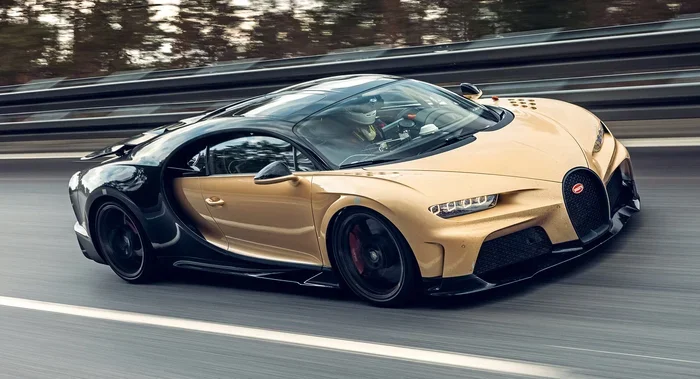
In 2019, the Bugatti Chiron Super Sport 300+ became the first production car to break the 300 mph barrier. The driver, Andy Wallace, hit a top speed of 304.77 mph on a test track in Germany. This was a historic moment for the automotive world.
What Changed for the 300 mph Run?
Bugatti made several modifications for the record attempt. The car received a longer tail section for better aerodynamics. The engine was tuned to produce around 1,578 horsepower. Special tires were developed to handle the extreme speed. The suspension was adjusted for maximum stability.
After the record, Bugatti decided to produce a limited number of Chiron Super Sport 300+ cars for customers. These are the fastest road-legal cars ever sold to the public. They prove that Bugatti achieves extreme speed not just in a one-off test, but in a product you can actually buy.
The Engineering Behind the Record
Every system in the car was pushed to its limit. The cooling system worked harder than ever. The transmission handled enormous stress. The carbon fiber body remained perfectly intact. The record run proved that Bugatti’s engineering is not just theoretical. It works in the real world, at the real limits.
For those interested in how long cars like this last, you might wonder about vehicle longevity. While a Bugatti is built for performance rather than longevity, you can explore how many miles Jeep Wranglers last to understand the difference between performance cars and durable daily drivers.
Thermal Management: Keeping Cool at Extreme Speed
Heat is the silent killer of performance. When a car goes fast, every system generates heat. The engine, transmission, brakes, and even the electronics all produce thermal energy. If not managed properly, this heat can cause failure.
Engine Cooling System
Bugatti uses a complex cooling system with multiple radiators. These radiators are much larger than those found in standard cars. They circulate coolant through the engine block and head to maintain safe operating temperatures. The system is designed to handle sustained high-speed driving, not just short bursts.
Brake Cooling
Brakes generate enormous heat during high-speed driving. Bugatti uses carbon-ceramic brake discs that can withstand extreme temperatures. These discs are much lighter and more durable than traditional steel brakes. Large air ducts channel cool air directly to the brakes, keeping them effective even after repeated hard stops.
Transmission and Differential Cooling
The dual-clutch transmission and rear differential also need cooling. Bugatti uses oil coolers specifically sized for these components. The cooling system ensures that power delivery remains smooth and consistent, even during extended high-speed runs.
Effective thermal management is one of the reasons Bugatti achieves extreme speed reliably. Without proper cooling, the car would overheat and lose power. Every cooling system is engineered to match the performance demands of the car.
Technology and Innovation: The Brain Behind the Speed
Speed is not just about mechanical parts. Electronics and software play a huge role. Bugatti uses advanced technology to monitor and control every aspect of the car’s performance.
Drive Modes and Performance Settings
The Chiron offers multiple drive modes. Each mode adjusts engine response, suspension stiffness, and aerodynamic settings. In normal mode, the car is comfortable and refined. In sport mode, it becomes aggressive and responsive. In top speed mode, every system is optimized for maximum velocity.
Top speed mode lowers the car slightly, adjusts the wing position, and activates the full power of the engine. The car’s computers constantly monitor speed, temperature, and traction to keep everything in check.
Data Logging and Telemetry
Bugatti cars are equipped with advanced telemetry systems. These systems record data from every sensor in real time. Engineers can analyze this data to understand how the car performs on the track or at top speed. This information helps Bugatti improve future models and push the boundaries even further.
Common Mistakes People Make About Bugatti Speed
There are some misconceptions about how Bugatti achieves its incredible speeds. Let us clear up a few of them.
- Myth: It is all about the engine. The engine is important, but aerodynamics, weight, tires, and cooling all work together. No single part does it alone.
- Myth: Bugatti cars are just raw power. They are actually very refined and comfortable. The engineering balances speed with luxury and daily usability.
- Myth: Anyone can drive one at top speed. Top speed runs require professional drivers, special tires, and specific track conditions. These cars are not meant to be driven at 300 mph on public roads.
- Myth: Speed is the only focus. Bugatti also focuses on build quality, comfort, and exclusivity. Each car is hand-built and takes hundreds of hours to complete.
Quick Tips: What Makes a Car Fast?
If you are fascinated by speed, here are some quick tips to understand what makes any car fast:
- More power is not always better. Power-to-weight ratio matters more than raw horsepower.
- Aerodynamics reduce drag. A sleek shape helps a car cut through the air more efficiently.
- Lightweight materials improve acceleration. Carbon fiber and aluminum are key to reducing weight.
- Grip is essential. Good tires and a proper drivetrain keep the car stable at high speeds.
- Cooling systems prevent overheating. Even the best engine will lose power if it gets too hot.
Conclusion
Bugatti achieves extreme speed through a combination of a massive quad-turbo W16 engine, advanced aerodynamics, lightweight construction, custom tires, and sophisticated technology. Every system in the car is designed to work together to push the limits of what is possible on four wheels.
From breaking the 300 mph barrier to delivering a comfortable grand touring experience, Bugatti proves that extreme speed and everyday usability can coexist. The engineering behind these cars is truly remarkable. It is no wonder that Bugatti remains one of the most respected names in the automotive world.
If you love fast cars and cutting-edge engineering, Bugatti’s story of speed is one that will continue to inspire. The quest for velocity never ends, and Bugatti is leading the way.
Frequently Asked Questions
What engine does Bugatti use to achieve extreme speed?
Bugatti uses an 8.0-liter quad-turbo W16 engine that produces over 1,500 horsepower. This engine delivers massive torque and smooth power delivery, making it the core reason Bugatti achieves extreme speed. The four turbochargers ensure the engine breathes efficiently at all speeds.
How fast is the fastest Bugatti ever made?
The Bugatti Chiron Super Sport 300+ reached a top speed of 304.77 mph in 2019. It was the first production car to break the 300 mph barrier. This incredible feat was the result of years of engineering and testing.
Why are Bugatti cars so expensive?
Bugatti cars are expensive because they use premium materials, advanced technology, and hand-built craftsmanship. The engineering required to achieve extreme speed adds significant cost. Each car is a limited-production masterpiece built to the highest standards.
Can a Bugatti be driven on public roads?
Yes, Bugatti cars are road-legal and designed for daily driving. They offer comfort, luxury, and advanced safety features alongside extreme performance. However, driving at top speed should only be done on closed tracks with professional drivers.
How does Bugatti keep the car stable at over 300 mph?
Bugatti uses active aerodynamics, custom Michelin tires, an all-wheel-drive system, and advanced stability control. These systems work together to keep the car planted and stable at extreme speeds. Every component is engineered for maximum grip and control.
What role does aerodynamics play in Bugatti’s speed?
Aerodynamics reduces drag and increases downforce, both of which are essential for high-speed stability and efficiency. Bugatti uses wind tunnel testing and computer simulations to perfect the shape of each car. Active aerodynamic components adjust automatically based on driving conditions.