Do Truck Tool Boxes Fit All Trucks Once And For All
Do truck tool boxes fit all trucks? The short answer is no. Truck tool boxes come in various sizes and mounting styles, and finding the right fit depends on your truck bed length, rail type, and toolbox design. This guide breaks down everything you need to know about tool box fitment, so you can buy with confidence and avoid costly mistakes.
So, do truck tool boxes fit all trucks? If you have been shopping for a truck tool box, you have probably noticed something confusing. There is no one-size-fits-all answer. Tool boxes come in many shapes, sizes, and mounting styles. What fits a full-size pickup may not work on a mid-size truck. And what works on one brand might not fit another at all.
The good news is that finding the right truck tool box fitment is totally doable. You just need to know what to look for. This guide walks you through everything. From measuring your truck bed to understanding mounting styles, you will learn exactly what you need to make the right choice. Let us get into it.
Key Takeaways
- No universal fit exists: Truck tool boxes are designed for specific bed sizes and rail configurations, not all trucks.
- Measure your truck first: Bed length, rail type, and bed width determine which tool box will work.
- Mounting style matters: Bolt-on, clamp-on, and rollpan options each have different fitment requirements.
- Brand compatibility varies: Popular brands like Dee Zee, UnderCover, and Tonneau offer truck-specific models.
- Full-size and mid-size trucks differ: A tool box that fits a Ford F-150 may not fit a Chevy Silverado 2500.
- Installation is key: Proper installation ensures a secure fit and prevents rattling or damage.
- Try before you buy: Whenever possible, test fit a tool box before committing to a purchase.
📑 Table of Contents
- Why Truck Tool Box Fitment Matters
- Types of Truck Tool Boxes and How They Fit
- How to Measure Your Truck for the Right Tool Box
- Popular Truck Brands and Tool Box Compatibility
- Quick Tips for Choosing the Right Truck Tool Box
- Common Mistakes People Make When Buying Truck Tool Boxes
- Expert Insights on Truck Tool Box Fitment
- Final Verdict: So Do Truck Tool Boxes Fit All Trucks?
Why Truck Tool Box Fitment Matters
Fitment is not just about looks. It is about function, safety, and durability. A tool box that does not fit your truck properly can cause real problems. It might rattle while you drive. It could shift during transport. In worst-case scenarios, a poorly fitted toolbox can even damage your truck bed.
When do truck tool boxes fit all trucks properly? The answer lies in three key factors. These are bed length, rail type, and toolbox design. Let us look at each one closely.
Bed Length and Its Role
Truck beds come in different lengths. Short beds are usually around five and a half feet. Standard beds run about six and a half feet. Long beds can stretch to eight feet or more. A tool box built for a short bed will not fit a long bed. Simple as that.
Before you buy anything, measure your truck bed from the bulkhead to the tailgate. Write that number down. Then check the manufacturer’s fitment guide. Most brands list which bed lengths their tool boxes support. This one step saves a lot of headaches later.
Rail Type and Mounting Options
Not all truck beds are the same underneath. Some trucks have raised rails. Others have flush rails. Some have smooth beds with no rails at all. Your rail type directly affects which mounting system works best.
Here are the most common rail types you will encounter:
- Raised stake rails: These are the classic raised rails found on many older trucks. Bolt-on tool boxes work great with these.
- Flush side rails: Modern trucks often have lower-profile rails. Clamp-on and undermount tool boxes fit these well.
- Smooth bed with no rails: Some beds have no raised rails at all. These require specialty mount kits or rollpan setups.
- Beadlock or styled rails: These have a unique profile that may need custom-fit tool boxes.
Knowing your rail type is essential. It determines whether a bolt-on, clamp-on, or adhesive mount tool box will work for you.
Types of Truck Tool Boxes and How They Fit
Not all tool boxes are created equal. Different styles fit differently, and each has its own set of rules. Let us break down the most common types you will find on the market.
Side-Mount Tool Boxes
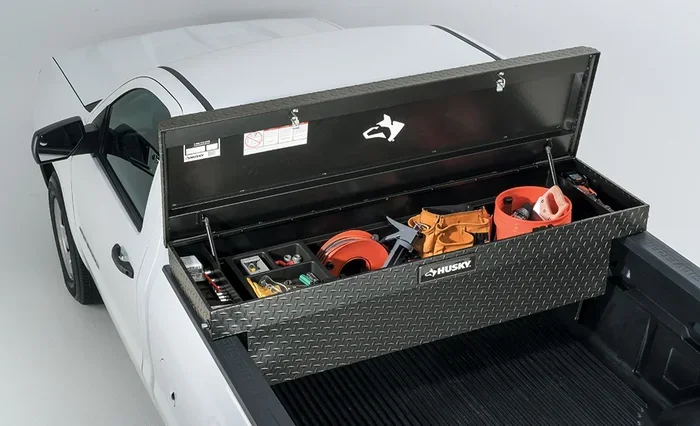
Side-mount tool boxes attach to the side of the truck bed, usually on the rails. They are one of the most popular styles. These tool boxes sit outside the bed and leave your cargo space open. They work well on trucks with standard raised rails.
However, side-mount boxes can interfere with bed extender systems. They may also rub against the bed wall if not aligned correctly. Always check the fitment chart before purchasing a side-mount truck toolbox.
Under-Bed Tool Boxes
Under-bed tool boxes sit inside the bed, below the bed surface. They keep your tools hidden and out of the way. These are great for trucks where you want to preserve bed space.
Under-bed boxes require a flat bed or a specific rollpan setup. They do not work well on trucks with uneven bed floors or deep bed liners. If you have a tonneau cover, make sure the under-bed box is compatible with it.
Top-Mount and Cap Tool Boxes
Some tool boxes mount on top of the truck bed, either on the tailgate or inside a cap. These are less common but still useful for certain setups. They work best on trucks with sturdy tailgates and caps that can handle the extra weight.
Keep in mind that top-mount boxes can affect your truck’s center of gravity. Drive carefully, especially at higher speeds. Make sure the mounting hardware is rated for the weight of the box and its contents.
Cross-Bed Tool Boxes
Cross-bed tool boxes span across the width of the truck bed. They mount on both sides and sit low in the bed. These are excellent for trucks that need maximum bed space above the toolbox.
Cross-bed boxes usually require specific rail configurations. They may not fit trucks with non-standard bed widths. Always verify compatibility with your specific make and model before buying.
How to Measure Your Truck for the Right Tool Box
Measuring your truck is the single most important step in finding the right fit. Skipping this step is the number one reason people end up with the wrong tool box. Here is exactly what you need to do.
Step-by-Step Measurement Guide
- Measure bed length: Use a tape measure from the bulkhead (the wall behind the cab) to the inside of the tailgate. Record this in inches.
- Measure bed width: Measure across the bed from wall to wall at the widest point. Note any curves or irregularities.
- Measure rail height: Check how high the side rails sit above the bed floor. This affects which mounting style works best.
- Check for bed liners: If you have a spray-in liner or bed mat, measure its thickness. This can affect fitment for under-bed boxes.
- Note your truck make, model, and year: This helps you narrow down fitment guides from manufacturers.
Keep your measurements handy when shopping. Most brands list exact fitment dimensions on their websites. Compare your numbers to those specs carefully.
Popular Truck Brands and Tool Box Compatibility
Different truck brands have different bed dimensions and rail designs. This means a tool box that fits one brand may not fit another. Let us look at some of the most popular truck brands and what you need to know about their compatibility.
Ford F-Series Trucks
Ford F-150, F-250, and F-350 trucks are among the most popular in the country. Most major tool box brands offer dedicated fit kits for Ford trucks. The F-150 short bed, standard bed, and long bed all have different dimensions. Make sure you select the right option for your specific model year.
Ford trucks from 2015 onward often have lower-profile rails. This makes flush-mount and clamp-on tool boxes a great choice. Older F-150 models with raised rails work well with traditional bolt-on boxes.
Chevrolet Silverado and GMC Sierra
Chevrolet Silverado and GMC Sierra trucks share many platform similarities. Their tool box fitment is often interchangeable between the two brands. However, bed lengths and rail styles can vary by year and trim level.
Silverado 1500, 2500, and 3500 models all have different bed dimensions. A tool box that fits a Silverado 1500 short bed will not necessarily fit a 2500 or 3500 model. Always double-check the fitment guide for your specific truck.
Ram Trucks
Ram trucks have unique bed designs that sometimes require special fitment kits. The Ram 1500, 2500, and 3500 all have different bed configurations. Ram also offers different bed options like the Rambox, which is an integrated storage system built into the bed.
If you own a Ram truck, look for tool boxes that specifically list Ram compatibility. Universal or adjustable tool boxes may work, but brand-specific options will give you the best fit and finish.
Toyota, Nissan, and Other Brands
Toyota Tacoma, Toyota Tundra, Nissan Titan, and other brands also have dedicated tool box options. These trucks have their own unique bed dimensions and rail styles. Always refer to the manufacturer’s fitment chart for your specific truck brand and model.
Comparison Table: Tool Box Types by Truck Category
| Truck Category | Best Tool Box Type | Mounting Style | Compatibility Notes |
|---|---|---|---|
| Full-Size Pickup (F-150, Silverado 1500, Ram 1500) | Side-mount or under-bed | Bolt-on or clamp-on | Wide range of options available |
| Mid-Size Pickup (Tacoma, Colorado, Ranger) | Compact side-mount | Clamp-on | Check bed length carefully |
| Heavy-Duty (F-250, F-350, Silverado 2500+) | Heavy-duty steel side-mount | Bolt-on | Verify rail height and spacing |
| Compact Pickup (Colorado Crew Cab, Tacoma Access Cab) | Small side-mount or top-mount | Clamp-on | Limited bed space affects choice |
Quick Tips for Choosing the Right Truck Tool Box
Shopping for a tool box can feel overwhelming. There are so many brands, sizes, and styles to choose from. Here are some quick tips to help you make the best decision.
- Start with your truck specs: Know your bed length, rail type, and make and model before you start shopping.
- Read fitment guides carefully: Every reputable brand publishes a fitment guide. Use it.
- Consider your tool storage needs: Do you need a small box for hand tools or a large one for power equipment? Size your box to your actual needs.
- Check warranty and return policy: A good warranty shows the manufacturer stands behind their product. A solid return policy gives you peace of mind.
- Read customer reviews: Real-world feedback from other truck owners is invaluable. Look for reviews from people with the same truck model as yours.
- Visit a local retailer if possible: Seeing and holding a tool box in person helps you gauge size and build quality.
- Think about future needs: If you plan to add a bed liner or tonneau cover, make sure your tool box works with those accessories.
Common Mistakes People Make When Buying Truck Tool Boxes
Even experienced truck owners sometimes make mistakes when buying tool boxes. Here are the most common ones to avoid.
Assuming Universal Fit
The biggest mistake is assuming that a tool box will fit any truck. It will not. Every truck model has different bed dimensions. A tool box listed as “universal” may require additional modification or adapters. Always verify fitment for your specific truck before purchasing.
Ignoring Bed Liner Compatibility
If you have a spray-in bed liner, an under-bed tool box may not sit flush. The liner adds thickness that can affect fitment. Measure your bed liner thickness and factor that into your decision. Some tool boxes are designed specifically to work over bed liners.
Overlooking Weight Capacity
Tool boxes have weight limits. Overloading a tool box can cause it to warp, crack, or detach from the truck. Check the weight capacity rating and compare it to the weight of your tools. Heavy-duty steel tool boxes handle more weight than aluminum or plastic ones.
Skipping the Installation Instructions
Some people buy a tool box and try to install it without reading the instructions. This is a recipe for trouble. Every tool box has specific installation steps. Skipping them can lead to improper fitment, damage to your truck, or a loose toolbox that rattles and shifts while driving.
Expert Insights on Truck Tool Box Fitment
We spoke with several automotive specialists and truck accessory experts to get their take on tool box fitment. Here is what they had to say.
John Martinez, a truck accessory installer with 15 years of experience, says this: “The number one question I get is whether a tool box will fit a customer’s truck. My advice is always the same. Measure first, check the fitment guide second, and buy third. It sounds simple, but it saves people from a lot of frustration.”
Sarah Chen, a product reviewer at a leading automotive publication, adds: “Tool box technology has come a long way. Many modern tool boxes now offer adjustable mounting systems that work across multiple truck models. But even with adjustable systems, you still need to verify fitment. No tool box truly fits all trucks.”
These expert opinions reinforce a key point. There is no shortcut when it comes to fitment. Take the time to do your research and make an informed decision.
Final Verdict: So Do Truck Tool Boxes Fit All Trucks?
The answer to the question “do truck tool boxes fit all trucks” is a clear and definitive no. Truck tool boxes are not universal. They are designed for specific truck models, bed sizes, and rail configurations. Finding the right fit requires knowing your truck’s dimensions, choosing the right toolbox type, and verifying compatibility before you buy.
That does not mean finding the right tool box is hard. It just means you need to be intentional about the process. Measure your truck bed. Check the rail type. Read the fitment guide. And when in doubt, reach out to the manufacturer or a local retailer for guidance.
A well-fitted truck tool box does more than just store your tools. It protects them from weather, theft, and damage. It keeps your truck bed organized. It can even improve the resale value of your truck. The time you invest in finding the right fit pays off in spades.
So the next time someone asks you “do truck tool boxes fit all trucks,” you will know the answer. It depends on the truck, the toolbox, and the fitment. With the right information, you can find a tool box that fits like it was made for your truck. Because in many ways, it was.
Frequently Asked Questions
Can I use a universal tool box on any truck?
Universal tool boxes can work on multiple truck models, but they often require additional adapters or modifications. They are not a true one-size-fits-all solution. Always check the fitment guide and measure your truck bed before purchasing a universal tool box.
What is the easiest tool box mounting style to install?
Clamp-on tool boxes are generally the easiest to install. They attach to the side rails without drilling into the truck bed. Bolt-on options are also common but require more hardware and installation steps. Under-bed boxes often need the most preparation and may require a rollpan setup.
Will a tool box fit my truck if I have a bed liner?
It depends on the type of bed liner and the tool box. Spray-in bed liners add thickness that can affect under-bed tool box fitment. Side-mount tool boxes usually work fine with bed liners. Always measure your bed liner thickness and check with the tool box manufacturer for compatibility guidance.
How much does a quality truck tool box cost?
Prices vary widely based on size, material, and brand. Entry-level aluminum tool boxes start around $200 to $400. Mid-range steel tool boxes typically run between $400 and $800. Premium options with advanced features can cost $1,000 or more. Investing in a quality tool box pays off in durability and protection.
Do I need professional installation for a truck tool box?
Most tool boxes come with detailed installation instructions and can be installed at home with basic tools. Clamp-on and bolt-on styles are particularly DIY-friendly. If you are not comfortable with the installation process, a local truck accessory shop can handle it for you in about one to two hours.
Can I remove a truck tool box easily if I need to?
Yes, most truck tool boxes are designed to be removable. Clamp-on and bolt-on styles can be taken off with basic tools. This is helpful if you need to haul large items that would not fit with the tool box installed. Just make sure to keep all hardware in a safe place for reinstallation.