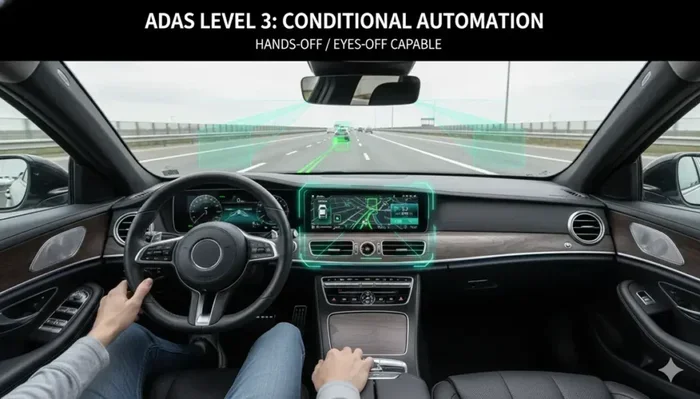
Everything About ADAS Level 3 Cars in India You Must Know
ADAS Level 3 cars in India are changing how we think about driving. These semi-autonomous vehicles can handle driving tasks like steering and speed control without human input — but only in specific conditions. India is slowly seeing these advanced cars arrive, and understanding what they offer is essential for any car buyer looking ahead.
You have probably seen cars on Indian highways that seem to drive themselves. They steer, brake, and accelerate without you touching the wheel. This is not science fiction anymore. ADAS Level 3 cars in India are real, and they are slowly making their way into the Indian market.
ADAS stands for Advanced Driver Assistance Systems. These are smart technologies built into modern vehicles to help drivers stay safe. Level 3 is a big step up from basic features like lane assist or automatic emergency braking. With Level 3, your car can handle most driving tasks on its own — but there is a catch. You still need to be alert and ready to take over when the system asks you to.
If you are a car buyer in India or simply curious about where automotive technology is heading, this guide is for you. We will cover everything you need to know about ADAS Level 3 cars in India. From how the technology works to which models are available, we have got you covered.
Key Takeaways
- Level 3 autonomy allows hands-free driving in certain conditions, but the driver must remain ready to take over.
- ADAS Level 3 cars in India are still limited in availability, with premium brands leading the way.
- These vehicles use advanced sensors like LiDAR, radar, and cameras to navigate roads safely.
- Indian road conditions and infrastructure pose unique challenges for autonomous driving technology.
- The cost of Level 3 cars remains high, making them accessible mainly to luxury buyers.
- Government regulations for autonomous vehicles in India are still evolving and developing.
- The future looks promising, with more ADAS-equipped vehicles expected in the Indian market soon.
📑 Table of Contents
What Are ADAS Level 3 Cars?
Understanding the SAE Automation Levels
To understand Level 3, you need to know the bigger picture. The Society of Automotive Engineers (SAE) defined six levels of driving automation. These range from Level 0 (no automation) to Level 5 (full automation). Here is a quick look at each level:
- Level 0: No automation at all. The driver does everything.
- Level 1: Driver assistance. The car can control speed or steering, but not both at the same time.
- Level 2: Partial automation. The car can handle both steering and speed, but the driver must always watch the road.
- Level 3: Conditional automation. The car drives itself in certain situations, and the driver can look away temporarily.
- Level 4: High automation. The car drives itself in most conditions without human input.
- Level 5: Full automation. No driver needed at all.
ADAS Level 3 cars in India fall into Level 3 of this scale. This means your car can handle driving tasks like steering, accelerating, and braking on its own — but only under specific conditions. The key difference between Level 2 and Level 3 is that Level 3 allows the driver to take their eyes off the road for short periods.
What Makes Level 3 Special?
What sets Level 3 apart is the concept of eyes-off driving. At Level 2, you must keep your hands on the wheel and your eyes on the road at all times. Level 3 changes this. When the system is active, you can read a message or watch a movie — but only for a short time. The car will alert you when it needs you back in control.
This is a huge leap forward in car safety technology. It reduces driver fatigue on long highway drives. It also adds a layer of convenience that was not possible before. However, Level 3 still requires a human driver who can take over when needed. This is why it is called “conditional automation.”
How ADAS Level 3 Technology Works
Key Sensors and Systems
ADAS Level 3 cars in India rely on a complex set of sensors and software to “see” the road. These systems work together to create a 360-degree view of the vehicle’s surroundings. Here are the main components:
- Cameras: These detect lane markings, traffic signs, pedestrians, and other vehicles. They act like the car’s eyes.
- Radar: Radar sensors measure the distance and speed of objects around the car. They work well in bad weather.
- LiDAR: Light Detection and Ranging sensors create detailed 3D maps of the environment. They are very accurate but expensive.
- Ultrasonic sensors: These are used for short-range detection, mainly for parking and low-speed maneuvering.
- Processing units: Powerful computers analyze all sensor data in real time to make driving decisions.
All of these components work together to give the car a detailed understanding of its surroundings. When you drive a semi-autonomous vehicle with Level 3 capability, these systems constantly monitor the road, other cars, and obstacles. They make decisions faster than any human could.
What Happens When the Driver Needs to Take Over?
One of the most important features of Level 3 automation is the driver monitoring system. This system tracks your attention and readiness. If the car encounters a situation it cannot handle, it will alert you to take back control.
Here is how the takeover process typically works:
- The car detects a situation it cannot handle, like heavy rain or complex traffic.
- It gives you a warning — usually a sound and a visual alert on the dashboard.
- You have a few seconds to take control of the vehicle.
- If you do not respond, the car will try to safely pull over and stop.
This is why ADAS Level 3 cars in India still need an attentive driver. The system is smart, but it has limits. Understanding these limits is crucial for safe driving.
Quick Tips for Level 3 Driving
- Always keep your eyes on the road even when the system is active.
- Do not rely entirely on the car — stay engaged.
- Know the limits of your vehicle’s Level 3 system.
- Keep your hands near the steering wheel at all times.
- Read the owner’s manual to understand how the system works in your specific car.
ADAS Level 3 Cars Available in India
Mercedes-Benz S-Class
The Mercedes-Benz S-Class is one of the most prominent ADAS Level 3 cars in India. It comes with a feature called Drive Pilot, which allows hands-free driving on highways at speeds up to 60 km/h. This is a game-changer for long highway drives in India.
The S-Class uses a combination of cameras, radar, and sensors to navigate roads. It can handle lane keeping, speed adjustment, and even lane changes in certain conditions. However, Drive Pilot is currently available only in select markets, and its availability in India is still being evaluated.
BMW 7 Series
The BMW 7 Series also offers advanced ADAS features that push toward Level 3 capability. BMW’s Driving Assistant Professional system provides hands-free driving on highways, but the driver must remain ready to take over at all times. This is technically closer to Level 2+ in some markets.
BMW has been expanding its presence in India, and the 7 Series is a flagship model that showcases the brand’s autonomous driving technology. The car features adaptive cruise control, lane keeping assist, and traffic jam assist — all of which work together to reduce driver workload.
Audi A8
The Audi A8 was one of the first cars in the world to offer Level 3 autonomy. Its Traffic Jam Assist system allows the car to drive itself in slow-moving traffic. In India, the A8 is available through limited imports and select dealerships.
Audi’s system uses a front-facing camera and radar to handle driving tasks in traffic jams up to 60 km/h. The driver can take their hands off the wheel and eyes off the road for short periods. However, the car will alert the driver when it needs control back.
Comparison Table: ADAS Level 3 Features in Indian Market
| Feature | Mercedes S-Class | BMW 7 Series | Audi A8 |
|---|---|---|---|
| Hands-Free Driving | Yes (highway, up to 60 km/h) | Yes (highway, limited conditions) | Yes (traffic jam, up to 60 km/h) |
| Driver Monitoring | Yes | Yes | Yes |
| Lane Keeping Assist | Yes | Yes | Yes |
| Adaptive Cruise Control | Yes | Yes | Yes |
| Availability in India | Limited | Available | Limited imports |
| Price Range (approx.) | ₹2.5 crore+ | ₹1.8 crore+ | ₹2.2 crore+ |
These three models represent the current landscape of ADAS Level 3 cars in India. They are all premium vehicles with a price tag that puts them out of reach for most Indian buyers. However, they set the standard for what is possible in the Indian market.
Expert Insight
“The arrival of Level 3 autonomous driving in India is still in its early stages. The biggest hurdles are road infrastructure, regulatory frameworks, and cost. But the direction is clear — the Indian automotive industry is moving toward smarter, safer vehicles.” — Automotive Technology Analyst
Benefits of ADAS Level 3 Cars for Indian Roads
Safety Improvements
Road safety is a major concern in India. According to recent reports, India accounts for a significant percentage of global road accident fatalities. ADAS Level 3 cars in India can help reduce these numbers significantly.
Here is how Level 3 technology improves safety:
- Reduced human error: Most accidents happen due to driver mistakes. Level 3 automation reduces the chance of human error during highway driving.
- Faster reaction times: Sensors and computers react faster than humans. They can detect danger and brake before a driver even notices.
- Driver monitoring: These systems track driver attention and alert them when they are distracted or drowsy.
- Consistent following distance: Adaptive cruise control maintains a safe distance from the car ahead, reducing rear-end collisions.
- Lane discipline: Lane keeping assist prevents accidental lane drifting, which is a common cause of highway accidents.
While these systems are not perfect, they add a valuable layer of protection. For Indian roads where traffic can be unpredictable, semi-autonomous vehicles offer a significant safety advantage.
Comfort and Convenience
Beyond safety, ADAS Level 3 cars in India offer unmatched comfort. Imagine driving on a long highway stretch and being able to relax for a few minutes while the car handles everything. This is what Level 3 autonomy promises.
For Indian drivers who spend hours on highways for work or travel, this can be a game-changer. Traffic jams on cities like Mumbai, Delhi, and Bangalore can be exhausting. Level 3 technology can reduce that stress significantly.
Common Mistakes to Avoid
- Over-relying on the system: Level 3 is not full autonomy. Always stay alert.
- Ignoring takeover alerts: When the car asks you to take control, respond immediately.
- Using Level 3 in bad weather: Heavy rain, fog, or snow can confuse sensors. Use the system only in conditions it is designed for.
- Not reading the manual: Every car’s Level 3 system works differently. Know your specific car’s capabilities.
- Using the system in city traffic: Most Level 3 systems are designed for highways, not busy city roads.
Challenges Facing ADAS Level 3 Cars in India
Road Infrastructure Issues
Indian roads are notoriously diverse. You might encounter potholes, unpaved stretches, cattle on the road, sudden lane changes, and chaotic traffic all in a single drive. This kind of environment is challenging for any autonomous driving technology.
Level 3 systems are designed to work best on well-marked highways with clear lane lines and predictable traffic. Many Indian highways do not meet these conditions. Road markings can be faded or missing entirely. This makes it harder for cameras and sensors to function properly.
Until road infrastructure improves across India, the full potential of ADAS Level 3 cars in India will be limited. However, automakers are working on adapting these systems to handle the unique challenges of Indian roads.
Regulatory and Legal Gaps
India does not yet have a comprehensive legal framework for autonomous vehicles. There are no specific laws that address Level 3 automation. Questions about liability in case of an accident remain unanswered.
Who is responsible if a Level 3 car gets into an accident — the driver or the manufacturer? This is a critical question that needs to be addressed before Level 3 cars can become mainstream in India. The government is working on guidelines, but progress has been slow.
Some states have started exploring regulations for autonomous vehicles, but a national framework is still in development. Until then, the adoption of ADAS Level 3 cars in India will remain limited to premium segments.
Cost and Affordability
The technology behind ADAS Level 3 cars in India is expensive. Sensors like LiDAR, powerful processing units, and advanced software all add to the cost. This is why Level 3 cars are currently available only in the luxury segment.
For the average Indian car buyer, these vehicles are out of reach. A Mercedes S-Class or Audi A8 costs several crores, putting them firmly in the premium category. However, as the technology matures and becomes more affordable, we can expect ADAS features to trickle down to mid-range and even budget cars.
Quick Tips for Buying an ADAS Car in India
- Start with cars that offer Level 1 or Level 2 ADAS features. These are more affordable and widely available.
- Look for features like adaptive cruise control, lane keeping assist, and automatic emergency braking.
- Test drive the car to understand how the ADAS system works in real conditions.
- Check if the carmaker offers software updates for the ADAS system.
- Consider the cost of maintenance and repairs for ADAS-equipped vehicles.
The Future of ADAS Level 3 Cars in India
Upcoming Models and Plans
The future of ADAS Level 3 cars in India looks promising. Several global automakers have announced plans to bring more autonomous features to the Indian market. Companies like Mercedes-Benz, BMW, and Audi are investing heavily in autonomous driving technology for India.
We can expect more Level 3 capable models to arrive in the next few years. As costs come down, these features may even make their way into more affordable vehicles. The Indian automotive market is one of the largest in the world, and automakers see huge potential here.
Some Indian startups are also working on ADAS solutions tailored for Indian roads. These companies are developing sensors and software that can handle the unique challenges of Indian driving conditions. This local innovation could accelerate the adoption of ADAS Level 3 cars in India.
Government Initiatives and Road Safety
The Indian government has recognized the importance of car safety technology. Several initiatives are underway to improve road safety and promote advanced vehicle technologies. The National Automotive Mission Plan and the Faster Adoption and Manufacturing of Electric and Hybrid Vehicles (FAME) scheme are examples of government efforts to modernize the automotive sector.
While these schemes currently focus more on electric vehicles, the push for technology adoption is creating a favorable environment for semi-autonomous vehicles as well. As India works toward better road safety, ADAS and autonomous driving technologies will play an increasingly important role.
Conclusion
ADAS Level 3 cars in India represent the future of driving. They offer a blend of safety, comfort, and convenience that was not possible just a few years ago. While the technology is still in its early stages in India, the direction is clear — the automotive industry is moving toward smarter, more autonomous vehicles.
Currently, ADAS Level 3 cars in India are limited to premium models from brands like Mercedes-Benz, BMW, and Audi. The challenges of road infrastructure, regulations, and cost are real. But with continued innovation and government support, these barriers will gradually come down.
If you are a car buyer in India, it is worth keeping an eye on this space. Even if a full Level 3 car is not in your budget today, many modern vehicles already offer ADAS features that make driving safer and more enjoyable. Start with what is available now, and look forward to the exciting developments that lie ahead.
The road to autonomous driving in India is long, but ADAS Level 3 technology is an important milestone on that journey. Stay informed, stay safe, and enjoy the ride.
Frequently Asked Questions
What is the difference between ADAS Level 2 and Level 3?
The main difference is that Level 2 requires the driver to keep their hands on the wheel and eyes on the road at all times. Level 3 allows the driver to take their eyes off the road temporarily while the car handles driving tasks. However, the driver must still be ready to take over when the system requests it.
Are ADAS Level 3 cars legal in India?
There are no specific laws in India that prohibit or regulate ADAS Level 3 cars in India. However, there is no comprehensive legal framework for autonomous vehicles either. The government is working on guidelines, but as of now, these cars are available through imports and select dealerships in the premium segment.
Which is the first ADAS Level 3 car available in India?
The Mercedes-Benz S-Class with its Drive Pilot feature is one of the first ADAS Level 3 cars in India. However, its availability is limited, and the full Level 3 functionality may not be active in the Indian market yet. BMW and Audi also offer advanced ADAS features that approach Level 3 capability.
Can ADAS Level 3 cars drive fully autonomously in India?
No, ADAS Level 3 cars in India cannot drive fully autonomously. Level 3 is conditional automation, meaning the car can handle driving in specific situations, but the driver must remain alert and ready to take over. Full autonomy (Level 5) is still years away for Indian roads.
How much do ADAS Level 3 cars cost in India?
Currently, ADAS Level 3 cars in India are available only in the luxury segment. Prices start from around ₹1.8 crore for a BMW 7 Series and go up to ₹2.5 crore or more for a Mercedes S-Class. As the technology becomes more common, prices are expected to come down over time.
Will ADAS Level 3 technology become available in affordable cars in India?
Yes, eventually. As autonomous driving technology matures and becomes more affordable, we can expect ADAS features to trickle down to mid-range and budget cars. Many modern cars in the ₹10-20 lakh range already offer Level 1 and Level 2 ADAS features, and Level 3 will follow as the technology becomes more accessible.