Is It More Difficult to Steal a Car With Push Button Start
Push button start cars are generally harder to steal than traditional key vehicles, but they are not impossible targets. Modern vehicles use encrypted transponder signals and immobilizer systems that make hot-wiring nearly obsolete. However, clever thieves have developed relay attack tools and other methods to bypass these systems. Understanding how your car’s security works is the first step toward keeping it safe. This guide breaks down the technology, the threats, and the best ways to protect your push button start vehicle.
You park your car, walk away, and never think twice. No fumbling with a key, no turning anything — just press a button and go. It is convenient. It is modern. But have you ever wondered if that same convenience makes your car an easier target for thieves?
The short answer is no. Push button start systems are actually more difficult to steal than traditional key ignition cars. But the longer answer is more nuanced. While the technology itself is secure, the way many people use their key fobs creates vulnerabilities. Thieves are smart. They adapt. And they have found clever ways around even the best security systems.
In this article, we will break down exactly how push button start technology works, what methods thieves use to bypass it, and what you can do to keep your car safe. Whether you already own a push button start vehicle or are thinking about buying one, this guide will give you the knowledge you need to make informed decisions about car security.
Key Takeaways
- Push button start adds a layer of security: Encrypted signals and immobilizers make traditional theft methods ineffective.
- Relay attacks are the biggest threat: Thieves can amplify your key fob’s signal from inside your home to unlock and start your car.
- Simple habits make a big difference: Storing your key fob away from doors and windows reduces your risk significantly.
- Aftermarket anti-theft devices work: Steering wheel locks, signal blockers, and GPS trackers add extra protection.
- Newer models are safer: Manufacturers continue improving encryption and adding features like motion-sensing key fobs.
- Insurance matters: Make sure your policy covers keyless theft, as it is becoming more common.
- Stay informed: Knowing how thieves operate helps you stay one step ahead.
📑 Table of Contents
- How Push Button Start Technology Works
- Common Methods Thieves Use to Steal Push Button Start Cars
- Is Push Button Start Actually Safer Than Traditional Keys?
- Best Anti-Theft Accessories for Push Button Start Vehicles
- Tips to Protect Your Push Button Start Car from Theft
- The Future of Car Security Technology
- What to Do If Your Push Button Start Car Gets Stolen
- Final Thoughts
How Push Button Start Technology Works
Before we talk about theft, it helps to understand what makes push button start cars tick. The system is more sophisticated than most people realize. When you press the start button, your car does not just crank an engine. It performs a series of electronic checks in milliseconds.
The Role of the Smart Key Fob
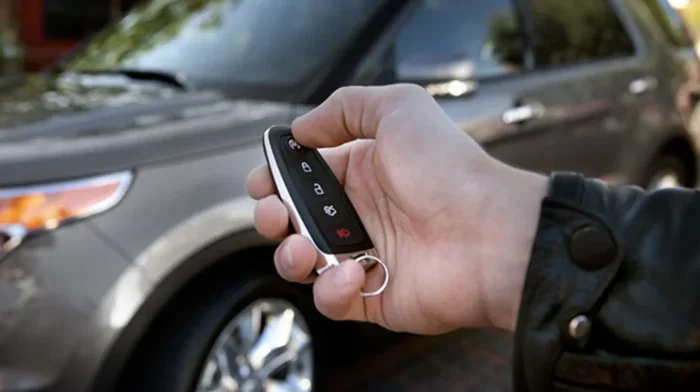
Your key fob is the brain of the system. It constantly emits a low-frequency signal. When you approach your car, the vehicle’s antenna picks up that signal. The car recognizes your fob and allows you to start the engine. This is called passive entry, and it happens without you ever touching the key to the car.
But here is the critical part. The fob does not just send a simple “yes, this is me” signal. Modern vehicles use rolling encryption codes. Every time you use the fob, the code changes. This means a thief cannot simply copy a signal and replay it later. The code would be invalid by the time they tried to use it.
The Immobilizer System
Even if someone somehow gets past the key fob recognition, there is another layer of defense. Most push button start cars have an immobilizer system. This is a security feature built into the car’s engine control unit. If the immobilizer does not recognize the correct encrypted code from the key fob, it will not allow the fuel system or ignition to engage. The engine simply will not start.
Hot-wiring a push button start car is almost impossible because there is no physical ignition cylinder to bypass. Traditional thieves relied on connecting wires directly to the ignition system. With push button start, those wires do not exist in the same way. The entire starting process is controlled electronically, and the car will not respond to unauthorized signals.
Common Methods Thieves Use to Steal Push Button Start Cars
So if push button start cars are so secure, why do people still steal them? The answer lies in the methods thieves use. They do not try to hot-wire the car. Instead, they exploit weaknesses in the key fob system and human behavior.
Relay Attacks: The Biggest Threat
A relay attack is the most common method used to steal push button start vehicles. Here is how it works. A thief uses a device that captures the signal from your key fob, even if it is inside your house. The device amplifies the signal and sends it to an accomplice standing near your car. The car thinks your fob is nearby. It unlocks the doors and allows the engine to start.
This entire process takes seconds. And it works even if your key fob is on a shelf in your bedroom. The signal can pass through walls, doors, and windows. Many people do not realize their key fob is constantly broadcasting a signal, even when they are not using it.
Signal Jamming
Another method is signal jamming. In this case, a thief uses a device that blocks the signal between your key fob and the car. When you press the lock button on your fob, the signal does not reach the car. The doors remain unlocked, and the thief can simply walk up and open them. This method does not let them start the car easily, but it gives them access to valuables inside.
Key Fob Cloning
Some thieves attempt to clone your key fob. They capture the signal when you use it and create a duplicate fob. Older vehicles with weaker encryption are more vulnerable to this. Newer models use stronger encryption that makes cloning much harder. But it is not impossible, especially with advanced equipment.
OBD Port Exploitation
The OBD port (On-Board Diagnostics port) is a standard feature in most modern cars. It is usually located under the dashboard. Thieves can plug a device into this port and reprogram a blank key fob to match the car’s system. This method is more common in high-end luxury vehicles where the return on investment is higher.
Direct Physical Attacks
Some thieves still use brute force. They may break a window and manually disconnect wires to bypass the immobilizer. This is rare for push button start cars because it is time-consuming and noisy. Most thieves prefer methods that are quick and quiet.
Is Push Button Start Actually Safer Than Traditional Keys?
The honest answer is yes, push button start cars are generally safer than traditional key ignition vehicles. But safety is relative. No car is completely theft-proof. Let us compare the two to understand why.
| Feature | Traditional Key Ignition | Push Button Start |
|---|---|---|
| Hot-Wiring Risk | High — physical ignition cylinder can be bypassed | Very Low — no physical ignition cylinder |
| Key Fob Signal | Not applicable — no electronic fob | Encrypted rolling codes make cloning difficult |
| Immobilizer System | Basic or absent in older models | Advanced encrypted immobilizer standard |
| Relay Attack Vulnerability | Not applicable | High — key fob signal can be amplified |
| OBD Port Exploitation | Less common — older systems less standardized | Moderate — standardized port makes it easier to target |
| Overall Theft Difficulty | Easier for experienced thieves | Harder, but not impossible |
As you can see, push button start vehicles have a clear advantage when it comes to most traditional theft methods. The lack of a physical ignition cylinder is a huge deterrent. But the key fob system introduces a new set of vulnerabilities that did not exist with traditional keys.
The key takeaway is this: push button start makes casual theft much harder, but determined thieves with the right tools can still find ways in. Your job is to make your car a harder target than the one parked next to it.
Best Anti-Theft Accessories for Push Button Start Vehicles
If you own a push button start car, you are not helpless. There are several anti-theft accessories that can dramatically reduce your risk. Some are simple and affordable. Others are more advanced. The best approach is to layer multiple protections together.
Signal-Blocking Pouches and Boxes
A signal-blocking pouch (also called a Faraday pouch) is one of the simplest and most effective tools. You store your key fob inside the pouch when you are at home. The pouch blocks the fob’s signal from being transmitted. Even if a thief is standing outside your house with a relay device, they cannot pick up your signal.
These pouches cost between $10 and $30. They are small enough to fit in a drawer or on a shelf. For maximum protection, some people use a signal-blocking box that can hold multiple fobs and even other electronic devices.
Steering Wheel Locks
A visible steering wheel lock is a powerful deterrent. Thieves want quick and easy targets. A brightly colored lock on the steering wheel makes your car stand out and signals that you take security seriously. Popular brands like The Club are well-known and effective.
Steering wheel locks do not stop a determined professional thief. But they do make your car a less attractive target compared to the car next to it that has no visible protection at all.
GPS Trackers
Installing a GPS tracker in your car does not prevent theft, but it dramatically increases your chances of recovering the vehicle. Modern trackers are small and easy to hide. Some plug into the OBD port, while others are battery-powered and can be placed anywhere.
Some trackers send real-time alerts to your phone if the car moves when it should not be. This can help you catch a thief in the act or locate the vehicle quickly after a theft.
OBD Port Locks
Since the OBD port is a common entry point for thieves, an OBD port lock is a smart addition. This is a small device that covers the port and requires a key or combination to open. It prevents thieves from plugging in their reprogramming tools.
Car Alarms with Motion Sensors
Many modern cars come with advanced alarm systems that include motion sensors. If someone touches or moves the car, the alarm sounds immediately. Some systems also send alerts directly to your smartphone. Make sure your alarm is set to the most sensitive mode when your car is parked at home.
Tire Locks
A tire lock (also called a boot lock) makes it impossible to drive the car away. While it is more commonly used for parking enforcement, it works as a theft deterrent too. The device clamps onto the tire and prevents the wheel from turning.
Tips to Protect Your Push Button Start Car from Theft
Technology alone will not keep your car safe. Your daily habits play a huge role in vehicle security. Here are practical tips that every push button start car owner should follow.
Store Your Key Fob Away from Doors and Windows
This is the single most important habit you can build. Your key fob’s signal can travel through walls and windows. If you keep it near the front door or on a hallway table, a thief standing outside can pick it up. Instead, store your fob in the faraday pouch or in a drawer in the back of your house.
Turn Off Passive Entry When Not Needed
Many push button start cars allow you to disable passive entry in the settings. When passive entry is off, you must physically press a button on the key fob to unlock the car. This prevents thieves from capturing your fob’s signal when you walk toward the car.
Never Leave Your Car Running Unattended
This one seems obvious, but it happens more than you think. People warm up their cars in the driveway and go back inside to grab coffee. A push button start car can be driven away in seconds if the fob is inside. Always take the fob with you and turn off the engine before leaving the vehicle.
Park in Well-Lit and Visible Areas
Thieves prefer darkness and privacy. Parking in a well-lit area or a visible spot near foot traffic reduces the chance of someone targeting your car. If you have a garage, use it. Park with the wheels turned toward the curb or the garage wall to make towing more difficult.
Keep Your Software Updated
Car manufacturers regularly release software updates that patch security vulnerabilities. Check with your dealer or use the manufacturer’s app to make sure your car’s firmware is up to date. These updates often address newly discovered exploits that thieves could use.
Use Two-Factor Authentication for Keyless Features
Some newer vehicles offer two-factor authentication for keyless entry and start. This means the car requires both the fob’s signal and a secondary verification, such as a PIN code entered on the key fob or a smartphone app. If your car offers this feature, enable it.
The Future of Car Security Technology
Car manufacturers know that keyless theft is a growing concern. They are investing heavily in new security technologies to stay ahead of thieves. Here is what we can expect in the coming years.
One major development is ultra-wideband (UWB) technology. Unlike traditional Bluetooth or RFID signals, UWB uses a very precise signal that can determine the exact location of the key fob. This means your car will only unlock and start if the fob is actually inside the vehicle, not somewhere else in the neighborhood. Several automakers are already rolling out UWB in their latest models.
Another innovation is motion-sensing key fobs. These fobs go to sleep when they have not been moved for a certain period. This prevents thieves from capturing a signal from a fob sitting still on a counter. When you pick up the fob and move it, it wakes up and becomes active again.
Some manufacturers are also exploring biometric authentication. Imagine unlocking your car with your fingerprint or face instead of a key fob. This would eliminate the signal-based vulnerability entirely. While this technology is still in its early stages, it is only a matter of time before it becomes mainstream.
Finally, AI-powered security systems are being developed to detect unusual behavior around parked cars. These systems use cameras and sensors to identify suspicious activity and alert the owner in real time. The goal is to make car theft so difficult and risky that thieves simply move on to an easier target.
What to Do If Your Push Button Start Car Gets Stolen
Even with the best precautions, theft can still happen. If you discover your car has been stolen, act quickly. Here is what you should do.
- Call the police immediately. File a report and provide them with your VIN number, license plate, and any tracking information you have.
- Contact your insurance company. Report the theft as soon as possible. Make sure your policy covers keyless theft, as some older policies may not include this.
- Use your GPS tracker if you have one. Share the real-time location with the police. This can significantly increase the chances of recovery.
- Do not try to track the car yourself. Let the professionals handle it. Confronting a thief can be dangerous.
- Document everything. Take photos of the scene, note any suspicious activity in the area, and gather witness statements if possible.
Final Thoughts
The truth is that push button start technology has made car theft more difficult for the average criminal. The encryption, rolling codes, and immobilizer systems create a strong defense that traditional key cars simply do not have. But technology is always evolving, and so are thieves. The best protection is a combination of smart technology and smart habits.
Use a signal-blocking pouch. Park in safe areas. Keep your software updated. Layer your security. These simple steps make a tremendous difference. You do not need to be paranoid — just aware. A little effort goes a long way in keeping your push button start car where it belongs: in your driveway.
Stay informed, stay proactive, and enjoy the convenience of your modern vehicle without worrying about it walking away on someone else.
Frequently Asked Questions
Can a push button start car be stolen without the key fob?
Yes, it is possible, but it requires specialized tools and knowledge. Thieves often use relay attacks to amplify the key fob’s signal from inside your home, or they exploit the OBD port to reprogram a blank fob. This is why storing your fob in a signal-blocking pouch is so important.
Are push button start cars more expensive to insure?
Not necessarily. Insurance rates depend on many factors, including the car’s make, model, and your driving history. However, some insurers may charge more for keyless entry vehicles because keyless theft is on the rise. Check with your provider to make sure your policy covers this type of theft.
Do steering wheel locks actually work against professional thieves?
Steering wheel locks are not foolproof, but they are highly effective as a deterrent. Professional thieves usually target the easiest and fastest opportunities. A visible steering wheel lock makes your car a less attractive option compared to unprotected vehicles nearby.
What is the difference between a relay attack and signal jamming?
A relay attack amplifies your key fob’s signal to trick the car into thinking the fob is nearby. Signal jamming blocks the signal when you try to lock your car, leaving the doors unlocked. Both are used by thieves, but they work in different ways and target different aspects of your car’s security system.
How can I tell if my key fob has a motion sensor?
Check your car’s owner manual or look for a setting in the infotainment system related to key fob sleep mode. Newer vehicles from brands like BMW, Tesla, and Toyota often include motion-sensing fobs that automatically go to sleep after a period of inactivity.
Is it safe to leave my push button start car running while I run a quick errand?
No, it is not safe. Even with push button start, a car can be driven away if the key fob is inside the vehicle. Always turn off the engine and take the fob with you, no matter how short the errand is.
=== CONCLUSION ===
Push button start cars are more difficult to steal than traditional key vehicles, but they are not immune. The technology provides strong protection against most common theft methods, but human habits and key fob vulnerabilities create opportunities for skilled thieves. By understanding how the systems work and where the weaknesses lie, you can take meaningful steps to protect your vehicle. Use signal blockers, install physical deterrents, keep your software updated, and practice smart daily habits. Your car is a significant investment — treat its security with the same care you give to any other important part of your life.