Are Toyota 4Runners AWD Here Is What You Need to Know
Yes, Toyota 4Runners are available with AWD. The Toyota 4Runner AWD system has been a core feature for decades, offering serious off-road capability and everyday reliability. Whether you pick the base SR5 or the rugged TRD Pro trim, most 4Runner models come standard with an all-wheel drive drivetrain. In this guide, we break down exactly how the Toyota 4Runner AWD system works, which trims offer it, and what it means for your driving experience. If you are shopping for a dependable SUV, this is the article you need to read.
If you have been looking at SUVs, you have probably asked yourself one question: are Toyota 4Runners AWD? The short answer is yes. The Toyota 4Runner AWD system is one of the reasons this SUV has remained so popular for decades. It is tough, reliable, and built to handle just about anything you throw at it. Whether you drive on city streets or rugged mountain trails, the 4Runner gives you the confidence to keep going.
But here is the thing. Not all 4Runners are built the same way. Some trims use part-time AWD. Others come with features like crawl control and locking differentials that make them true off-road machines. Understanding how the Toyota 4Runner AWD system works can help you pick the right trim and get the most out of your SUV. In this article, we will walk you through everything you need to know.
We will cover how the AWD system works, which trims offer it, and what makes the 4Runner such a strong choice for both daily driving and weekend adventures. By the end, you will have a clear picture of what the Toyota 4Runner AWD experience is really like.
Key Takeaways
- Most 4Runner trims come standard with AWD: Toyota equips nearly every 4Runner trim with an all-wheel drive system from the factory.
- Part-time AWD is the standard setup: The Toyota 4Runner AWD system is part-time, meaning you can shift between two-wheel drive and four-wheel drive modes.
- TRD Off-Road and TRD Pro trims offer advanced features: These trims include crawl control, multi-terrain select, and locking differentials for serious off-road performance.
- The V6 engine pairs perfectly with AWD: The 4.0-liter V6 or 3.5-liter twin-turbo V6 delivers strong power to all four wheels when needed.
- Regular maintenance keeps the AWD system healthy: Checking fluid levels and inspecting differentials goes a long way in preventing costly repairs.
- AWD adds real value for off-road enthusiasts: If you plan on hitting trails, the Toyota 4Runner AWD system gives you the traction and confidence you need.
📑 Table of Contents
Understanding the Toyota 4Runner AWD System
What Does AWD Mean for the 4Runner?
All-wheel drive means power is sent to all four wheels at the same time. For the Toyota 4Runner AWD system, this setup gives you better traction on wet roads, gravel, mud, and snow. It also improves stability during everyday driving. The 4Runner uses a part-time AWD system, which means you can switch between two-wheel drive and four-wheel drive depending on conditions.
This is different from a full-time AWD system found in some other SUVs. With part-time AWD, you get better fuel economy when you are driving on paved roads. Then, when the terrain gets tough, you switch into 4WD mode and let the system do its job. It is a smart design that balances efficiency with capability.
How the AWD System Works
The Toyota 4Runner AWD system relies on a few key components working together. The transfer case sits between the front and rear axles. It splits engine power and sends it to both the front and rear wheels. Inside the transfer case, you will find low-range gearing for serious off-road situations and high-range gearing for normal driving.
Here is how the system flows:
- Engine produces power through the V6 engine.
- Transmission sends power to the transfer case.
- Transfer case splits power between the front and rear axles.
- Front and rear differentials distribute power to individual wheels.
- Electronic systems like traction control and stability control monitor wheel slip and adjust power delivery in real time.
When one wheel starts to slip, the system automatically redirects power to the wheels with better traction. This happens fast and without any input from you. That is what makes the Toyota 4Runner AWD system so effective and user-friendly.
Toyota 4Runner AWD vs 4WD: What Is the Difference?
People often use AWD and 4WD interchangeably, but they are not exactly the same. Understanding the difference matters when you are choosing a Toyota 4Runner AWD setup.
All-wheel drive typically sends power to all four wheels continuously or automatically. Four-wheel drive usually requires you to manually engage it. The 4Runner uses a part-time system that works like both. You drive in 2WD for normal conditions and shift into 4WD when you need extra grip.
Part-Time AWD Explained
The Toyota 4Runner AWD system is part-time. This means the front wheels do not receive power all the time. When you are cruising on the highway, the system operates in 2WD mode. This saves fuel and reduces wear on drivetrain components.
When you hit rough terrain, rain, snow, or mud, you shift into 4WD. The transfer case locks the front and rear axles together, sending equal power to all four wheels. This gives you maximum traction when you need it most.
Full-Time AWD vs Part-Time AWD
Some SUVs use full-time AWD, where all four wheels receive power at all times. The Toyota 4Runner does not use this approach. Here is a quick comparison:
| Feature | Part-Time AWD (4Runner) | Full-Time AWD (Other SUVs) |
|---|---|---|
| Power Delivery | 2WD by default, 4WD when engaged | All four wheels always powered |
| Fuel Economy | Better on pavement | Slightly lower |
| Off-Road Capability | Excellent with low-range gearing | Good but often lacks low range |
| Drivetrain Wear | Lower on pavement | Constant wear on all components |
| Driver Control | Manual shift between modes | Automatic, no driver input needed |
For most drivers, the part-time system on the Toyota 4Runner AWD is the better choice. It gives you flexibility, better fuel economy, and strong off-road performance when you need it.
Which Toyota 4Runner Trims Offer AWD?
Great news. Almost every Toyota 4Runner trim comes with AWD as standard equipment. You do not have to pay extra for it in most cases. Here is a breakdown of the trims and what AWD features they include.
SR5 Trim
The base SR5 trim comes standard with the Toyota 4Runner AWD system. It includes the part-time 4WD system with a two-speed transfer case. You get low-range gearing, which is essential for off-road driving. The SR5 is a solid starting point for anyone who wants a reliable Toyota 4Runner AWD SUV without spending extra.
TRD Off-Road Trim
The TRD Off-Road trim takes the AWD system to the next level. It adds several off-road features that make a big difference on tough terrain. These include:
- Crawl control that automatically manages speed on steep inclines and declines.
- Multi-terrain select with modes for mud, sand, and rock crawling.
- Locking rear differential for better traction when wheels slip.
- Skid plates to protect the undercarriage from rocks and debris.
- Off-road suspension with increased ground clearance.
If you plan on doing serious off-roading, the TRD Off-Road is the trim to get. The Toyota 4Runner AWD system on this trim is purpose-built for trails.
TRD Pro Trim
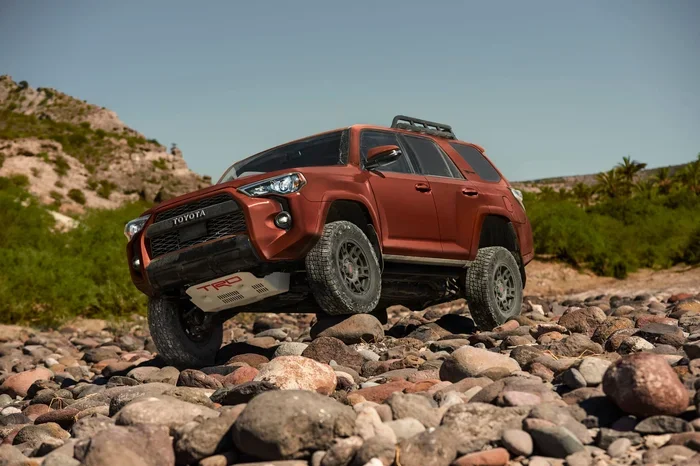
The TRD Pro trim is the top-tier off-road package. It includes everything in the TRD Off-Road trim plus additional upgrades. You get specially tuned Fox off-road shocks, all-terrain tires, and enhanced electronic stability control. The Toyota 4Runner AWD system on the TRD Pro is ready for anything.
Expert drivers often say the TRD Pro is the best factory-ready off-road SUV you can buy. The combination of AWD, locking differentials, and advanced terrain modes makes it a force to be reckoned with.
AWD Performance in Off-Road Conditions
The Toyota 4Runner AWD system truly shines when you take it off the pavement. Whether you are crossing a river, climbing a rocky hill, or navigating deep sand, the AWD system keeps you moving forward.
Crawl Control and Multi-Terrain Select
Crawl control is one of the best features on the Toyota 4Runner AWD system. It acts like a low-speed cruise control for off-road driving. You set the speed, and the system manages the throttle and braking for each wheel. This lets you focus on steering instead of worrying about pedal control.
Multi-terrain select gives you options for different surfaces. You can choose from modes like Mud, Sand, and Rock. Each mode adjusts the traction control and engine response to match the terrain. This makes the 4Runner incredibly versatile in different off-road environments.
Real-World Off-Road Examples
Let us say you are driving on a muddy trail. The Toyota 4Runner AWD system detects wheel slip and redirects power to the wheels with the most grip. You select the Mud mode, and the system softens the throttle response to prevent spinning. The locking rear differential ensures both rear wheels turn at the same speed, keeping you moving forward.
Now imagine you are climbing a steep rock face. You shift into low-range 4WD, engage crawl control, and let the system do the work. The ground clearance and skid plates protect the undercarriage while the AWD system delivers steady power to all four wheels.
These are real-world scenarios where the Toyota 4Runner AWD system proves its worth. It is not just about going fast. It is about going where other vehicles cannot.
Quick Tips: Maximizing Your AWD Performance
Here are some practical tips to get the most out of your Toyota 4Runner AWD system:
- Always check your tire pressure before heading off-road. Lower pressure increases traction on soft surfaces.
- Use 4WD LOW for steep climbs, descents, and rough terrain.
- Do not spin your wheels excessively on pavement. It can damage the drivetrain.
- Engage the locking differential when you need maximum traction on slippery surfaces.
- Drive smoothly when the system is active. Sudden inputs can unsettle the vehicle.
Common Toyota 4Runner AWD Problems and Solutions
The Toyota 4Runner AWD system is known for its durability. But like any mechanical system, it can develop issues over time. Knowing what to watch for can save you money and headaches.
Common AWD Issues
- Transfer case fluid leaks: Old or degraded fluid can cause the transfer case to overheat or make grinding noises.
- Front differential wear: If you frequently drive in 4WD on dry pavement, the front differential can wear prematurely.
- Sensor malfunctions: The electronic stability control sensors can fail, causing warning lights on the dashboard.
- Vacuum actuator problems: Some older models use vacuum-actuated systems that can develop leaks.
Maintenance Tips for AWD Longevity
Keeping your Toyota 4Runner AWD system in great shape comes down to regular maintenance. Here is what you should do:
- Change the transfer case fluid every 30,000 to 60,000 miles.
- Check the front and rear differential fluid at each service interval.
- Inspect all drivetrain components for wear, cracks, or leaks.
- Avoid driving in 4WD on dry pavement unless necessary.
- Replace worn tires with matching sets to prevent drivetrain stress.
Common Mistakes AWD Owners Make
Even experienced 4Runner owners make mistakes. Here are a few to avoid:
- Leaving the system in 4WD on dry pavement: This causes excessive wear on the drivetrain and can damage the transfer case.
- Ignoring warning lights: If your AWD warning light comes on, get it checked immediately.
- Skipping fluid changes: Dirty fluid reduces performance and shortens the life of drivetrain components.
- Overloading the vehicle: Excess weight puts extra strain on the AWD system and suspension.
Is a Toyota 4Runner AWD Right for You?
The Toyota 4Runner AWD system is one of the best in the SUV segment. It is proven, reliable, and incredibly capable. But is it the right choice for you? That depends on how and where you drive.
If you live in an area with harsh winters, the Toyota 4Runner AWD system gives you the confidence to drive safely in snow and ice. If you enjoy weekend camping trips or off-road adventures, the AWD system with low-range gearing and locking differentials makes tackling trails easy and fun.
For daily driving, the part-time AWD system offers excellent fuel economy and smooth highway cruising. The V6 engine provides plenty of power for merging, passing, and hauling cargo. And with electronic stability control and traction control working behind the scenes, you feel safe and secure in any weather.
Expert Insights
According to automotive experts, the Toyota 4Runner AWD system is one of the most robust in its class. Off-road enthusiasts consistently praise the 4Runner for its durability and capability. The combination of a proven V6 engine, reliable transfer case, and advanced electronic systems makes it a standout choice.
Mechanics also note that the 4Runner AWD system is relatively simple compared to complex full-time AWD setups found in some competitors. This simplicity translates to fewer things that can go wrong and lower long-term maintenance costs.
Consumer Reports and J.D. Power have given the 4Runner high marks for reliability and owner satisfaction. The Toyota 4Runner AWD system is a big reason why this SUV continues to earn top ratings year after year.
Conclusion
So, are Toyota 4Runners AWD? Absolutely. The Toyota 4Runner AWD system is a core part of what makes this SUV so capable and popular. From the base SR5 trim to the rugged TRD Pro, every 4Runner comes with an all-wheel drive system built to handle real-world challenges.
Whether you are navigating city streets in the rain or climbing a rocky mountain trail, the Toyota 4Runner AWD system delivers the traction, control, and confidence you need. With features like crawl control, multi-terrain select, and locking differentials, it is one of the best AWD systems in the SUV market.
If you are in the market for a reliable, capable, and durable SUV, the Toyota 4Runner AWD deserves a spot at the top of your list. Do your research, test drive one, and experience the difference for yourself. You will not be disappointed.
Frequently Asked Questions
Do all Toyota 4Runners come with AWD?
Most trims of the Toyota 4Runner come standard with AWD. The SR5, TRD Off-Road, and TRD Pro trims all include the AWD system from the factory. Always check the specific trim and model year to confirm the drivetrain before purchasing.
Is the Toyota 4Runner AWD system full-time or part-time?
The Toyota 4Runner AWD system is part-time. This means it operates in two-wheel drive by default and switches to four-wheel drive when you engage it. This design improves fuel economy on paved roads while still offering strong off-road capability.
Can you turn AWD on and off in a Toyota 4Runner?
Yes. The Toyota 4Runner AWD system allows you to shift between 2WD and 4WD modes using the transfer case. You can also engage 4WD LOW for serious off-road situations. Always make sure to disengage 4WD when driving on dry pavement to prevent drivetrain damage.
What is the difference between AWD and 4WD on the 4Runner?
On the Toyota 4Runner, AWD and 4WD refer to the same system. It is a part-time system that sends power to all four wheels when engaged. The terms are used interchangeably by Toyota, but the system functions as a traditional 4WD setup with a two-speed transfer case and low-range gearing.
Does the Toyota 4Runner AWD system work well in snow?
Yes. The Toyota 4Runner AWD system performs very well in snow. The part-time system sends power to all four wheels when you shift into 4WD, giving you excellent traction on slippery surfaces. The electronic stability control and traction control systems also help maintain grip in winter conditions.
How often should you service the AWD system on a Toyota 4Runner?
You should change the transfer case fluid and differential fluid every 30,000 to 60,000 miles. Regular inspections of the front differential, rear differential, and driveshaft are also recommended. Keeping up with maintenance ensures your Toyota 4Runner AWD system lasts for many years.
=== CONCLUSION ===
The Toyota 4Runner AWD system is a proven, reliable, and capable drivetrain that has earned its reputation over decades. Whether you drive the base SR5 or the premium TRD Pro, you get an all-wheel drive system that handles both everyday commutes and serious off-road adventures with ease.
Understanding how the system works, which trims offer it, and how to maintain it helps you get the most out of your 4Runner. The combination of a strong V6 engine, smart part-time AWD design, and advanced features like crawl control and multi-terrain select makes the 4Runner one of the best SUVs on the market.
If you have been wondering whether a Toyota 4Runner AWD is right for you, the answer is almost certainly yes. Do the research, take a test drive, and experience the capability firsthand. This SUV has been winning over drivers for decades, and it is not slowing down anytime soon.