Are Mazdas Owned by Toyota or a Fully Separate Brand
No, Mazdas are not owned by Toyota. Mazda Motor Corporation is an independent Japanese automaker with its own identity, technology, and leadership. However, the two companies share a strategic partnership that includes cross-shareholding and joint ventures. While Toyota holds a small stake in Mazda, Mazda operates as a fully separate brand with complete autonomy over its vehicles and engineering decisions.
Have you ever wondered about the relationship between two of Japan’s most respected automakers? The question “Are Mazdas Owned by Toyota” comes up surprisingly often. Maybe you saw a Toyota badge on a Mazda-looking car. Or perhaps you heard rumors about the two companies merging. Either way, the answer might surprise you.
The short answer is no. Mazda is not owned by Toyota. But the full story is much more interesting. These two brands share a unique partnership that goes deeper than most people realize. They collaborate on projects, share technology, and even own small stakes in each other. Yet both companies remain fully independent in how they design, build, and sell their vehicles.
In this article, we will break down everything you need to know. We will explore the history between these two automakers. We will look at how their partnership works. And we will clear up the confusion once and for all. Whether you are a Mazda fan, a Toyota loyalist, or just curious about the automotive industry, this guide has you covered.
Key Takeaways
- Mazda is an independent automaker: It is not owned by Toyota and has its own corporate structure, leadership, and manufacturing facilities.
- Toyota holds a small ownership stake: Through cross-shareholding agreements, Toyota owns roughly 3-5% of Mazda, but this does not make Mazda a subsidiary.
- The two brands collaborate on several projects: Including the Toyota Supra and Mazda MX-5 Miata, as well as shared EV and hybrid technology development.
- Mazda has its own unique engineering philosophy: Skyactiv technology, rotary engines, and Jinba Ittai design principles set Mazda apart from Toyota.
- Mazda remains a separate brand identity: From logos to dealerships to vehicle lineups, Mazda operates completely independently in the market.
- The partnership benefits both companies: Shared resources help reduce costs while allowing each brand to maintain its unique character.
- Consumers can buy Mazdas without any Toyota affiliation: Mazda dealerships, service centers, and parts networks are entirely separate from Toyota.
📑 Table of Contents
The History Between Mazda and Toyota
The story of Mazda and Toyota goes back decades. Understanding their history helps explain why people often confuse the two brands. Both companies are Japanese automakers. Both have built global reputations for quality and reliability. But their paths have been quite different.
Early Days of Mazda
Mazda started as a cork-making company in Hiroshima, Japan. The founder, Jujiro Matsuda, shifted the company toward machinery in the 1920s. By the 1930s, Mazda was producing three-wheeled trucks. The company officially became Mazda Motor Corporation in 1984. But the Mazda name had been in use since the 1920s.
Mazda built its reputation on innovation. The company became famous for its rotary engine technology. The Mazda RX-7 and RX-8 showcased this unique engineering approach. Few other automakers dared to pursue the rotary engine. Mazda stuck with it for decades, even when it was not the most profitable path.
Toyota’s Rise as a Global Giant
Toyota Motor Corporation grew into one of the largest automakers in the world. The company started in 1937, founded by Kiichiro Toyoda. Toyota focused on mass production and efficiency. The Toyota Production System became a model for manufacturing worldwide. Models like the Corolla, Camry, and RAV4 became global bestsellers.
Toyota expanded aggressively into every major market. The company built factories on nearly every continent. Today, Toyota sells more vehicles than almost any other automaker. Its fuel efficiency and reliability reputation helped drive this growth.
How the Partnership Began
The Mazda-Toyota relationship deepened in the 2010s. In 2015, Toyota invested $500 million in Mazda. This was a strategic move, not a takeover. Both companies saw the value in working together. Mazda gained access to Toyota’s hybrid and electric technology. Toyota gained insights into Mazda’s sporty driving dynamics and efficient engine designs.
The partnership also involved cross-shareholding. Toyota bought a small percentage of Mazda shares. Mazda bought a small percentage of Toyota shares. This arrangement helps stabilize both companies. It also encourages long-term collaboration without merging operations.
Understanding Mazda’s Independence
Despite the partnership, Mazda operates as a fully independent company. Let us look at the key factors that prove Mazda is its own brand.
Mazda’s Corporate Structure
Mazda Motor Corporation is headquartered in Fuchu, Hiroshima, Japan. It is a publicly traded company on the Tokyo Stock Exchange. Mazda has its own board of directors, CEO, and executive team. The company makes all its own decisions about vehicle development, marketing, and sales.
Toyota does not control Mazda’s operations. Mazda designs its own engines. Mazda engineers its own chassis. Mazda sets its own pricing strategy. The company answers to its shareholders, not to Toyota.
Mazda’s Unique Engineering Philosophy
One of the clearest signs that Mazda is independent is its engineering approach. Mazda follows a philosophy called Jinba Ittai. This means “rider and horse as one.” It reflects Mazda’s focus on creating vehicles that feel connected and responsive.
Mazda developed the Skyactiv technology suite. This includes engines, transmissions, chassis, and body design. Skyactiv engines are known for being highly efficient without sacrificing performance. The Skyactiv-X engine, for example, uses a unique spark-controlled compression ignition process. This is Mazda’s own innovation, not something borrowed from Toyota.
Mazda also continues to invest in rotary engines. The company revived the rotary engine with the Mazda RX-Vision concept. While no production rotary car exists today, Mazda has not abandoned this technology. Toyota has no influence on this decision.
Mazda’s Vehicle Lineup
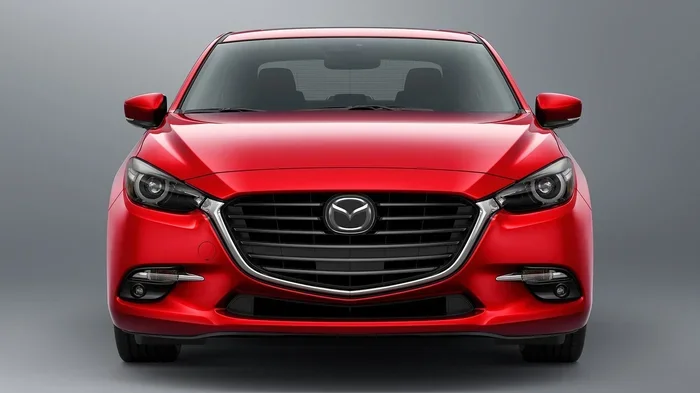
Mazda’s vehicle lineup reflects its independent identity. The Mazda3 is a popular compact sedan and hatchback. The Mazda6 is a mid-size sedan with a sporty edge. The CX-30, CX-5, CX-90, and CX-70 make up Mazda’s SUV family. Each model carries Mazda’s design language, known as Kodo.
None of these vehicles are rebadged Toyotas. They are designed, engineered, and manufactured by Mazda. Some Mazda models are built in Mazda-owned factories in Japan, Mexico, and Thailand. This level of independence is clear.
The Toyota-Mazda Partnership in Detail
Now let us look at what Toyota and Mazda actually do together. The partnership is real and meaningful. But it does not mean ownership.
Shared Manufacturing Facilities
Toyota and Mazda built a joint assembly plant in Alabama. The Toyota-Mazda Manufacturing USA plant produces the Toyota Corolla and the Mazda CX-50. This facility helps both companies reduce costs. It also creates jobs in the local community.
Shared manufacturing does not mean shared ownership. Mazda still controls the design and engineering of the CX-50. Toyota controls the Corolla production at this plant. Each brand maintains its own identity and standards.
The Toyota Supra and Mazda MX-5 Miata
You might be surprised to learn that the Toyota Supra and Mazda MX-5 Miata share a platform. Both cars are built at the same factory in Mexico. But they are very different vehicles.
The Supra is a grand tourer with a focus on power and luxury. It uses a BMW-sourced engine. The MX-5 Miata is a lightweight roadster focused on driving fun. It uses a Mazda-designed engine. The shared platform saves money, but the two cars serve completely different purposes.
This collaboration shows that partnerships in the automotive world are common. Companies share resources without giving up their independence.
Electric Vehicle Development
Both Toyota and Mazda are investing in electric vehicles. Toyota has been a leader in hybrid technology with the Prius. The company has also developed hydrogen fuel cell vehicles like the Mirai.
Mazda has taken a different approach. The company focuses on efficient internal combustion engines while developing battery electric vehicles. The Mazda MX-30 is the company’s first mass-market EV. Mazda has also explored rotary engines as range extenders for electric vehicles.
The partnership allows both companies to share EV technology. But each brand pursues its own strategy. Mazda is not simply following Toyota’s lead.
Why People Think Mazda Is Owned by Toyota
There are several reasons why this question keeps coming up. Let us address the most common misconceptions.
The Toyota Investment
Toyota’s $500 million investment in Mazda made headlines. Some people interpreted this as Toyota buying Mazda. In reality, it was a strategic partnership. Toyota owns a very small stake in Mazda. It does not control the company or influence its decisions.
Shared Platforms and Parts
When two automakers share platforms, it can look like one brand is just a version of the other. But this is standard practice in the industry. Many automakers share components to reduce costs. Ford and General Motors have done this for years. It does not mean one company owns the other.
Toyota Dealerships Selling Mazda Vehicles
In some markets, Toyota dealers also sell Mazda vehicles. This can confuse consumers. But dealership arrangements vary by region. A Toyota dealer selling a Mazda does not mean Mazda is a Toyota product.
Similar Brand Values
Both Toyota and Mazda emphasize quality, reliability, and driving enjoyment. Their values overlap in many ways. This makes it easy to assume they are connected. But many automakers share similar values without being related.
How Mazda Compares to Toyota
Let us put the two brands side by side. This comparison highlights how different they are, despite the partnership.
| Feature | Mazda | Toyota |
|---|---|---|
| Headquarters | Fuchu, Hiroshima, Japan | Toyota City, Aichi, Japan |
| Founded | 1920 | 1937 |
| Ownership | Publicly traded, independent | Publicly traded, independent |
| Toyota’s Stake in Mazda | ~3-5% (minor) | N/A |
| Key Technology | Skyactiv, rotary engine | Hybrid, hydrogen fuel cell |
| Design Philosophy | Jinba Ittai, Kodo | Kaizen, continuous improvement |
| Vehicle Focus | Driving dynamics, sporty feel | Reliability, practicality, efficiency |
| Flagship SUV | CX-90 | Highlander |
| Flagship Sedan | Mazda6 | Camry |
| Sports Car | MX-5 Miata | Supra |
This comparison makes one thing clear. Mazda and Toyota are separate brands with distinct identities. Their partnership helps both companies grow. But neither controls the other.
What Mazda’s Future Looks Like
Mazda has exciting plans ahead. The company continues to invest in its own technology and design. Here is what we can expect.
Expanding the EV Lineup
Mazda has announced plans for new electric vehicles. The company aims to offer EVs across its lineup by 2030. These vehicles will use Mazda’s own platforms and technology. The company is not relying on Toyota for its EV strategy.
Continuing the Rotary Engine Legacy
Mazda has hinted at returning to rotary engines. The company sees potential in rotary technology as a range extender for EVs. This would be a unique differentiator from Toyota. Mazda’s rotary heritage remains a core part of its identity.
Growing Global Presence
Mazda continues to expand into new markets. The company is building new factories and strengthening its dealer network. Mazda’s global sales have been growing steadily. The brand is becoming more competitive with each new model.
The Partnership Will Continue
The Toyota-Mazda partnership is likely to deepen. Both companies benefit from shared resources and technology. But Mazda will remain independent. The cross-shareholding agreement ensures stability. And both brands will continue to offer distinct vehicles for different types of drivers.
Key Takeaways
- Mazda is not owned by Toyota: Mazda Motor Corporation is a fully independent automaker with its own leadership, facilities, and decision-making power.
- Toyota holds a small investment stake: The $500 million investment gives Toyota a minor ownership position, but it does not give Toyota control over Mazda.
- The two brands share manufacturing and technology: Joint ventures and shared platforms help both companies reduce costs and innovate faster.
- Mazda has its own unique engineering identity: Skyactiv technology, rotary engines, and Jinba Ittai philosophy set Mazda apart from every other automaker.
- Mazda’s vehicle lineup is entirely its own: Every Mazda model is designed, engineered, and sold as a Mazda product.
- The partnership benefits both brands: Collaboration allows Mazda and Toyota to share resources without sacrificing their individual identities.
- Consumers should buy Mazda for what it is: Mazda offers a distinct driving experience that cannot be found in any Toyota vehicle.
Frequently Asked Questions
Does Toyota own any part of Mazda?
Yes, Toyota owns a small stake in Mazda through cross-shareholding. Toyota invested $500 million in Mazda in 2015. However, this is a minor ownership position. Toyota does not control Mazda or influence its decisions. Mazda remains fully independent.
Is the Mazda CX-50 built by Toyota?
The Mazda CX-50 shares a manufacturing facility with Toyota. The Toyota-Mazda plant in Alabama produces both the CX-50 and the Toyota Corolla Cross. But the CX-50 is designed, engineered, and branded as a Mazda. It is not a Toyota vehicle.
Are any Mazda models rebadged Toyotas?
No. Every Mazda model is designed and built by Mazda. The MX-5 Miata and Toyota Supra share a platform, but they are completely different vehicles. Mazda controls its own design, engineering, and branding for every model it sells.
Why do some Toyota dealers sell Mazda cars?
Some Toyota dealerships add Mazda to their lineup to offer more options to customers. This is a dealership-level decision, not a corporate ownership arrangement. Mazda vehicles sold at Toyota dealers are still fully Mazda products.
Will Mazda ever be fully owned by Toyota?
There are no plans for Toyota to fully acquire Mazda. The cross-shareholding arrangement benefits both companies as independent entities. Mazda has consistently stated its commitment to remaining an independent brand. Both companies value their partnership but also their independence.
What makes Mazda different from Toyota?
Mazda focuses on driving dynamics and sporty feel. The company is famous for its rotary engines and Skyactiv technology. Toyota emphasizes reliability, practicality, and hybrid technology. While both are quality Japanese automakers, they serve different driving preferences and priorities.
Conclusion
The question “Are Mazdas Owned by Toyota” has a clear answer. Mazda is its own brand. It has always been its own brand. The partnership with Toyota is strategic and beneficial. But it does not change Mazda’s fundamental independence.
Mazda designs its own engines. Mazda engineers its own chassis. Mazda builds its own vehicles. The company’s Skyactiv technology, rotary engine legacy, and Jinba Ittai philosophy are entirely its own. Toyota’s small investment stake does not give it control or influence over Mazda’s direction.
The automotive industry is full of partnerships and collaborations. Companies share resources to innovate and grow. But sharing resources is not the same as sharing ownership. Mazda and Toyota understand this distinction perfectly.
If you are considering a Mazda, you are choosing a brand with a rich history and a clear identity. You are not buying a Toyota product. You are buying a vehicle built by Mazda engineers, designed by Mazda designers, and sold through Mazda dealers. That is something worth celebrating.
So the next time someone asks if Mazdas are owned by Toyota, you can set the record straight. Mazda is a fully separate brand. It always has been. And with exciting new EVs and a renewed commitment to driving joy, Mazda’s future looks brighter than ever.