Does Turning on the Heater Actually Cool the Engine
Yes, turning on the heater can help cool a hot engine. The heater core acts like a small radiator, pulling heat from the coolant and blowing it into the cabin. However, this trick works best as a temporary fix and is not a replacement for proper cooling system maintenance.
You are driving down the road. The temperature gauge on your dashboard starts climbing. Your heart sinks a little. Then you remember something someone told you. Does turning on the heater cool the engine? It sounds too simple to work. But the truth is, it really can help. In this article, we will break down exactly how this trick works, when it helps, and when it is not enough.
Every car owner should know this answer. Overheating can cause serious engine damage. Repair bills can reach hundreds or even thousands of dollars. Understanding how your car’s cooling system works gives you a real advantage. It can save you money. It can also keep you safe on the road.
We will walk through the science behind this simple trick. We will share step-by-step instructions. We will also cover what to do if the heater alone is not enough. By the end, you will feel confident handling a hot engine situation. Let us dive in.
Key Takeaways
- The heater core transfers heat away from the engine coolant: It uses the same fluid that keeps your engine from overheating.
- Turning on the heat can lower engine temperature temporarily: It adds heat absorption capacity to the cooling loop.
- This method works best in emergencies: It is not a long-term solution for a faulty cooling system.
- You should still address the root cause: Low coolant, a broken thermostat, or a failing water pump need proper repair.
- Watch for temperature gauge changes: If the needle drops after turning on the heater, the trick is working.
- Regular maintenance prevents overheating: Coolant flushes and hose checks keep your engine running safely.
- Know when to pull over: If the temperature warning light stays on, stop driving immediately to avoid engine damage.
📑 Table of Contents
- How Does a Car Engine Cooling System Work?
- So, Does Turning on the Heater Cool the Engine?
- How the Heater Core Acts as a Mini Radiator
- Step-by-Step: Using the Heater to Cool an Overheating Engine
- When the Heater Trick Is Not Enough
- Expert Tips for Preventing Engine Overheating
- Is It Safe to Drive With the Heater On to Cool the Engine?
- Key Takeaways
- Conclusion
How Does a Car Engine Cooling System Work?
Before we answer the big question, let us understand the basics. Your engine produces a lot of heat. Combustion happens thousands of times per minute. Without a cooling system, your engine would seize up in minutes. The cooling system keeps everything running at a safe temperature.
The Role of Coolant in Engine Heat Management
Coolant, also called antifreeze, is the lifeblood of your cooling system. It flows through channels inside the engine block. As it moves, it absorbs heat from the engine parts. Then it carries that heat away to the radiator. The radiator releases the heat into the air.
Here is a simple way to think about it. Imagine a hot cup of coffee. If you blow on it, the heat spreads into the air. The radiator does the same thing for your engine. Coolant is the liquid that moves the heat from the engine to the radiator.
Key Components of the Cooling System
Several parts work together to keep your engine cool:
- Water pump: This pushes coolant through the system.
- Thermostat: This valve opens and closes to regulate coolant flow based on engine temperature.
- Radiator: This is the main heat exchanger that releases engine heat into the atmosphere.
- Radiator fan: This blows air through the radiator when the car is slow or idling.
- Hoses: These carry coolant between the engine, radiator, and heater core.
- Heater core: This is a small radiator inside your dashboard that heats your cabin.
All of these parts must work together. If one fails, your engine can overheat quickly. This is where the heater trick comes into play.
So, Does Turning on the Heater Cool the Engine?
The short answer is yes. Turning on the heater can help lower engine temperature. But it is not magic. It works because of how the heater core interacts with the coolant system. Let us look at the science behind this.
The Science Behind the Heater Trick
When you turn on the heater, you are turning on the heater core. The heater core is a small heat exchanger. It looks like a tiny radiator. Coolant flows through it. A fan blows air across it and into your car cabin.
Here is what happens step by step:
- You turn the heater on to full blast.
- The heater core receives hot coolant from the engine.
- The fan blows air over the heater core.
- Heat transfers from the coolant into the air.
- The now-cooler coolant returns to the engine.
- The engine loses some of its excess heat.
Basically, the heater core acts as an extra radiator. It gives the coolant more surface area to release heat. This can bring down the engine temperature, especially in a pinch.
When Does This Trick Actually Work?
The heater trick works best in certain situations. Here are the times it helps most:
- Mild to moderate overheating: If the temperature gauge is rising but has not hit the red zone, the heater can help pull heat away.
- Low-speed or idling driving: At low speeds, the radiator does not get enough airflow. The heater compensates by adding another heat exchange path.
- Emergency situations: If you are stuck in traffic or the radiator fan fails, turning on the heat can buy you time.
- Hot weather driving: On very hot days, the radiator struggles to release heat. The heater adds extra cooling capacity.
However, this trick does not fix the underlying problem. It is a temporary measure. You still need to find out why your engine is overheating in the first place.
How the Heater Core Acts as a Mini Radiator
The heater core is one of the most underrated parts in your car. Most people only think about it when the cabin gets cold. But it plays a big role in engine cooling too. Understanding how it works helps you appreciate why the heater trick is effective.
What Happens Inside the Heater Core
The heater core looks like a small metal box with tubes running through it. Hot coolant enters one side. A fan blows cabin air across these tubes. The heat moves from the coolant into the air. Warm air comes out of your vents. Cooler coolant flows back to the engine.
The heater core is essentially a heat exchanger. It transfers thermal energy from one fluid (coolant) to another (air). This is the same basic principle that makes a radiator work. The only difference is size and purpose.
Why the Heater Core Helps Cool the Engine
When you turn the heater on full blast, you are maximizing the heat transfer. More air flows over the heater core. More heat gets pulled from the coolant. The coolant returns to the engine at a lower temperature.
Think of it this way. Your engine is like a pot of boiling water. The radiator is one way to cool it down. The heater core is like adding a second cooling method. Together, they remove heat faster than either one alone.
This is why does turning on the heater cool the engine is a real and effective technique. It adds cooling capacity to a system that may already be stressed.
Step-by-Step: Using the Heater to Cool an Overheating Engine
If you find yourself in an overheating situation, here is exactly what to do. Follow these steps carefully to protect your engine.
What to Do Right Away
- Pull over safely. Find a flat, safe spot to stop. Turn off the engine.
- Turn the heater to maximum. Set the temperature to hot. Set the fan to full blast. Do this before you restart the engine.
- Open the windows. This lets hot air escape from the cabin.
- Restart the engine and let it idle. Watch the temperature gauge closely.
- Check the temperature gauge. If the needle starts dropping, the heater trick is working.
- Drive slowly to a safe location. If the temperature stabilizes, you can drive to a mechanic or home.
Some drivers also crack open the hood to let heat escape. This can help too. But be careful. Do not open the hood if steam is shooting out. You could get burned.
Common Mistakes to Avoid
There are some things you should never do when your engine is overheating:
- Do not ignore the temperature warning light. If the light is on, stop driving immediately.
- Do not open the radiator cap right away. The system is under pressure. Hot coolant can spray out and cause burns.
- Do not pour cold water on a hot engine. The sudden temperature change can crack the engine block.
- Do not keep driving if the gauge stays in the red. Continued driving can cause warped heads, blown head gaskets, or engine failure.
These mistakes can turn a simple overheating incident into a major repair job. Always err on the side of caution.
When the Heater Trick Is Not Enough
Sometimes turning on the heater does not fix the problem. If your engine is seriously overheating, you need more than a trick. You need to understand what is really going wrong.
Signs Your Cooling System Needs Repair
Watch for these warning signs that point to a deeper problem:
- The temperature gauge stays in the red zone even after turning on the heater.
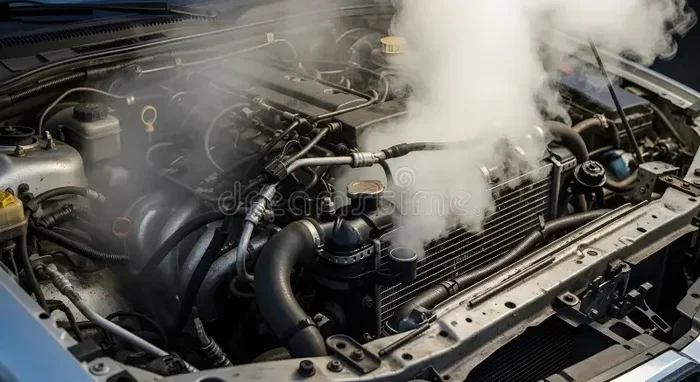
- Steam or smoke comes from under the hood. This usually means coolant is leaking.
- You see a puddle of green, orange, or pink fluid under your car. This is likely coolant.
- The heater blows cold air even when set to hot. This can mean low coolant or a clogged heater core.
- The coolant warning light stays on. This indicates low coolant levels or a sensor issue.
- You hear a knocking sound from the engine. This can mean the engine is running too hot.
If you notice any of these signs, do not rely on the heater trick alone. You need a proper inspection.
Common Causes of Engine Overheating
Several issues can cause your engine to overheat:
- Low coolant level: Coolant leaks over time. A simple top-off may fix it.
- Broken thermostat: A stuck thermostat prevents coolant from flowing to the radiator.
- Failing water pump: Without a working pump, coolant does not circulate.
- Clogged radiator: Dirt and debris can block airflow through the radiator.
- Broken radiator fan: The fan helps cool the radiator at low speeds. If it fails, overheating follows.
- Blown head gasket: This is a serious issue that allows combustion gases into the cooling system.
Each of these problems requires a different fix. A mechanic can diagnose the exact cause and recommend the right repair.
Expert Tips for Preventing Engine Overheating
The best way to deal with an overheating engine is to prevent it from happening in the first place. Here are some expert tips that every car owner should follow.
Regular Maintenance Habits That Help
- Check your coolant level monthly. Low coolant is the number one cause of overheating.
- Get a coolant flush every 30,000 miles. Old coolant loses its effectiveness over time.
- Inspect radiator hoses for cracks or leaks. Worn hoses can fail without warning.
- Replace the thermostat on schedule. A stuck thermostat is a common and preventable cause of overheating.
- Keep the radiator clean. Remove bugs, leaves, and debris from the front of the radiator.
- Listen for unusual sounds. Grinding or whining near the engine can signal a failing water pump.
Quick Checks You Can Do at Home
You do not need to be a mechanic to do these simple checks:
- Look at the coolant reservoir. The fluid level should be between the minimum and maximum marks.
- Check the color of the coolant. It should be bright green, orange, or pink. If it looks brown or rusty, it is time for a flush.
- Feel the radiator hoses when the engine is warm. They should be warm but not hard or brittle.
- Watch the temperature gauge while driving. If it creeps up on hot days, get the system checked.
- Test the heater. If the heater does not blow hot air, the heater core or coolant level may be the issue.
These small habits can save you from a big repair bill. They also help your car last longer and run better.
Is It Safe to Drive With the Heater On to Cool the Engine?
Many drivers wonder if this is safe. The short answer is yes, for a short time. Turning on the heater to pull heat from the engine is a safe and widely accepted practice. It is even recommended by many mechanics as a temporary measure.
However, there are limits. If the temperature gauge does not drop after a few minutes, you should stop driving. Continuing to drive an overheating engine can cause permanent damage. The cost of a tow truck is far less than the cost of a new engine.
Also, keep in mind that driving with the heater on makes the cabin very hot. The air conditioning compressor adds load to the engine, which can make things worse. If you are using the heater trick, turn off the A/C. This reduces the strain on the engine and lets the heater do its job more effectively.
Some drivers also ask whether this works for diesel engines. The answer is yes. Diesel engines use the same basic cooling system. The heater core works the same way. However, diesel engines run hotter than gasoline engines. So the heater trick may not be as effective in severe cases.
Another common question is whether this works in all cars. The answer is mostly yes. Almost every car with a liquid cooling system has a heater core connected to the coolant loop. Whether you drive a sedan, SUV, or truck, the same principle applies.
Key Takeaways
- The heater core is a heat exchanger: It pulls heat from the coolant and releases it into the cabin.
- Turning on the heater can lower engine temperature: It adds extra cooling capacity to the system.
- This works best as a temporary fix: It is not a substitute for proper cooling system repairs.
- Always check for the root cause of overheating: Low coolant, broken thermostats, and failing water pumps are common culprits.
- Prevention is the best strategy: Regular coolant checks and flushes keep your engine running cool.
- Know when to stop driving: If the temperature warning light stays on, pull over and call for help.
Conclusion
So, does turning on the heater cool the engine? The answer is a clear yes. The heater core acts as a mini radiator. It pulls excess heat from the coolant and releases it into your car cabin. This can bring down the engine temperature in a pinch, especially during mild overheating or emergency situations.
But here is the important part. This trick is not a permanent fix. It is a temporary solution that gives you time to find a safe place to stop. If your engine keeps overheating, you need to address the real problem. Check the coolant level. Inspect the hoses. Get the thermostat and water pump tested. A proper diagnosis from a trusted mechanic will save you from bigger headaches down the road.
Taking care of your car’s cooling system is one of the best things you can do as a car owner. It keeps your engine healthy. It keeps you safe. And it saves you money on expensive repairs. Next time you see that temperature gauge climbing, you will know exactly what to do. You will be prepared. You will be confident. And you will handle the situation like a pro.
Keep these tips in mind. Share them with a friend who might need them. And remember, a little knowledge goes a long way when it comes to keeping your car running smoothly all year long.
Frequently Asked Questions
Can I use the heater to cool my engine while driving?
Yes, you can turn on the heater while driving to help pull heat from the engine. Set it to full hot and the fan to maximum. This works best when the engine is starting to run warm but has not yet reached the danger zone on the temperature gauge.
How long should I leave the heater on to cool the engine?
Leave the heater on for about 5 to 10 minutes while idling. Watch the temperature gauge. If the needle starts dropping, the trick is working. If it does not drop, pull over safely and turn off the engine to let it cool down.
Will turning on the heater damage my car?
No, turning on the heater will not damage your car. It uses the same coolant system that is already designed to handle engine heat. The heater core is a built-in part of your car’s cooling system and is meant to handle this heat transfer safely.
What should I do if the heater does not cool the engine?
If the temperature gauge does not drop after turning on the heater, pull over safely. Turn off the engine and let it cool for at least 15 minutes. Do not open the radiator cap while the engine is hot. Once cooled, check the coolant level and look for leaks. Call a mechanic if needed.
Is it better to use the heater or the air conditioning when the engine overheats?
Use the heater, not the air conditioning. The A/C compressor adds extra load to the engine, which can make overheating worse. The heater, on the other hand, acts as a secondary radiator and pulls heat away from the engine without adding extra strain.
How can I prevent my engine from overheating in the future?
Check your coolant level regularly and get a coolant flush every 30,000 miles. Inspect hoses for cracks, keep the radiator clean, and have the thermostat and water pump tested during routine maintenance. These simple habits go a long way in preventing overheating issues.