Can I Clean My Engine Air Filter Instead of Replacing It
Many car owners wonder whether they can clean their engine air filter instead of replacing it. The answer depends on the filter type, how dirty it is, and your vehicle’s make and model. Paper filters are almost always meant to be swapped out, while reusable cotton or foam filters can handle multiple cleanings. Cleaning the wrong filter type can hurt engine performance, reduce fuel efficiency, and even cause costly damage. This guide walks you through every scenario so you can make the right call for your car.
You pop the hood, take a look at your air filter, and it’s covered in dust and grime. Your first thought might be, “Can I just clean this and keep going?” It is a totally natural question. After all, replacing an air filter isn’t cheap, and nobody wants to spend money on something they could fix themselves.
The truth is, the answer isn’t a simple yes or no. It depends on what kind of filter you have, how dirty it is, and what kind of driving you do. Can I clean my engine air filter instead of replacing it? — that’s the question we’re going to answer in full today. We’ll look at every filter type, every cleaning method, and every situation where cleaning makes sense — and where it really doesn’t.
By the end of this guide, you’ll know exactly what to do with your dirty air filter. No guesswork. No guesswork. Just clear, practical advice that keeps your engine running strong and your wallet happy.
Key Takeaways
- Filter type matters most: Paper filters cannot be cleaned, but reusable cotton and foam filters can.
- Cleaning has limits: Even reusable filters lose effectiveness after several cleanings and eventually need replacing.
- Using the right cleaning kit: A proper air filter cleaning solution preserves filter integrity and airflow.
- Engine damage risk: A poorly cleaned or damaged filter lets dirt into the engine, causing serious problems.
- Cost savings exist: Reusable filters save money over time, but only when maintained correctly.
- Check your owner’s manual: Always follow the manufacturer’s recommendations for filter care and replacement.
- Performance impact: A clogged filter reduces airflow, which lowers engine power and fuel economy.
📑 Table of Contents
- Why Your Engine Air Filter Matters So Much
- Types of Engine Air Filters and What They Can Handle
- Can I Clean My Engine Air Filter Instead of Replacing It? The Real Answer
- How to Properly Clean a Reusable Air Filter
- Common Mistakes People Make When Cleaning Air Filters
- When Cleaning Just Isn’t Enough: Signs You Need a New Filter
- Expert Insights: What Mechanics Recommend
- Key Takeaways
- Conclusion
Why Your Engine Air Filter Matters So Much
Before we get into cleaning, let’s talk about why this little filter is such a big deal. Your engine needs air to burn fuel. A lot of air. In fact, a typical engine burns about 10,000 gallons of air for every single gallon of gas. That air carries dust, pollen, dirt, and all kinds of debris. The air filter catches all of that before it reaches your engine’s combustion chambers.
A clean air filter allows smooth, unrestricted airflow. When airflow stays free, your engine runs efficiently. You get better fuel economy, smoother acceleration, and lower emissions. A dirty filter chokes the engine. It restricts the air supply, which forces the engine to work harder. Over time, this leads to reduced power, poor mileage, and even long-term engine damage.
So maintaining proper air filter maintenance isn’t just about keeping your hood clean. It’s about protecting the heart of your vehicle. Whether you drive a daily commuter or a weekend toy, your engine filter plays a role in how well everything runs.
Types of Engine Air Filters and What They Can Handle
Not all air filters are created equal. The type you have determines whether cleaning is even an option. Let’s break down the three main types you’ll encounter.
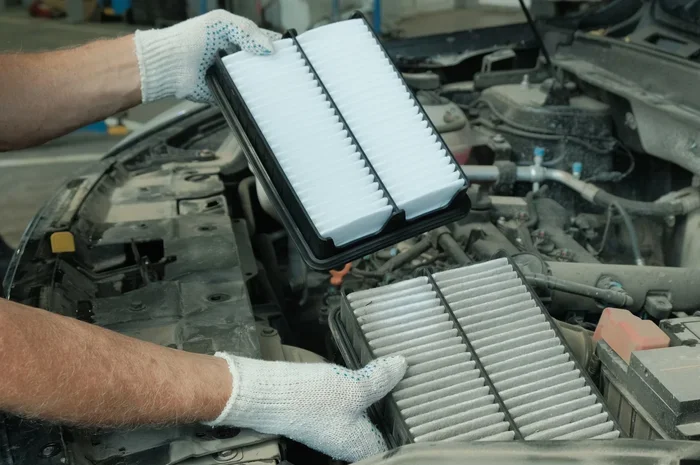
Paper Air Filters
Paper filters are the most common type in everyday vehicles. They’re affordable, disposable, and designed for one-time use. The material is made of layered paper pleats that trap dirt effectively. Once those paper fibers get clogged with dirt and debris, they can’t be restored.
You might be tempted to bang it out or blow compressed air through it. Some people even try washing it with soap and water. None of these methods work well. Paper fibers break down when wet or under pressure. Once damaged, the filter can’t properly screen out particles. That means dirt passes through to your engine.
The short answer: Do not try to clean a paper air filter. Just replace it. It’s not worth the risk.
Reusable Cotton Gauze Filters
Cotton gauze filters are popular among car enthusiasts and off-road drivers. Brands like K&N are well known for this type of filter. They use layers of cotton gauze treated with a special oil that traps particles while still allowing excellent airflow. These filters are built to last for the life of the vehicle — as long as you maintain them properly.
Cleaning a cotton filter is straightforward. You use a dedicated air filter cleaning solution to dissolve the oil and trapped grime. Then you re-oil the filter and let it dry completely before reinstalling. When done correctly, a cotton filter can be cleaned multiple times before it needs replacing.
The short answer: Yes, you can clean these filters — and you should as part of regular air filter maintenance.
Foam and Polyurethane Filters
Foam filters are common in off-road vehicles, lawn equipment, and older cars. They’re thick, spongy, and excellent at trapping large particles. Some foam filters are designed to be cleaned and reused, while others are disposable.
Washable foam filters can be cleaned with soap and water, then dried thoroughly and re-oiled. The key is making sure no soap residue remains and the filter dries completely before reinstallation. A wet or soapy filter can restrict airflow and even damage your mass airflow sensor.
The short answer: Check your filter’s label. If it says “washable” or “reusable,” you can clean it. Otherwise, replace it.
Can I Clean My Engine Air Filter Instead of Replacing It? The Real Answer
Now we get to the core question. The answer comes down to three factors: filter type, filter condition, and your vehicle’s needs. Let’s walk through each one.
If you have a paper filter, the answer is no. Period. Paper filters are not designed for cleaning. Trying to reuse them compromises your engine protection and airflow. You should replace them according to your vehicle’s regular maintenance schedule — typically every 12,000 to 15,000 miles, or as recommended in your owner’s manual.
If you have a reusable cotton or foam filter, the answer is yes — with some important caveats. You can clean these filters, but only a certain number of times. Even the best high-flow air filter will eventually wear out. The fibers break down, the oil coating degrades, and the filter loses its ability to trap fine particles effectively.
Here is a simple comparison to help you decide:
| Filter Type | Can It Be Cleaned? | How Many Times? | Replacement Needed? |
|---|---|---|---|
| Paper | No | 0 | Yes, every 12,000-15,000 miles |
| Cotton Gauze (Reusable) | Yes | 3-5 times before replacement | After multiple cleanings or damage |
| Foam (Washable) | Yes | Multiple times | When foam becomes brittle or torn |
| Foam (Disposable) | No | 0 | Yes, as needed |
One thing many people overlook is the condition of the filter’s frame or housing. Even if the filter element looks cleanable, a bent or damaged frame means the filter won’t seal properly. A poor seal lets unfiltered air bypass the filter and enter the engine. That’s worse than a dirty filter in some cases.
How to Properly Clean a Reusable Air Filter
If you have a washable filter, cleaning it the right way is essential. A sloppy job can do more harm than good. Here is a step-by-step walkthrough.
Step 1: Remove the Filter
Open your air filter housing and carefully remove the filter. Take note of how it sits and which direction it faces. This makes reinstallation much easier. Most air filter housings have clips or screws. Use the right tool so you don’t damage the housing.
Step 2: Inspect the Filter
Hold the filter up to a light source. If light passes through easily, the filter still has life left. If it’s completely opaque and clogged, it might be beyond saving. Also look for tears, holes, or a damaged rubber gasket. Any of these issues means the filter needs to be replaced, not cleaned.
Step 3: Apply Cleaning Solution
Use a dedicated air filter cleaning kit. These kits come with a spray or soak solution specifically formulated to break down oil and grime without damaging the filter material. Spray both sides generously. Let it sit for the time recommended on the product label — usually 10 to 15 minutes.
Never use household cleaners, dish soap, or gasoline. These substances can damage the filter’s oil coating or leave residues that restrict airflow. A proper air filter cleaning solution is worth every penny.
Step 4: Rinse Thoroughly
Rinse the filter with clean, low-pressure water. Start from the inside and work outward. High-pressure water can damage the filter fibers, so keep the pressure gentle. Keep rinsing until the water runs clear and free of suds or residue.
Step 5: Dry Completely
This step is critical. A damp filter installed in the housing can cause all kinds of problems. Let the filter air dry completely — this can take 24 hours or more. Place it in a clean, dry area with good airflow. Never use a heat gun or oven to speed up drying. Excessive heat warps the filter material.
Step 6: Re-Oil and Reinstall
Once dry, apply a fresh coat of air filter oil evenly across the filter. Use the oil that came with your cleaning kit or one recommended by the filter manufacturer. Wipe away any excess oil. Then reinstall the filter in the correct orientation, making sure the seal sits properly in the housing.
Quick Tips for Cleaning Success
- Clean your filter in a well-ventilated area. Cleaning solutions can produce fumes.
- Wear gloves. The oil and cleaning solution can stain skin and clothing.
- Don’t rush the drying step. A damp filter is worse than a dirty one.
- Mark your calendar. Note the cleaning date so you track your filter’s lifespan.
- Keep a spare filter on hand. This way you can swap in a clean one while the other dries.
Common Mistakes People Make When Cleaning Air Filters
Even with good intentions, many people make mistakes that reduce filter effectiveness or cause engine problems. Here are the most common ones to avoid.
Using the Wrong Cleaning Method
Some people throw a paper filter in the dishwasher or soak it in gasoline. Both are terrible ideas. The dishwasher’s heat and moisture destroy paper fibers. Gasoline strips the filter’s oil coating and leaves behind flammable residue. Always match your cleaning method to your filter type.
Not Letting the Filter Dry Fully
This is the number one mistake people make. A filter that’s even slightly damp when installed will restrict airflow. In worst cases, moisture reaches the engine and causes corrosion or sensor issues. If you live in a humid climate, give the filter extra drying time.
Over-Oiling the Filter
Too much oil on a cotton filter attracts dirt and clogs the pores. It also creates a sticky residue that can contaminate the mass airflow sensor. Apply a thin, even coat. You should not see dripping oil when you hold the filter up.
Ignoring the Filter Housing
While you have the filter out, take a moment to inspect the housing. Blow out any loose debris. Check the rubber gasket for cracks or gaps. A clean housing ensures a proper seal and prevents unfiltered air from sneaking past.
Waiting Too Long Between Cleanings
Even the best reusable filter needs regular attention. If you drive in dusty or off-road conditions, you may need to clean your filter every 5,000 to 10,000 miles. Waiting too long between cleanings allows grime to build up beyond what any cleaning method can fix.
When Cleaning Just Isn’t Enough: Signs You Need a New Filter
Sometimes cleaning is not the answer. Knowing the signs that your filter needs replacing saves you from engine trouble down the road.
One clear sign is visible damage. Tears, holes, or a collapsed filter element mean the filter has reached the end of its life. No amount of cleaning fixes a broken filter.
Another sign is persistent poor engine performance. If you’ve cleaned your filter recently but still notice rough idling, reduced acceleration, or lower fuel efficiency, the filter might be too far gone. Fine particles that slip through a worn filter can coat your mass airflow sensor and clog your intake system.
A strong smell of dirt or dust coming from the engine bay after cleaning is another red flag. It means the filter material is breaking down and shedding particles into the intake.
Finally, follow your mileage schedule. Even with excellent care, a filter has a finite air filter lifespan. Most reusable filters need replacement every 50,000 miles or so, depending on driving conditions. Check your owner’s manual for the exact recommendation.
Expert Insights: What Mechanics Recommend
We asked a few experienced mechanics about air filter cleaning, and their advice aligns with what we’ve covered. Most professional mechanics agree that paper filters should never be cleaned. The cost of a new paper filter is low compared to the cost of repairing engine damage caused by a compromised filter.
For reusable filters, mechanics emphasize the importance of using the right cleaning products. “An air filter cleaning kit costs around twenty to thirty dollars,” says one veteran mechanic. “That’s nothing compared to replacing a mass airflow sensor, which can run several hundred dollars. Proper cleaning is a small investment with big returns.”
Another common recommendation from the pros is to clean your filter more often if you drive in harsh conditions. Dusty roads, construction zones, and heavy traffic all shorten the time between cleanings. If you notice your filter looks worse than normal, don’t wait for your scheduled maintenance. Clean it sooner.
One mechanic shared a simple rule of thumb: “If light doesn’t pass through the filter easily, it’s time to clean or replace it. Your engine deserves the same clean air you breathe.”
Key Takeaways
- Filter type determines everything: Paper filters cannot be cleaned; cotton and washable foam filters can.
- Use the right cleaning solution: A dedicated air filter cleaning kit preserves filter integrity and airflow.
- Dry completely before reinstalling: Moisture in the intake system can cause serious engine damage.
- Watch for warning signs: Tears, poor performance, and dust smells signal that replacement is needed.
- Reusable filters save money long-term: But only if you clean and maintain them correctly.
- Follow your owner’s manual: The manufacturer knows your engine best and provides the best guidance.
Conclusion
So, can I clean my engine air filter instead of replacing it? The answer is: it depends. If you have a paper filter, the answer is no. If you have a washable cotton or foam filter, the answer is yes — with proper care and the right cleaning method.
Air filter maintenance is one of the simplest and most impactful things you can do for your vehicle. A clean filter means better airflow, improved fuel efficiency, and a healthier engine. Whether you choose to clean or replace, the most important thing is to stay on top of it. Don’t let a dirty filter sneak up on you and cause bigger problems.
Take a few minutes today to check your filter. If it’s a reusable type and still in good shape, grab your cleaning kit and give it some care. If it’s a paper filter that’s seen better days, swap it out for a fresh one. Your engine will thank you with smoother runs, better mileage, and a longer life ahead.
Keep this guide handy the next time you’re under the hood. And remember, a little maintenance goes a long way. Your car, truck, or SUV is counting on you to keep that air filter in top shape.
Frequently Asked Questions
Can I wash my engine air filter with water?
It depends on the filter type. Paper filters should never get wet because the fibers break down and lose their filtering ability. Reusable cotton and foam filters can be rinsed with low-pressure water, but only if they are specifically labeled as washable. Always dry the filter completely before reinstalling it.
How often should I clean my reusable air filter?
Most reusable air filters should be cleaned every 5,000 to 10,000 miles under normal driving conditions. If you drive in dusty areas, on unpaved roads, or in heavy traffic, you may need to clean it more often. Check the manufacturer’s guidelines for the best schedule.
What happens if I drive with a dirty air filter?
A dirty air filter restricts airflow to your engine. This causes reduced power, poor fuel economy, rough idling, and increased emissions. Over time, dirt particles can pass through a clogged filter and damage internal engine components like pistons and cylinders. Replacing or cleaning the filter promptly prevents these issues.
Is it cheaper to clean a filter or buy a new one?
For reusable filters, cleaning is significantly cheaper over time. A quality air filter cleaning kit costs around $20 to $30 and can be used many times. A new high-performance cotton filter can cost $50 to $100 or more. Paper filters are inexpensive to replace but cannot be cleaned, so cleaning them would be a waste of time and money.
Can a dirty air filter trigger the check engine light?
Yes, in some cases. A severely clogged filter can cause airflow issues that affect the mass airflow sensor and oxygen sensor readings. These sensor problems can trigger the check engine light. While a dirty filter is not the most common cause, it is worth checking if you notice the light alongside reduced engine performance.
What is the best air filter cleaning solution to use?
Dedicated air filter cleaning solutions from brands like K&N or CRC are the safest and most effective options. These products are specifically formulated to dissolve oil and grime without damaging the filter material. Avoid household cleaners, gasoline, or high-pressure washers, as these can destroy the filter or leave harmful residues behind.