Can Jeep Interiors Get Wet And How To Deal With Moisture
Yes, Jeep interiors can get wet, and knowing how to handle moisture is essential for every Jeep owner. Whether you drive a Jeep Wrangler with a soft top or a Sahara with a hard top, water intrusion is a real concern. This guide covers everything from waterproofing your interior to dealing with existing moisture and preventing long-term damage. You will learn practical tips, product recommendations, and common mistakes to avoid. Keep your Jeep cabin dry, clean, and protected for years to come.
Jeep owners love their trucks for toughness and adventure-readiness. But one question comes up often: Can Jeep Interiors Get Wet and still stay in good shape? The short answer is yes, they can get wet. The real question is what happens next and how you handle it.
Moisture in a Jeep cabin is more common than most people think. Rain leaks through soft tops. Condensation builds up on cold mornings. Splashes from off-road trails soak the floor. Every Jeep driver faces this at some point. The good news is that with the right knowledge and tools, you can protect your interior and deal with any water damage that does occur.
This article walks you through everything you need to know. We cover what Jeep interiors are made of, how moisture gets in, how to prevent it, and how to fix existing damage. Whether you drive a two-door Wrangler or a four-door Grand Cherokee, this guide has practical advice for you.
Key Takeaways
- Jeep interiors are not fully waterproof: Even rugged models can suffer water damage from rain, condensation, and splashing.
- Soft tops and hard tops both allow moisture in: Understanding how water enters helps you take the right protective steps.
- Waterproof floor mats and seat covers are essential: These are the first line of defense against interior damage.
- Act quickly when moisture gets in: Drying your Jeep interior promptly prevents mold, mildew, and lasting odors.
- Regular maintenance keeps interiors dry: Simple habits like checking seals and airing out your Jeep go a long way.
- Multiple products can help: From fabric protectors to moisture absorbers, the right tools make a big difference.
- Prevention is always better than repair: Investing in waterproofing saves money and preserves your Jeep’s value.
📑 Table of Contents
Understanding Jeep Interior Materials
Before you can protect your Jeep from moisture, you need to know what you are working with. Different materials react to water in different ways. Some handle wet conditions well, while others stain or warp easily.
Vinyl and Plastic Surfaces
Most Jeep interiors use vinyl and hard plastic for seats, dashboards, and door panels. These materials are naturally moisture-resistant. Water sits on the surface and wipes off easily. Vinyl seats in a Jeep Wrangler Sahara, for example, handle splashes without staining. However, prolonged exposure to standing water can still cause damage over time. The edges and seams where vinyl meets other materials are the weakest spots.
Fabric Seats and Carpet
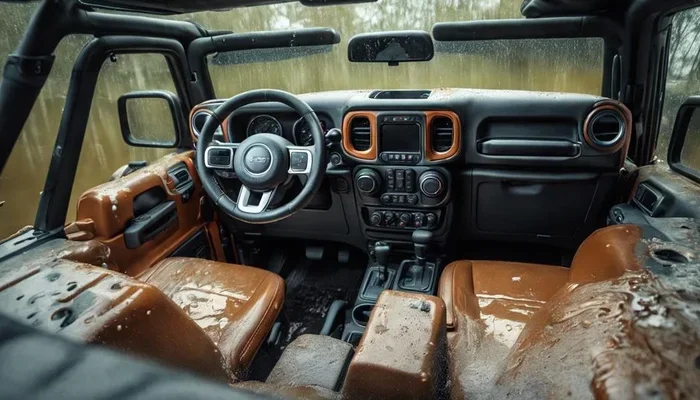
Fabric seats and carpet absorb water quickly. This is the biggest concern for Jeep owners. Once fabric soaks through, it holds moisture deep inside the padding. This leads to mold, mildew, and bad smells if not dried properly. Cloth seats in a Jeep Gladiator or Wrangler look great but need extra protection from water.
Rubber Floor Mats and Cargo Liners
Rubber floor mats are your best friend when it comes to water. They form a barrier between the wet outside world and your carpet. A good set of custom-fit Jeep floor mats catches most of the moisture before it reaches the floor. Cargo liners work the same way for the back seat and trunk area.
Soft Top Fabrics
Jeep soft tops use reinforced vinyl or canvas. These materials are designed to repel water on the outside. But over time, seams can leak, and the fabric can degrade. Older soft tops especially need regular treatment to maintain their water resistance. A new soft top can cost several hundred dollars, so keeping it in good shape matters.
Common Causes Of Moisture In Jeep Interiors
Water finds its way into Jeep cabins more easily than you might expect. Understanding the sources helps you prevent problems before they start.
Rain and Snow Through Soft Tops
Soft top Jeeps are the most vulnerable to water intrusion. Even a small gap in the seals around the windshield or doors lets rain drip inside. Snow melts and soaks through the fabric. If you drive with the top down and it starts to rain, your entire interior can get drenched. This is one of the most common reasons Jeep owners ask, “Can Jeep Interiors Get Wet” and how bad is it really.
Condensation Buildup
Condensation happens when warm, humid air meets cold surfaces inside your Jeep. This is very common in winter. You wake up to water droplets on the windows and damp seats. Over time, this constant moisture cycle causes mold growth and musty odors. Condensation is sneaky because it happens even when it has not rained.
Off-Road Splashing and Flooding
Jeeps are built for off-roading, and that means going through water. Deep puddles, streams, and muddy trails send water over the fenders and into the cabin. Water splashes onto the seats, drips through the floor, and soaks the carpet. If you regularly take your Jeep off-road, interior waterproofing is not optional-it is essential.
Leaking Seals and Weatherstripping
The rubber seals around your Jeep doors and windows wear out over time. When they crack or shrink, they no longer keep water out. A small leak can cause big damage if it goes unnoticed for weeks. Checking your weatherstripping every few months is a simple way to avoid this problem.
Wet Clothing and Gear
Sometimes the moisture source is you. Damp jackets, muddy boots, and wet backpacks leave water on the seats and floor. Over time, this adds up and creates the same problems as a rain leak. This is an easy one to fix with simple habits and protective accessories.
How To Protect Your Jeep Interior From Water Damage
Prevention is always better than repair. A few smart choices can keep your Jeep interior dry and looking great for years.
Install Waterproof Floor Mats
This is the single most effective step you can take. Custom-fit rubber floor mats cover the entire floor and trap water, mud, and dirt. They are easy to remove and clean. Brands like WeatherTech and Husky Liners make mats specifically designed for Jeep models. Look for mats with raised edges that prevent water from spilling over onto the carpet.
Use Seat Covers
Waterproof seat covers protect your fabric or vinyl seats from moisture damage. They are especially useful if you regularly haul wet gear or have passengers who track in water. Mesh seat covers work well in warm weather because they allow airflow. Full-coverage waterproof covers are better for rainy seasons and off-road trips.
Apply Fabric Protector Spray
Fabric protector sprays create an invisible barrier on your seats and carpet. Water beads up on the surface instead of soaking in. Spray your interior fabric every few months for best results. Products like Scotchgard and 303 Fabric Guard are popular choices among Jeep owners. This is a quick, affordable way to boost your interior’s water resistance.
Seal Your Soft Top
If you drive a soft top Jeep, keeping the seals in good condition is critical. Replace worn door seals and windshield trim regularly. Apply a soft top protectant to the fabric to maintain its water-shedding ability. You can also use a waterproof spray made specifically for soft top materials. A well-maintained soft top keeps your interior dry through many rainy seasons.
Keep a Drain Plug Kit Handy
Some Jeep models have drain plugs in the doors that can loosen over time. Carry a spare set of plugs and check them periodically. A missing drain plug is one of the fastest ways for water to enter your cabin. This small part makes a huge difference in keeping moisture out.
Use Moisture Absorbers
Even with the best protection, some moisture can still get in. Placing moisture absorbers like DampRid or silica gel packets in your Jeep helps catch excess humidity. These are especially useful during humid months or when you store your Jeep for long periods. They prevent mold and keep the air inside your cabin fresh.
Quick Tips For Jeep Interior Moisture Prevention
- Leave your Jeep doors open after rain to air out the interior
- Keep a small towel in your Jeep to wipe up spills quickly
- Check your soft top seals before every rainy season
- Vacuum and clean your interior regularly to prevent mold
- Store a moisture absorber in your Jeep year-round
- Avoid leaving wet items inside your Jeep overnight
Dealing With Existing Moisture And Water Damage
Even the best prevention plans can fail. When moisture does get into your Jeep interior, you need to act fast. The longer water sits, the worse the damage becomes.
Step 1: Remove Standing Water Immediately
If you notice standing water in your Jeep, remove it right away. Use towels, a wet-dry vacuum, or a small mop to soak it up. Do not let water sit on the carpet or seep under the seats. The faster you remove it, the less chance it has to cause lasting damage. For deep puddles from off-roading, a portable car vacuum works wonders.
Step 2: Dry the Interior Thoroughly
After removing standing water, you need to dry the entire interior. Open all doors and the sunroof if your Jeep has one. Use fans or a dehumidifier to speed up the drying process. On a sunny day, park your Jeep in direct sunlight with the windows cracked. You can also use a hair dryer on a low setting for tight spots like under seats and in door panels. Make sure the carpet and padding are completely dry before closing everything up.
Step 3: Check for Mold and Mildew
Mold and mildew can start growing within 24 to 48 hours of moisture exposure. Check your seats, carpet, and headliner for any signs of dark spots or a musty smell. If you find mold, clean it immediately with a mixture of water and white vinegar or a specialized mold remover. For severe mold problems, you may need professional interior detailing services. Ignoring mold leads to health issues and permanent damage to your Jeep interior.
Step 4: Treat Stains and Odors
Water damage often leaves behind stains and unpleasant odors. Use an upholstery cleaner designed for automotive interiors. For fabric seats, a steam cleaner works well to lift stains and kill bacteria. For odors, sprinkle baking soda on the carpet and seats, let it sit for several hours, then vacuum it up. Activated charcoal bags also work great for absorbing lingering smells.
Step 5: Inspect and Repair Damaged Seals
If water intrusion was caused by a leak, find and fix the source. Inspect your door seals, window seals, and soft top connections. Replace any damaged seals to prevent future leaks. This step is crucial because without fixing the root cause, you will keep dealing with the same moisture problems over and over.
Common Mistakes To Avoid When Dealing With Jeep Moisture
- Ignoring small leaks: A tiny drip today becomes a big problem tomorrow
- Using a regular household vacuum: These are not designed for wet conditions and can be damaged
- Skipping the drying step: If you remove water but do not dry the interior, mold will follow
- Using harsh chemical cleaners: These can damage fabric and vinyl surfaces
- Waiting too long to act: Time is the biggest enemy when dealing with moisture damage
Best Products For Jeep Interior Waterproofing
The market is full of products designed to protect Jeep interiors from water. Here are some of the best options that Jeep owners swear by.
| Product Type | Top Brand | Best For | Price Range |
|---|---|---|---|
| Custom Floor Mats | WeatherTech | Full floor coverage, mud and water | $80-$150 |
| Seat Covers | Coverking | Fabric and vinyl seat protection | $100-$250 |
| Fabric Protector | 303 Fabric Guard | Water beading on seats and carpet | $15-$20 |
| Soft Top Sealant | 303 Aerospace Protectant | Soft top water resistance | $15-$25 |
| Moisture Absorber | DampRid | Humidity control and odor prevention | $5-$10 |
| Upholstery Cleaner | Meguiar’s Interior Detailer | Stain removal and freshening | $10-$15 |
| Wet-Dry Vacuum | Shop Vac | Removing standing water from cabin | $40-$120 |
Investing in a few of these products can save you hundreds of dollars in interior repairs. The cost of prevention is always lower than the cost of fixing water damage. Many Jeep owners build a small moisture protection kit with these essentials and keep it in their garage or trunk.
Expert Insight: Why Jeep Owners Should Prioritize Interior Protection
Professional Jeep detailers agree that interior waterproofing is one of the most overlooked aspects of vehicle maintenance. A Jeep that spends years exposed to rain and off-road conditions without interior protection will show significant wear by the time it reaches 100,000 miles. On the other hand, a well-protected Jeep interior can look nearly new even after a decade of hard use. The difference comes down to consistent care and the right products. Taking a few minutes after every wet drive to dry out your interior and check for moisture makes a tremendous long-term impact.
Long-Term Maintenance Tips For A Dry Jeep Interior
Keeping your Jeep interior dry is not a one-time task. It requires regular attention and simple habits that become part of your routine.
Make It a Habit to Air Out Your Jeep
After every rain or off-road trip, open your Jeep doors and let the interior air out. This simple habit prevents moisture from settling into fabric and carpet. Even on days when your Jeep does not get wet, airing it out reduces humidity buildup inside the cabin.
Check Your Seals Regularly
Inspect the rubber seals around your doors, windows, and soft top every few months. Look for cracks, gaps, or areas where the seal is pulling away from the frame. Replace damaged seals promptly. This is a cheap repair that prevents expensive water damage.
Clean Spills Immediately
Do not let drinks, mud, or any liquid sit on your Jeep seats or carpet. Blot spills right away with a clean towel. The longer a liquid sits, the deeper it soaks into the material and the harder it is to remove. Keeping a pack of microfiber towels in your Jeep is a smart move.
Schedule Regular Interior Detailing
Professional interior detailing every few months keeps your Jeep cabin in top shape. Detailers have specialized tools and products that reach deep into fabric and remove moisture, stains, and bacteria that regular cleaning misses. This is especially important for Jeep owners who frequently drive in wet conditions.
Store Your Jeep Properly
If you store your Jeep for extended periods, make sure the interior is completely dry before closing it up. Place moisture absorbers inside and leave the doors slightly cracked for ventilation. A climate-controlled storage space is ideal, but even a dry garage works well if you follow these steps.
Monitor Humidity Levels
Humidity inside your Jeep can build up even without visible water. A small digital hygrometer placed inside your Jeep helps you track moisture levels. If the humidity rises above 50%, use a dehumidifier or moisture absorber to bring it down. This proactive step prevents hidden moisture problems before they become visible.
Protect Your Jeep From UV Damage Too
Sun damage weakens the materials that protect your interior from water. UV rays break down rubber seals, fade fabric, and dry out vinyl. Using a UV-protectant spray on your soft top and interior surfaces helps maintain their moisture resistance. Park in the shade or use a windshield sunshade when possible to reduce UV exposure.
Conclusion
The answer to “Can Jeep Interiors Get Wet” is a clear yes. Jeep interiors are built tough, but they are not immune to water damage. Whether it comes from rain, condensation, off-road splashing, or everyday spills, moisture can cause serious problems if left unchecked. The good news is that with the right knowledge and tools, you can prevent most water damage and deal with whatever does get through.
Protect your Jeep with waterproof floor mats, seat covers, and fabric sprays. Act quickly when moisture does get inside. Dry your interior thoroughly, check for mold, and fix any leaks right away. Make interior maintenance a regular part of your Jeep ownership routine.
Your Jeep has been through a lot of adventures with you. Give it the protection it deserves. A little effort today saves you from costly repairs and keeps your Jeep interior looking and smelling great for many miles to come. Stay dry, stay protected, and keep exploring.
Frequently Asked Questions
Can a Jeep Wrangler interior get completely flooded?
Yes, a Jeep Wrangler interior can get completely flooded, especially during off-road adventures or heavy rainstorms. The low ground clearance and open design make water intrusion common. This is why waterproof floor mats and seat covers are so important for Wrangler owners.
How do I know if my Jeep has a water leak?
Signs of a water leak include damp carpet, water stains on the headliner, musty odors, and visible dripping after rain. Check your door seals, soft top connections, and drain plugs if you notice any of these symptoms. Catching leaks early prevents serious interior damage.
What is the best way to dry a wet Jeep interior?
The best way is to remove standing water with towels or a wet-dry vacuum, then open all doors and use fans or a dehumidifier. Parking in direct sunlight with the windows cracked also speeds up drying. Make sure the carpet and padding are completely dry before closing everything up to prevent mold growth.
Does a hard top Jeep keep the interior drier than a soft top?
Generally yes. Hard tops create a more sealed cabin that keeps out more rain and moisture than soft tops. However, hard tops can still have leaks around the windshield or door seals. Both hard top and soft top Jeep owners should take steps to protect their interiors from moisture.
Can moisture damage cause permanent harm to a Jeep interior?
Yes, prolonged moisture exposure can cause permanent damage. Mold can eat through fabric and carpet fibers. Water can warp plastic components and corrode metal parts underneath the seats. The sooner you address moisture problems, the less chance of permanent harm to your Jeep interior.
How often should I reapply fabric protector to my Jeep seats?
Reapply fabric protector every three to four months for best results. If you drive in wet conditions frequently or wash your seats often, you may need to reapply more often. The protector wears off over time, so regular reapplication keeps your interior water-resistant throughout the year.