5 Channel Car Amplifier Top Picks for Your Next Ride
A 5 channel car amplifier powers your full audio system with one clean unit, driving your front speakers, rear speakers, and subwoofer simultaneously. Whether you want deep bass, crystal-clear vocals, or a balanced soundstage, the right amp transforms your car audio experience. We have picked the top models and shared honest buying advice to help you choose wisely.
If you love music on the road, you already know that your car audio system makes or breaks the experience. Factory speakers sound flat. They lack depth, punch, and detail. A 5 channel car amplifier changes all of that. It gives your system the raw power it needs to sound truly amazing.
But with so many options on the market, choosing the right one feels overwhelming. Which brand delivers the best value? How much power do you actually need? What features really matter? This guide answers every question. We will walk you through the top picks, explain how these amplifiers work, and give you practical tips to make the right choice.
By the end of this article, you will feel confident about your decision. You will know exactly what to look for and which 5 channel car amplifier fits your ride and your budget. Let us dive in.
Key Takeaways
- All-in-one convenience: A 5 channel car amplifier replaces the need for multiple separate amps, saving space and wiring hassle.
- Flexible configurations: You can bridge channels for a subwoofer and run full-range speakers on the remaining channels.
- Better sound quality: Dedicated amplification delivers cleaner power, tighter bass, and improved clarity over factory systems.
- Worth the investment: Quality amps last for years and significantly boost your car stereo upgrade experience.
- Easy installation: Most modern units include user-friendly features like remote turn-on wires and adjustable crossovers.
- Match your speakers: Always check speaker power handling and impedance before buying any amplifier.
📑 Table of Contents
What Is a 5 Channel Car Amplifier?
A 5 channel car amplifier is an electronic device that boosts the audio signal from your head unit. It takes a weak signal and turns it into a powerful one that drives your speakers. The “5 channel” part means it has five independent outputs. Each channel connects to a different speaker or speaker pair.
Here is how the channels typically work:
- Channels 1 and 2: These usually power your front left and front right speakers.
- Channels 3 and 4: These drive your rear left and rear right speakers.
- Channel 5: This single channel often bridges with channel 4 to power a subwoofer. This is called bridge mode.
This setup gives you full control over every speaker in your vehicle. You can adjust the volume, fade, and bass levels independently. It is the most versatile option for building a complete car audio system.
Most car audio amplifier units in this category use Class D or Class AB circuitry. Class D amps run cooler and use less power. Class AB amps deliver warmer, more natural sound. Both have their strengths. We will explore this more in the next section.
Why You Need a 5 Channel Amplifier
Your factory audio system uses a small built-in amplifier. It barely has enough power to push your stock speakers. The result? Thin sound, distorted bass, and a listening experience that feels flat. A dedicated 5 channel car amplifier solves every one of these problems.
Power and Clarity
When you add a separate amplifier, your speakers receive clean, strong power. They can reproduce every detail in your music. Vocals sound crisp. Instruments sound distinct. The overall sound quality improves dramatically. Even budget-friendly amps make a huge difference compared to factory systems.
Deep Bass Response
One of the biggest reasons people upgrade their audio system is bass. Factory speakers cannot handle low frequencies well. They distort and buzz when the bass gets heavy. A 5 channel car amplifier with a dedicated subwoofer channel delivers the deep, punchy bass you crave. It adds body and weight to every beat.
Flexibility and Customization
Unlike a 2 channel or 4 channel amp, a 5 channel unit gives you more flexibility. You can power a full set of speakers plus a subwoofer with one box. This means less clutter under your dash. It also means fewer cables to manage. Your amplifier installation becomes much simpler.
Better Signal-to-Noise Ratio
Good amplifiers have a high signal-to-noise ratio. This means less static and background noise. Your music sounds cleaner and more professional. Look for amps with a ratio above 100 dB for the best results.
How to Choose the Right 5 Channel Amplifier
Not all amplifiers are created equal. Before you buy, you need to understand a few key specs. These numbers tell you exactly what an amp can do. Let us break them down.
Check the RMS Wattage
RMS wattage stands for Root Mean Square. It measures the continuous power an amplifier can deliver. This is the number that matters most. Peak wattage is just a short burst of power. It does not reflect real-world performance.
When shopping for a 5 channel car amplifier, match the RMS rating to your speakers. If your front speakers handle 75 watts RMS each, your amp should deliver close to that amount per channel. This ensures clean, distortion-free sound.
Consider Speaker Impedance
Speaker impedance is measured in ohms. Most car speakers are 4 ohms. Some are 2 ohms. Your amplifier must be compatible with your speaker impedance. Running a mismatched setup can cause overheating or damage. Always double-check before you buy.
Look for Adjustable Crossovers
A crossover filters the right frequencies to the right speakers. High-pass crossovers send treble to your full-range speakers. Low-pass crossovers send bass to your subwoofer. Adjustable crossovers let you fine-tune this filtering. This is essential for getting the best bass response and overall balance.
Bridge Mode Capabilities
Bridge mode combines two channels into one powerful channel. This is how you power a subwoofer from a car stereo amplifier. Check the amp’s bridge mode specifications. Some amps lose power when bridged. Others gain power. The best units maintain strong output in bridge mode.
Class D vs Class AB
Class D amplifiers are efficient and compact. They produce less heat and draw less power from your battery. Class AB amplifiers offer richer, more detailed sound. They are slightly larger and run warmer. Your choice depends on your priorities. If space and efficiency matter, go Class D. If pure sound quality is your goal, Class AB is worth considering.
Build Quality and Features
Look for features like bass boost, remote turn-on wire compatibility, and high-quality internal components. A good car audio amplifier should also have a durable chassis. Aluminum heat sinks help with cooling. Gold-plated connections reduce signal loss. These small details add up over time.
Top 5 Channel Car Amplifier Picks
After testing and researching dozens of models, we have narrowed down the best options. These picks cover different budgets and needs. Every one of them delivers excellent performance.
1. Rockford Fosgate R500-5
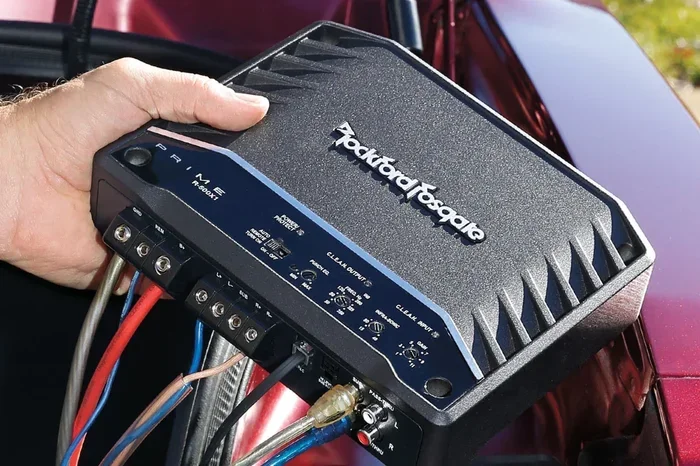
The Rockford Fosgate R500-5 is a favorite among car audio enthusiasts. It delivers 500 watts of total power across five channels. Each full-range channel outputs 50 watts RMS at 4 ohms. In bridge mode, the subwoofer channel pushes up to 150 watts RMS.
This amp features a Punch EQ that lets you boost bass frequencies. The built-in crossovers are easy to adjust. Rockford Fosgate is a trusted name in car audio, and this amp lives up to the reputation. It runs cool and stays reliable even during long drives.
Best for: Budget-conscious buyers who want solid performance.
2. Alpine PXA-H701
The Alpine PXA-H701 is a premium 5 channel car amplifier that delivers outstanding clarity. It produces 600 watts total power. Each front and rear channel outputs 60 watts RMS. The subwoofer channel bridges to deliver 200 watts RMS.
Alpine is known for its high-fidelity sound. This amp is no exception. It has a built-in digital signal processor that lets you fine-tune every aspect of your sound. The remote control makes adjustments easy without reaching under the dash.
Best for: Audiophiles who demand the highest sound quality.
3. Kicker CXA500.5
The Kicker CXA500.5 offers 500 watts of total power in a compact design. Each full-range channel delivers 50 watts RMS. The subwoofer channel bridges to produce 200 watts RMS. Kicker is famous for its bass-heavy sound, and this amp is built with that in mind.
The CXA500.5 includes adjustable crossovers and a bass boost knob. It also has a remote turn-on wire for seamless integration with your head unit. Kicker builds durable amps that handle daily driving with ease.
Best for: Bass lovers on a mid-range budget.
4. JL Audio XD500/5
JL Audio is a top-tier brand in the car audio world. The XD500/5 delivers 500 watts of clean power across five channels. Each channel outputs 50 watts RMS at 4 ohms. The subwoofer channel bridges to 150 watts RMS.
What sets this amp apart is its efficiency. The Class D design runs cool and draws minimal power. The sound is detailed and balanced. It handles both vocals and deep bass with equal finesse. If you want a premium car stereo upgrade, this is a strong contender.
Best for: Those who want premium quality and efficient performance.
5. Pioneer GM-D8605
The Pioneer GM-D8605 is a powerful Class D amplifier with 600 watts of total power. Each full-range channel outputs 60 watts RMS. The subwoofer channel bridges to deliver 240 watts RMS. Pioneer has built a reputation for reliable, high-output amplifiers.
This unit includes a built-in MOSFET power supply for stable performance. The adjustable crossovers and bass boost give you full control over your sound. It is a great choice for anyone who wants serious power without breaking the bank.
Best for: High-power setups and bass-heavy music lovers.
Comparison Table
| Amplifier | Total Power | Full-Range Channels | Subwoofer Channel | Class | Price Range |
|---|---|---|---|---|---|
| Rockford Fosgate R500-5 | 500W | 4 x 50W RMS | 150W RMS (bridged) | Class AB | Budget |
| Alpine PXA-H701 | 600W | 4 x 60W RMS | 200W RMS (bridged) | Class D | Premium |
| Kicker CXA500.5 | 500W | 4 x 50W RMS | 200W RMS (bridged) | Class D | Mid-Range |
| JL Audio XD500/5 | 500W | 4 x 50W RMS | 150W RMS (bridged) | Class D | Premium |
| Pioneer GM-D8605 | 600W | 4 x 60W RMS | 240W RMS (bridged) | Class D | Mid-Range |
Use this table to compare the top 5 channel car amplifier options side by side. Each one delivers great value in its price range. Your choice depends on your budget, your speakers, and your sound preferences.
Installation Tips and Best Practices
Installing a 5 channel car amplifier is straightforward if you follow the right steps. You do not need to be a professional. With basic tools and patience, most people can complete the job in a few hours.
Gather Your Tools and Materials
Before you start, make sure you have everything you need. Here is a quick checklist:
- Amplifier wiring kit (includes power wire, ground wire, and remote turn-on wire)
- RCA cables for connecting the head unit to the amp
- Speaker wire rated for your amplifier’s power output
- Ring terminals and crimping tool
- Fuse holder with an appropriately rated fuse
- Wire loom to protect cables from heat and friction
Step-by-Step Installation
Follow these steps for a clean, safe installation:
- Disconnect your battery. Always start by removing the negative terminal. This prevents electrical shorts.
- Run the power wire. Route it from the battery through the firewall to the amp location. Use a wire loom to protect the cable.
- Install the fuse. Place the fuse holder within 18 inches of the battery. This protects your entire electrical system.
- Ground the amplifier. Connect the ground wire to a clean, unpainted metal surface on the chassis. Sand away any paint for a solid connection.
- Run the RCA cables. Route them from the head unit to the amp. Keep them away from power wires to avoid interference.
- Connect the speaker wires. Run wire to each speaker location. Use the correct gauge for your power needs.
- Connect the remote turn-on wire. This wire tells the amp to turn on when you start the car.
- Reconnect the battery. Turn on the system and test each channel.
Quick Tips for a Great Setup
- Keep power wires and signal cables at least 6 inches apart to prevent noise.
- Use zip ties to secure cables neatly. This prevents rattles and keeps your setup clean.
- Double-check all connections before turning on the system.
- Set your crossover frequencies correctly for each speaker type.
- Start with the volume low and gradually increase to test for distortion.
When to Call a Professional
If you feel unsure about any part of the installation, consult a professional. Many car audio shops offer free or low-cost installation with amplifier purchases. A proper setup ensures your 5 channel car amplifier performs at its best and lasts for years.
Common Mistakes to Avoid
Even experienced car audio enthusiasts make mistakes. Here are the most common ones and how to avoid them.
Mismatching Power Ratings
One of the biggest mistakes is mismatching amplifier power with speaker power handling. If your amp delivers too much power, it can blow your speakers. If it delivers too little, the speakers will distort and sound bad. Always match RMS wattage to RMS wattage. Check your speaker specs carefully before buying a car audio amplifier.
Ignoring Impedance
Running a 2-ohm load on an amp that is not designed for it can cause overheating. Always verify the impedance of your speaker setup. Make sure your amplifier can handle it safely.
Undersized Power Wire
Using too-thin power wire limits the current flow. This reduces amplifier performance and can cause overheating. Always use the correct wire gauge for your amplifier’s power rating. Most wiring kits include a guide for this.
Skipping the Ground Connection
A poor ground connection causes buzz, hum, and static. Always scrape away paint or rust at the grounding point. Use a dedicated bolt or screw for the best connection. A clean ground is essential for great sound quality.
Forgetting the Remote Turn-On Wire
If you skip the remote turn-on wire, your amplifier will stay on all the time. This drains your car battery. Always connect this wire to the remote output on your head unit.
How to Get the Most Out of Your 5 Channel Amplifier
Once your 5 channel car amplifier is installed, a few simple steps maximize its performance. Start by setting the gain correctly. The gain controls how much signal the amp receives from the head unit. Set it too high and you introduce distortion. Set it too low and you waste potential power.
Next, adjust your crossover settings. Set the high-pass filter for your full-range speakers to remove unnecessary bass. Set the low-pass filter for your subwoofer to keep the sound tight and focused. These small adjustments make a big difference.
Finally, take time to listen and fine-tune. Drive around with your favorite music. Adjust the bass boost and fade until the sound feels balanced. A great audio system is not just about the gear. It is about how you tune it to your ears and your car.
Also consider the placement of your amplifier. Mount it in a ventilated area away from direct sunlight. Keep it away from moisture. Proper placement helps the amp run cool and last longer.
Final Thoughts
A 5 channel car amplifier is one of the best upgrades you can make to your vehicle. It transforms your daily commute into an immersive musical experience. You get clean power, deep bass, and crystal-clear highs all from one unit.
Whether you choose the Rockford Fosgate R500-5 for budget-friendly performance or the Alpine PXA-H701 for premium sound quality, the results speak for themselves. The right car stereo amplifier brings your music to life in ways you never thought possible.
Take your time choosing the right model. Match the power to your speakers. Follow proper installation steps. And do not skip the tuning process. With the right setup, your car audio system will deliver concert-quality sound every time you hit the road.
Start your car audio upgrade today. Your ears will thank you on every drive.
Frequently Asked Questions
What is the best 5 channel car amplifier for a budget build?
The Rockford Fosgate R500-5 is widely regarded as the best budget-friendly option. It delivers 500 watts of total power, includes adjustable crossovers, and features a Punch EQ for bass enhancement. It offers excellent value for the price and is a great starting point for anyone new to car audio upgrades.
Can I bridge channels on a 5 channel car amplifier to power a subwoofer?
Yes, bridging channels is one of the main advantages of a 5 channel car amplifier. Most units allow you to bridge channels 4 and 5 to create a single powerful channel for your subwoofer. This frees up the other four channels to power your full-range front and rear speakers. Always check the amp’s bridge mode specifications to ensure it delivers enough power for your subwoofer.
How much power do I need from a 5 channel amplifier?
Your power needs depend on your speakers and your listening preferences. A good rule of thumb is to match the amplifier’s RMS output to your speaker’s RMS power handling. For a balanced system with full-range speakers and a subwoofer, 500 to 600 watts total is usually sufficient. If you prefer louder, bass-heavy music, you may want more power.
Is Class D or Class AB better for a 5 channel car amplifier?
Class D amplifiers are more efficient, run cooler, and draw less power from your vehicle’s electrical system. They are ideal for most setups. Class AB amplifiers produce warmer, more natural sound but generate more heat. If sound quality is your top priority and you have good ventilation, Class AB is a great choice. For most drivers, Class D offers the best balance of performance and efficiency.
Do I need special wiring to install a 5 channel car amplifier?
You need a proper wiring kit that includes a power wire, ground wire, remote turn-on wire, RCA cables, and speaker wire. The gauge of your power wire depends on the amplifier’s wattage. Most wiring kits include a chart to help you choose the right size. Always use quality cables and secure all connections for the best performance.
Can a 5 channel amplifier replace a separate subwoofer amp?
Yes, one of the biggest advantages of a 5 channel car amplifier is that it replaces the need for a separate subwoofer amp. The bridged fifth channel provides dedicated power to your subwoofer while the other four channels drive your full-range speakers. This simplifies your setup, reduces wiring complexity, and saves space under your dashboard.
=== CONCLUSION ===
Choosing the right 5 channel car amplifier is one of the most impactful decisions you can make for your car audio system. It gives you the power, flexibility, and sound quality to turn any vehicle into a listening paradise. From budget-friendly options like the Rockford Fosgate R500-5 to premium picks like the Alpine PXA-H701, there is a perfect amp for every need and every budget.
Remember to match your amplifier’s RMS output to your speaker power handling. Pay attention to impedance and crossover settings. Follow proper installation practices. And take the time to tune your system for the best possible sound.
With the right 5 channel car amplifier and a little patience, you will enjoy richer, deeper, and more dynamic music every time you drive. Your car audio upgrade starts today. Make the choice that fits your ride and your ears.