Is It Okay to Drive With Traction Control Off and Why
Is It Okay to Drive With Traction Control Off? Yes, but only in specific situations like deep snow, off-road trails, or when stuck in mud. This guide explains when it’s safe to turn off traction control, why drivers do it, and the risks you need to understand before you switch it off.
“Is It Okay to Drive With Traction Control Off?” is a question many drivers ask, especially when they see the traction control light flash on the dashboard. You might wonder if disabling this system gives you more control or if it just makes things more dangerous. The truth is, there are times when turning off traction control is not only okay but actually helpful. However, doing so incorrectly can lead to wheel spin, longer stopping distances, and even loss of control. This article breaks down exactly when it’s safe, when it’s not, and what happens under the hood.
Traction control is a driver-assist feature that has been standard in cars since the late 1990s. It works hand-in-hand with the anti-lock braking system (ABS) and electronic stability control (ESC) to keep your car stable. Most of the time, you should leave it on. But if you’re heading off-road, stuck in snow, or navigating a dirt trail, you might need to disable it. Knowing the difference between safe and risky situations can save you from a spinout or a stuck vehicle.
Before we dive into the details, let’s clear up one common myth. Turning off traction control does not make your car faster. It simply changes how the system manages wheel spin. The engine still delivers the same power. The difference lies in whether the computer intervenes to slow down a spinning wheel. This is why understanding when to use it is so important for everyday driving safety.
Key Takeaways
- Traction control helps prevent wheel slip: It uses sensors and ABS to keep your tires gripping the road.
- You can safely turn it off in certain conditions: Deep snow, loose gravel, mud, and sand often require wheel spin to gain traction.
- Never drive with it off on highways or wet roads: The risk of losing control increases dramatically.
- Turning it off won’t boost speed: It only affects how the car handles traction, not engine power.
- Modern stability control systems add extra safety: Even with traction control off, ESC can still intervene.
- Always know your vehicle’s manual: Some cars have a temporary off mode that reactivates automatically.
📑 Table of Contents
What Is Traction Control and How Does It Work?
Traction control is a driver assistance system designed to prevent your wheels from spinning uncontrollably. It monitors the speed of each wheel using sensors. When it detects that one or more wheels are spinning faster than the others, it steps in. The system reduces engine power or applies the brakes to that specific wheel. This helps maintain tire grip on the road surface.
How the System Detects Wheel Slip
The traction control system relies on wheel speed sensors. These sensors are the same ones used by the anti-lock braking system (ABS). They send real-time data to the car’s computer. If the computer sees a wheel spinning too fast, it knows that wheel has lost grip. The system then reacts within milliseconds. It can cut fuel injection, spark advance, or apply a light brake to that wheel. This process happens so fast that you barely notice it.
Think of it like a babysitter for your wheels. When a wheel starts to slip, the babysitter gently holds it back. This is especially useful on wet roads or during sudden acceleration. The system keeps the car stable and helps the driver maintain control. It works with both front-wheel drive and rear-wheel drive vehicles. In all-wheel drive cars, it helps balance power between the front and rear axles.
The Role of ABS and Stability Control
Traction control does not work alone. It is closely linked to ABS and electronic stability control (ESC). ABS prevents your wheels from locking up during hard braking. ESC uses traction control inputs to help you steer in the intended direction during a skid. Together, these systems form a safety net. They reduce the risk of oversteer and understeer. Oversteer happens when the rear of the car swings out. Understeer is when the front pushes wide in a turn. A stability control system helps counteract both.
When you turn off traction control, you are only disabling one part of this safety net. ABS and ESC may still remain active, depending on your vehicle. However, the car loses its ability to manage wheel spin during acceleration. This can change how the car behaves on tricky surfaces. That’s why it’s important to know exactly what you’re turning off.
Key Takeaways: Traction control uses sensors to detect wheel slip and applies brakes or reduces power. It works alongside ABS and ESC to keep you stable. Turning it off removes that specific intervention but not the entire safety system.
When Is It Safe to Turn Off Traction Control?
There are several real-world situations where driving with traction control off is not only okay but recommended. The key is matching the setting to the road conditions. If you’re on a surface where a little wheel spin actually helps you move forward, you may need to disable the system. Let’s look at the most common scenarios.
Driving on Snow and Ice
Deep snow is one of the top reasons drivers turn off traction control. When a car is stuck in snow, the wheels spin uselessly. They dig into the snow and create a hole. The traction control system keeps cutting power to prevent spin. This can leave you stuck. By turning it off, you allow the wheels to spin and build momentum. This helps the tires carve through the snow and find grip on the road underneath.
The same logic applies to driving on ice, but with caution. On glare ice, a spinning wheel can actually find a thin layer of water and gain a tiny bit of traction. However, this technique is tricky. It works best at very low speeds. If you’re trying to get moving from a standstill in deep snow, turning off traction control can be a lifesaver. Always re-enable it once you’re moving safely.
Off-Road and Loose Surfaces
Off-road driving often demands wheel spin. Whether you’re on loose gravel, a dirt trail, or a rocky path, the tires need to slip slightly to find grip. Traction control fights this. It can make the car feel sluggish and hesitant. On a steep dirt hill, for example, you need the wheels to spin to climb. With traction control on, the system may cut power before the car can gain enough momentum to reach the top.
Many off-road enthusiasts keep traction control off for this exact reason. It allows for smoother throttle response and more natural wheel movement. If you’re heading out on a trail, check your vehicle’s manual for a specific off-road mode. Some modern trucks and SUVs have a dedicated setting that temporarily disables traction control while keeping ESC active.
Stuck in Mud or Sand
Mud and sand are two of the most challenging surfaces for a car. They are soft and give way easily. When a wheel hits mud, it can spin freely and dig deeper. Traction control sees this spin and reduces power, which can make you sink faster. Turning the system off lets the wheels spin and act like paddles. This can help you wiggle free or slowly crawl out of a sticky situation.
Sand presents a similar challenge. On loose beach sand or a desert dune, you want the wheels to spin to stay on top of the surface. A spinning tire floats on the sand rather than digging in. Again, this only works at low speeds. If you’re stuck, try rocking the car gently with traction control off. Once you’re free, turn it back on immediately.
| Condition | Traction Control On | Traction Control Off |
|---|---|---|
| Deep Snow | Wheels dig in, car stays stuck | Wheels spin, build momentum to move |
| Loose Gravel | System cuts power, car feels sluggish | Wheels spin naturally, better grip |
| Mud | Prevents digging out, may sink deeper | Allows wheel spin to paddle through |
| Sand | Wheels dig, car sinks | Wheels float on surface |
| Dry Highway | Optimal stability and braking | Risk of wheel spin, longer stopping |
| Wet Road | Prevents hydroplaning and spin | Increased risk of losing control |
Quick Tips: Always turn traction control back on when you leave the tricky surface. Use a low gear when driving off-road with traction control off. If your car has a stability control off button, read the manual to understand what exactly it disables.
Common Mistakes: Many drivers forget to turn traction control back on after leaving the snow or trail. This leaves the system off for the next highway drive, which is dangerous. Another mistake is turning it off at high speed on a wet road. The system is there to protect you from hydroplaning and sudden skids.
When Should You Never Turn Off Traction Control?
There are situations where keeping traction control on is non-negotiable. These are the times when the system is working hardest to keep you safe. Turning it off in these conditions can turn a minor slip into a serious accident.
Highway Driving and Wet Roads
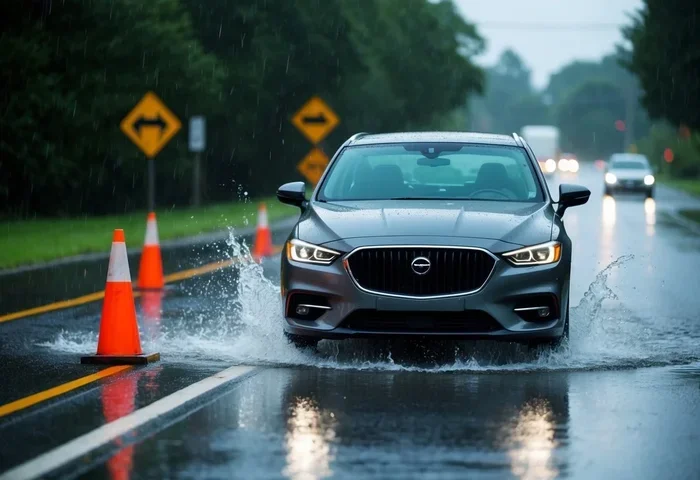
Highway driving demands stable car handling. At speeds above 50 mph, a spinning wheel can cause a sudden loss of control. The traction control system constantly monitors road conditions and adjusts power to prevent this. On a wet highway, water can build up between the tires and the road. The system helps prevent wheel spin that leads to hydroplaning. Hydroplaning is when your tires ride on a film of water instead of gripping the road. It can happen at surprisingly low speeds and is extremely dangerous.
If you turn off traction control on a wet road, you lose that safety net. The car becomes more responsive to throttle inputs, but also more unpredictable. A sudden burst of power can cause the rear wheels to spin and the tail to swing out. This is especially true for rear-wheel drive vehicles. Even with all-wheel drive, a spinning wheel can break traction and send the car sideways.
Emergency Maneuvers
During an emergency stop or a sudden swerve, you want every safety system working at full capacity. Traction control helps the ABS and ESC do their jobs. It ensures the wheels maintain grip when you need it most. If the system is off, the car may not be able to correct a skid as effectively. The braking distance can increase, and the car might not respond to steering inputs the way you expect.
Imagine you need to swerve around a sudden obstacle on a rain-soaked road. With traction control on, the car stays planted. With it off, a sudden throttle change or weight transfer can cause the wheels to slip. The car might understeer and plow straight ahead, or oversteer and spin. In these critical moments, the stability control system is your best friend. Never turn it off when driving in unpredictable traffic or poor weather.
Expert Insights: Driving instructors consistently emphasize that traction control is a safety aid, not a performance option. It is designed for everyday driving and should remain on unless you have a specific, low-speed off-road or snow scenario. As one veteran instructor puts it, “If you don’t know why you’re turning it off, leave it on.”
The Risks of Driving With Traction Control Off
Understanding the risks helps you make informed decisions. When you disable traction control, you take on more responsibility for managing wheel grip. The car becomes more sensitive to how you use the throttle. Here is what can go wrong if you are not careful.
Increased Wheel Spin and Oversteer
The most obvious risk is uncontrolled wheel spin. On a slippery surface, a spinning tire has almost no grip. It just spins in place or causes the car to slide. In a rear-wheel drive car, this can lead to oversteer. The rear end swings out, and the car starts to rotate. If you are not ready to countersteer, you can easily spin into a ditch or another lane. Front-wheel drive cars can experience severe understeer, where the front pushes wide and you can’t turn the car.
Even on a dry road, aggressive acceleration with traction control off can cause the wheels to break traction. This is especially true for powerful engines or performance cars. The throttle response becomes sharper, and the car can lurch forward unpredictably. If the road is slightly damp from morning dew or a light rain, this risk multiplies.
Longer Braking Distances
While traction control mainly affects acceleration, it also influences overall stability during braking. A car that is spinning out of control is harder to stop. The traction control system works with the ABS to keep the wheels rolling just enough to maintain steering control during a stop. Without it, a sudden skid can lock the wheels and extend your braking distance. On a wet or icy road, this extra distance can be the difference between a safe stop and a collision.
Key Takeaways: Driving with traction control off increases the chance of wheel spin, oversteer, and understeer. It can also lead to longer braking distances in emergency situations. These risks are highest on slippery surfaces and at higher speeds.
Quick Tips and Common Mistakes
Quick Tips for Using Traction Control
- Know your button location: Most cars have a traction control off button near the steering wheel or center console. Look for a car icon with wavy lines.
- Use the traction control light as a reminder: When the light is on, the system is off. Check it before you drive on a public road.
- Re-enable it after the tricky surface: As soon as you are on clear, dry pavement, turn it back on.
- Combine with low gears: When off-road, use a low-range transfer case if your vehicle has one. This gives you more control at slow speeds.
- Don’t turn it off for performance: It won’t make your car faster. It only changes how power is delivered.
Common Mistakes Drivers Make
- Leaving it off after off-roading: This is the most common mistake. Drivers forget to switch it back on and drive home on the highway with the system disabled.
- Turning it off on wet roads: Some drivers think it helps them go faster in the rain. It actually reduces safety and can cause hydroplaning.
- Confusing traction control with stability control: Some vehicles have separate buttons. Turning off traction control may not turn off the stability control system. Read your manual to understand the difference.
- Ignoring the traction control warning light: If the light stays on, it could indicate a sensor fault. Have it checked by a mechanic.
- Using it as a substitute for winter tires: Traction control helps, but it cannot create grip on ice. Winter tires are still essential for cold-weather driving.
Key Takeaways: Always turn the system back on when you leave the tricky surface. Use the traction control light as a visual reminder. Never disable it for highway driving or wet conditions. Know the difference between traction control and stability control.
Is It Okay to Drive With Traction Control Off? Final Verdict
So, is it okay to drive with traction control off? The answer depends entirely on the situation. For daily driving on paved roads, the answer is a clear no. The system is there to keep you safe, and turning it off removes a layer of protection you don’t need to sacrifice. On a highway, in rain, or on any public road with other drivers, traction control should stay on.
However, if you are stuck in deep snow, trying to climb a loose gravel hill, or wading through mud, then yes, it is okay to turn it off. In these low-speed, off-pavement scenarios, a little wheel spin is exactly what you need. The key is knowing when to switch it back on. Once you are clear of the difficult surface, re-enable the system immediately.
Expert Insights: Most driving safety experts agree that the average driver should rarely turn off traction control. The system is designed to handle most situations better than a human can. If you are unsure, leave it on. The only time you should actively disable it is when you have a clear, low-speed reason and the immediate environment demands it.
Is It Okay to Drive With Traction Control Off? Yes, but only when the road conditions require it, at low speeds, and for a short duration. Always prioritize safety, and when in doubt, keep the system engaged. Your car’s traction control system is one of the most important driver assistance features you have. Respect it, use it wisely, and it will help keep you and your passengers safe on every journey.
Remember that modern vehicles also come with advanced stability control and electronic systems that work together. Even if you turn off traction control, your car may still have other safeguards active. But the best practice is simple: leave traction control on for normal driving, and only turn it off when you truly need to. That way, you get the best of both worlds—safety when you need it, and flexibility when the terrain demands it.
Frequently Asked Questions
Can I drive with traction control off on the highway?
No, you should never drive with traction control off on a highway. The system helps prevent wheel spin and maintains stability at higher speeds. Turning it off on a highway increases the risk of losing control, especially in wet or windy conditions.
Does turning off traction control save fuel?
No, turning off traction control does not save fuel. The system only intervenes when a wheel spins. It uses minimal energy and has no impact on your fuel economy. In fact, driving without it in slippery conditions can lead to inefficient wheel spin and wasted energy.
Will my ABS still work if traction control is off?
Yes, in most vehicles, the anti-lock braking system (ABS) remains fully active even when traction control is off. They share sensors but operate independently for braking. However, you lose the traction management during acceleration, which can affect overall stability.
Can I turn off traction control in the rain?
You should not turn off traction control in the rain. The system helps prevent wheel spin on wet roads and reduces the risk of hydroplaning. Keeping it on gives you better control and shorter braking distances on slippery surfaces.
Is it okay to drive with traction control off in snow?
Yes, it is often okay and even helpful in deep snow. When your car is stuck, allowing the wheels to spin can help you build momentum and move forward. However, you should re-enable traction control as soon as you are moving safely on clear pavement.
What does the traction control warning light mean?
The traction control warning light means the system is either off or there is a fault. If the light stays on after you start the car, the system may be disabled or have a sensor issue. Have it checked by a mechanic to ensure your safety systems are working properly.