Does the Toyota 4Runner Have a Third Row Seating Option
The Toyota 4Runner does not offer a third row seat in any trim or model year. It seats five passengers comfortably across two rows. If you need third row seating for your family, Toyota offers several alternative SUVs that fill this gap perfectly. Let us explore the 4Runner seating layout, compare it with other Toyota options, and help you find the right vehicle for your needs.
The Toyota 4Runner is one of the most iconic SUVs on the road today. It has earned a loyal following thanks to its rugged build, off-road prowess, and reputation for lasting well over 300,000 miles. But if you are shopping for a larger family vehicle, one question comes up a lot: does the Toyota 4Runner have a third row?
The short answer is no. The 4Runner has always been a two-row, five-passenger SUV. There is no third row seat in any trim, any model year, or any special edition. This is a deliberate design choice that prioritizes cargo space and off-road geometry over raw passenger capacity. But that does not mean the 4Runner falls short for families. It simply means you need to understand what it offers and whether that fits your lifestyle.
In this article, we will dive deep into the 4Runner seating layout, explore why Toyota chose this design, compare the 4Runner with other Toyota SUVs that do offer a third row, and help you figure out if the 4Runner is the right pick for your family. Whether you are a daily commuter, an weekend adventurer, or a parent hauling kids and gear, this guide has you covered.
Key Takeaways
- No Third Row: The Toyota 4Runner only seats five passengers with its two-row configuration across all trims and model years.
- Spacious Second Row: The 4Runner compensates with generous rear legroom and cargo space behind the second row.
- Strong Competitors: Toyota models like the Sienna and Highlander offer third row seating if you need to carry more passengers.
- Excellent Cargo Flexibility: The 4Runner’s cargo area is among the best in the mid-size SUV class for hauling gear and luggage.
- Built for Adventure: The 4Runner excels in off-road capability, reliability, and durability, making it a top choice for active families.
- Multiple Alternatives Exist: Toyota has several family-friendly SUVs with third row seating that you can explore if five seats are not enough.
📑 Table of Contents
- Understanding the Toyota 4Runner Seating Layout
- 4Runner Cargo Space and Practicality
- Toyota SUVs With Third Row Seating
- Seating Configuration and Family Needs
- Why the 4Runner Remains a Top Choice Despite No Third Row
- Common Mistakes Buyers Make When Choosing Between the 4Runner and Three-Row SUVs
- Expert Insights: What Toyota Engineers Say About the 4Runner
- Quick Tips for Maximizing Your 4Runner’s Seating and Storage
- Conclusion
Understanding the Toyota 4Runner Seating Layout
The Toyota 4Runner has maintained a consistent two-row seating design throughout its entire production history. The current generation, which debuted in 2024, continues this tradition. Every trim, from the base SR5 to the top-tier TRD Pro, offers the same five-passenger configuration.
First Row Seating
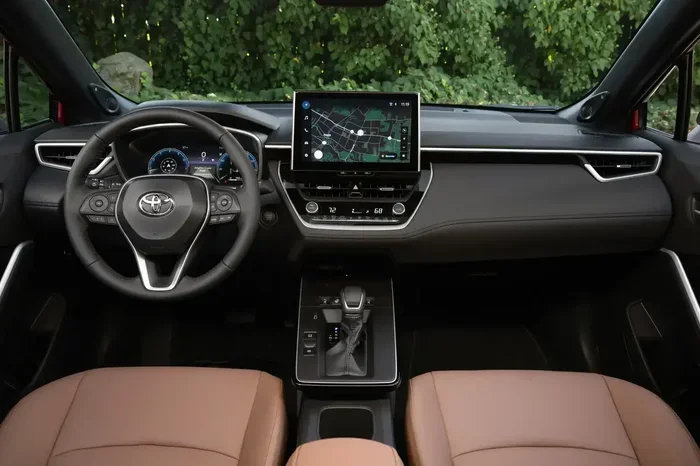
The front row of the 4Runner is roomy and comfortable. Both the driver and front passenger get plenty of legroom and headroom. The seats are bolstered well, which is great for off-road driving where you need to stay firmly planted. The front row also features adjustable seat bottoms and reclining backrests on higher trims, so long road trips stay comfortable.
Second Row Seating
The second row is where the 4Runner really shines in terms of space. Even though it only seats three passengers in the rear, the rear seating space is surprisingly generous. Adults can sit comfortably in the back without feeling cramped. The rear seats fold down in a 60/40 split, which opens up a flat cargo floor for hauling larger items.
Here are some key specs for the 4Runner second row:
- Legroom: Approximately 41 inches of rear legroom
- Headroom: Plenty of headroom for tall passengers
- Seat Folding: 60/40 split-fold rear seats
- Seat Material: Cloth standard, leather available on higher trims
- LATCH System: Available for installing child car seats
Why No Third Row?
Toyota designed the 4Runner with a specific purpose in mind. It is a mid-size off-road SUV built for adventure, not a family hauler optimized for carpooling. Adding a third row would require a longer wheelbase, which would change the vehicle’s ground clearance, approach angle, and overall off-road character. Toyota kept the 4Runner’s dimensions focused on rugged capability rather than passenger volume.
Also, the 4Runner shares its platform with the Toyota Tacoma pickup truck. This body-on-frame design leaves less room for a third row compared to unibody SUVs like the Highlander. The trade-off is a stronger, more durable vehicle that can handle serious trail conditions.
4Runner Cargo Space and Practicality
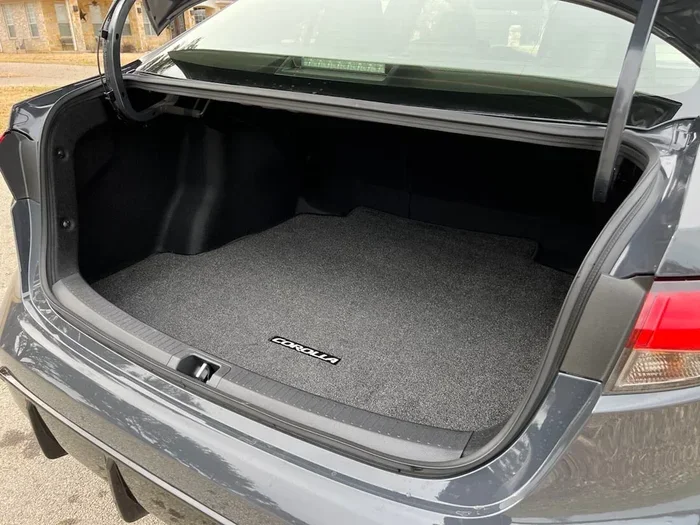
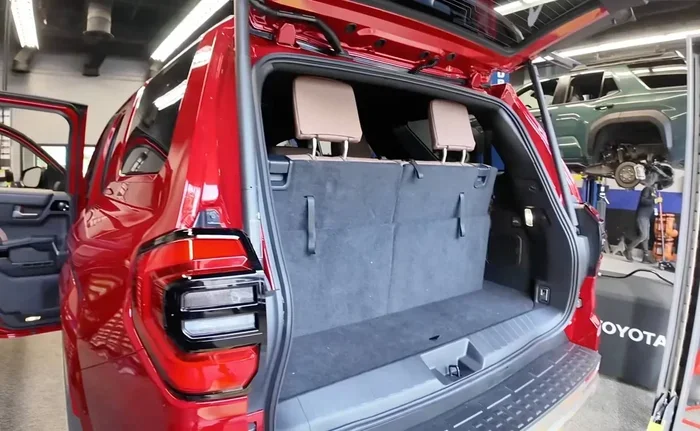
Even without a third row, the 4Runner offers impressive cargo capacity. When the rear seats are up, you get approximately 47.2 cubic feet of cargo space behind the second row. Fold the seats down, and that number jumps to around 89.7 cubic feet. This is plenty of room for luggage, camping gear, sports equipment, or even furniture.
Comparing Cargo Space
If you have ever tried to fit four suitcases in a Toyota Camry, you know that sedans have limited cargo room. The 4Runner dwarfs the Camry in this area. Here is a quick comparison of cargo space across popular Toyota models:
| Vehicle | Seating | Cargo (Seats Up) | Cargo (Seats Down) |
|---|---|---|---|
| Toyota 4Runner | 5 passengers | 47.2 cu ft | 89.7 cu ft |
| Toyota Camry | 5 passengers | 15.1 cu ft | N/A |
| Toyota Highlander | 8 passengers | 16.0 cu ft (3rd row up) | 84.3 cu ft (3rd row folded) |
| Toyota Sienna | 7-8 passengers | 33.1 cu ft (2nd row up) | 140.4 cu ft (2nd row folded) |
As you can see, the 4Runner offers the most cargo space of any Toyota SUV in this comparison when the rear seats are folded. This makes it an excellent choice for families who prioritize hauling gear over carrying extra passengers.
Real-World Cargo Tips
Here are some practical tips for maximizing your 4Runner’s cargo area:
- Use the cargo net: The 4Runner comes with a cargo net to keep smaller items from shifting during drives.
- Invest in a cargo mat: Protect the carpet from dirt, mud, and spills after off-road adventures.
- Consider roof storage: Roof racks and cargo boxes add even more hauling capacity without eating into interior space.
- Fold seats partially: The 60/40 split lets you customize the cargo area for oddly shaped items.
Toyota SUVs With Third Row Seating
If you need to carry more than five passengers, Toyota has several SUVs that offer a third row. These vehicles are worth considering if the 4Runner’s five-seat layout does not meet your family’s needs.
Toyota Highlander
The Toyota Highlander is a mid-size three-row SUV that seats up to eight passengers. It offers a comfortable third row for children or shorter adults. The Highlander comes in both gas and hybrid versions, giving you excellent fuel economy alongside the seating capacity you need. The interior is modern, with a large touchscreen and plenty of driver-assistance features.
The Highlander’s seating configuration makes it a popular choice for families who regularly carpool or take road trips with extended family. It strikes a nice balance between the 4Runner’s ruggedness and a minivan’s practicality.
Toyota Sienna
The Toyota Sienna is a minivan, and it is arguably the best family hauler Toyota makes. It seats up to eight passengers comfortably and offers sliding doors that make getting in and out easy for kids and elderly passengers. If you are wondering whether you can fit a large family inside, the answer is yes. The Sienna has been designed from the ground up for people transport.
For those curious about the Sienna’s versatility, you might ask yourself, can you turn a Toyota Sienna into a camper? The answer is absolutely yes. With the second and third rows folded, the Sienna creates a flat sleeping area that is surprisingly comfortable for overnight trips.
Also, if you have a larger family, you might wonder, can 8 people fit in a Toyota Sienna? Yes, the Sienna is rated for eight passengers, and it does so with room to spare. The Sienna offers one of the most spacious interiors in the Toyota lineup.
Toyota Grand Highlander
The Toyota Grand Highlander is the newest addition to Toyota’s three-row SUV lineup. It offers seating for up to eight passengers with a more premium interior than the standard Highlander. The Grand Highlander features a longer wheelbase, which translates to more room in the third row and a larger cargo area behind it.
This model bridges the gap between the Highlander and larger SUVs like the Chevy Traverse. If you want the 4Runner’s reliability and Toyota quality but need a third row, the Grand Highlander is a strong contender.
Seating Configuration and Family Needs
Choosing the right vehicle depends heavily on your family’s needs. Let us break down a few scenarios to help you decide.
When the 4Runner Makes Sense
The 4Runner is ideal for families who:
- Have one or two children who ride in the back seat
- Need a rugged vehicle for outdoor adventures and off-road trips
- Prioritize cargo space over passenger capacity
- Want a vehicle known for longevity and low maintenance costs
- Do not regularly carpool more than four additional people
Many families with young children find the 4Runner perfectly adequate. Two car seats in the back seat, plus room for a parent in the front, adds up to five. For most everyday situations, this is more than enough.
When a Third Row Becomes Necessary
You might need a third row if:
- You regularly carpool for your kids’ sports teams or school activities
- You have three or more children who need their own seats
- You frequently transport extended family members
- You run a small business that needs to carry crew members
- You live in an area where ride-sharing or shuttle services are common
In these cases, a Toyota SUV with a third row like the Highlander, Grand Highlander, or Sienna would be a better fit. These vehicles are designed specifically to move more people comfortably and safely.
Seating Configuration Comparison
Here is a side-by-side look at how the 4Runner compares to Toyota’s three-row options:
| Feature | 4Runner | Highlander | Grand Highlander | Sienna |
|---|---|---|---|---|
| Total Seating | 5 | 8 | 8 | 8 |
| Rows | 2 | 3 | 3 | 3 |
| Off-Road Capability | Excellent | Moderate | Moderate | Limited |
| Fuel Economy (Combined) | 20 mpg | 36 mpg (hybrid) | 29 mpg (hybrid) | 36 mpg (hybrid) |
| Cargo (Seats Up) | 47.2 cu ft | 16.0 cu ft | 17.2 cu ft | 33.1 cu ft |
| Starting Price | $40,000 | $38,000 | $40,000 | $39,000 |
This table makes it easy to see the trade-offs. The 4Runner wins on off-road capability and cargo space. The Highlander, Grand Highlander, and Sienna win on passenger capacity and fuel economy. Your decision should be based on what matters most to your family.
Why the 4Runner Remains a Top Choice Despite No Third Row
The Toyota 4Runner consistently ranks as one of the best-selling SUVs in America, and it has done so for decades. Why? Because it delivers where it counts. The 4Runner’s reputation for reliability is unmatched. Many owners report pushing 300,000 miles or more with proper maintenance.
Durability and Reliability
The 4Runner is built like a tank. Its body-on-frame construction, solid rear axle, and simple mechanical design make it incredibly durable. Unlike modern SUVs packed with complex electronics, the 4Runner relies on proven technology that lasts. This means fewer trips to the shop and lower repair costs over the life of the vehicle.
If you have ever wondered whether you can tune a Toyota Camry for better performance, the 4Runner offers a similar simplicity. It is not about speed; it is about dependability. The 4Runner’s 4.0-liter V6 engine produces 270 horsepower, which is more than enough for daily driving and trail adventures alike.
Resale Value
Toyota 4Runners hold their value exceptionally well. According to industry data, the 4Runner retains roughly 70% of its value after five years. This is significantly higher than most competitors. When you buy a 4Runner, you are making a smart long-term investment.
Off-Road Heritage
The 4Runner has a rich history rooted in off-road performance. It traces its lineage back to the original Toyota Hilux Surf, which was built for rugged terrain around the world. Today, the TRD Off-Road and TRD Pro trims come equipped with locking differentials, crawl control, and multi-terrain select. These features make the 4Runner one of the most capable off-road SUVs you can buy.
For families who love camping, hiking, and exploring the outdoors, the 4Runner is practically purpose-built. It can handle river crossings, rocky trails, and steep inclines with confidence. No other Toyota SUV matches its combination of ruggedness and everyday usability.
Common Mistakes Buyers Make When Choosing Between the 4Runner and Three-Row SUVs
When shopping for a Toyota SUV, buyers often make a few common mistakes. Avoiding these pitfalls can save you time, money, and regret.
Overprioritizing Passenger Capacity
Some buyers automatically assume they need a third row because they have three or more children. But if your oldest child is still in a booster seat and your second row has room for three across, you may not need a third row at all. Measure your current seating needs before assuming you need more rows.
Underestimating Cargo Needs
On the flip side, some families with only two children choose a three-row SUV but rarely use the third row. That third row takes up cargo space when folded. If you frequently haul gear, a two-row SUV like the 4Runner might actually serve you better. The rear seats fold flat, giving you a massive cargo area for luggage or equipment.
Ignoring Total Cost of Ownership
Three-row SUVs often come with higher price tags, more complex drivetrains, and potentially higher maintenance costs. The 4Runner’s simplicity keeps costs down over the long run. Before choosing based on seating alone, consider insurance, fuel, maintenance, and resale value.
Skipping the Test Drive
Every family is different. What works for one family might not work for yours. Always test drive the vehicles you are considering. Bring your car seats, your cargo, and your family members. See how the vehicle actually feels in real-world conditions before making a decision.
Expert Insights: What Toyota Engineers Say About the 4Runner
Toyota engineers have consistently stated that the 4Runner is designed for drivers who value capability over capacity. The 4Runner’s two-row design is not a limitation; it is a deliberate engineering choice. By keeping the vehicle shorter and more maneuverable, Toyota ensures the 4Runner can tackle tight trails and narrow trails that longer three-row SUVs cannot.
The engineers also point out that the 4Runner’s seating arrangements are optimized for comfort and safety. The second row is wide enough for three adults, and the seats provide excellent support during long drives. Child safety seats install easily using the LATCH system, and the rear window offers good visibility for monitoring kids in the back.
Toyota also emphasizes that the 4Runner’s build quality means the seats and interior materials are built to last. Unlike some competitors where second-row fabrics wear out quickly, the 4Runner’s seats are known for holding up over many years of heavy use.
Quick Tips for Maximizing Your 4Runner’s Seating and Storage
Want to get the most out of your 4Runner’s interior? Here are some quick tips:
- Use a cargo organizer: Keep small items like phones, snacks, and maps neatly stored in the cargo area.
- Install seat protectors: Protect the second-row seats from dirty shoes, pet claws, and spills.
- Consider a roof rack: If you frequently carry bulky items like bikes or kayaks, a roof rack frees up interior space.
- Keep a spare tire kit accessible: The 4Runner’s underfloor storage compartment is a great place for emergency supplies.
- Use sunshades for rear passengers: Keep kids comfortable and protected from glare on long drives.
Conclusion
The Toyota 4Runner does not have a third row, and it never has. This five-passenger, two-row SUV is built for families who prioritize off-road capability, cargo space, and long-term reliability over raw passenger numbers. For many families, five seats are more than enough, and the 4Runner delivers in every other category that matters.
If you need to carry more than five people regularly, Toyota has excellent alternatives. The Highlander, Grand Highlander, and Sienna all offer third row seating with strong family-friendly features. Each of these vehicles brings something unique to the table, and they all share Toyota’s legendary reliability.
Ultimately, the best vehicle is the one that fits your life. If the 4Runner’s combination of ruggedness, durability, and cargo space speaks to you, it is a fantastic choice. But if your family needs more seats, do not force the 4Runner into a role it was not designed for. Explore Toyota’s full lineup and find the SUV that truly matches your needs. The right vehicle is out there, and it will make every drive a better experience for your whole family.
Frequently Asked Questions
Can the Toyota 4Runner seat more than five people?
No, the Toyota 4Runner is designed to seat exactly five passengers across two rows. There is no third row available in any trim or model year. The front row seats two and the rear row seats three.
Which Toyota SUV has a third row and is similar to the 4Runner?
The Toyota Grand Highlander is the closest three-row SUV to the 4Runner in terms of size and capability. It seats up to eight passengers and offers a more modern interior. The Toyota Highlander is another strong option with a proven track record.
Is the Toyota 4Runner a good family car despite having only five seats?
Absolutely. The 4Runner is an excellent family vehicle for families with one or two children. It offers a spacious second row, generous cargo space, top-tier safety ratings, and legendary reliability. Many families find five seats more than sufficient for their daily needs.
How much cargo space does the 4Runner have with the rear seats folded down?
With the rear seats folded down, the Toyota 4Runner offers approximately 89.7 cubic feet of cargo space. This is among the largest cargo areas in the mid-size SUV segment and can easily accommodate large luggage, camping gear, and other bulky items.
Does the Toyota 4Runner have better off-road capability than the Highlander or Sienna?
Yes, the 4Runner is significantly better for off-road driving. It features a body-on-frame design, locking differentials, crawl control, and multi-terrain select. The Highlander and Sienna are built for on-road comfort and family transport, not for serious trail use.
Can you add aftermarket seating to a 4Runner to create a third row?
While aftermarket third-row kits exist for some vehicles, adding a third row to a 4Runner is not recommended. It would compromise the vehicle’s structural integrity, safety ratings, and warranty. Toyota designed the 4Runner as a two-row SUV, and modifying it is not worth the risk or cost.